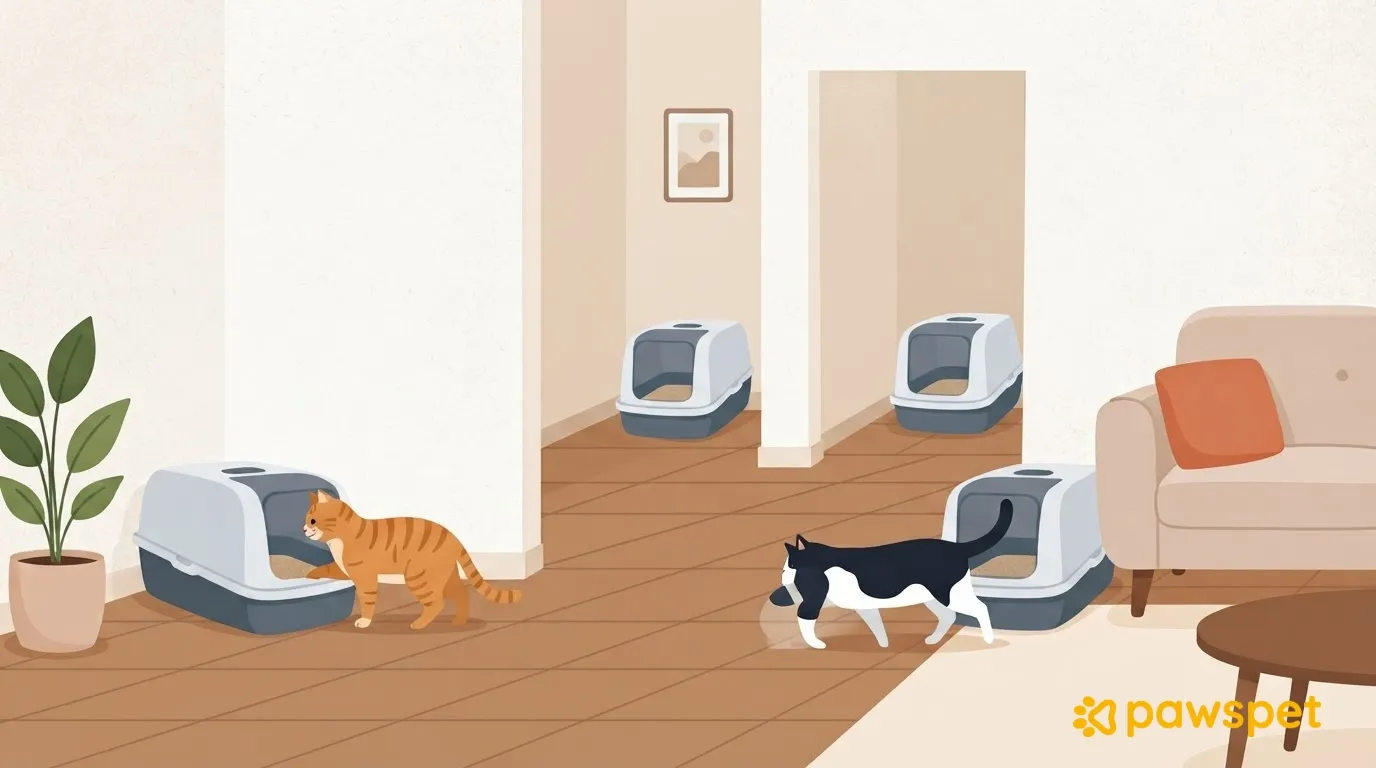
A common starting point is one litter box per cat, plus one, but where you place them matters most. Two litter boxes side by side often count as a single station because they share the same access point. This is a practical guideline to adapt to your home and cats, not a rule to follow to the letter.
How many litter boxes do you need for two, three, or four cats?
| Cats | Starting number of litter boxes |
|---|---|
| 2 | 3 |
| 3 | 4 |
| 4 | 5 |
These numbers are a starting point: spread the litter boxes across multiple areas rather than lining them up in one corner. A very large box does not replace multiple stations: it is still just one place to reach.
If space is limited, fewer boxes in separate spots may be more useful than many side by side. First, look for a location that genuinely gives the cat another option.
Where to place them: separate areas and escape routes
- Different rooms or floors. Distribute litter boxes across the areas your cats use.
- Quiet spots without dead ends. Avoid places like the end of a hallway, a closet, or inside a piece of furniture if there is only one way in and another cat could block it.
- Visible entrance and multiple escape routes. Your cat should be able to see who is approaching and leave from more than one direction.
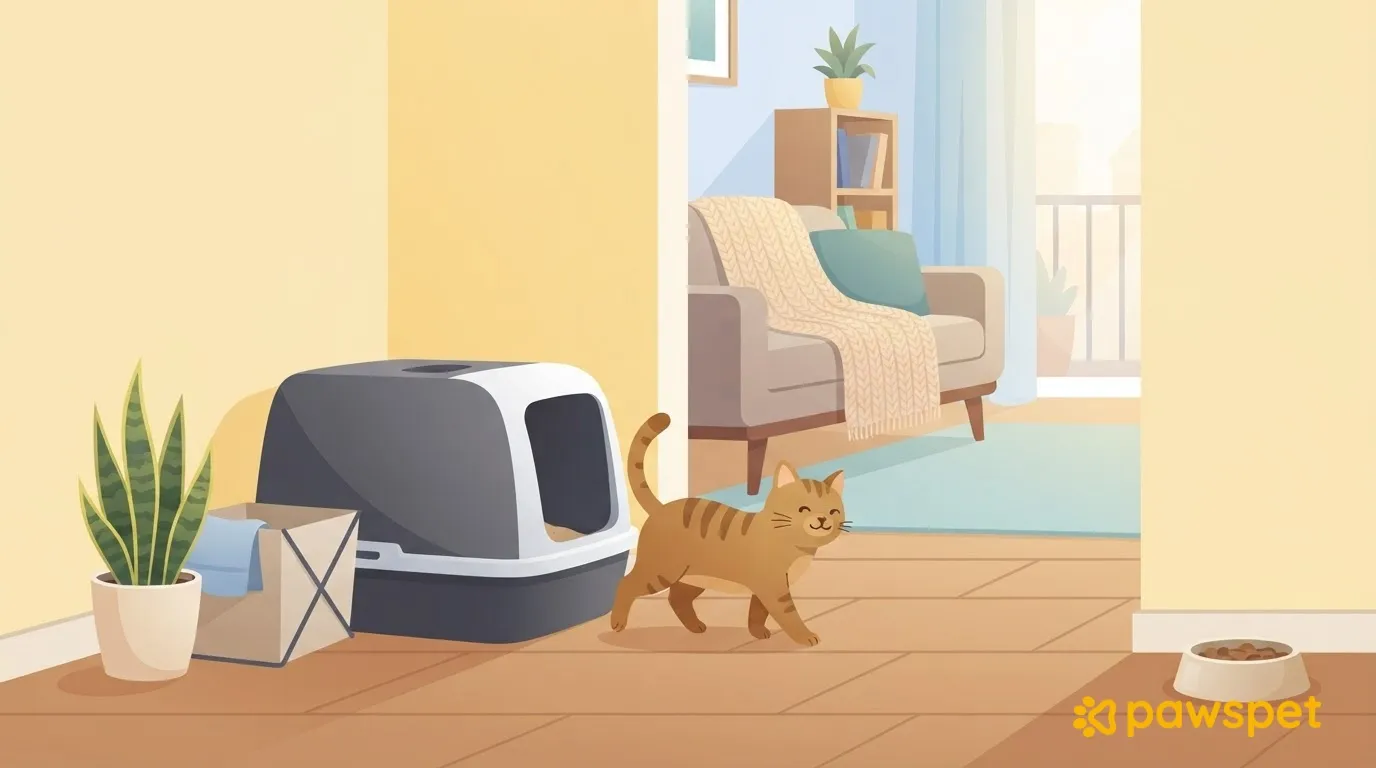
- Away from food, water, and noise. Keep litter boxes away from food and water bowls and noisy appliances.
- Easy access. For an older or less agile cat, choose a low entry and a route without obstacles.
Check the route, too: two different rooms may still only be accessible through the same hallway, where one cat can stop the other.
Example: a two-room apartment with two cats
With two cats, you could put one litter box in the bathroom, one in a corner of the bedroom where the door is visible, and the third in the living room, away from the bowls. Keep the doors accessible: if the bathroom doorway becomes a blocking point, reconsider that location.
Example: a two-story home
With three cats and four litter boxes to start, you could put two on the ground floor in separate rooms and two upstairs, also separated. Keep at least one station on each floor: do not put them all in the same room.
How to tell if a cat is blocking access
Blocking does not necessarily involve a fight. Watch for a cat waiting at the entrance or in the hallway leading to the litter box, chasing the other cat as it leaves, or pouncing on it. The other cat may rush in and out, always use the same litter box, or make a mess nearby. A preference for one box, on its own, does not prove that access is being blocked.
To improve the routes:
- add a station in the area where the cat that seems to be blocked spends the most time;
- move a piece of furniture if that would create a second way in;
- where ambushes happen, consider removing lids or flaps to leave the entrance more open.
Then watch to see whether entering and leaving become more relaxed, without expecting one change to resolve all the tension.
Cleaning when you have more than one cat
More cats mean more use. Scooping at least once a day is a common guideline; depending on how quickly the boxes get dirty, you may need to do it more than once a day. Wash the boxes regularly and avoid strong fragrances and deodorizers nearby.
If you change litter, do not replace it in all the boxes at once: offer the new litter in an extra box next to the usual ones and let the cats choose. This proximity helps them try the material; it does not create an independent station.
To remember to scoop three or more litter boxes, you can set up a recurring «Hygiene and care» activity with a reminder in the PawsPet app, then check off each occurrence after cleaning.
When the problem is not the litter box
If a cat suddenly changes its habits, goes to the litter box often but urinates only a little, strains, cries, or you find blood, contact your veterinarian before changing the setup. If your cat cannot urinate, this is an emergency: contact your veterinarian or an emergency clinic immediately.
If there are no health signs that need further investigation, draw a floor plan and mark the litter boxes, bowls, and resting places. Compare it with the checklist, then observe for a week which cat uses which litter box and where it encounters obstacles.