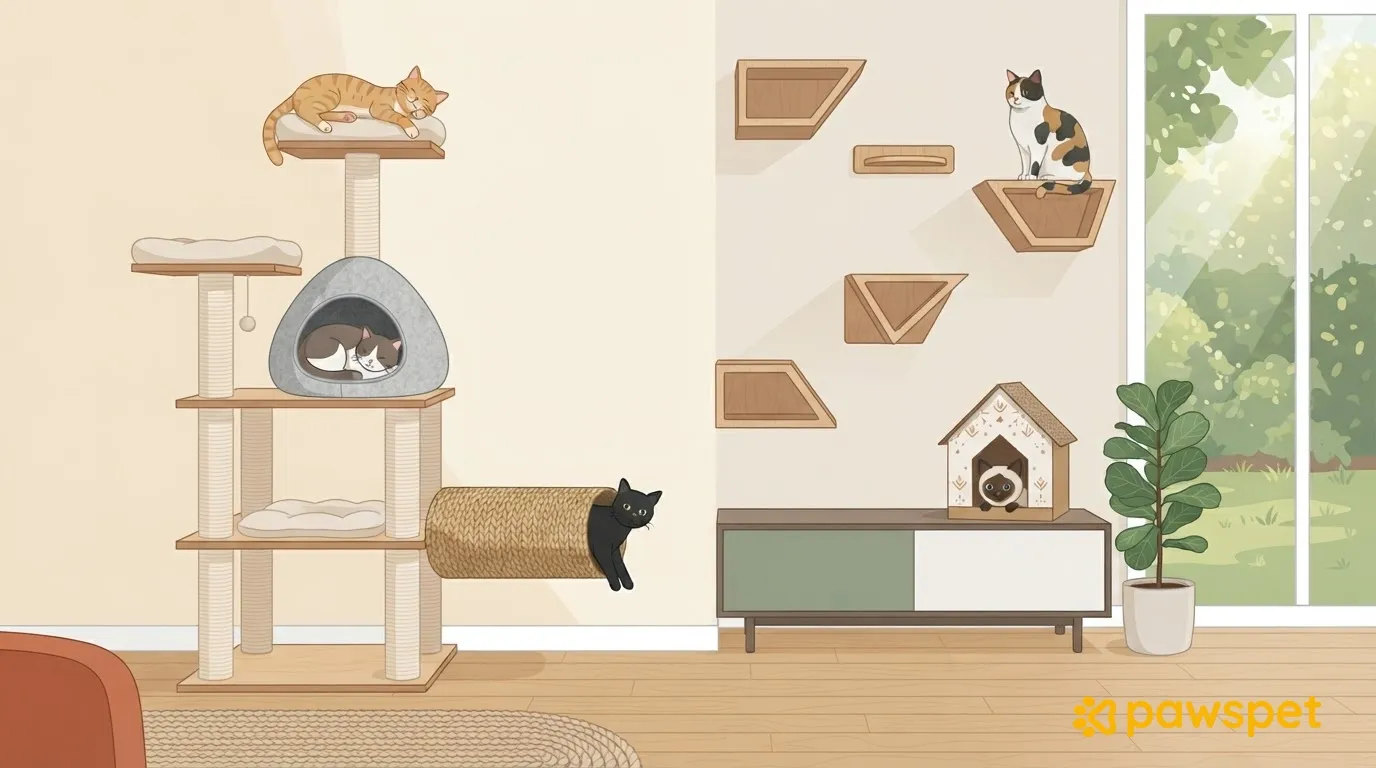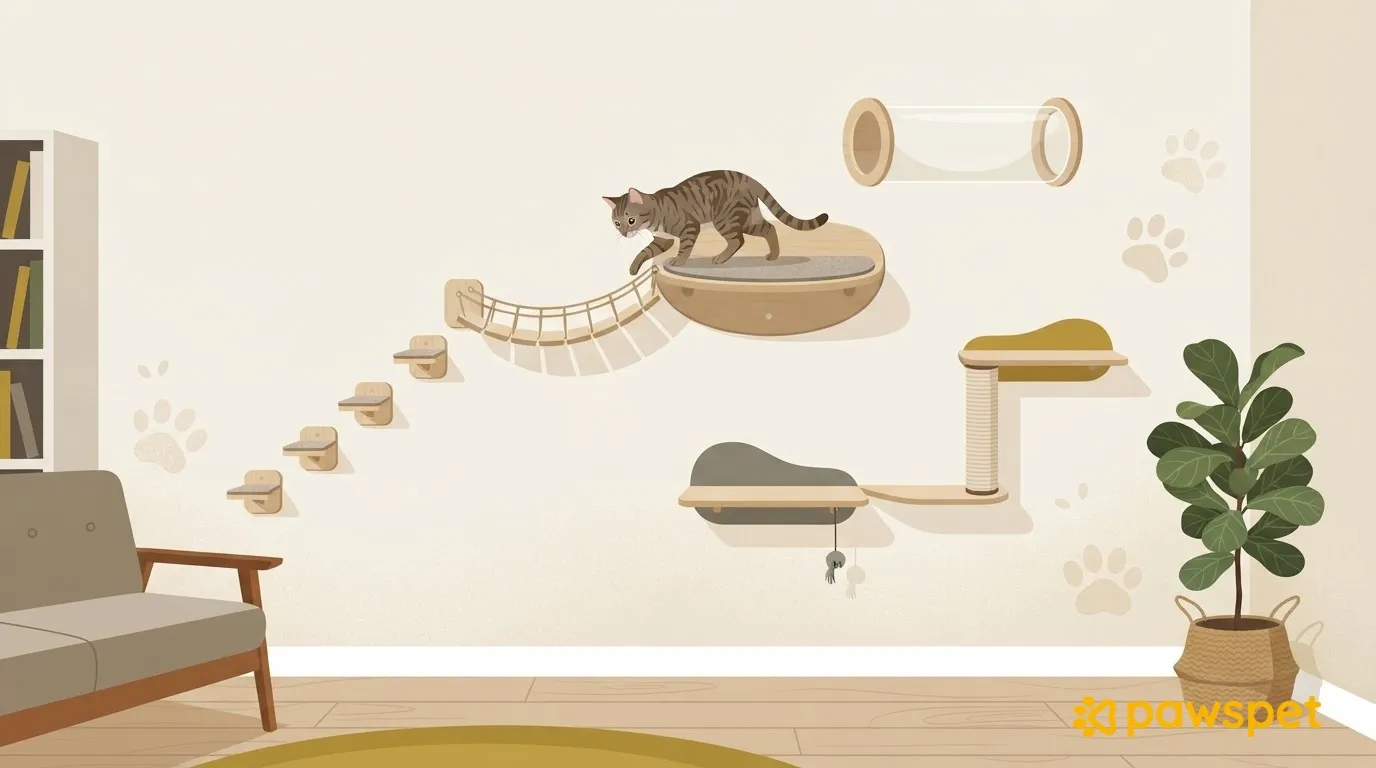
When floor space is limited, there’s room to expand upward. A route that starts low, with easy-to-reach resting spots, somewhere to rest, and at least two ways down is worth more than scattered shelves and accessories—provided it is securely fixed and kept away from the kitchen and heat sources. Here’s how to plan it before buying anything or drilling holes.
Why height gives your cat more space
Many cats seek out elevated spots: from there, they can watch the room, rest without being stepped on, and get away from anything that bothers them. In a small home, where there’s little room to move around on the floor, vertical space is a simple form of environmental enrichment. With multiple cats, high-up spots can also help them avoid crossing paths: each cat has its own place and a route to get there.
Plan the route before you buy
Take a sheet of paper, draw the room’s layout, and map out the vertical route for cats one section at a time.
- Notice where your cat already climbs. For a few days, note which pieces of furniture your cat uses and which jumps it makes without hesitation: these are the starting point for your plan.
- Choose a low starting point. A chair, pouf, or low cabinet: the first step should be easy.
- Add resting spots at distances similar to the ones your cat already manages. If in doubt, bring them closer together: one extra stopping point is better than a jump that’s too difficult.
- Plan a wide landing spot. A shelf where your cat can lie down fully, without its paws or tail hanging over the edge.
- Give every section another way down. If another cat or a bag blocks the only way back, your cat can get stuck up high: avoid dead ends.
- Keep the route away from the TV and fragile objects. One dash or a mistimed jump is enough to knock nearby items over.
An example in a one-bedroom apartment
This is an illustrative example, not a test. In a living room with the sofa against a wall:
- Climb: sofa → shelf on the same wall → top of the bookcase → wide shelf near the window, which should be closed or protected.
- First way down: the same route in reverse.
- Second way down: from the wide shelf to a low cabinet and then to the floor, without going through the bookcase.
Any furniture used as a resting spot must be stable: if it wobbles when you put a hand on it, it won’t work.
Fastenings and surfaces: don’t improvise
Securing shelves and platforms for cats takes more care than it might seem: cats don’t just sit on them—they jump and land with force.
- Wall and anchors. Solid masonry, hollow brick, and drywall require different anchors. If you don’t know what your wall is made of or where cables and pipes run, get advice before drilling.
- Load capacity. The manufacturer’s stated capacity should be well above your cat’s weight: a landing puts more strain on a shelf than a stationary cat. Follow the instructions for shelves, brackets, and anchors.
- Surface and edges. Make sure non-slip covering is firmly attached, with no lifted edges. Corners, edges, and screws must not stick out or have sharp parts.
- Checks. No fastening lasts forever: recheck screws and brackets (see below).
If you rent, check your lease or ask your landlord before drilling. No-drill alternatives include a stable cat tree, with any fall-prevention fastening recommended by the manufacturer, or making the top of existing furniture accessible with a step; if securing it requires drilling, the same rule applies.
Where to put elevated spots
- Near a window, only if it stays closed or is protected.
- With a view of where you spend time: your cat can keep you company without getting underfoot.
- Away from stovetops, radiators, heaters, and other heat sources: many cats are attracted to warmth, and a stovetop can stay hot even after use.
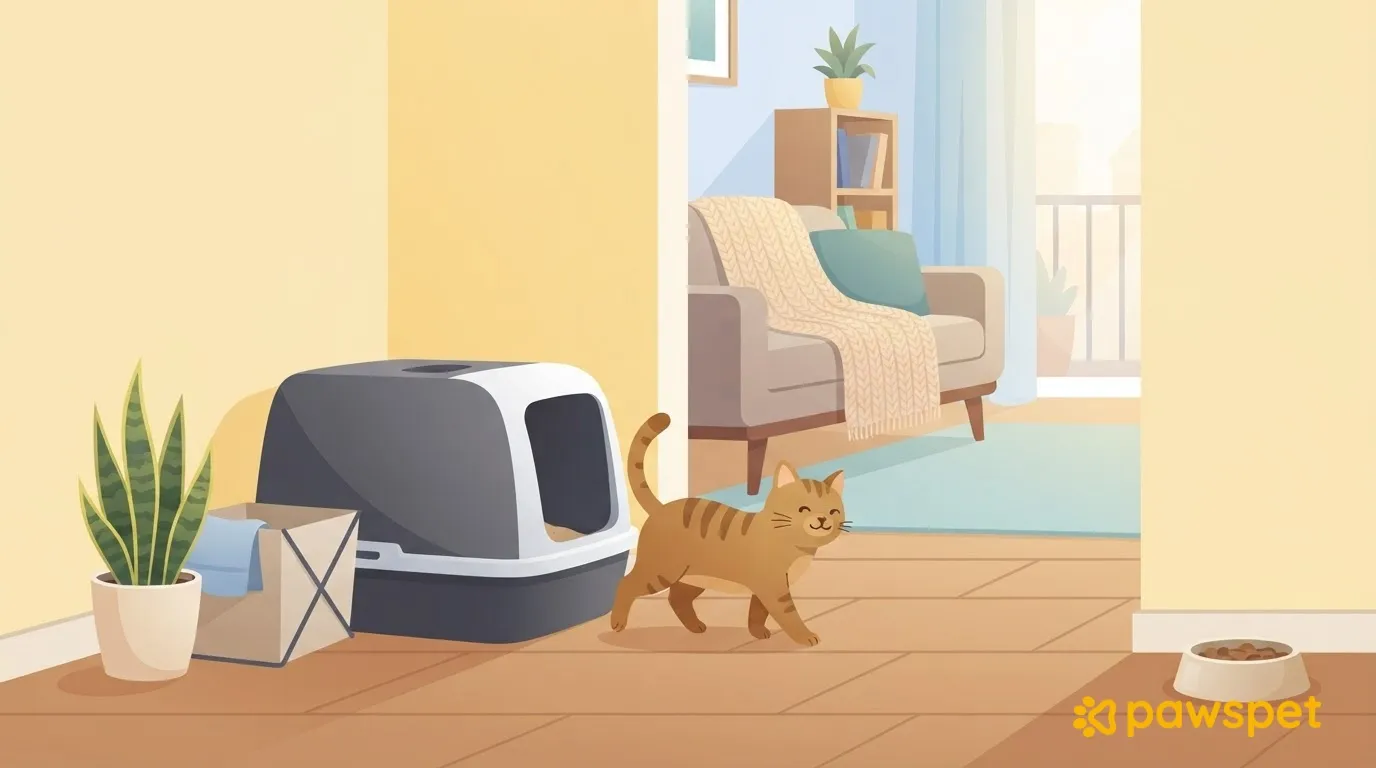
- Not above the litter box or food and water bowls: cats need peace and quiet when eating or using the litter box.
- A quiet sleeping spot, separate from the routes they pass along.
- If your cat jumps onto the stovetop, offer a nearby elevated alternative, but not above the kitchen.
Kittens, older cats, and cats that hesitate
Kittens. Start with low heights and supervision until they get used to the route.
Older or overweight cats. They need steps or ramps, closer resting spots, and wider shelves, so climbing and lying down take less effort.
Cats that hesitate. If a cat suddenly stops climbing where it used to, hesitates before jumping, or has trouble getting down, the issue isn’t the furniture: have a veterinarian examine your cat rather than waiting to see if it passes or trying to find an explanation yourself. During the visit, explain what has changed and when it started. If you don’t yet have a regular veterinarian, you can look for one nearby in the «Services» tab of the PawsPet app by choosing the «Veterinarian» service type.
The monthly check
Once a month, check the route from top to bottom. If anything seems off, keep your cat away from that section until it has been fixed.
- Screws and brackets: nothing wobbles, and no screws are coming loose.
- Non-slip surfaces: firmly attached, with no lifted edges.
- Shelves: remove any objects that have ended up there.
- Routes down: both ways are still clear.
- Cat tree: stable, with no wobbling.