It’s normal for a cat to hide from time to time: they do it to rest and feel safe. In a small home, offer at least one covered refuge on the floor and one up high, with two exits when possible, in a quiet spot that’s still close to everyday activity. Block off gaps you wouldn’t be able to get them out of, and don’t force them out of hiding.
In a small home, a hiding place serves as a quiet room
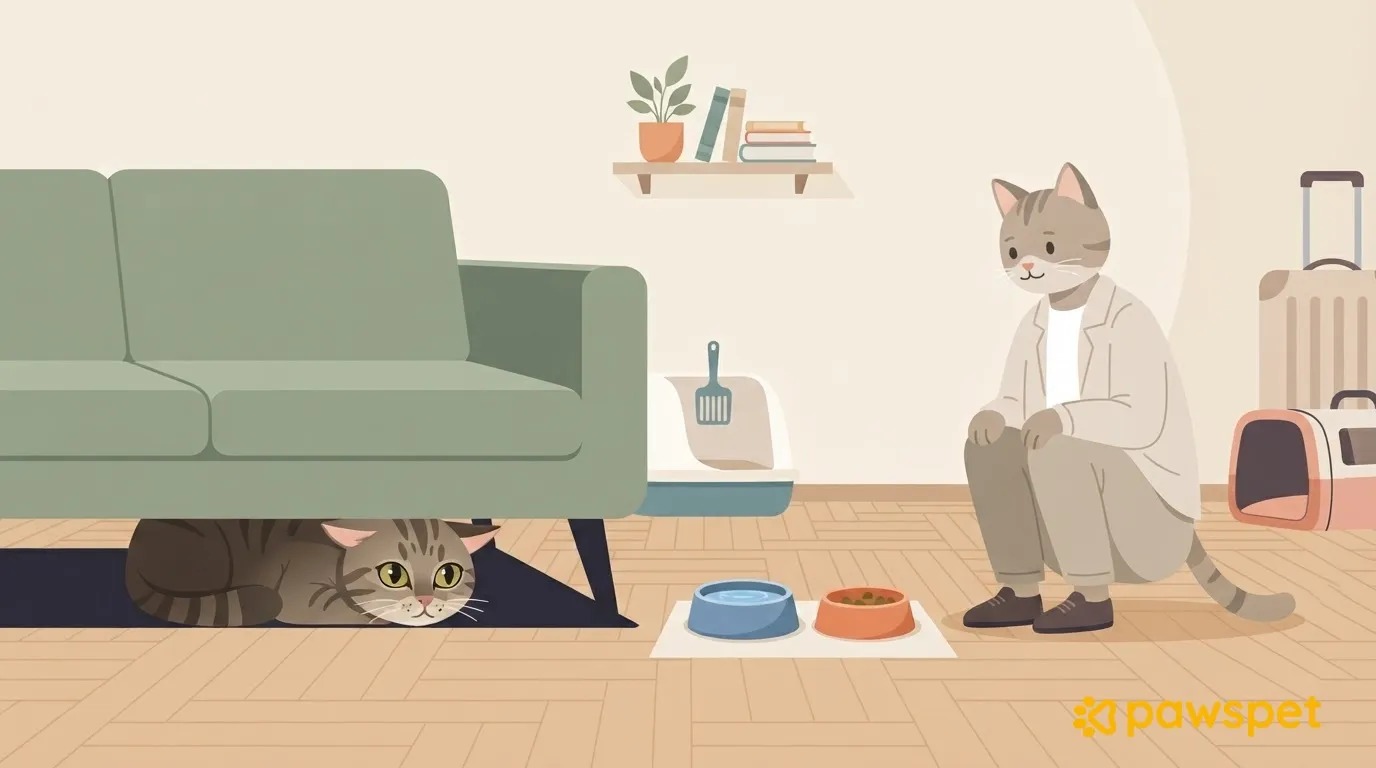
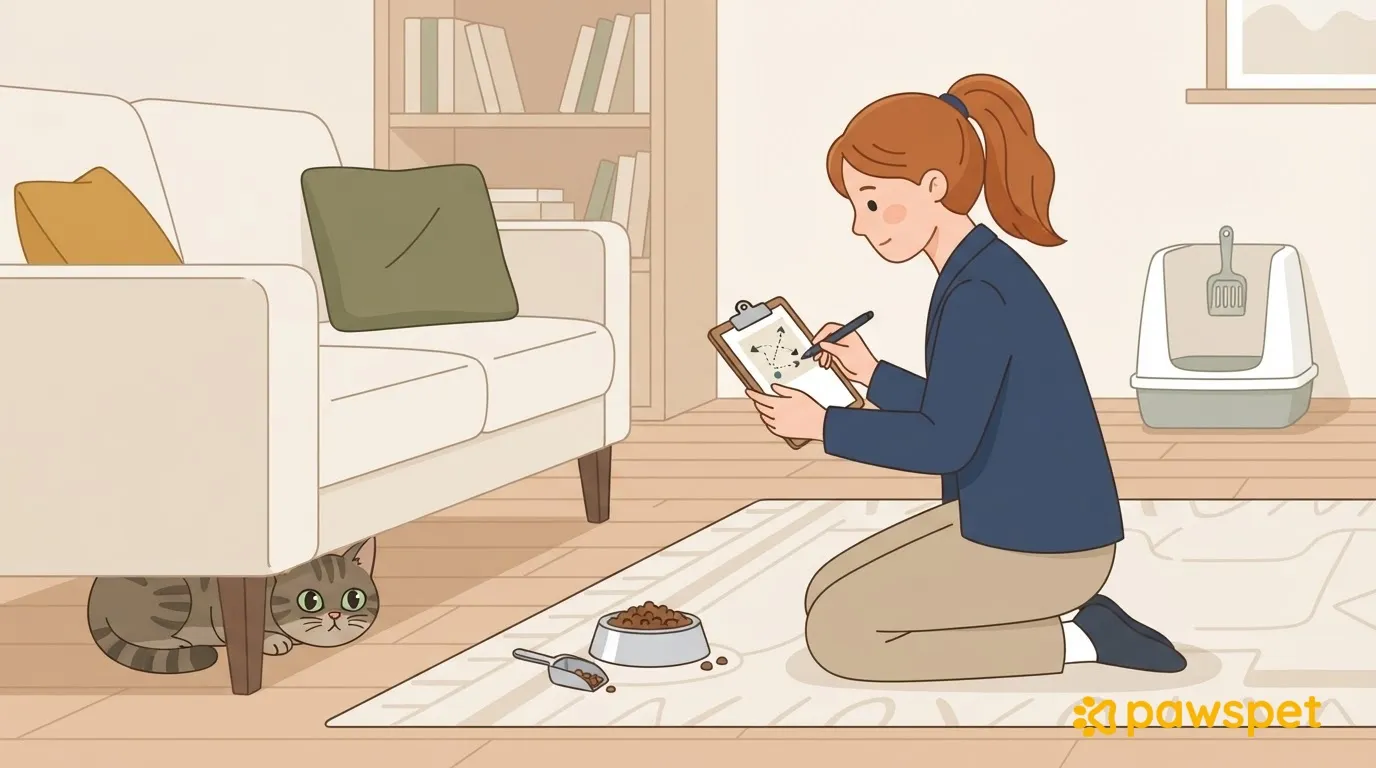
In a small home, and especially in a studio apartment, there often isn’t another room to retreat to: a hiding place fills that role. It’s where your cat can rest undisturbed, shelter from the vacuum cleaner and doorbell, wait for guests to leave, and get used to new things, especially if they’re shy or have just arrived. If they’ve settled into a safe refuge they chose themselves, don’t force them out: doing so could make them lose trust in that spot. Wait for them to come out on their own.
Three hiding places to set up
There’s no need to clutter your home: a few items are enough, as long as they’re stable, washable or easy to replace, and free of wires or cords. Leave the carrier open as a familiar refuge, too: it’ll feel familiar on the day of a vet visit.
On the floor and covered
A cardboard box with two openings or an igloo-style bed can help your cat feel sheltered; when possible, two exits help them avoid feeling trapped. Keep the space under a bed or raised piece of furniture accessible, as long as you can see and reach your cat, and cover one side with a washable blanket.
Up high
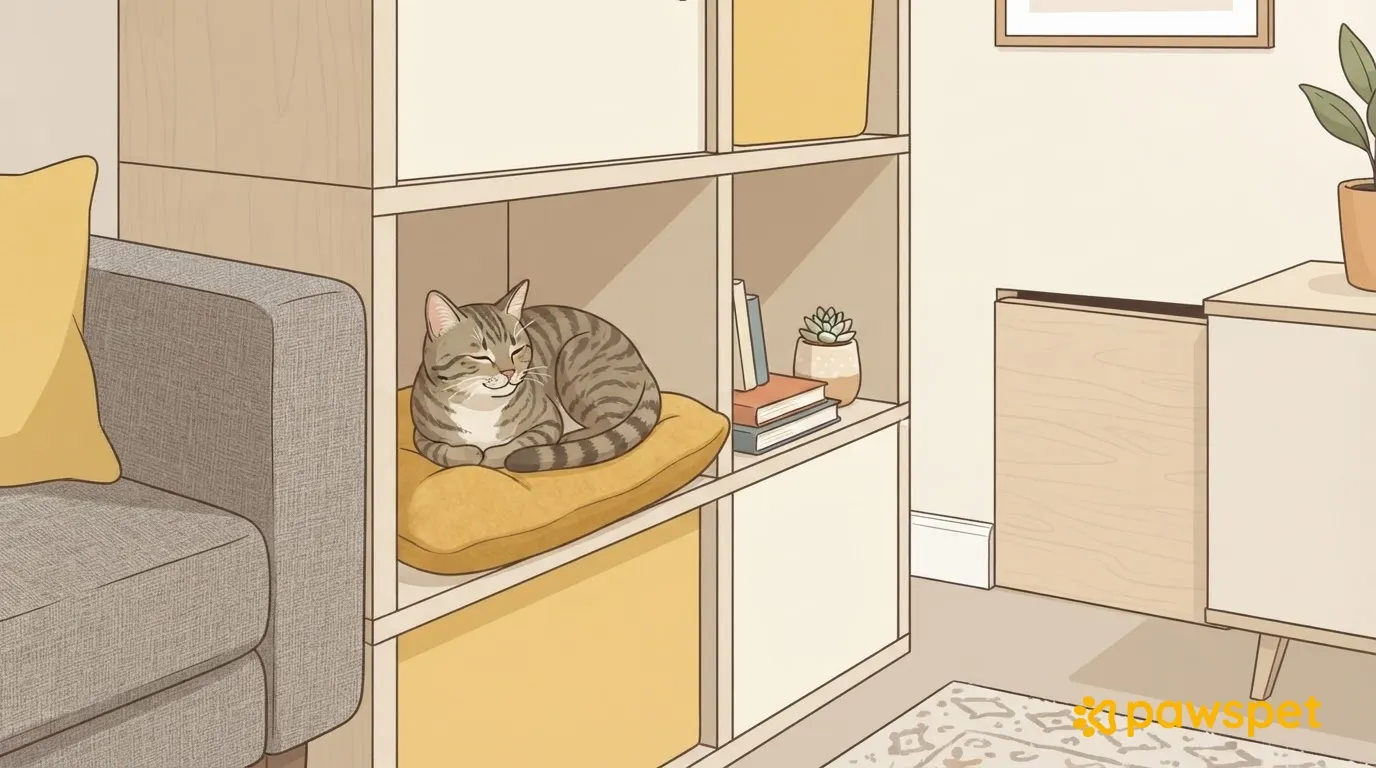
An existing shelf or the top of a wardrobe can hold a box or a bed: from up there, your cat can watch the room while staying out of the way. Choose a spot they can reach without difficult jumps, with a stable base and no gap behind it where they could fall.
Near you
Some cats want to be covered but not isolated. In a covered bed or a box in the living area, next to the sofa and with the opening facing the room, they can keep an eye on everyday life without being in the middle of it.
Where to put them when space is limited
Keep refuges away from the front door and noisy appliances, out of busy walkways, and not next to the litter box. If your home has two rooms, set up a refuge in each one. Food, water, and the litter box should be reachable without crossing the busiest part of the home. If you have two cats, add one more refuge so they don’t have to compete for one. Never place a refuge next to radiators or heaters.
Spaces to block off or check
If your cat can squeeze into a space they wouldn’t be able to get out of, or something could close on them, that space needs to be blocked off or checked. Here are household dangers for cats to look out for:
- Block off gaps behind and beneath the refrigerator, oven, and dishwasher without covering ventilation grilles, and check inside the oven and dishwasher before turning them on.
- Block gaps in the kitchen kickboard and in spaces beneath furniture that you wouldn’t be able to reach.
- Keep washing machine and dryer doors closed, and check the drums before every cycle.
- Check drawers and cupboards before closing them.
- Check that your cat isn’t inside or underneath before operating the mechanism on sofa beds and recliners.
- Store bags and purses with handles in a cupboard: your cat could climb inside or get caught in them.
- Check boxes and recycling bags before folding them, closing them, or taking them outside.
- Close panels and block gaps under the bathtub or sink.
If your cat gets stuck or seems injured, don’t pull them out by force; call your vet immediately.
Guests, home repairs, and cat sitters
Ask guests not to look for or pick up your cat: if they want to, they’ll come out on their own. When guests are over, your cat should be able to reach food, water, and the litter box without walking through a crowd. During noisy repairs or cleaning, keep a refuge available away from the noise.
Tell the cat sitter or a family member where your cat usually hides, that they shouldn’t force them out, and that the signs to check are an emptied food bowl and a used litter box. If their caregiver already has a PawsPet account, you can add them as a collaborator from the cat’s profile (menu ⋮ » «Collaborators») and give them «Edit» permission for Activities, so they can record meals and litter box cleaning even when your cat doesn’t come out.
When hiding becomes a warning sign
Hiding is normal, but take it seriously if your cat:
- suddenly spends much more time hiding than usual;
- chooses unusual hiding places;
- eats or drinks less;
- uses the litter box differently than usual;
- doesn’t come out even to eat.
Contact your vet before changing your cat’s environment: a change in behavior may be caused by a health problem, not just fear. If there are no medical causes and the fear persists, ask your vet to recommend a feline behavior professional.
This week, set up one refuge on the floor and one up high, and check the spaces that need to be blocked off.