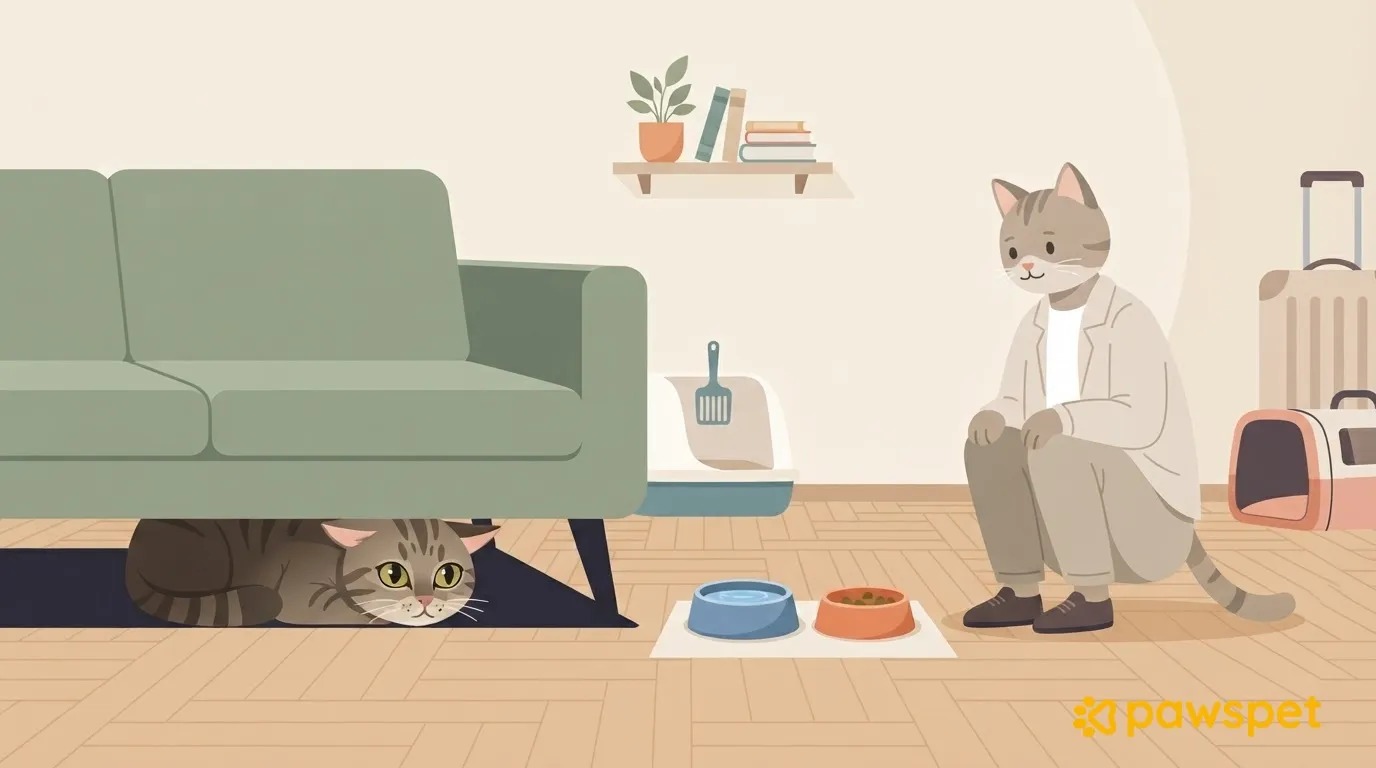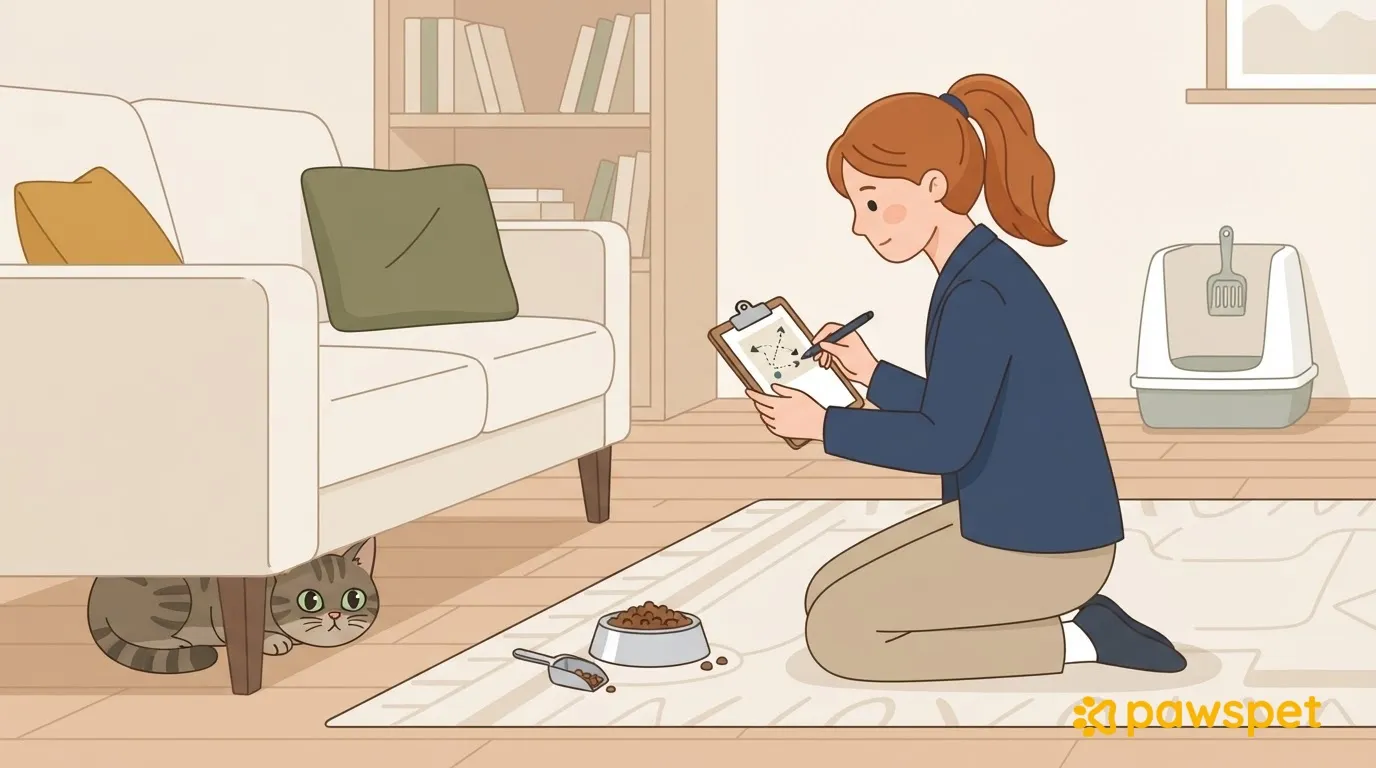
A shy cat may stay hidden when a pet sitter they barely know comes over, and getting a message saying “I didn't see the cat” while you're away doesn't tell you on its own how your cat is doing. The goal isn't to see your cat at every visit, but to find signs you can compare each time: food eaten, water level lowered, and litter box used. You'll need measured portions, a clean litter box at every visit, a map of hiding spots, and a clear rule for what to do when signs are missing; leave the map and rule on a sheet next to the bowls. These signs are useful clues, not a guarantee of your cat's health.
Why you shouldn't try to coax your cat out
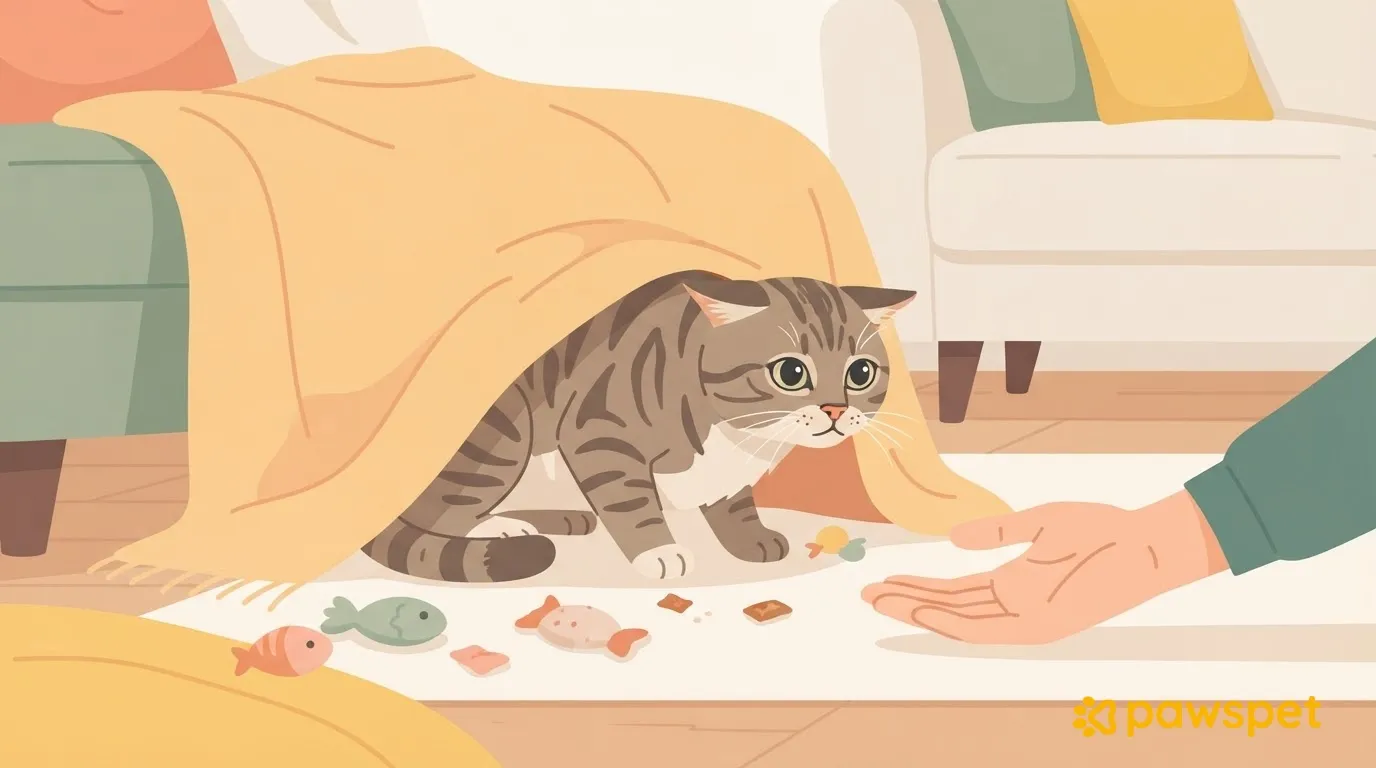
Pulling a shy cat out from under the bed increases their stress and the risk of scratches, and with a door open, the risk of escape too. Ask the pet sitter to make visits predictable: similar times, a calm voice, slow movements, a few minutes sitting quietly, and no chasing.
Before you leave, do a trial visit while you're at home: the pet sitter goes through the full routine, from portions to the litter box, and you clarify anything that's unclear.
Three signs to check at every visit
Food
Prepare portions in advance for each visit in containers labeled with the day and time, or leave a measuring scoop with the level marked. The pet sitter notes whether the food is gone, half-eaten, or untouched. If you use an automatic feeder, still check that food was dispensed and eaten.
Water
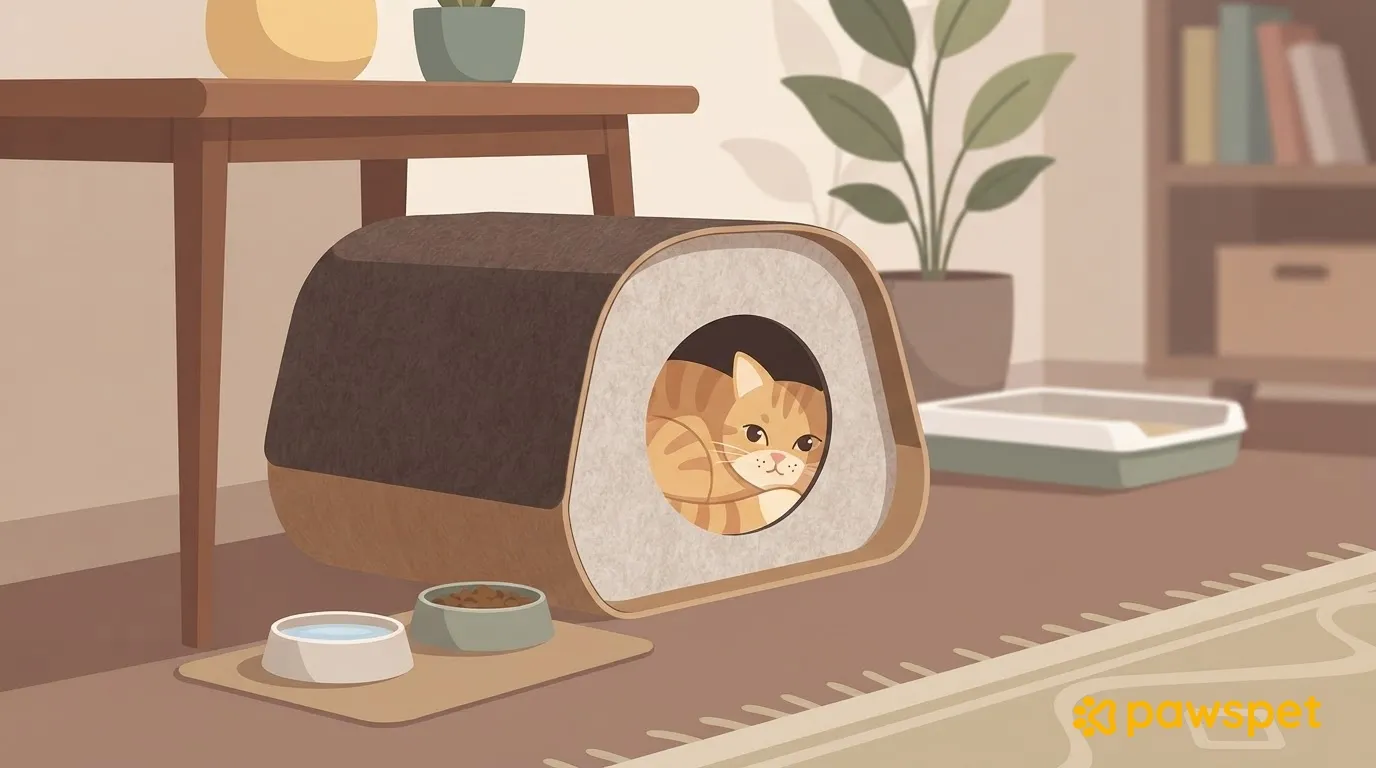
Put out several bowls in different places. At every visit, the pet sitter checks and notes the water level, then changes the water.
Litter box
The litter box should be fully cleaned at every visit, leaving no waste behind, so each visit shows only what's new. The pet sitter notes whether there was pee and whether there were stools.
The log for every visit
In the notes, the pet sitter can record other clues: toys or objects moved, fur on a blanket. The “Cat seen” column is an extra data point, not the main measure. Here's a log to print, with one row per visit:
| Date and time | Food | Water | Pee | Poop | Cat seen | Notes |
|---|---|---|---|---|---|---|
| E.g. 12/07, 18:00 | Gone | Lower | Yes | Yes | No | Blanket with fur |
A paper log, however, stays at home while you're away. You can ask the pet sitter to send you the same details after every visit or, if they use the PawsPet app, share your cat's profile with them: from the ⋮ menu at the top right, choose “Collaborators” and “Add collaborator,” search for them by name or email (they must already have an account), and give them editing permission for Activities.
That way, they can log each visit as an activity, for example with the type “Pet sitting and walking,” adding the three signs in the note, and you can find them all in your cat's “Activities” profile. During the trial visit, check this too: the pet sitter records an entry and you make sure it appears for you as well.
The map of hiding spots and safety checks
On the sheet, list the hiding spots you know about: under the bed, inside the wardrobe, behind the sofa, between the boxes. To look without disturbing your cat, the pet sitter uses a flashlight, keeps their distance, and doesn't put their hands inside.
Before you leave, block off dangerous places or places your cat wouldn't be able to get out of: appliances with doors, drawers, rooms with cleaning products. Leave doors and windows as you found them.
When entering and leaving, the pet sitter closes the front door right away and, if they haven't seen the cat, checks that the cat isn't near the entrance before leaving.
If signs are missing: the plan to agree on
Agree with the pet sitter on what to do in these three situations and write it on the sheet, along with your veterinarian's number.
- Signs present, cat not seen: make a note and carry on. If possible, take a photo of the cat in their hiding spot without touching them. If you booked the pet sitter through PawsPet, a chat with them is created with the order and supports photos: you can ask them to send the picture there.
- No signs since the previous visit (food untouched, litter box unused): search all hiding spots, check doors and windows to rule out an escape, and contact you right away.
- The cat is behaving very differently than usual, or goes into the litter box repeatedly without producing anything: call the veterinarian immediately, then call you. These are signs that shouldn't be left until later.
Before you leave, ask your veterinarian how long a missed meal can go on for your cat before they need to be seen, and write the answer on the sheet. Don't look for a number that applies to every cat: your veterinarian knows your cat best.
Take the next step today: divide the food into labeled portions for the entire time you're away and prepare a map of hiding spots to leave next to the bowls, along with the log and plan.