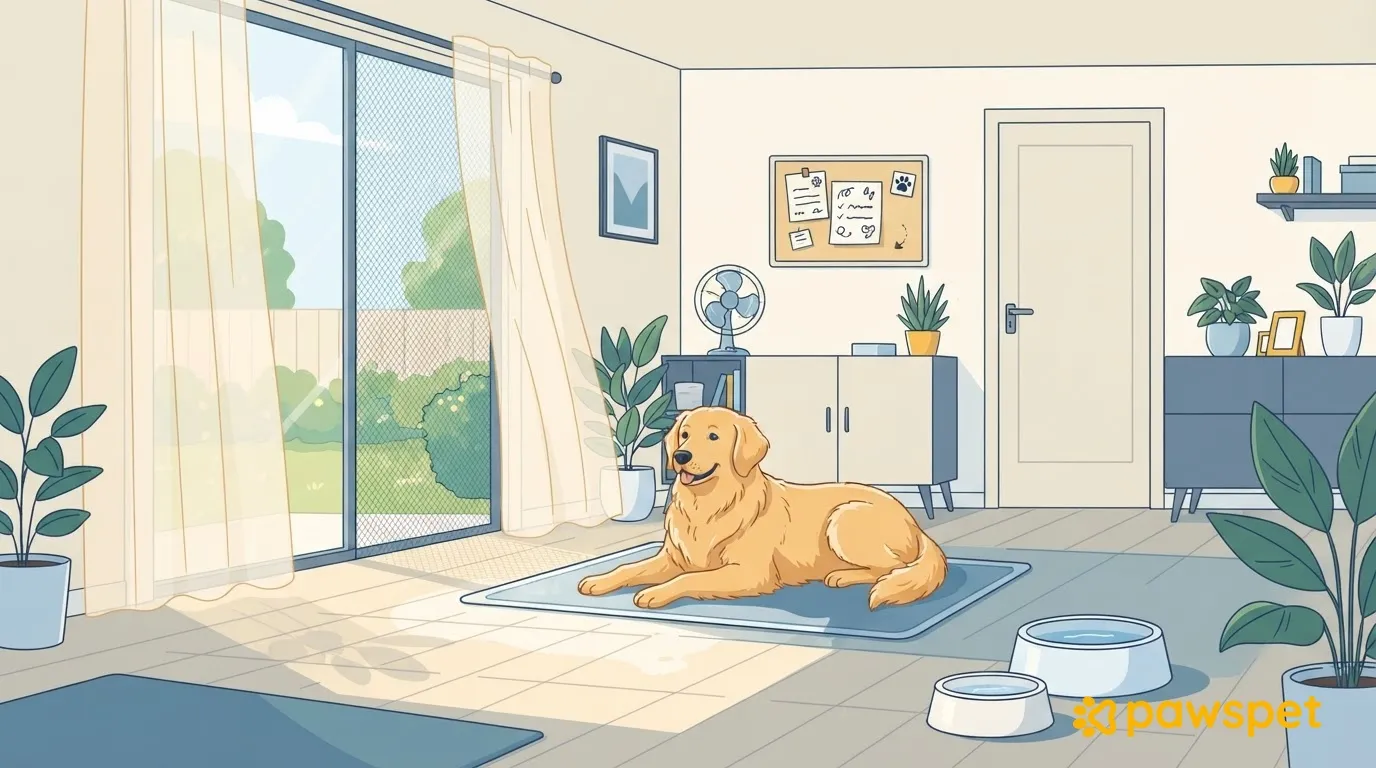
Before you leave, prepare your home so it stays as cool and safe as possible when no one is there: shade on sun-exposed sides, access to the coolest rooms, multiple water stations, and windows left open only when it is safe. Give the pet sitter a checklist for every visit and one rule: if they find your pet in distress, call the veterinarian immediately.
Before you leave: check your home during the hottest part of the day
On a hot day before your departure, walk through your home during the hottest hours. Note which rooms get direct sunlight and which stay cooler. If you have a thermometer, use it only to compare the rooms with one another.
Then prepare the spaces:
- Lower the shutters or close the curtains on sun-exposed sides.
- Keep the coolest rooms accessible and indicate which interior doors should stay open so your pet can move around.
- Keep pets out of sunrooms, attics, and other areas that get very hot.
If you leave an air conditioner or fan running, write down how it works and what to do if it stops. Don't rely entirely on an appliance: your plan should also account for hours without power.
Water: multiple stations and a check at every visit
Set up at least two water stations in different rooms, using sturdy bowls that are hard to tip over. If you use a fountain, leave a regular bowl too: water must still be available if the fountain stops working.
Add these checks to the handover notes for every visit:
- Change the water and check all stations, not just the one closest to the entrance.
- Note whether the water level has dropped.
- Report any tipped-over bowls or water found on the floor.
Don't change your pet's food just before you leave: stick with familiar routines and instructions for the pet sitter, without adding anything new to manage while you're away.
Windows, balconies, and doors: let air circulate safely
Leaving a window open for ventilation may seem like the simplest option, but it can put cats at risk of falling or escaping. Tilt-and-turn windows are no exception: don't leave one accessible to your cat.
For a dog, a sunny balcony or yard without shade and water is not a place to wait for the pet sitter.
Set a clear rule: windows and balcony access must be left exactly as you left them. The pet sitter should open a window for ventilation only if you have agreed on it and the window is secured. When coming in or leaving, close the door right away; don't leave it ajar while handling bags or keys.
Visits and dog walks during cooler hours
Schedule dog walks for early morning and evening, take water along, and keep walks shorter on the hottest days. Never leave your dog in a parked car.
To decide whether you need more visits than usual, consider:
- How warm the home gets between visits.
- How much your pet drinks.
- Their age and health, following your veterinarian's advice.
- Whether or not there is a cooling system.
- Your dog's need for walks.
For cats, visits are mainly for checking water, the litter box, and room temperatures. Even if the pet sitter stays overnight, consider separately how daytime hours will be covered.
If you need more visits than your pet sitter can provide, in the «Services» tab of the PawsPet owner app, you can search for «Pet sitting», set «Service delivery mode» to «In-home», and check the service's «Availability» section before booking. Availability depends on professionals in your area: searching does not guarantee that you will find all the visits you need.
If the pet sitter finds your pet in distress or the power goes out
Very labored breathing, weakness, or behavior that is very different from usual are examples of signs not to ignore. Leave these instructions: take your pet to the coolest room and call the veterinarian immediately, who will advise you what to do; then let you know. Keep veterinary contact details on the handover sheet.
For a power outage, agree in advance on:
- Who to call as a backup keyholder, and include their contact details.
- How to check that the air conditioner and fountain are working.
- Who can make additional visits if the appliances stop working.
If your dog is afraid of summer thunderstorms, indicate where they take shelter and ask the pet sitter to note how they react.
Before you leave, walk through your home during the hottest part of the day with the handover sheet in hand. Add the summer checks to repeat at every visit and review them with the pet sitter, clarifying what to do if something doesn't work.