To prevent multiple cats from fighting over resting spots, provide more spots than cats, in different rooms and at different heights, with more than one way out. Keep these spots away from bottlenecks, food and water bowls, and litter boxes, and feed and play with each cat at regular times: this gives everyone more options and helps them know what to expect during the day. If you see injuries or repeated fights, contact your veterinarian right away.
How to recognize a dispute over resting spots
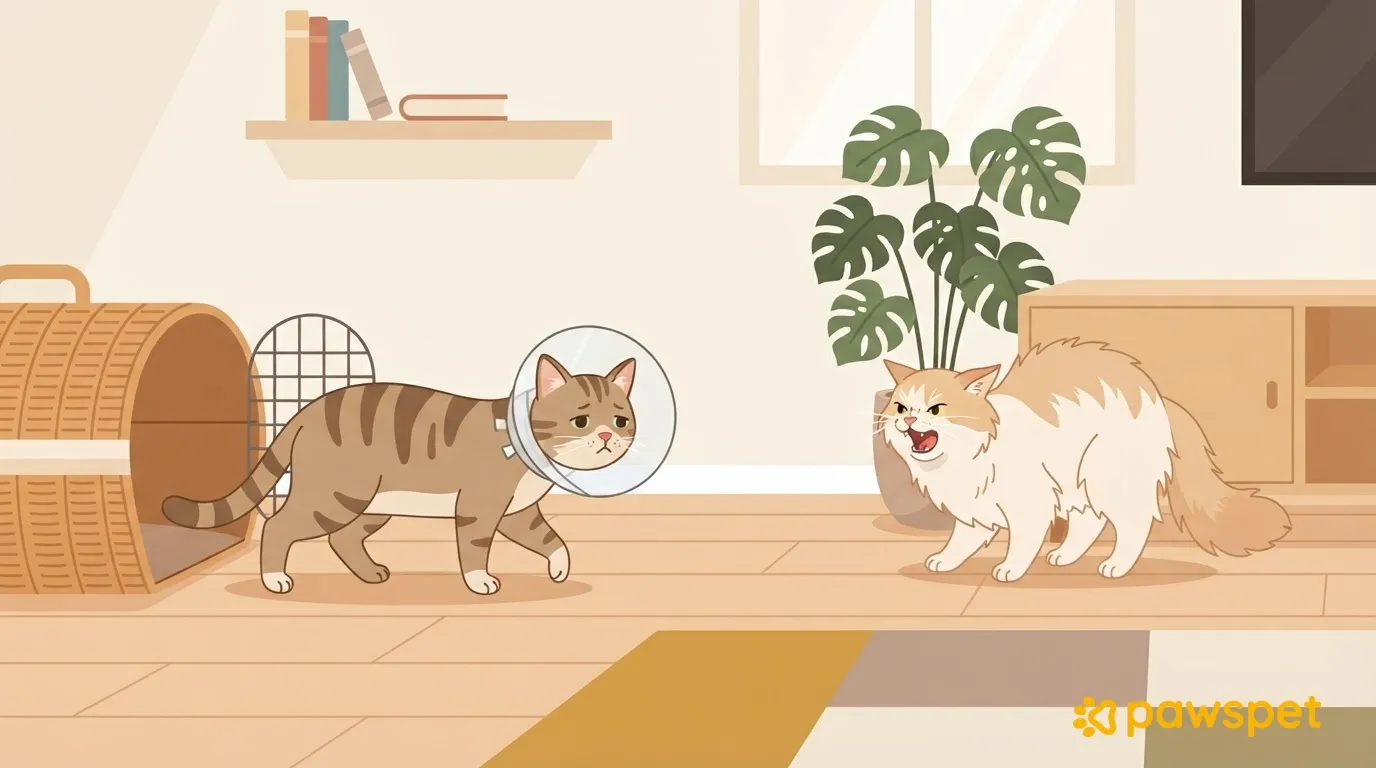
There’s no need to look for someone to blame: calmly observe what happens and where, especially when one cat approaches a spot already occupied by another. Here are the signs to look for:
- the same cat always takes the most desirable spot (the sofa, the top of the scratching post, or the bed), and the other never uses it;
- when one cat arrives, the other leaves;
- one cat stares fixedly at the other;
- one cat stands still in a hallway or doorway, and the other cannot get past;
- hissing or swatting near resting spots;
- one cat stays in almost the same room all the time or hides more than usual;
- changes in appetite or litter box use.
These signs are clues, not a diagnosis: the same behavior can have several explanations, including health-related ones. Carefully distinguish play from tension: during play, roles switch and there are pauses; tension involves fleeing, blocking, and hissing. If in doubt, record a short episode to show your veterinarian or a behavior professional.
More spots than cats, on different levels and with more than one way out
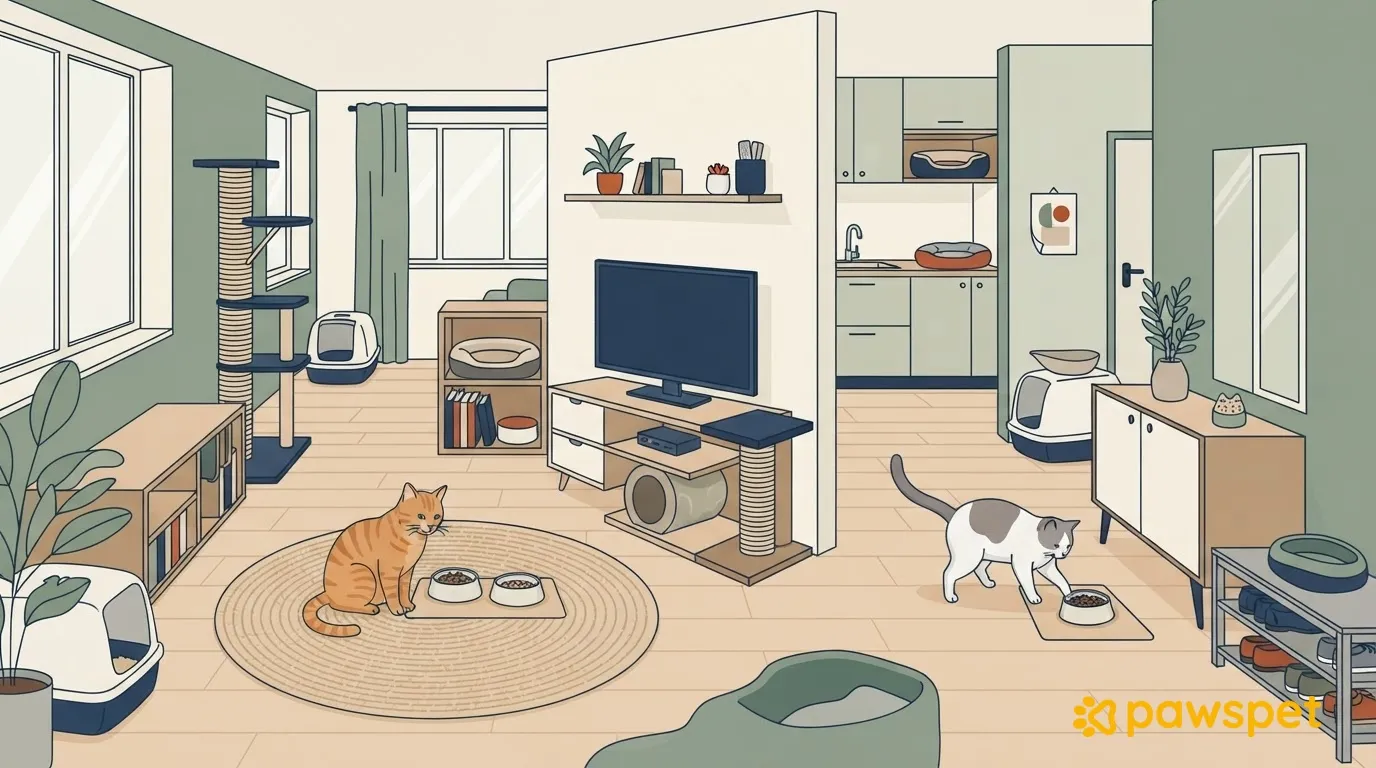
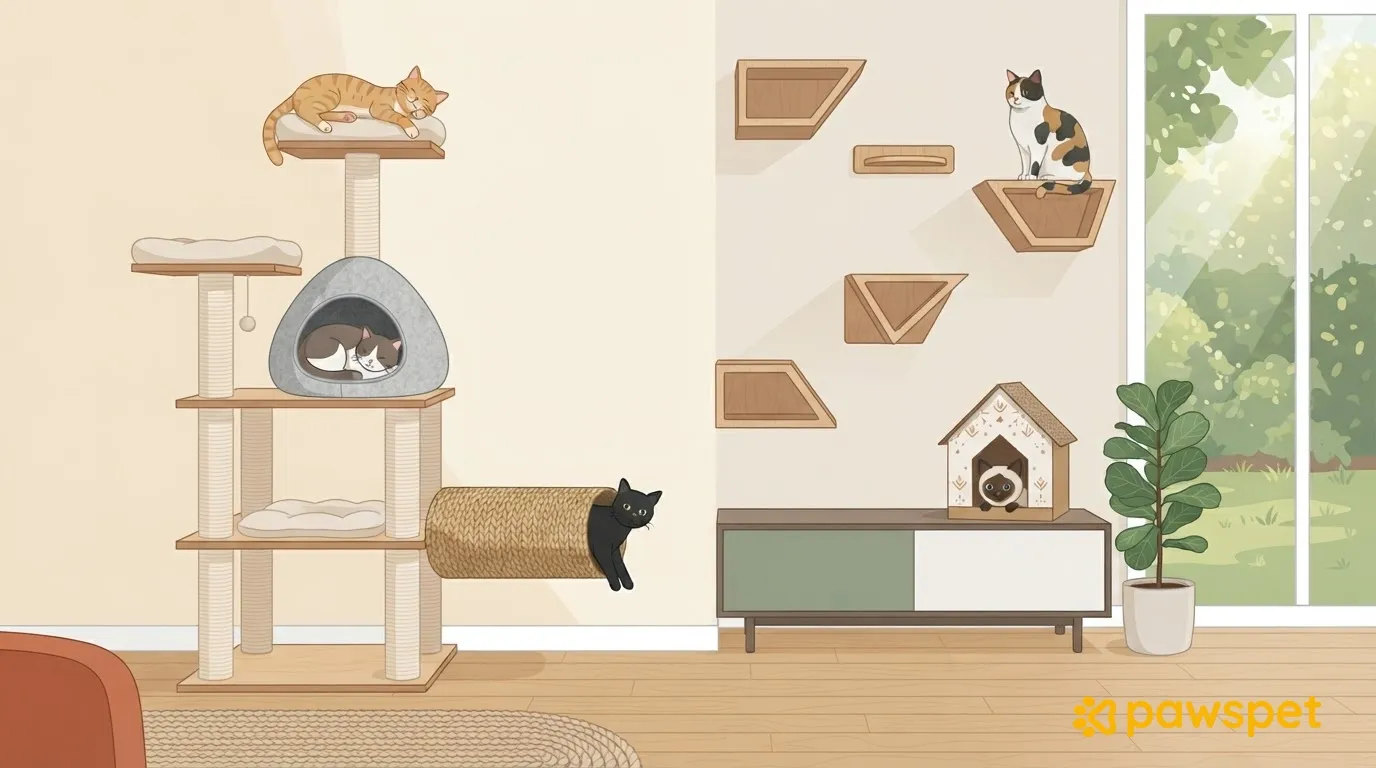
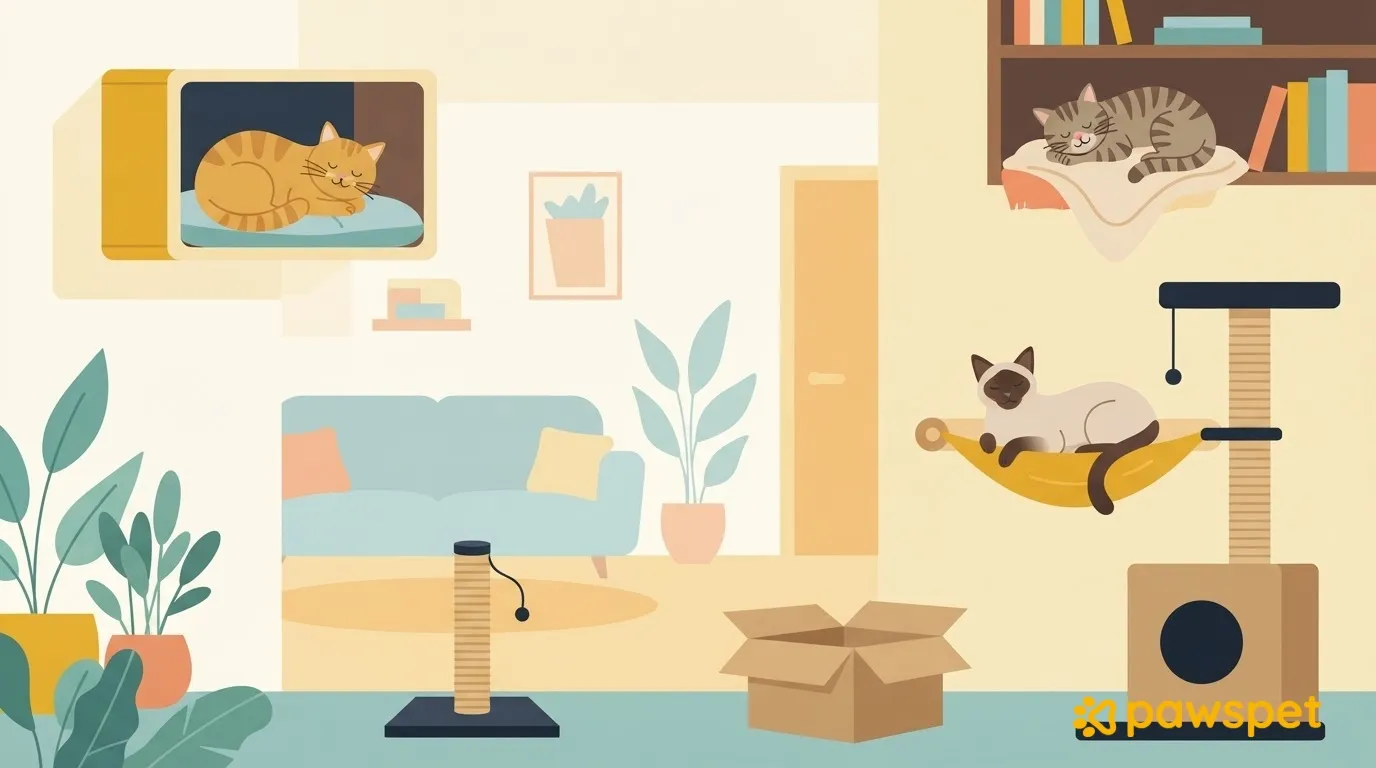
Start by providing more resting spots than cats, spread across different rooms so no spot becomes the only option. Make use of vertical space, which increases the number of available spots without taking up floor space: shelves, ledges, multi-level cat trees, and the tops of furniture, as long as access is safe and stable.
For each elevated spot, provide at least two ways to get up and down, so a cat cannot be left without an exit because another cat is guarding the only access point. Choose hideaways with multiple openings or open sides, and avoid dead ends where a cat may feel trapped.
Finally, duplicate the most contested spot: if it’s the sofa, provide a similar spot in height and comfort in another room or area of the home.
Away from bottlenecks, food and water bowls, and litter boxes
Follow your cats’ usual routes and identify bottlenecks—that is, places they have to pass through to get somewhere else. Check these spots:
- the hallway;
- doorways between rooms;
- the entrance to the kitchen or litter box room;
- the only place to climb onto a piece of furniture.
Don’t place resting spots in these areas: a cat stopping there may block the other, and the cat that needs to pass will end up right beside the resting cat. In a small apartment, you can’t eliminate bottlenecks, so it’s best to keep resting spots in quieter corners, away from these areas.
Also distribute water, food, and litter boxes around the home so no cat has to pass through another cat’s resting spot to reach them.
A predictable daily routine for each cat
Serve meals in separate places at the same times, so each cat knows where and when they’ll eat. Plan individual play sessions so no one has to compete for play, and share your attention by spending some time with each cat.
Change one thing at a time: if you move or add a spot, observe what happens before changing anything else. Never force a cat out of a spot or make the cats share it: each cat should be able to choose where to stay.
A one-week journal to understand what’s happening
For one week, note every episode of tension, even minor ones:
- date and time;
- room or spot;
- cats involved;
- what happened just beforehand;
- how it ended.
After a few days, you’ll see which spots seem contested, when it happens, and which cats are involved, and you’ll have a detailed account to bring to your appointment or consultation. The journal doesn’t resolve tension or replace professional advice: if injuries or fights occur, don’t wait until the end of the week—call your veterinarian right away.
To keep episodes organized for a professional to review, you can record them in the PawsPet app from the «Activity» tab using the yellow «+» button: choose «Behavior monitoring» (category «General»), select the cats involved under «Pets», add the date, time, and «Notes», and save; to review them, use the «Pet» filter or the «List» view.
When to involve a veterinarian and behaviorist
If there are injuries, repeated fights, refusal to eat or use the litter box, or if a cat hides for most of the day, contact your veterinarian first: a health problem or pain can also change behavior.
In the event of serious fights, keep the cats in separate rooms and ask your veterinarian for guidance before bringing them back together.
If tension continues after the veterinary visit, consult a feline behavior professional: the journal and any videos you’ve recorded will be useful to them.
The first change to make
Start with just one thing: identify the most contested spot, create a similar alternative in another room or area, and observe for a week who uses it and when. Don’t move anyone or force anything; just watch what changes. If the tension doesn’t decrease, take your notes to the veterinarian.