You can reduce the strain by preparing what you need on a work surface, replacing heavy loads with small portions, and doing short care tasks while seated. Clear floors and spreading tasks across the week also help, with others handling the heavier jobs. Pets love routine: make changes to their space and routine gradually.
A week of observation: which tasks take the most effort
For a few days, note each task and what it involves: bending, lifting, standing for a long time, or using your fingers precisely. Simple notes like these are enough:
- Filling the bowls: several bends.
- Carrying food and litter: heavy bags.
- Cleaning the litter box: time spent in the same position.
- Brushing: standing and holding the brush.
- Trimming nails: precision and keeping the pet calm.
If a family member helps you, go through a typical day together: they may notice repeated carrying and trips that you now take for granted.
Next to each item, write “I can simplify this” or “I need help.” If a movement causes pain, ask your doctor or a physical therapist what adjustments are right for you.
Meals and water without bending too much
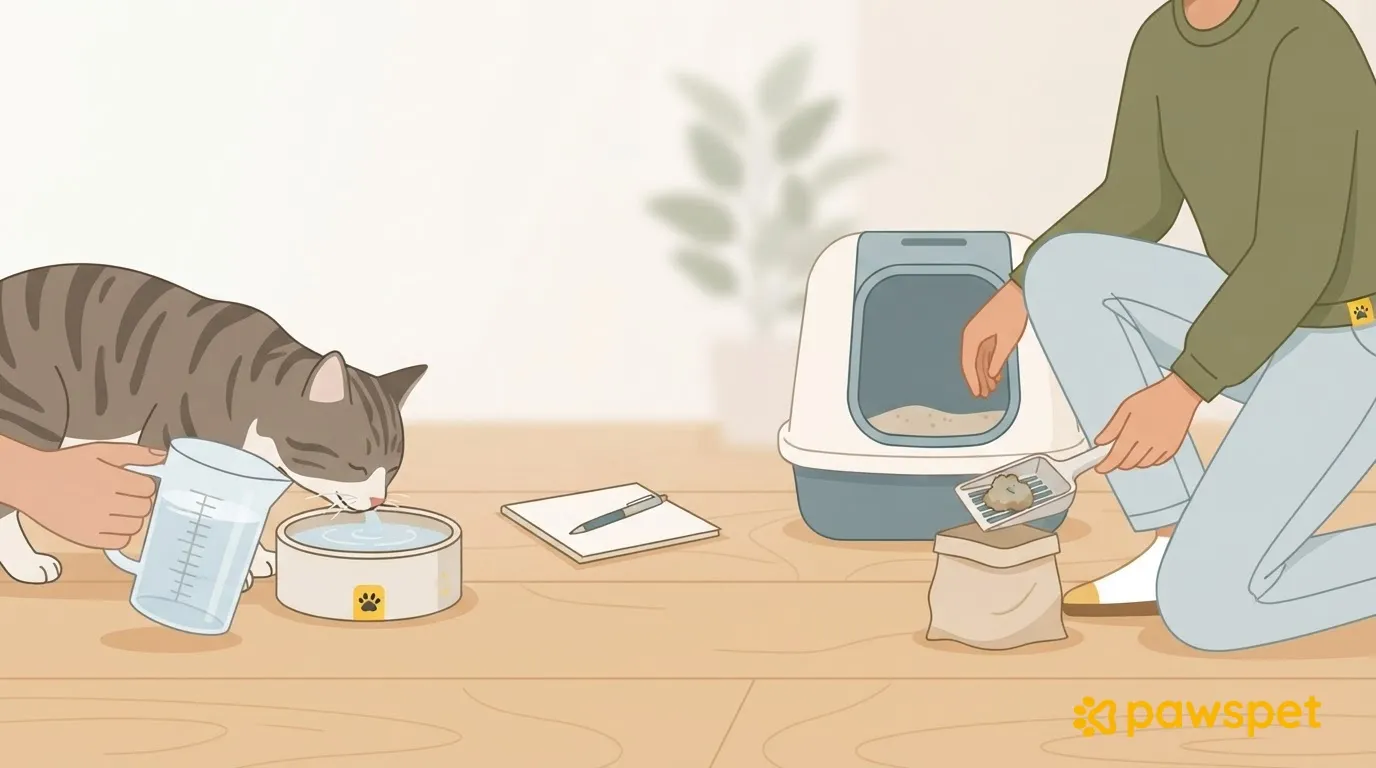
Prepare portions on a work surface, then take each bowl to its place in one movement. For water, use a small, lightweight container and avoid carrying it when it is too full.
Keep only a few days’ supply within reach in a small container, following the package’s storage instructions. For heavy bags, ask a family member for help or choose smaller packages.
Choose a fixed spot away from walkways, and gradually teach your pet to wait there while you bring the bowl, so they don’t weave around your legs. Do not change the food or the amount.
Litter box: no lifting full bags
Don’t move the litter box suddenly: your cat is used to that spot. If you need to change its location, do so little by little.
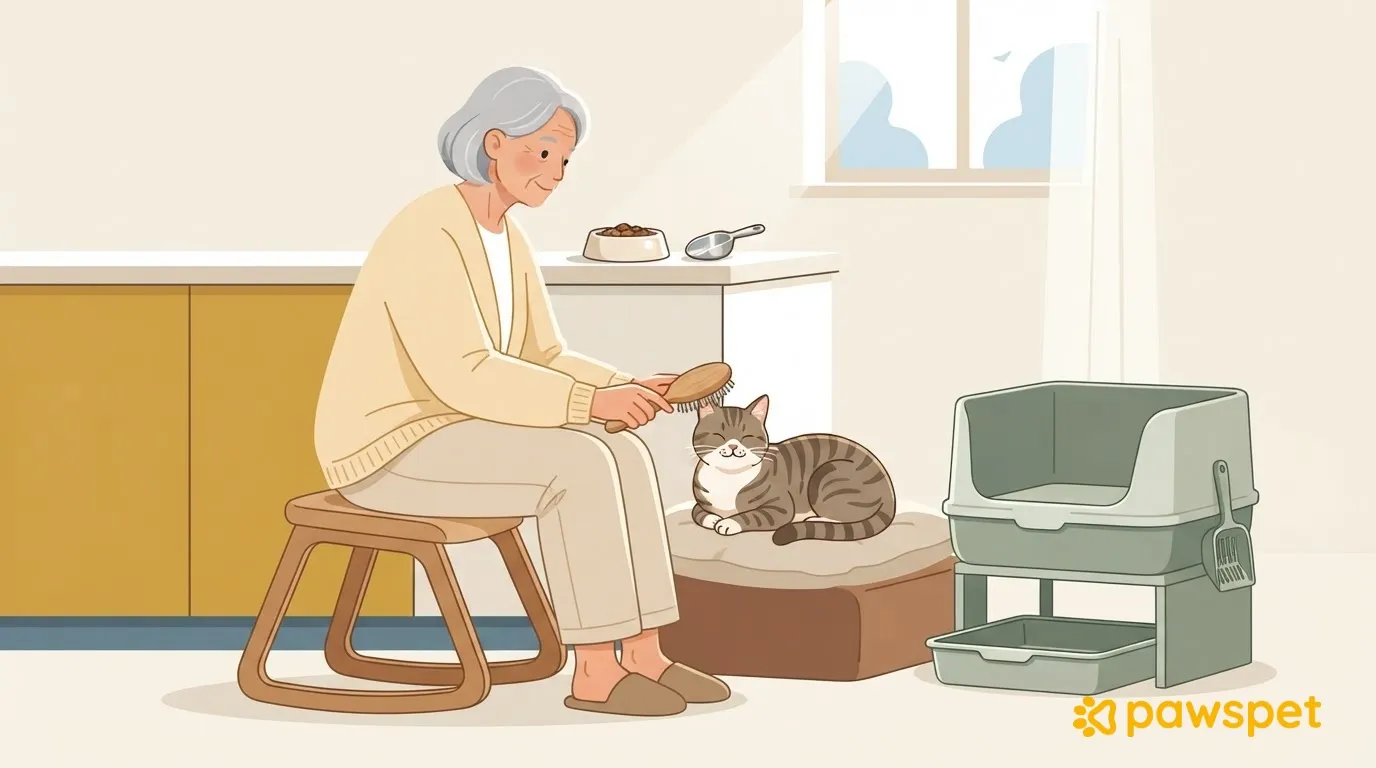
- Consider a long-handled scoop so you can work almost standing, or a stable seat next to the litter box: ask your physical therapist which position is safest for you.
- Keep bags and the waste bin within reach.
- Top up the litter with a small container instead of lifting the bag.
- Ask someone helping you to do a full litter change when the type of litter requires it.
Don’t clean less often to make the task easier: change how it’s done or who does it.
Coat, nails, and bathing: a little at a time, while seated
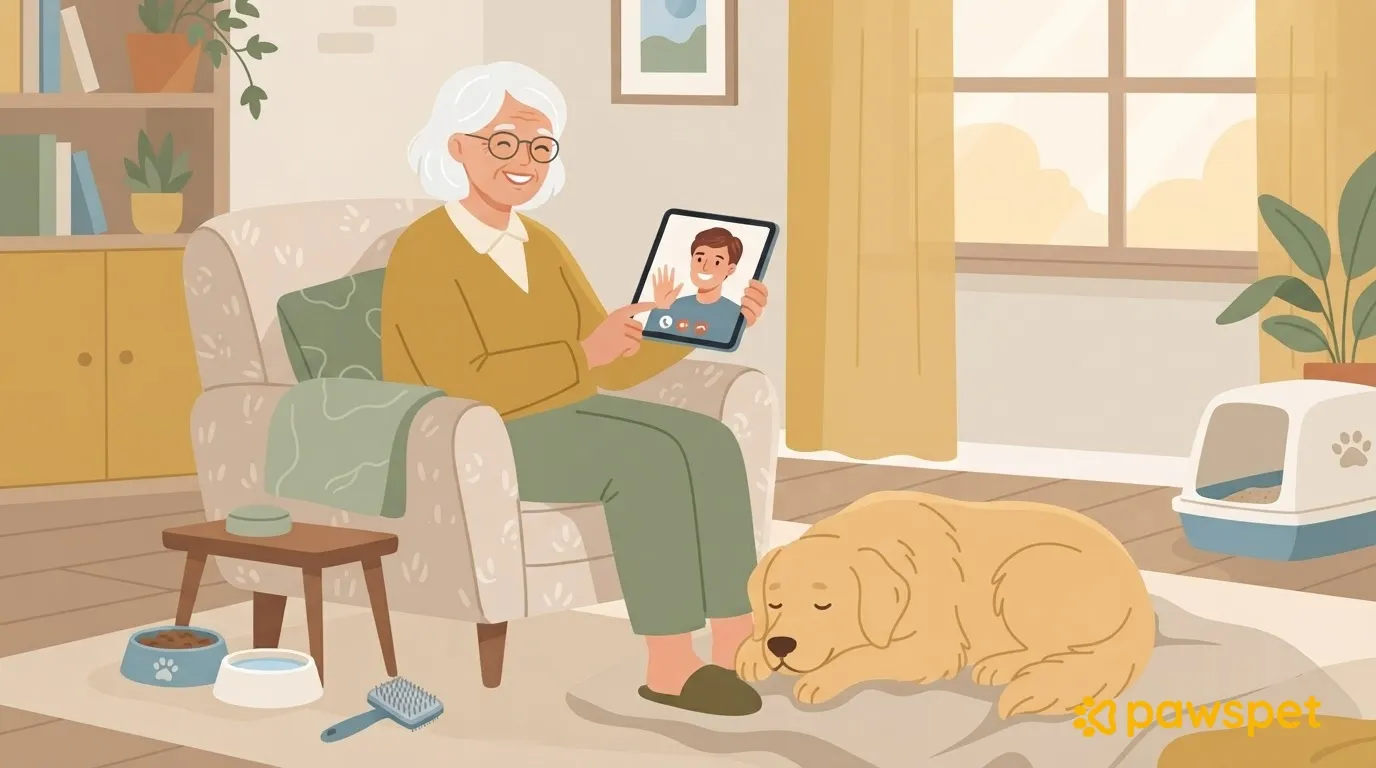
Brush for a few minutes while seated. Your cat can sit on your lap if they like; keep your dog standing on a non-slip mat without lifting them onto a table. Have the brush within reach before you start, and stop if your pet isn’t calm.
During shedding season, choose shorter, more frequent sessions rather than one long session. For bathing and nail trimming, if your pet gets agitated or the task is difficult for you, ask a veterinarian or groomer for help, including in-home service where available. For health problems, the veterinarian remains your point of contact.
To find help at home, open “Services” in the PawsPet app, choose the “Grooming” type, then set “Service method” to “At home” in the filters and enter your area. The search does not guarantee that professionals or appointments are available.
Clear floors and well-lit walkways
Pay particular attention to the routes you take with your hands full or at night:
- Put toys in a basket.
- Secure or remove rugs that slip.
- Keep a night-light along the route between the bedroom and bathroom.
- Place the bed and mat outside hallways.
- Get up slowly when your pet is sleeping near your feet.
Spread tasks across the week
Use your inventory to assign someone to each task. This table is an example of how to divide tasks, not a schedule of frequencies that works for everyone: adapt it to your pet’s usual care needs without putting off anything essential.
| When | Task | Who |
|---|---|---|
| Every day | Meals, water, and dog walks | You or a family member |
| Two or three times a week | Brief brushing | You or a family member |
| Once a week or less | Nail check, thorough bowl washing, heavy shopping | You for the checks; a family member for the other tasks |
| From time to time, when needed | Grooming or a visit | Professional |
Schedule heavy tasks for days when someone is available to help, and agree on who will do what.
To find tasks in the calendar, open “Activities” » “+” in the PawsPet app and create an activity of the “Hygiene” » “Brushing” type. Set “Repeat” to an interval in days or weeks and add an alert using the bell row, then tap “Save.” You can check off each recurring instance once you’ve done it. Alerts arrive as notifications if permission is enabled on your phone.
The first change
Choose the most strenuous task from your inventory and change only that one this week, involving whoever helps you. After a few days, check whether the new approach feels easier and whether your pet accepts it before changing another task. The care stays the same, but the burden shouldn’t fall entirely on you.