When your vet asks how much your dog or cat drinks and how often they urinate, the answer is often just an impression. It helps to measure water, pee, and poop for two or three consecutive days, always at the same time, and write the figures down: all you need is a measuring jug and a few notes. You don't need to know what the figures mean; your vet will assess them.
If your pet is clearly unwell, call the clinic first: measuring can wait.
Three rules for comparable figures
- Same time every day: choose a convenient time, for example when you fill the bowl in the morning. Each “measurement day” runs from that time to the same time the following day.
- Don't change the food: wet food contains water and would affect the comparison from one day to the next. If a change is unavoidable, make a note of it.
- Add context alongside the figures: write down what the day was like (hot weather, long walks, play, visitors). These notes are especially useful in summer: your vet will know how to interpret them.
Count all sources of water: your dog may drink in the kitchen and garden, your cat from a fountain or plant saucer. If several pets share bowls or a litter box, you don't need to separate them: note that the figure is for all of them together.
Water: the measuring jug method
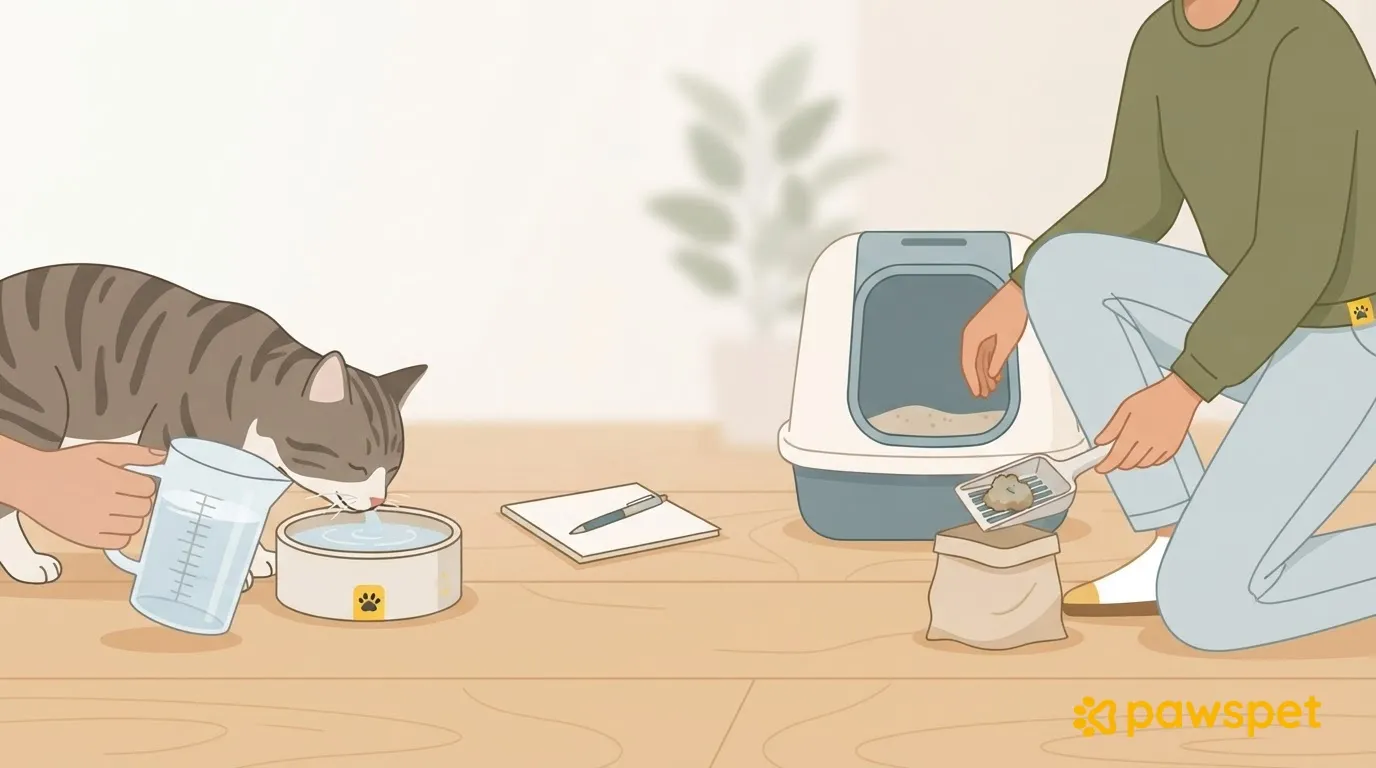
To measure how much water your pet drinks, you'll need a measuring jug or cup and a second bowl identical to your pet's.
- Use the jug to measure the water you pour into the bowl and write it down, along with the time. If you top it up during the day, measure and record each addition too.
- To estimate evaporation, pour the same amount of water into an identical control bowl and put it in the same room, where your pet can't reach it.
- The next day, at the same time, pour the water left in your pet's bowl into the jug and read the remaining amount. Do the same with the control bowl: the amount missing compared with the starting amount is the water that evaporated.
- Calculate: all water poured in − water left over − water evaporated = water drunk.
- If you use a fountain, note how much water you add to bring it back to its starting level.
Never restrict your pet's water to measure it: your pet should always have access to water as usual. Don't look for “right” figures to compare yours with: that's for your vet to assess.
Pee: what to count
Count these during the same “measurement day” as for water:
- Dog: note each outing when your dog urinates, any extra requests to go out (including at night), and accidents in the house, each with the time.
- Cat: with clumping litter, count the urine clumps when you clean the litter box, always at the same time, and note their size by comparing them with a familiar object (a walnut, a ping-pong ball). Also note visits to the litter box that don't produce anything.
Note color and smell only if they change, using simple words: “darker than usual,” “stronger smell.”
If your cat keeps going in and out of the litter box, straining and producing little or no urine, or if your dog strains but can't urinate, call your vet right away without waiting for the appointment.
If your vet asks for a urine sample, follow their instructions.
Poop: frequency and appearance in simple words
For each day, note:
- how many bowel movements there were;
- consistency: formed, soft, or runny;
- color;
- anything unusual, such as mucus or pieces you don't recognize;
- any changes in food or treats during those same days.
A photo taken from above in natural light is worth more than lots of adjectives: for your dog, take it on a walk before picking up the poop; for your cat, take it in the litter box before cleaning.
If you see blood (in the stool or pee), if your pet is lethargic, or if things get worse, call the clinic right away without finishing the measurements.
Reminders and weight with PawsPet
The tricky part of this method is remembering to measure at the same time every day. In the PawsPet smartphone app, you can create an activity that repeats every day with a reminder:
- “Activities” tab » yellow “+” button, which opens “New activity.”
- In “Name,” write, for example, “Measure water”; leave “All day” turned off and set the start date and time.
- Tap “Select activity type” and choose “Health” » “Symptom tracking”; then tap “Pets” and select your pet.
- In the row with the bell, tap “Set,” turn on the switch, choose, for example, “At event time,” and tap “Confirm.”
- Tap “Repeat,” choose “Every N days,” and enter 1 instead of N (just tap it); check the time using the wheel.
- In the “Duration” tab, choose “For a number of times” and enter 3 (4 if you want three complete days: the first time is just to get started). Then tap “Done” and “Save.”
Every day, once you've finished measuring, open “Activities” and tap the small circle to the left of the row to mark it as done: you'll recognize it because the activity repeats.
If you have a scale, record your pet's weight too: “Pets” tab » your pet » “Measurements” tab » “+”; then enter the weight and tap “Save” (one measurement per day). Keep the water, pee, and poop figures on the sheet below: the app reminds you to measure, but it doesn't calculate intake or assess the figures.
The sheet to bring to the vet visit
Copy the table onto a sheet of paper and fill in one row for each measurement day:
| Day | Water drunk, ml | Pee: outings or clumps | Poop: number and appearance | Weight, optional | Context |
|---|---|---|---|---|---|
| 1 | |||||
| 2 | |||||
| 3 |
To get an approximate weight for a small pet, weigh yourself holding your pet, then weigh yourself alone and subtract.
Start today, at the same time, and bring the sheet and photos of the poop to the vet visit.