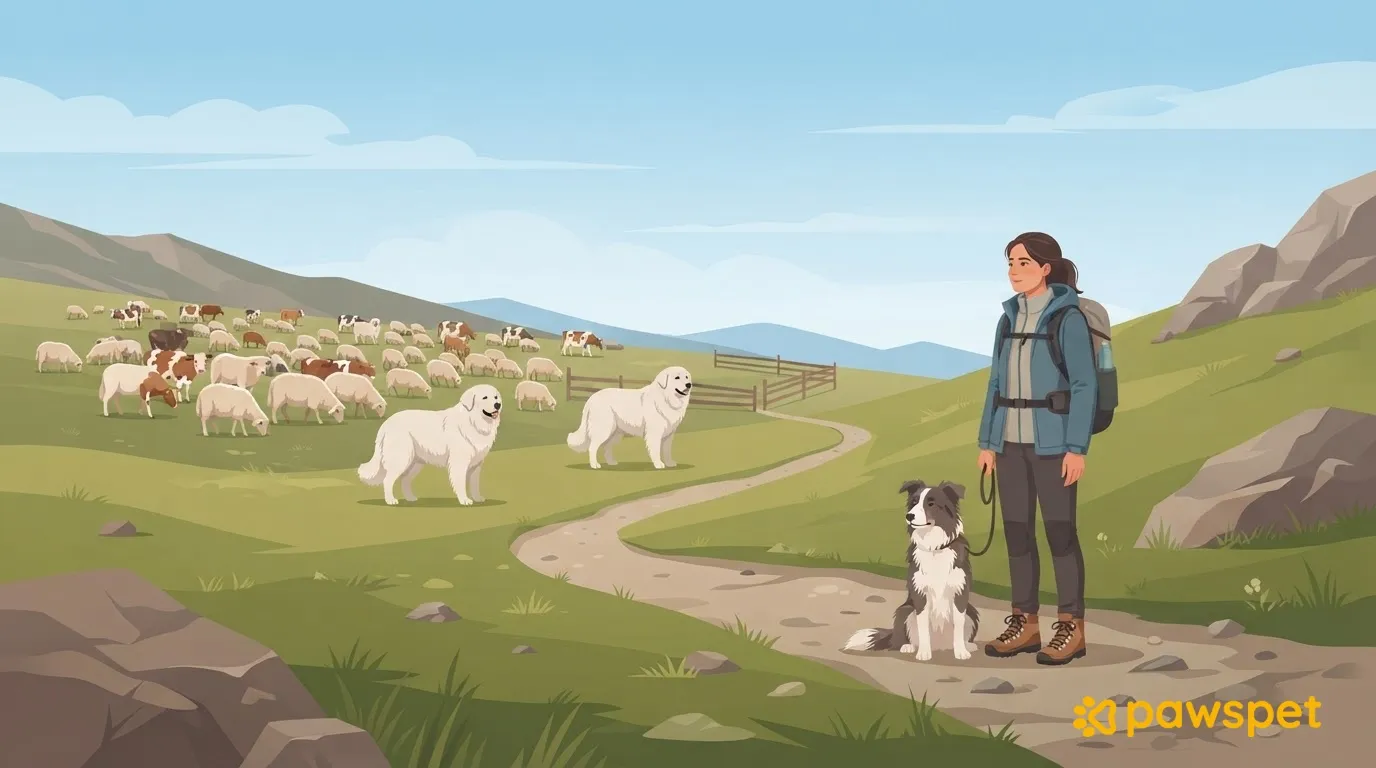
If you see a flock on the trail, stop at a distance, clip a short leash to your dog’s harness, and keep your dog calm on the side away from the animals. Then give the flock as wide a berth as possible, or wait or turn back: don’t walk through it or run. Pastures are working spaces shared with shepherds, livestock farmers, and their guardian dogs. If you’re passing through with your dog, you’re a guest.
Why a livestock guardian dog reacts to your dog
A livestock guardian dog lives with the flock and has a specific job: protecting it from anything it perceives as a threat. It isn’t a stray or “bad”: it’s working. To the guardian dog, your dog—even if friendly—is a stranger approaching and may seem like a danger. If your dog pulls or barks, that can reinforce this impression.
If a guardian dog approaches and barks, it’s usually a warning: it wants to keep you at a distance, and it’s best not to test it. Livestock guardian dogs come in different breeds and aren’t always easy to spot: where there are sheep or goats, assume there may be guardian dogs too. Everything you do near the flock should have one goal: showing that you’re not a threat.
Before you go: find out whether animals are grazing
You can’t always know what you’ll encounter, but you can gather some information beforehand. Ask the staff at mountain huts, park authorities, or local livestock farmers whether animals are grazing along your route and where they are at that time of year.
Once you’re on the trail, watch for signs: information boards, bells you can hear before you see the animals, and fences along the trail. If you notice any, slow down and look around before continuing.
Always plan an alternative route so that turning back doesn’t mean having to improvise. Bring a well-fitted harness and a short leash, and keep them handy—not at the bottom of your backpack.
When you see the flock: what to do, step by step
If you need to pass near a flock with your dog, follow these steps in order:
- Stop and look at where the sheep and guardian dogs are, and whether you can see the shepherd.
- Clip on the short leash to the harness and keep your dog beside you, on the side away from the animals.
- Choose the widest possible route around them. If there isn’t one, wait or turn back: it’s okay to abandon your route.
- Move slowly, without running, and speak in a calm voice. Avoid staring at the guardian dogs: a fixed stare may seem like a challenge.
- If your dog barks or pulls, increase the distance instead of pressing on.
- If the guardian dogs approach barking, stop and keep your dog beside you. Don’t shout, wave sticks, or throw stones.
- When they lose interest, move away calmly. Don’t offer food or try to pet them.
- If the shepherd is there, wait for them to call their dogs back before continuing.
Keeping your distance is the right thing to do in the moment, but it won’t change your dog’s habits. If your dog gets worked up as soon as they see animals, you can look for professionals under “Services” in the PawsPet app, in “Training” or “Behavioral Consultation,” to help you prepare for future outings.
Cows, grazing horses, and fences
Keep your distance from grazing cows, especially if there are calves: they may be more protective and react to the presence of dogs. Don’t walk through the herd, and keep your dog close and quiet. The same approach applies to horses: keep your distance, move slowly, and don’t run. Here too, if you can’t pass well away from them, turn back or choose another route.
If the animals approach persistently, change your priority: calmly move toward an exit from the pasture, taking care not to get between the animals and your dog. Your safety comes first.
When it comes to fences, pass only through gates and leave them as you found them. Don’t touch electric fences, and keep your dog away too. If in doubt, treat any wire or tape stretched across the pasture as if it were live.
If something goes wrong
If the dogs fight, don’t put your hands between them; move away with your dog as soon as you can. Then take your dog to the vet, even if the injuries seem minor: they may be deeper than they look.
Tell the shepherd or livestock farmer what happened, and note the place and time so the incident can be reconstructed. If your dog chases or frightens the animals, stop them, put them on a leash, and speak with the person responsible for the animals: you’re responsible for your dog’s behavior.
Before your next outing, train your dog to walk beside you on a short leash at home and in quiet places, and always plan an alternative route through grazing areas.