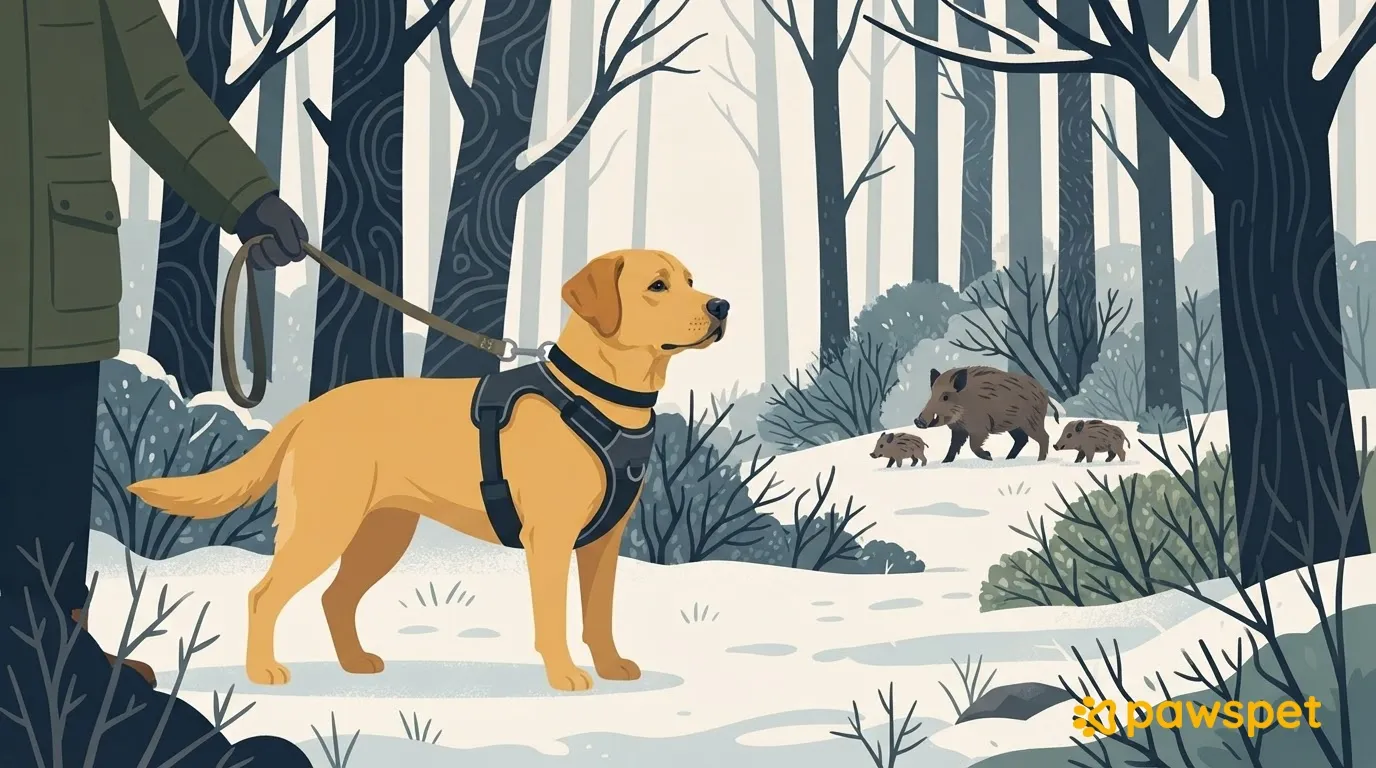
Where you see wildlife tracks or signs, keep your dog on a leash or a long line attached to a harness, and step in at the first signs, before your dog takes off. If hunting takes place in the area, make yourself and your dog visible; if you encounter wild boar, roe deer, or red deer, calmly increase your distance and do not let your dog approach. You do this for your dog and yourself, but also for wildlife, for whom every escape costs precious energy in winter.
Why a chase takes a greater toll in winter
During the colder months, wild animals usually find less food and try to conserve energy. Fleeing through snow or in the cold takes extra effort, just when their reserves are low.
The dog’s intentions matter little to them. Even if your dog “just wants to play,” a dog chasing a roe deer or hare is still a predator, and the animal’s response is to flee. Every chase therefore costs wildlife energy and puts your dog at risk: they may wander too far, end up on difficult terrain, or encounter an animal that defends itself.
In the woods, your dog can also disappear from sight in an instant, and you won’t know what they’re chasing or where they’ll end up. That’s why prevention is better than chasing after them.
Before you set out: area rules, hunting seasons, and visibility
It takes just a few minutes to check four things.
- Area rules. Read the park or protected area regulations on dogs, and check official local notices, including on the day of your outing.
- Hunting. Check your region’s hunting calendar and find out whether any hunts are scheduled in the area. On those days, choose marked trails and daylight hours, when it’s easier to see and be seen; if in doubt, change your route.
- Visibility. Wear bright colors, avoiding shades that blend into the woods, and put a fluorescent vest or bandana on your dog. They won’t eliminate every risk, but they’ll make you easier to spot.
- Bell. If it helps you hear where your dog is, attach a small bell.
Signs that a chase is about to start
Before they take off, many dogs:
- freeze and fix their gaze on a point;
- follow a fresh trail with their nose;
- tense their body and ears;
- suddenly pull.
Every dog has their own signals. Watch yours on calm outings, and you’ll learn to recognize the signs that come before a sudden dash.
The surroundings offer clues too: tracks in the snow, droppings, and ground disturbed by wild boar. If you notice these signs, wildlife frequents the area, so keep your dog close.
Step in at the first signs, not after your dog has already taken off: shorten the long line, change direction to move away from the trail, and reward your dog when they look at you. Use a long line attached to a harness in open spaces where you can handle it safely, and gather it in when other people approach so it doesn’t block the trail.
Unless your dog has a truly reliable recall around wildlife, keep them on a leash. If your dog often takes off after tracks, a professional can help. In the “Services” section of the PawsPet app, you can search for professionals in “Training” or “Behavioral consulting” and check whether any are near you.
If you encounter wild boar, roe deer, or red deer
Stop, stay quiet, and keep your dog close without letting them bark at the animals. If your dog pulls toward them, hold them firmly without jerking the leash. Give the animals space and calmly move away, retracing your steps without running. Don’t throw anything or offer food: give the animal time and space to leave.
A group with young may react more defensively. In that case, give them even more distance and stay calm; don’t approach to get a better look or take a photo. The goal is for the encounter to end without anyone having to flee or defend themselves.
If your dog is injured or has a collision with an animal, take them to the vet without trying home remedies.
If your dog has already taken off
Don’t chase them off the trail, especially on steep or snowy ground: you could get hurt or lose your bearings. Stop, call them in a calm voice, and stay for a while at the place where you became separated. If you’re not alone, ask the person with you for help.
When your dog returns, check them carefully. If you notice injuries or they seem uncomfortable, contact your vet. If they don’t return, report them missing according to your municipality’s or region’s dog registry instructions.
Before every outing, keep recent photos of your dog and their microchip number ready so you can describe them accurately if needed. To keep this information handy, you can save up to 6 photos and note the microchip number in your pet’s profile in PawsPet, then copy it with one tap.
Animal remains and bait: don’t let your dog touch them
Your dog may find carcasses, bones, or other remains on the trail. The strong smell can attract them, and they may want to eat or roll in them. Don’t let them. Keep your dog away from food or bait found on the ground too: you don’t know where it came from or what it contains.
If you notice anything suspicious along the route or your dog keeps sniffing the ground intently, shorten the leash or long line and move on, changing routes if needed. If you think your dog has swallowed something, go to the vet right away and don’t try home remedies.
For your next outing, three checks are enough:
- check the area’s rules and hunting calendar;
- prepare a harness, long line, and high-visibility vest;
- update your dog’s photos and microchip number in their records.
A few minutes can make the walk more relaxing for you and for the animals that live in the woods.