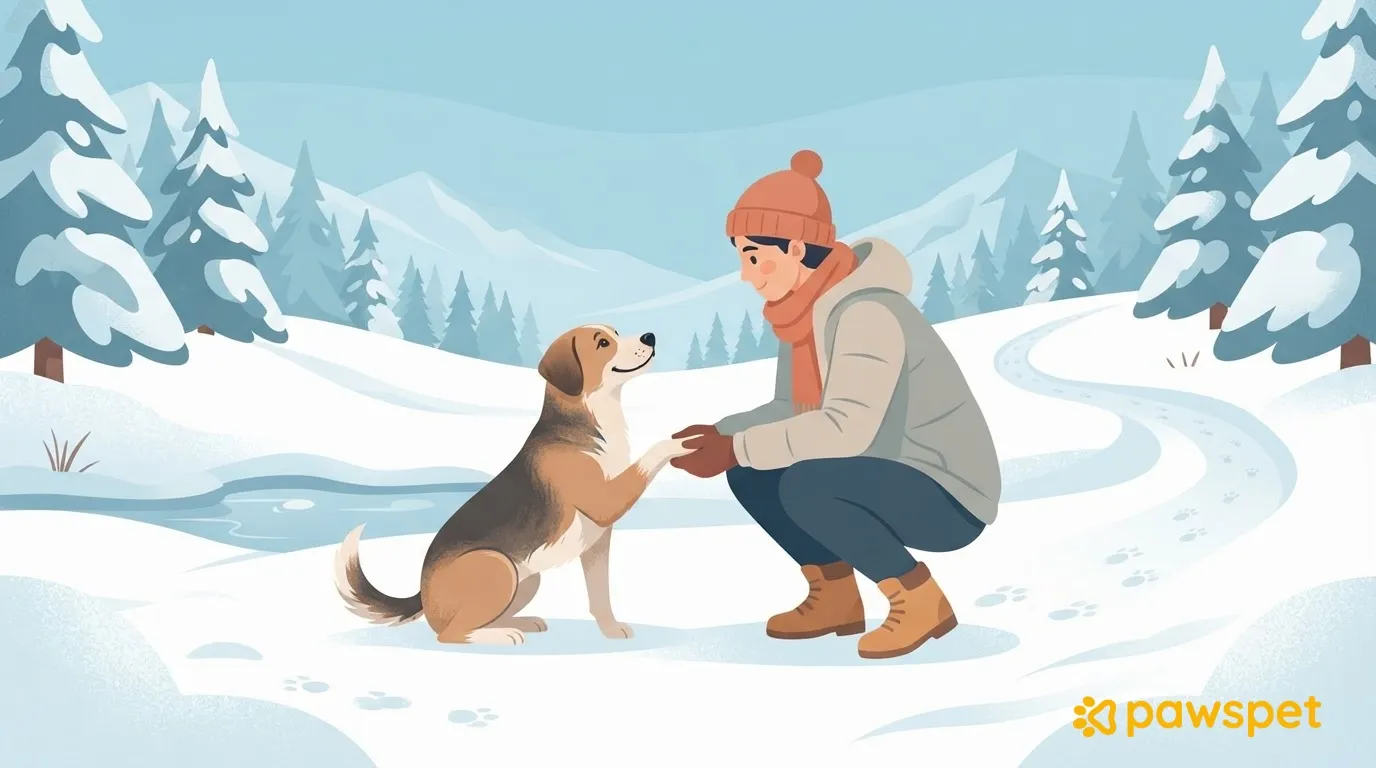
For a hike or snowshoe trip with your dog, choose a route that’s shorter than usual, with the option to turn back at any time, and check your dog’s paws at every stop. Keep your dog away from frozen lakes and waterways, on a leash where skiers and sledders pass, and head back at the first signs of cold or fatigue. In the snow, exertion, risks to your dog’s paws, and sharing trails with others all change.
Before you set out: route, weather, and your dog
Choose a short loop or a route with several places to turn back, rather than a climb with no alternatives: if your dog gets tired, you need to be able to shorten the trip without complications. If this is your dog’s first time in the snow, treat the outing as a trial run: it’s better to turn back early than to reach the destination at all costs.
Check the weather and when daylight will fade, because there are only a few useful hours in winter, and let someone know your route and expected return time. In the mountains, check official avalanche hazard information and stick to established routes.
Some dogs need extra care: short-haired or small dogs, puppies, and senior dogs. For them, it’s best to make the trip even shorter and watch them more closely. If your dog has a medical condition, ask your veterinarian beforehand whether the outing is suitable. Finally, check the rules for dogs in the area or resort, as they can vary from one place to another.
How far to walk in the snow and when to turn back
Fresh, deep snow takes more effort: every step costs more, even for a dog used to walks. Before setting out, decide where you’ll turn back and stick to it, even if the destination seems close.
Turn back before that point, too, if you notice any of these signs of cold or fatigue:
- shivering;
- repeatedly lifting paws;
- slowing down;
- looking for shelter;
- whining;
- refusing to continue.
They don’t all need to appear at once: just one is enough to shorten the trip or turn back. Use stops to take a calm look at your dog, as well as to check their paws.
Offer water from a bottle instead of letting your dog eat snow: near roads and parking lots, it may contain dirt or salt. Cold drains your phone battery quickly, so keep it in an inside pocket.
Gradually make subsequent outings longer, starting from what your dog handled well last time. To keep track of how far you’ve walked, you can record the hike using the GPS in the PawsPet app as a sports activity (“Hiking” or “Dog Trekking”): the route, duration, and distance will be saved.
Paws: ice balls, salt, and small cuts
In dogs with a lot of fur between their toes, snow can collect between the paw pads and compact into ice balls. Trimming this fur, including at a groomer’s, helps prevent them. If they form during your outing, stop and remove them with your fingers without pulling on the fur.
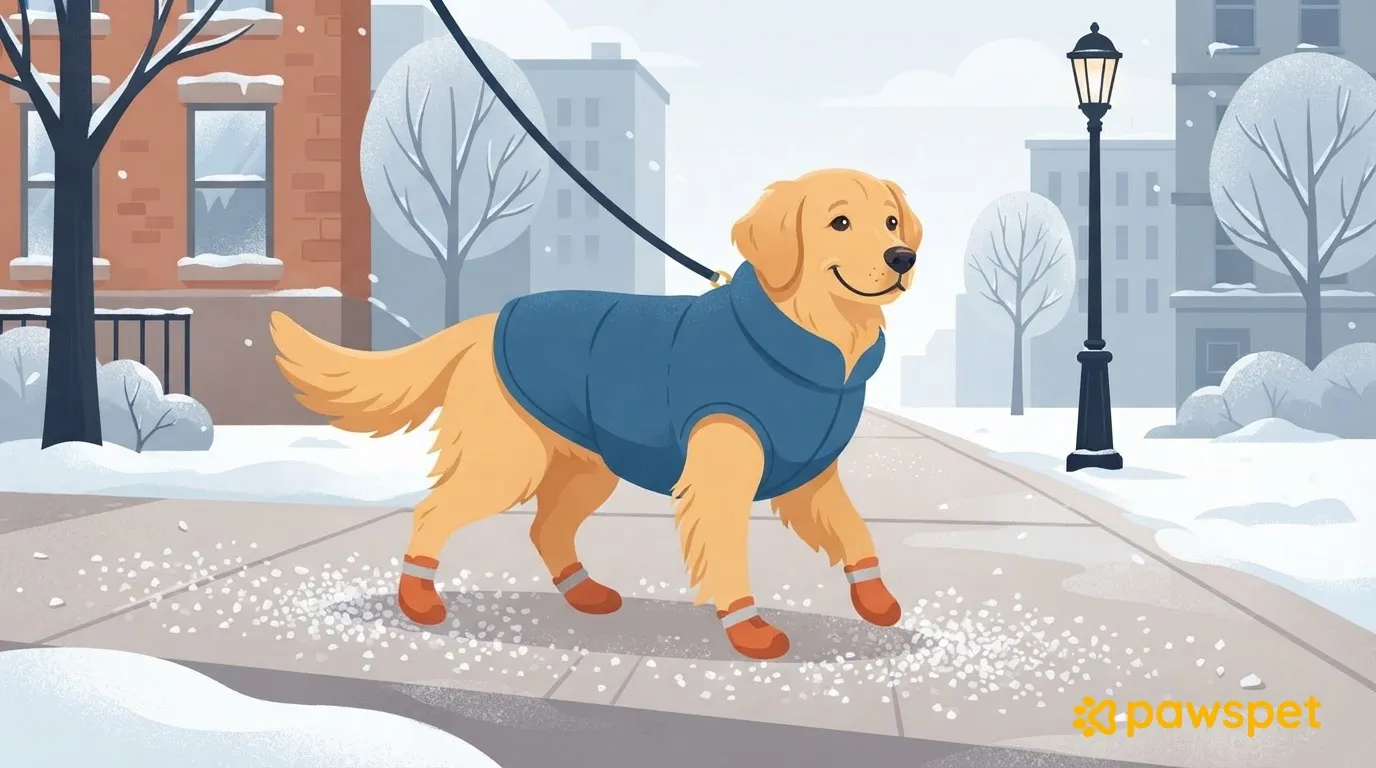
Paw balms and dog booties are options, not necessities: if you want to use them, try them at home before your outing and check that they don’t rub.
Check the paw pads at every stop: lift each paw, gently spread the toes, and look for cuts, cracks, or ice stuck between them. If you walk on roads or parking lots where road salt has been spread, don’t let your dog lick their paws, and rinse them with lukewarm water at the end of the day.
Ice and water: areas to avoid
Small lakes, ponds, and streams covered by snow or ice can give way, even when they look solid, and snow can hide where the bank ends. If your route runs alongside a lake or stream, consider an alternative.
Keep your dog away from frozen lakes and, near any stretch of water, on a leash or long line, even if they usually come when called.
If your dog falls through the ice, don’t walk onto the surface to rescue them: call 112 immediately and follow the operator’s instructions.
On trails shared with skiers and snowshoers
Walk beside groomed cross-country ski tracks, not on them, so you don’t damage them. Near ski slopes, sledding areas, and downhill sections, keep your dog on a leash: an off-leash dog could cross in front of someone skiing downhill at speed. On trails used by snowshoers, too, keep your dog to one side and leave room for people you meet.
If someone is coming toward you at speed, stop, keep your dog close, and let them pass; don’t let your dog chase skiers. If your dog gets agitated when meeting lots of people, choose a less busy time or route. Pick up your dog’s waste even in the snow: it will reappear when the snow melts.
After the outing: dry off, check, and know when to call the vet
When you finish, dry your dog’s paws and belly with a towel, because melting snow leaves the fur wet. Then check for cuts, cracks, and redness between the toes and on the paw pads, and repeat the check in the evening in good light.
Contact your veterinarian if your dog limps for a long time, a wound is bleeding, or part of a paw remains pale, cold, or painful: your veterinarian can assess what to do. In the following days, watch how your dog walks.
For your next outing, prepare a small paw-care kit (towel, wipes, water bottle, and bowl) and choose a shorter backup route in advance.