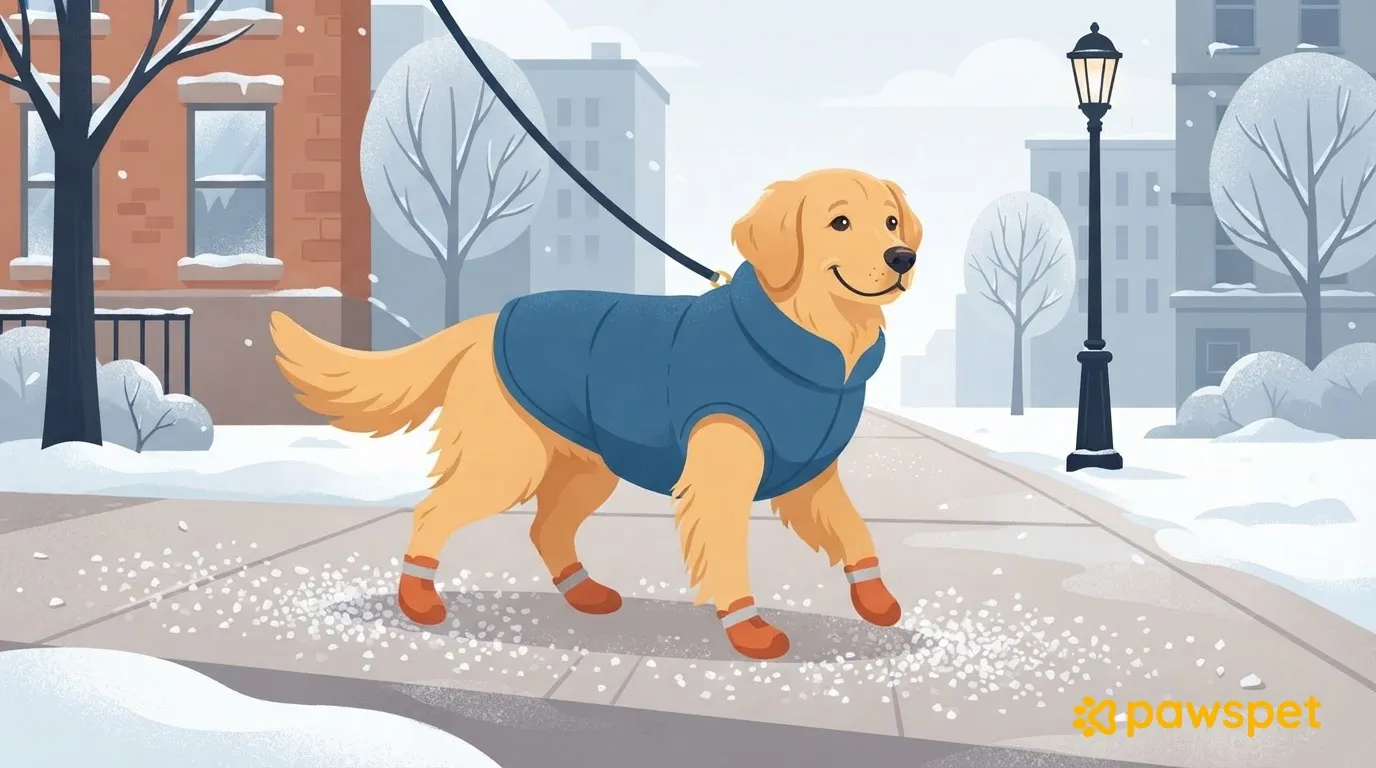
On freezing days when salt or other de-icers are spread on roads and sidewalks, choose an untreated route when you can, and avoid lingering on the granules. When you get home, rinse and dry your dog’s paws right away, then check the paw pads. Boots and paw balm are options if your dog accepts them. Wounds, limping, or symptoms after licking salt are reasons to contact a veterinarian.
Why salt and de-icers can cause discomfort
The granules can be abrasive and get lodged between the paw pads. On dry or cracked paw pads, contact can cause a burning sensation; this may be why some dogs lift a paw or lick their paws repeatedly.
By licking their paws, dogs can also ingest residue left on them. You often don’t know which product was used, so treat every stretch covered in granules with the same caution. Dirty snow and puddles near cars may contain other residues too, so don’t let your dog eat or lick them.
Before you go out: routes and protection
When it’s safe, choose roads or stretches with fewer granules, even if it makes the walk a little longer. Salt often builds up at crossings and bus stops: avoid stopping for long, and if you can, have your dog wait on a cleaner spot.
Long fur between the paw pads can hold ice and granules. Ask your groomer or veterinarian whether it should be trimmed. Choose a protective paw balm with your veterinarian’s guidance.
If you choose dog boots, introduce them gradually: let your dog try them on indoors, using a few treats and wearing them for just a few minutes at a time. Check that they fit properly and don’t rub; if your dog refuses them, don’t force it.
On the way, discourage your dog from eating snow or licking puddles: keep the leash short on dirty stretches, and reward your dog when they look at you instead of sniffing the ground. If your dog stops, lifts a paw, or suddenly slows down, move to a cleaner stretch and check their paws. If they seem uncomfortable, it’s best to shorten the walk.
None of these measures is a guarantee, which is why checking your dog’s paws when you get home remains the essential step.
When you get home: a paw-care routine
Follow the same steps every time, even after a short walk:
- Keep a towel and a basin or bottle of lukewarm water by the door.
- Rinse your dog’s paws—and their belly if they walked through dirty snow—before they start licking.
- Gently clean between the paw pads to remove any granules.
- Dry thoroughly, including between the toes.
- Check for redness, cuts, cracks, and lodged granules.
- Reward your dog to make the routine a pleasant experience.
To remember to check your dog’s paws on freezing days, you can create a recurring activity in the PawsPet app called «Nail and Paw Care» (Tab «Activities» » «+» » «Select activity type» » «Hygiene» » «Nail and Paw Care»), set «Repeat» for walk times, set «Duration» to «Until a date», and add an alert using the bell icon; each time, mark it as done by tapping the circle. The reminder doesn’t protect your dog’s paws; it just helps you remember to check them.
When to contact a veterinarian
Contact your veterinarian if you notice:
- limping that doesn’t go away;
- wounds or bleeding;
- cracked paw pads that don’t improve;
- swelling of the paws;
- persistent paw licking.
For paw care at home, stick to rinsing and drying, without trying improvised remedies.
If your dog has licked or eaten salt or dirty snow and develops vomiting, diarrhea, lethargy, or unusual behavior, call your veterinarian right away without waiting to see if it passes. Tell them when the signs started and what your dog may have licked or eaten.
A kit for salty days
By the door: a towel and lukewarm water. For walks: an alternative route you’ve already identified. If your dog accepts them: paw balm chosen with your veterinarian or dog boots. In the evening: a paw check.
Prepare the kit today, before the next freeze.