If your dog eats everything they find on walks, you need a three-part plan to use together: manage your route to reduce opportunities, teach “leave it” before they pick something up, and use a trade when they already have something in their mouth. Chasing them or forcing their mouth open does not work: it only makes them swallow faster. If you suspect they have swallowed something dangerous, call your veterinarian right away.
Why dogs do it and where the risk increases
Exploring with their nose and mouth and eating what they find is common dog behavior, and food smells make it more tempting in the city. Busy neighborhoods have plenty of hot spots:
- dumpsters
- takeout restaurants
- transit stops
- benches
- school entrances
- market areas
- sidewalks after weekend evenings
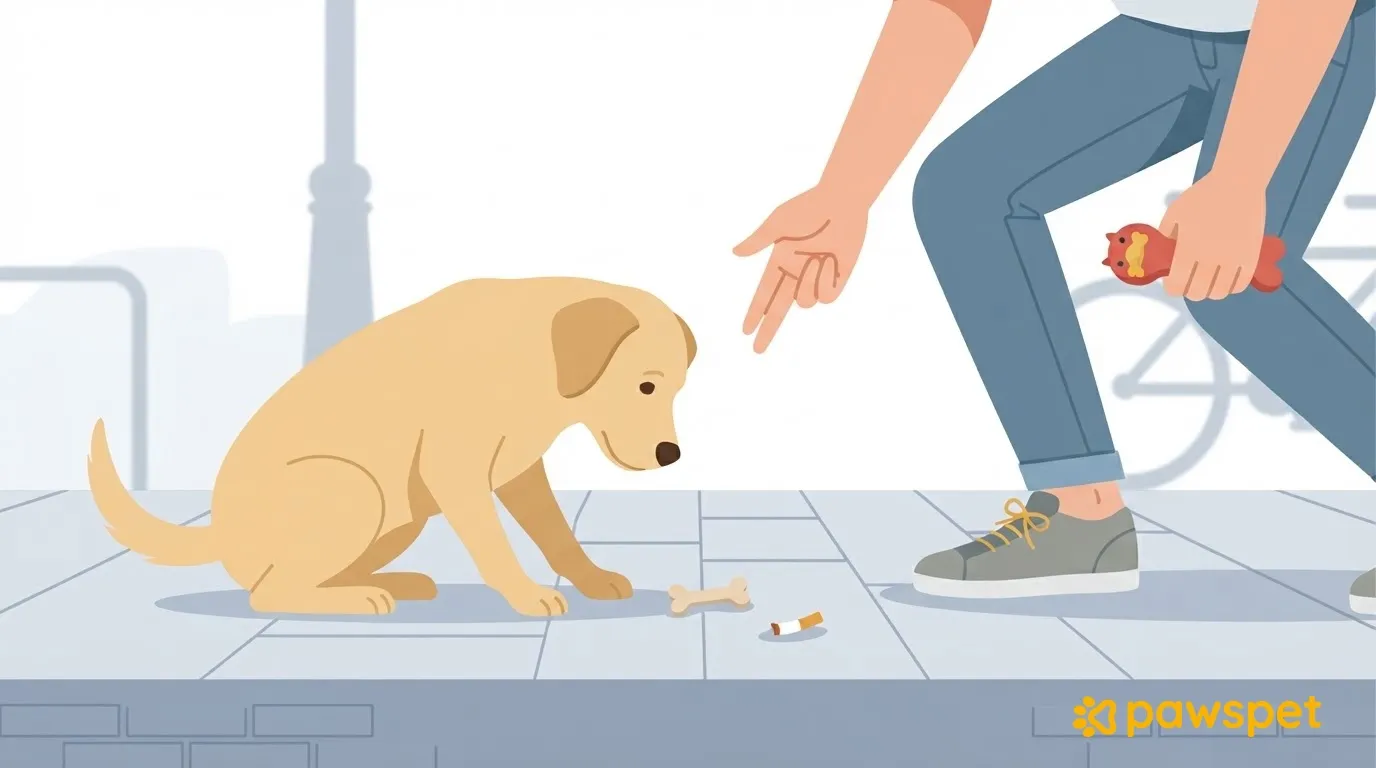
Common items include leftovers, cooked bones (which can splinter), cigarette butts, chewing gum, wrappers, and glass. Treat all of them as potentially dangerous, even when they seem harmless.
If your dog suddenly starts persistently eating non-food items too, talk to your veterinarian first: there may be an underlying health issue to rule out.
Reduce opportunities while you train
Every time your dog finds and eats something, the habit tends to get stronger. So, during the weeks you’re training, avoid testing them in the places where it’s hardest:
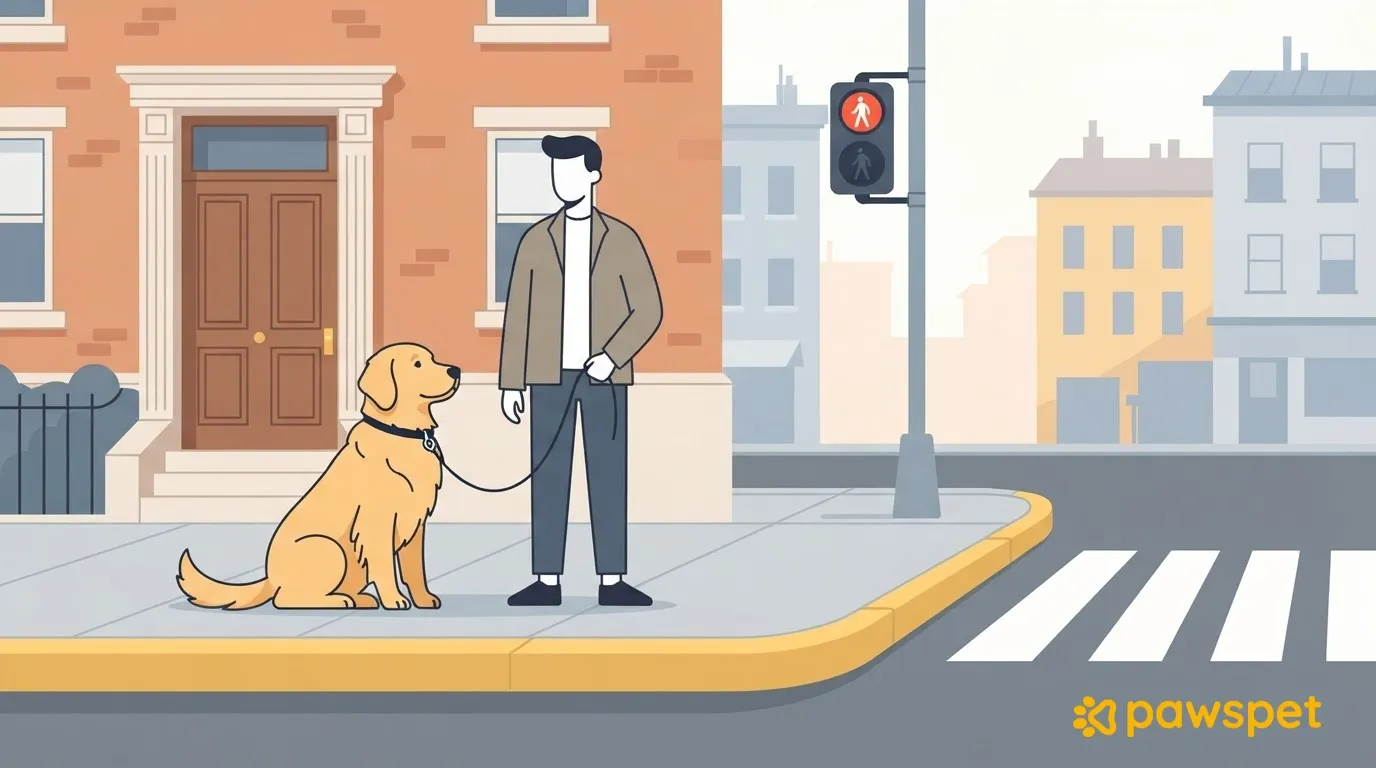
- change your route or cross to the other side of the sidewalk near hot spots;
- shorten the leash only there, and let it out where the street is clean;
- look ahead, beyond your dog’s nose, so you spot what they’re about to find;
- keep their attention with brief check-ins and rewards as you walk past;
- let them sniff in clean areas, so they have an outlet for exploring.
For dogs who persistently pick things up, a basket muzzle can also help, as it allows them to pant and drink. Introduce it gradually, never as a punishment, and preferably with a professional: it’s a management tool, not a solution.
Teach “leave it” step by step
Your dog needs to discover that leaving something alone pays off. Keep sessions short and frequent, and move to the next step only when they succeed almost every time: every dog learns at their own pace.
At home, with a closed fist
Close a highly appealing treat in one hand and let your dog sniff, lick, and nudge it. Wait without pulling your hand away or speaking. As soon as they stop trying or look away, mark the moment with a short word (for example, “yes”) and reward them with your other hand. They never get what’s in your fist: this teaches them that persistence doesn’t work.
Add the cue
When your dog moves away from your fist almost every time, start saying “leave it” a moment before they move away, then mark and reward with your other hand. Don’t use the cue earlier: it should signal something your dog already knows how to do.
From your fist to the floor
Put a treat on the floor and cover it with your hand or foot. Say “leave it”; when your dog gives up, mark and reward from your hand, never from the floor. Then start uncovering it a little at a time, with your dog on leash: if they lunge, cover the treat again and go back to the previous step.
Outside, with planted objects
On a quiet street, set out treats or objects that wouldn’t be a problem if your dog managed to get them, starting with uninteresting ones. With your dog on leash, approach and say “leave it” before they reach them; when they turn toward you, mark and reward generously.
On walks
When “leave it” works with the planted objects, move on to real walks: say it as soon as you spot the object, not when it’s already in your dog’s mouth (at that point, you need the trade). The reward should always come from your hand and be worth more than the leftover. Never let your dog have anything they’ve left on the street, not even as a reward.
If it’s already in their mouth: the trade
If you weren’t quick enough with “leave it,” switch to a trade: bring a highly appealing treat, more tempting than what’s in your dog’s mouth, close to their nose and wait for them to drop the item. Then reward them and pick it up yourself.
Don’t chase them, scold them, or force their mouth open: you risk being bitten and, if they feel threatened, your dog may swallow even faster.
Practice trading at home with toys too: bring a treat close to their nose while they have a toy in their mouth, reward them when they let it go, then give the toy back so they don’t associate trading with losing something.
If your dog growls, stiffens, or runs off with the object when you approach, don’t push it; contact a professional.
If you think they’ve swallowed something dangerous
Call your veterinarian or an emergency veterinary clinic right away, even if your dog seems fine, and follow their instructions.
- Tell them what your dog ate, when, and how much, as far as you know.
- Bring the packaging or a photo of the object, if you have one.
- Don’t induce vomiting or give any home remedies on your own.
When to ask a professional for help
It’s a good idea to get help from a professional if:
- the behavior is still intense after several weeks of consistent training;
- your dog guards what they find;
- you want to introduce a muzzle with a clear plan.
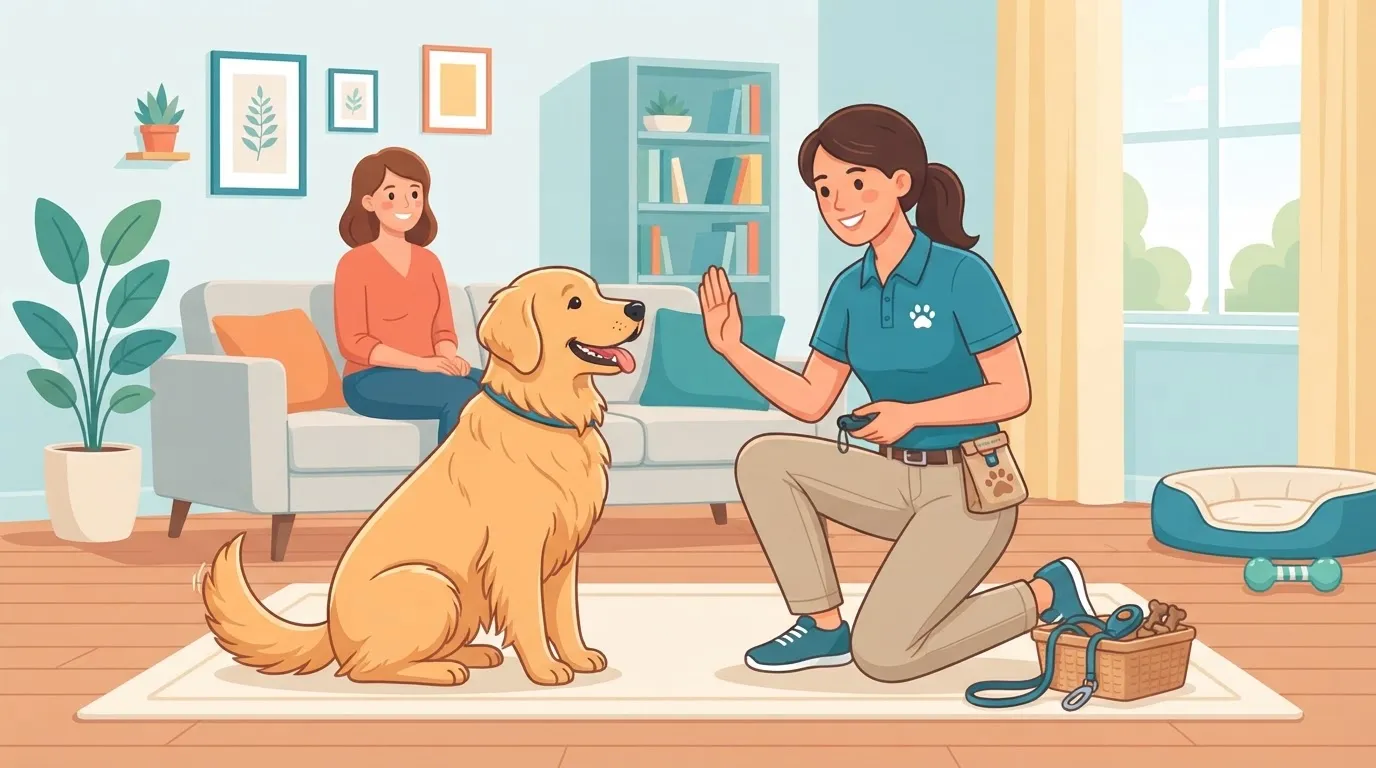
If your dog eats non-food items, start with your veterinarian. In other cases, in the “Services” section of the PawsPet app, you can search for dog trainers and behavior consultants by filtering by service type (for example, “Training” or “Behavior consultation”) and area, narrowing your search to your location.
Your plan for the next two weeks
During the first week, adjust your route near hot spots, do short “leave it” sessions at home (from the closed fist to the treat on the floor), and practice trading with toys. During the second week, if it’s working at home, move on to outdoor exercises with planted objects. This isn’t a deadline: if a step takes longer, stay there until it becomes reliable.
Today, save your veterinarian’s number and the number of an emergency veterinary clinic in your phone contacts.