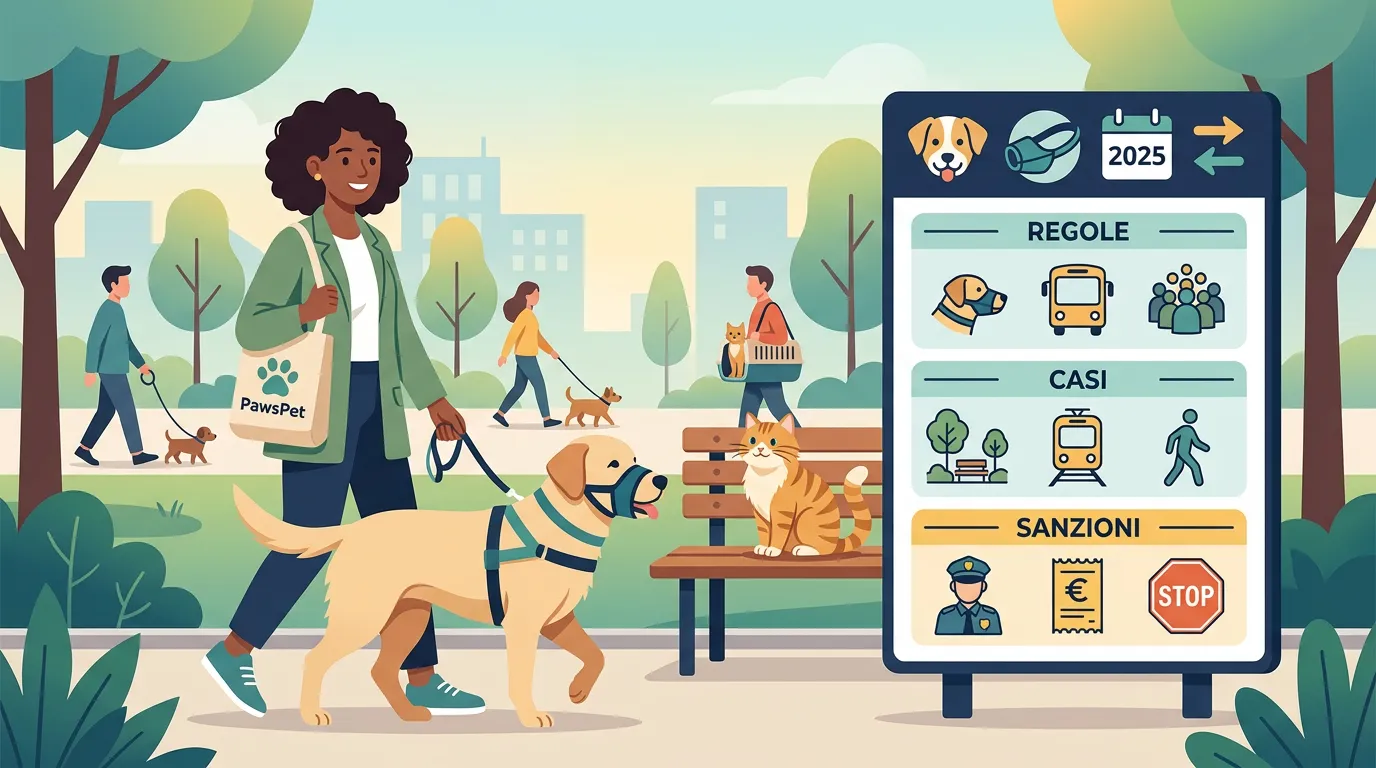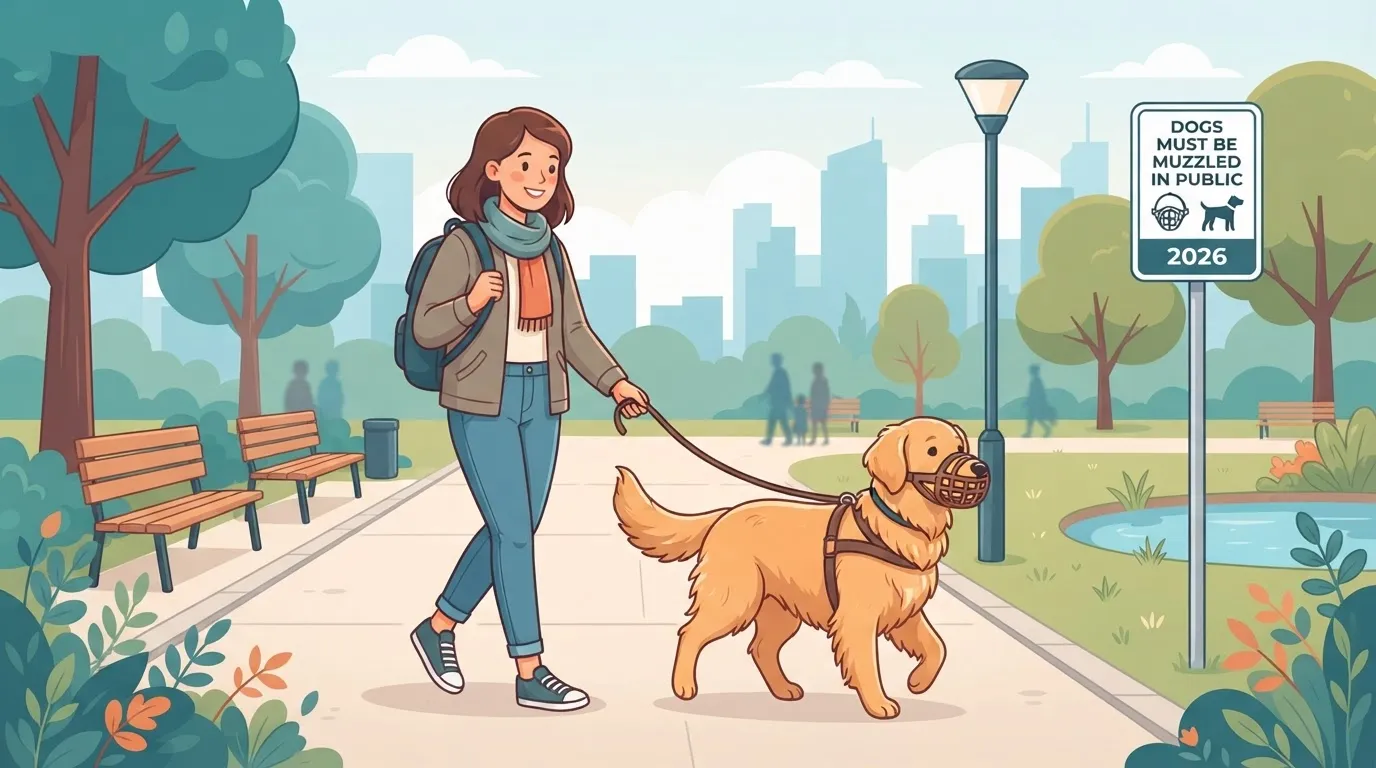
The 2026 dog muzzle requirement often raises questions: must a muzzle always be worn, is it enough to carry one, or does it depend on the location? The answer depends on general safety rules, local ordinances, and the regulations of facilities and transport providers. Understanding the difference helps you go out prepared while protecting your dog and the people around them.
When a muzzle must be carried and when it must be worn
In Italy, general provisions on responsible dog ownership require the owner or handler to carry a rigid or soft muzzle when walking the dog in urban areas and places open to the public.
A muzzle must be put on when:
- the dog may pose a risk to the safety of people or other animals;
- it is requested by the competent authorities;
- it is required by a local regulation, private facility or service provider;
- you enter certain crowded settings or areas with limited space, such as some forms of public transport.
This does not mean that every dog must always walk with a muzzle on. During a normal walk, unless local provisions or a specific risk situation say otherwise, the practical rule is to have one available and use it when necessary.
A leash, control of the dog and awareness of the surroundings remain essential: a muzzle does not replace responsible handling.
Dog walking rules: what to check in your area
The 2026 dog muzzle regulations should not be considered only at national level. Municipalities, parks, beaches, green spaces, shops and apartment buildings may establish specific instructions, provided they are consistent with the applicable rules.
Before going out or travelling on holiday with your dog, check:
- any municipal orders concerning leashes, access to green spaces and muzzles;
- signs at the entrances to parks, markets, beaches or venues;
- the regulations of campsites, hotels, museums and businesses open to the public;
- any individual requirements issued by the competent authorities;
- restrictions connected with events attracting large crowds.
A common mistake is to assume that size or breed automatically determines whether a muzzle is required. Safety measures should instead take the dog’s behaviour, the setting and the handler’s ability to manage the animal into account. A calm dog may struggle in a crowd; a frightened dog may react unpredictably even if they are usually sociable.
Muzzle on public transport: rules to check before travelling
Rules concerning a muzzle on public transport may vary depending on the provider, city and type of transport. Buses, underground trains, railways, ferries and taxis may have different conditions for allowing dogs on board.
In general, it is useful to prepare as follows:
- Check the provider’s current regulations before buying a ticket or boarding.
- Carry both a leash and a muzzle, even when the dog is travelling in a carrier.
- Ask whether health documents, a dedicated ticket or specific transport arrangements are required.
- Avoid the busiest times if your dog is sensitive to noise, nearby people or enclosed spaces.
- Gradually accustom your dog to the muzzle before the journey.
For the animal’s wellbeing, the muzzle should not be completely unfamiliar when the trip begins. A qualified dog trainer can help with an acclimatisation plan, especially if the dog shows fear or significant discomfort.
How to choose a muzzle and help your dog accept it
A suitable muzzle should be safe, correctly sized and compatible with the dog’s ability to breathe comfortably. When properly selected, basket muzzles generally allow dogs to pant and drink more easily than soft models. Soft muzzles may be suitable only for very brief, supervised use, according to a professional’s guidance.
To choose responsibly:
- measure your dog’s muzzle according to the manufacturer’s instructions;
- check that the dog can open their mouth and pant;
- inspect fastenings and stitching, and make sure there is no rubbing;
- never leave the dog unattended while wearing the muzzle;
- replace it if it is damaged or no longer fits correctly.
Acclimatisation should be gradual: introduce the muzzle, reward your dog for approaching it, let them place their muzzle inside voluntarily and increase the wearing time little by little. Avoid forcing it on. Associating the tool with stress or punishment can make it harder to use when it is genuinely needed.
Possible dog muzzle penalties and the owner’s responsibility
Dog muzzle penalties are not the same in every situation. They may depend on a violation of a local order, the regulations of a transport provider or failure to comply with instructions issued by the authorities. In the event of an incident, the owner’s overall conduct also matters, including control of the dog, use of the leash, risk prevention and compliance with the rules of the location.
To avoid problems, keep the muzzle in a walking bag or attached to the leash, and regularly check updates from your municipality and the services you use. With PawsPet, you can set useful reminders for renewals, appointments, documents and preparing for trips with your pet.
FAQ
Is a muzzle compulsory for every dog?
Not necessarily to be worn at all times, but in many situations it must be carried. It may become compulsory when there is a safety risk or when required by regulations, authorities or service providers.
Can I use a soft muzzle for a long walk?
It is generally not the most suitable choice for extended periods because it can restrict panting and comfort. For longer outings, consider a correctly sized basket muzzle and ask a qualified professional for advice.
What should I do if my dog cannot tolerate the muzzle?
Do not force it. Begin gradual acclimatisation using positive reinforcement and, if the discomfort continues or your dog reacts intensely, contact a competent dog trainer.