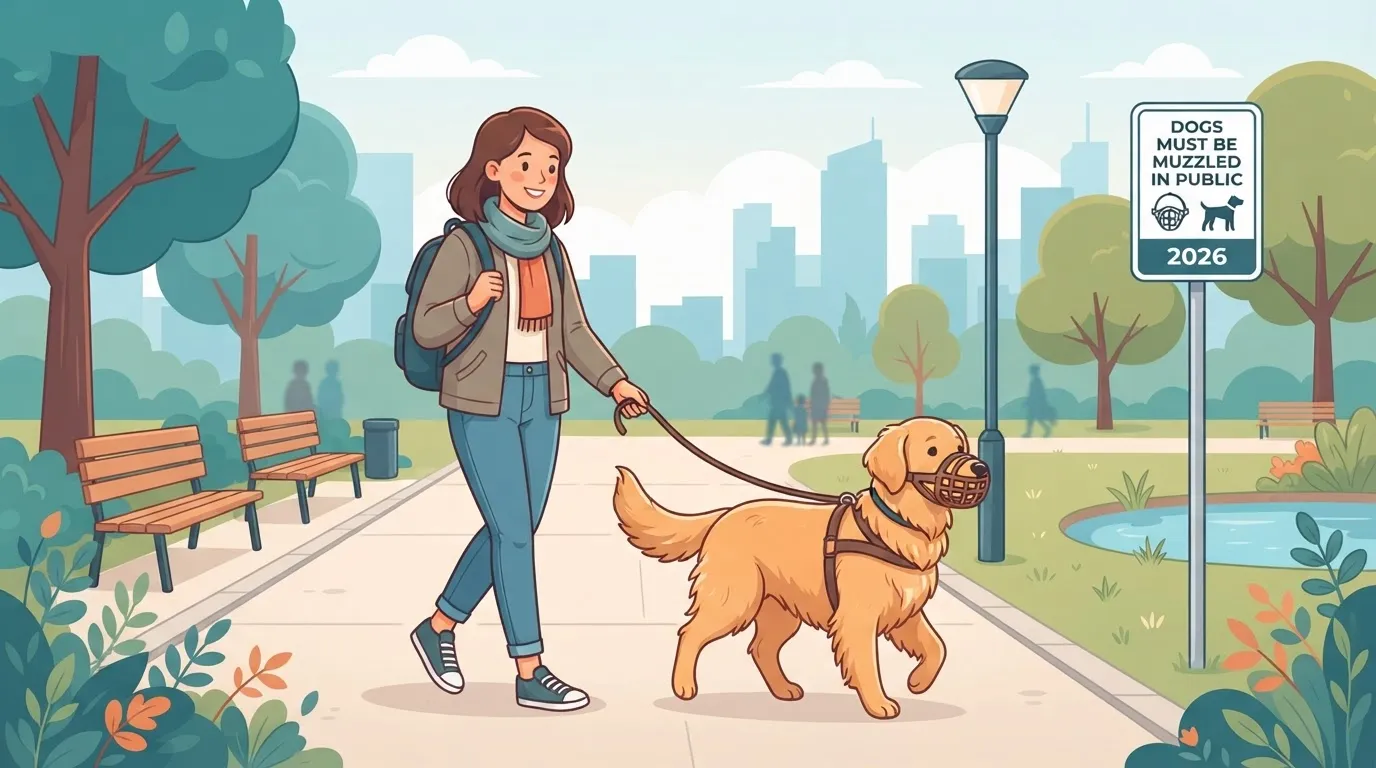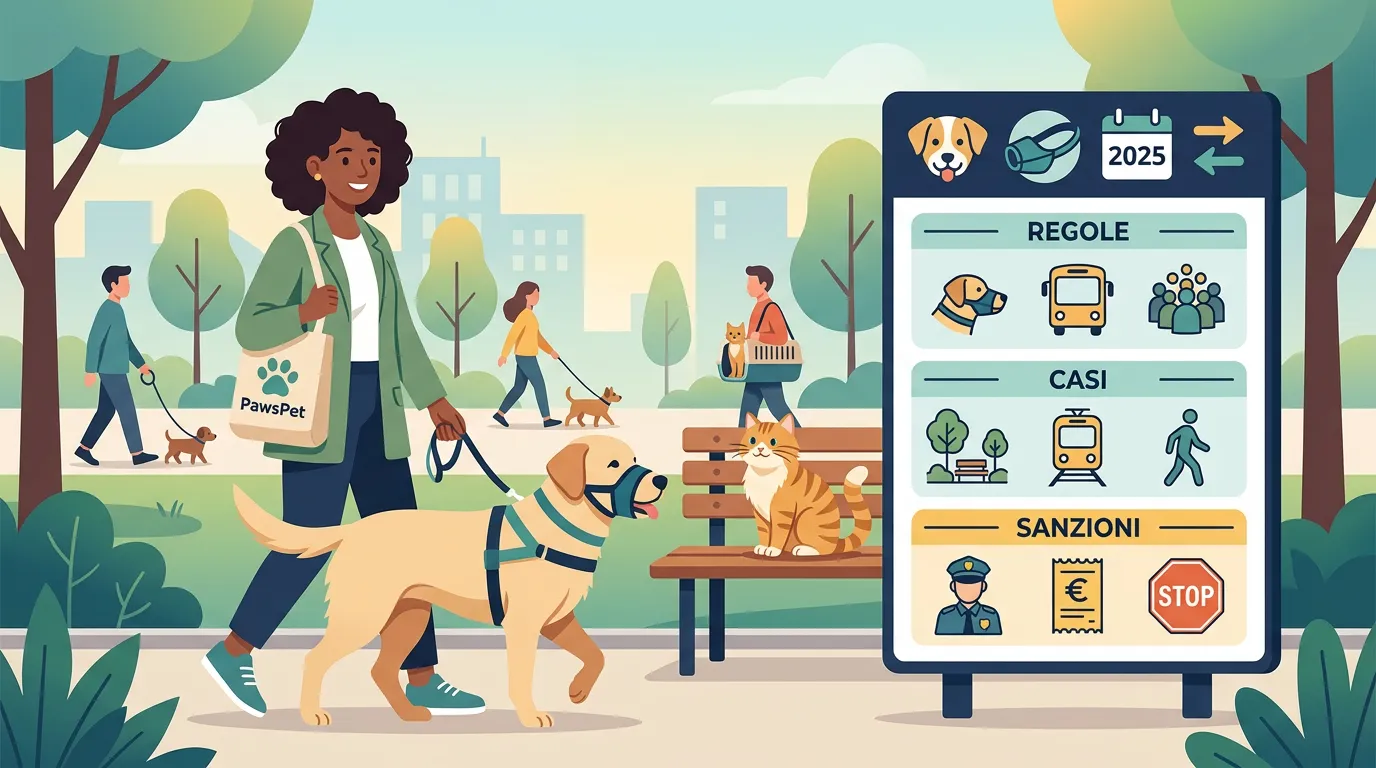
The dog muzzle requirement 2025 is a topic that often creates doubts among owners, trainers, and anyone who lives with dogs in the city every day. Knowing when a muzzle is required, when it is recommended, and how to use it correctly helps avoid fines, tension, and risky situations.
In this guide, you’ll find the updated rules, the cases where a muzzle is truly needed, and some practical tips for handling your dog calmly and responsibly.
Dog muzzle requirement 2025: what the rules say
In Italy, a muzzle is not an accessory to be used at all times, but a device that must be available and used in the cases required by law or by specific risk situations. The most important rule is simple: during walks, the dog must be kept on a leash and have a muzzle with them, to be put on when necessary.
In practice, the dog muzzle requirement 2025 mainly concerns:
- situations where it is required by local regulations or the venue operator;
- public transport and some crowded areas;
- dogs that, due to behavior or context, may create danger or discomfort;
- instructions given by authorities or professionals in specific situations.
It is important to distinguish between having a muzzle available and actually using it: often the muzzle must be carried even if it is not worn all the time.
When a dog really needs a muzzle
A muzzle may be necessary in several everyday situations. The most common ones are:
-
Travel on public transport
Many companies require the dog to be on a leash and have a muzzle available, with rules that may vary. -
Access to public places
Some shops, facilities, or events may have specific rules for large dogs, poorly socialized dogs, or very crowded environments. -
Walks in high-stress settings
Areas with heavy traffic, markets, fairs, or places full of stimuli can increase a dog’s agitation. In these cases, a muzzle can be a useful preventive measure. -
Advice from a veterinary behaviorist or dog trainer
If the dog shows signs of aggression, fear, or strong reactivity, a professional may recommend a desensitization program and, temporarily, the use of a muzzle. -
Temporary safety situations
After surgery, during a veterinary exam, or in delicate handling situations, a muzzle can help protect everyone.
How to choose the right muzzle
Not all muzzles are the same. Choosing the right one is essential for the dog’s safety and comfort.
Main criteria
- Proper size: it should fit well without being tight.
- Ability to pant: the dog must be able to open its mouth enough to regulate body temperature.
- Strong yet comfortable material: basket muzzles are often more suitable for prolonged use than overly restrictive models.
- Secure fit: it should not slip off easily during movement.
Mistakes to avoid
- buying a muzzle “by eye” without measuring the snout;
- using it only when needed, without first acclimating the dog;
- choosing a model that prevents the dog from panting;
- leaving the dog with a muzzle on for too long without supervision.
A good approach is to introduce it gradually, with rewards and short sessions. If the dog has a hard time with it, it’s better to ask for help from a qualified dog trainer.
Practical rules for going out safely
Beyond the muzzle, there are a few habits that really make a difference when managing a dog in the city. They are simple, but effective.
- Always keep your dog on a leash where required.
- Bring the muzzle with you, even if you think you won’t use it.
- Check local rules for parks, beaches, public transport, and facilities.
- Watch your dog’s body language: stiffness, intense panting, avoidance, or staring can indicate stress.
- Avoid forcing exposure to situations that put them at a disadvantage.
- Reward calm behavior to reinforce self-control.
If you want to manage these routines better, tools like PawsPet reminders can help you avoid forgetting documents, checkups, and appointments useful for your dog’s health and well-being.
Safety, prevention, and common sense
Talking about dog regulations is not just about avoiding fines: it means preventing accidents and ensuring a calmer experience for everyone. A muzzle should not be seen as punishment, but as a safety tool to be used wisely and with a positive acclimation process.
In some cases, in addition to the muzzle, it is helpful to work on:
- controlled socialization;
- recall training;
- managing interactions with other dogs;
- monitoring health and behavior.
With good organization, city outings become much easier too. Features like PawsPet health management and reminders can help you keep everything under control in an orderly way.
Conclusion
The dog muzzle requirement 2025 should be understood carefully: often it does not mean using it all the time, but having it available and putting it on when the situation calls for it. With the right choice, a gradual introduction, and a bit of prevention, you can move around with greater peace of mind and follow dog rules responsibly.
If you want to organize your pet’s routine better, PawsPet can help you manage health, reminders, and everyday safety all in one place.
FAQ
Is a muzzle mandatory for all dogs?
Not always. In many cases, it is mandatory to have one with you, while actual use depends on the context, regulations, and the dog’s behavior.
What type of muzzle is best?
In general, a basket muzzle of the correct size is more comfortable and allows the dog to pant, drink, and move better than overly restrictive models.
Can I train my dog to wear a muzzle on my own?
Yes, if the dog is calm. It’s best to proceed step by step with rewards and short sessions. If the dog shows fear or aggression, it’s advisable to contact a qualified professional.