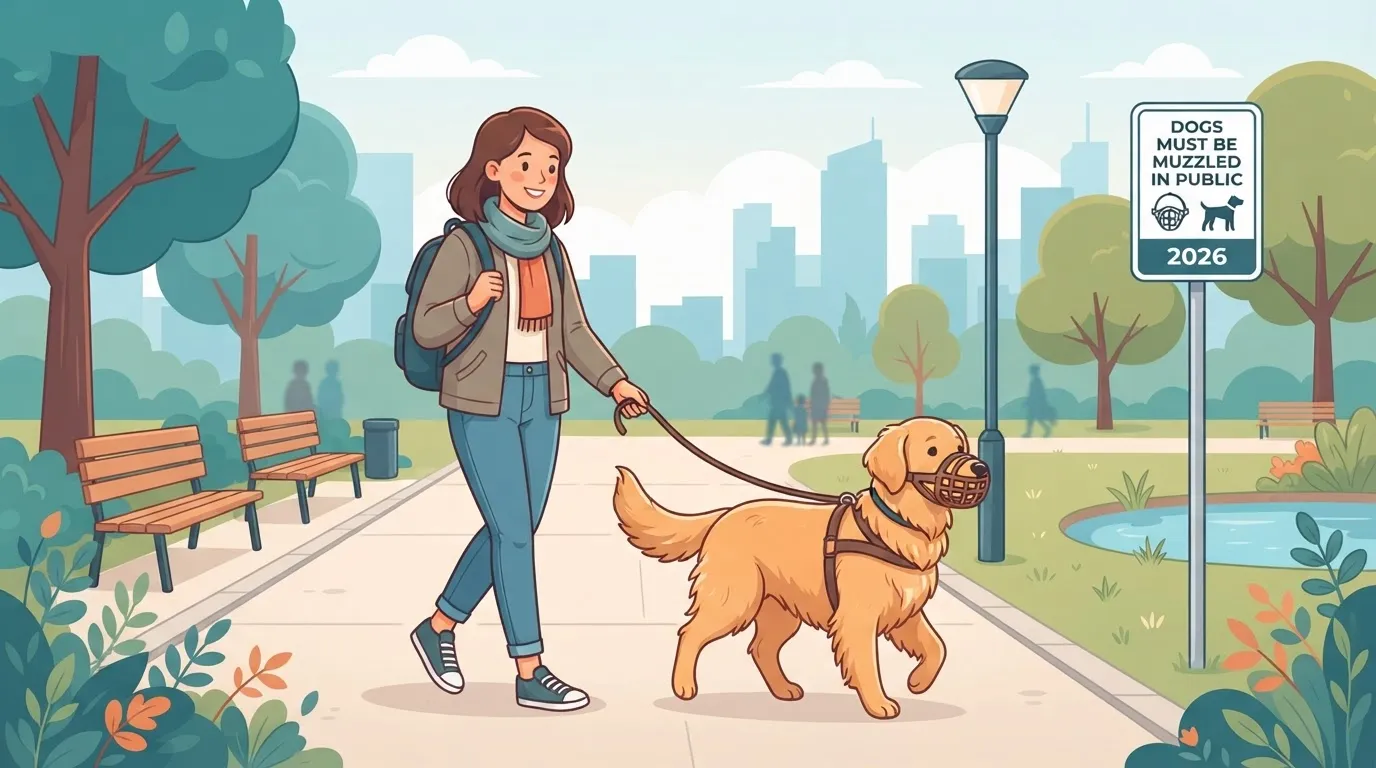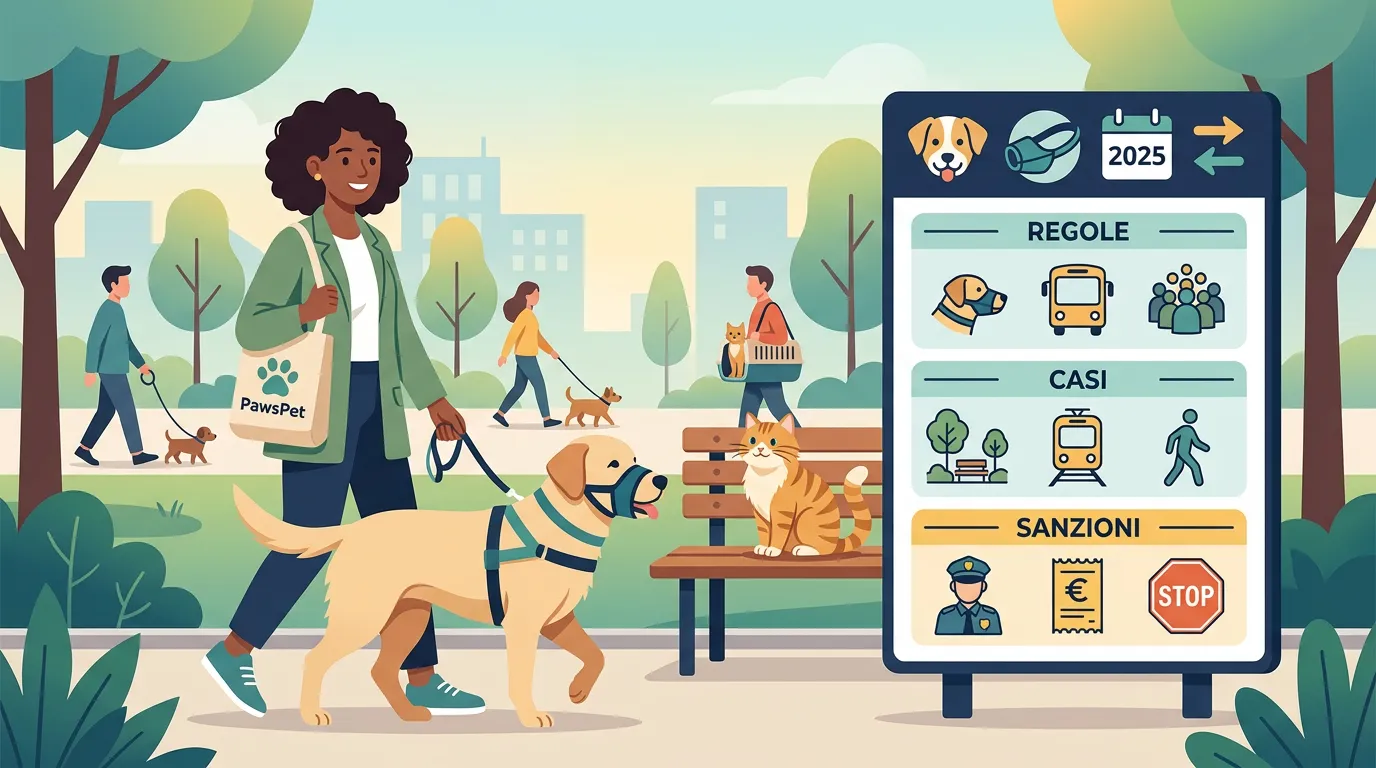
The 2025 dog muzzle obligation is a topic that often raises doubts—especially when traveling, entering public places, or taking your dog into the city. Understanding when a muzzle is required, how it should be used, and what happens in case of violations helps you avoid fines and ensure greater safety for everyone.
2025 dog muzzle obligation: what the rules say
In Italy, dog regulations do not include a general, one-size-fits-all requirement to use a muzzle for every dog in every situation. In practice, a muzzle may be required in specific contexts or when it’s needed to prevent risks for people, animals, or even for the dog itself.
The most common situations in which a muzzle is required or recommended are:
- Crowded public areas: markets, fairs, public transport, stations, and places with heavy foot traffic.
- Contexts where the dog must be controlled: veterinary visits, access to facilities or environments with internal rules.
- Dogs that need extra containment: if the dog shows fear, reactivity, or difficulty managing interactions with strangers.
- Transport and moving around: some companies or facilities may require it as part of internal policies.
It’s important to distinguish between legal obligation, local regulation requirements, and good dog safety practice. A well-informed owner should also check the rules set by the Municipality, public transport, and each individual facility.
When is a muzzle really needed?
The most common question is not just “Is it mandatory?”, but “In which cases is it actually necessary?”. The answer depends on the context and the dog’s behavior.
A muzzle can be useful or even necessary if:
- the dog is in training or during socialization;
- it tends to react unpredictably with other dogs or people;
- it needs to be examined by a professional;
- it’s in a noisy or very crowded environment;
- you’re using means of transport that require extra protection;
- you want to prevent the dog from picking up food from the ground or swallowing objects.
In these cases, a muzzle should not be seen as a punishment, but as a prevention tool. When used correctly, it can become part of dog rules in the city and help make walks calmer and more manageable.
How to choose the right muzzle
Not all muzzles are the same. Choosing the correct model is essential for your dog’s well-being and for complying with the rules.
The main types are:
- Basket muzzles: often the most practical option because they allow the dog to open its mouth slightly, pant, and in some cases drink.
- Fabric muzzles: useful for short, controlled situations, but less suitable for long periods because they greatly limit mouth movement.
- Technical/special muzzles: designed for specific needs, often recommended by a veterinarian or a dog trainer.
To choose well, make sure that:
- it’s the correct size;
- it doesn’t tighten on the muzzle;
- it allows proper breathing;
- your dog tolerates it after gradual introduction;
- it fits the dog’s type of activity.
A common mistake is buying the first muzzle you find without testing fit and comfort. The wrong muzzle can cause stress, refusal, and problems in everyday management.
Fines and owner responsibility
Fines can vary depending on the violation, the context, and the rules that apply. In general, the owner is responsible for the dog’s behavior and for respecting safety regulations.
The most common consequences include:
- fines for failing to comply with local provisions or safety requirements;
- objections in the event of a dangerous incident or aggression;
- an obligation to meet specific instructions;
- possible restrictions on access to certain public places or transport.
For this reason, it’s better not to wait for a critical moment. Carrying a suitable muzzle at all times is a prudent choice—especially if you frequently visit urban areas or places with stricter rules.
How to get your dog used to the muzzle
Using a muzzle effectively depends heavily on habituation. A dog that wears it only in stressful situations will associate the device with something negative. Go slowly.
Here’s a practical approach:
- Show the muzzle without forcing it and reward the dog’s interest.
- Insert it for just a few seconds at a time, using positive reinforcement.
- Gradually increase the duration at home, in a calm environment.
- Pair the muzzle with enjoyable moments, such as walks or treats.
- Never use it as the only management tool: it’s still important to work on education and self-control.
If the dog strongly refuses the device, or if there are worries related to pain, anxiety, or other signs, it’s always best to consult a qualified professional.
Useful tools for easier management
Besides the muzzle, good organization helps prevent routine problems. With an app like PawsPet, you can keep track of health management, reminders for vet visits and follow-ups, and—when useful—also organize outings better with practical features like GPS and a marketplace for selected accessories. It’s a simple way to keep everything more organized, especially if your dog frequently encounters different environments.
FAQ about the 2025 dog muzzle obligation
Is a muzzle mandatory for all dogs?
No. There is no universal requirement for all dogs in every situation. It depends on context, local regulations, and safety needs.
Which muzzle is best for everyday use?
In many cases, a basket muzzle is the most versatile because it’s more comfortable and allows better handling compared with fabric models.
Can I be fined if I don’t carry it with me?
If in a given context the muzzle is required and you don’t bring it, or you don’t use it properly, you could face fines or allegations.
In short, understanding the 2025 dog muzzle obligation means protecting your dog, respecting the rules, and enjoying outings with more peace of mind. If you want to manage your pet’s routines, check-ups, and safety more effectively, PawsPet can help you organize everything in a practical way.