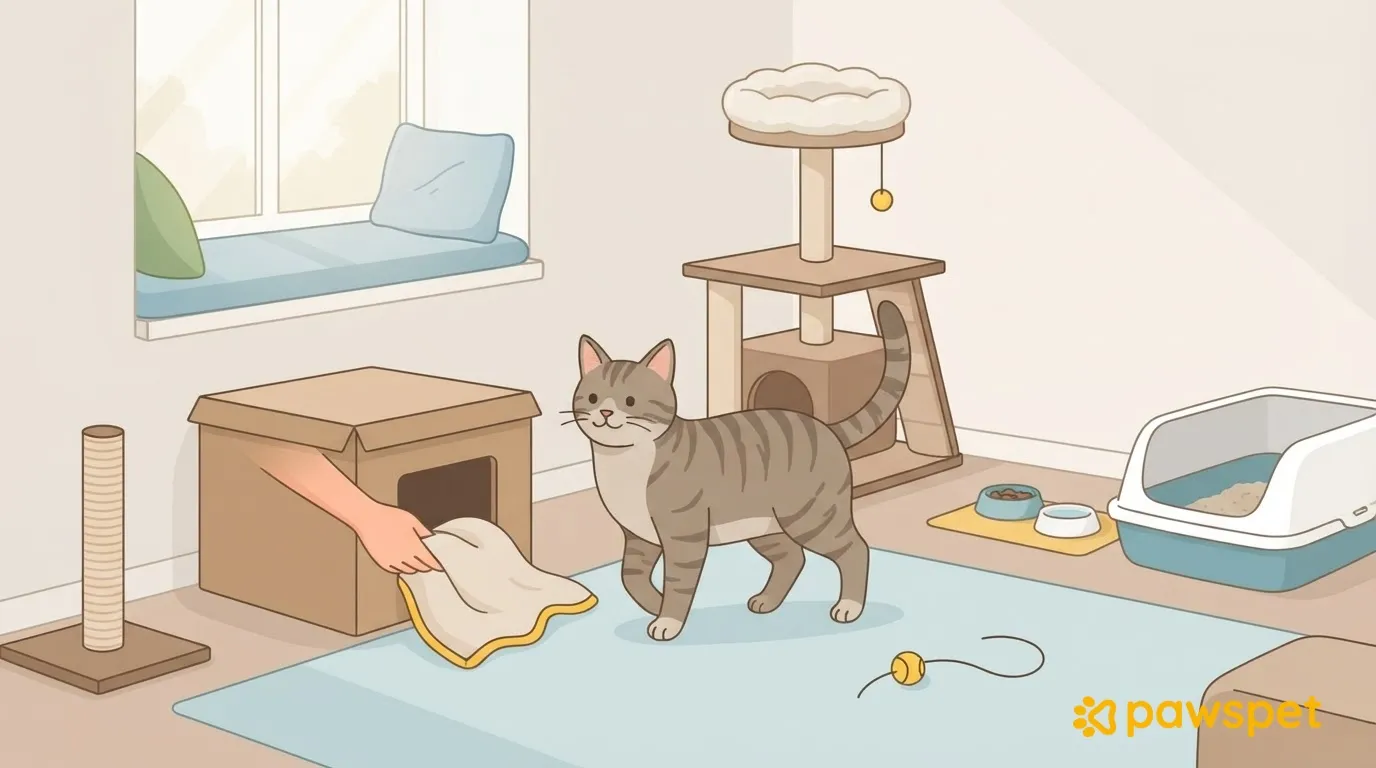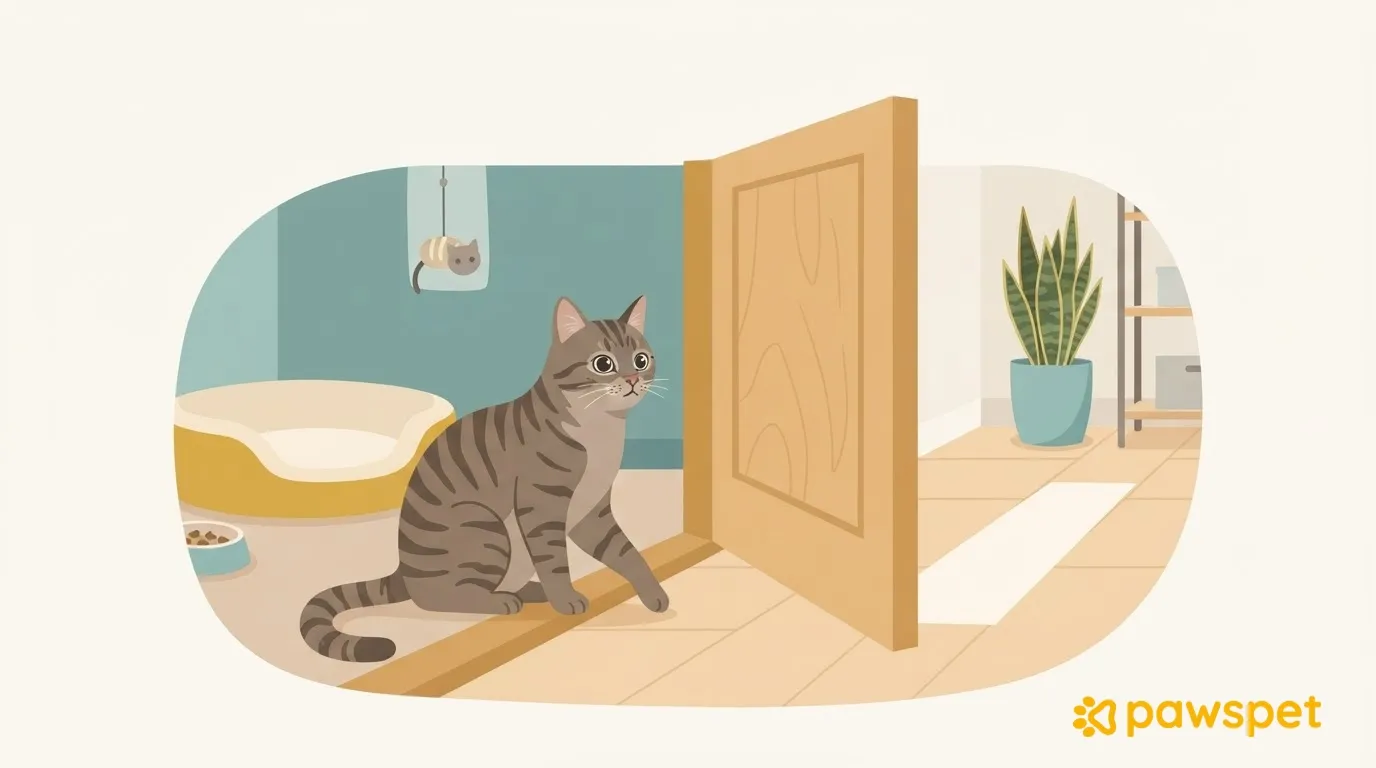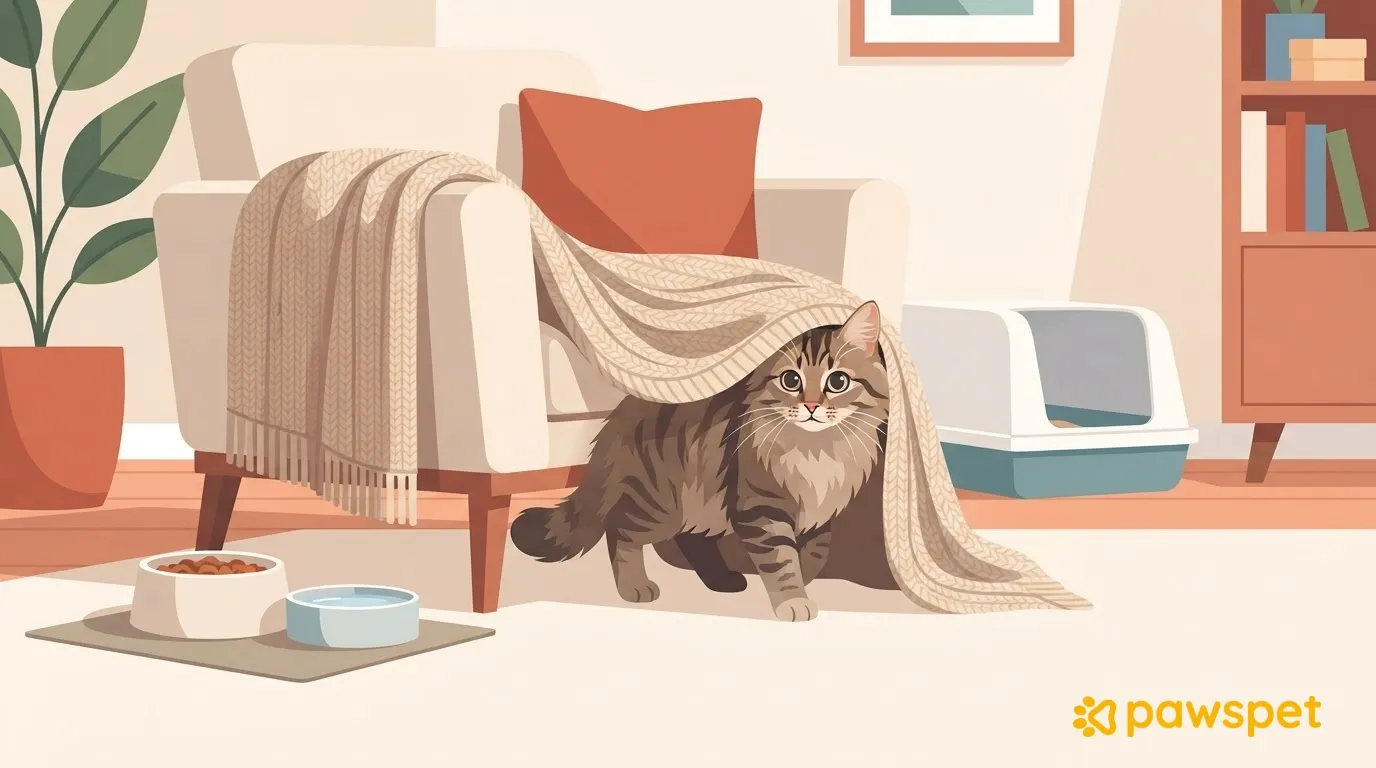
On arrival day, the steps are simple: take the carrier straight to the room you’ve already prepared, close the door, open the carrier door, and don’t rush. An adopted adult cat may hide or eat very little at first as part of adjusting, while some signs call for a vet without delay (you’ll find them in the list below). The first three days are a time to observe, not a deadline the cat has to meet.
The first few minutes: from the carrier to the room
- Make the journey as calm as possible: secure the carrier firmly, speak quietly, and don’t open it during the trip.
- When you arrive, go straight to the room and close the door behind you, checking that the windows are closed. Don’t show the cat around the house.
- Place the carrier on the floor, near a hiding place and away from the door.
- Open the carrier door without tilting the carrier or trying to coax the cat out: the cat will decide if and when to come out.
- Sit quietly at a distance for a few minutes, or leave discreetly: either is fine.
- Keep the door closed and other pets and visitors out of the room.
The first few hours: let your cat hide
In a new environment, it’s normal for an adult cat to crouch low, stay still, squeeze behind or under a piece of furniture, or refuse to leave the carrier. Don’t move the hiding place, including the carrier, and don’t try to coax the cat out, even to check how they’re doing.
If the cat has squeezed into a hard-to-reach spot, don’t pull them out: bring food and water closer, as explained in the next section. Cats often start exploring when the house is quiet, even at night, so not seeing your cat move doesn’t mean they aren’t moving around. Each time you go in, a quick, discreet glance is enough to check that they’re breathing comfortably and don’t have any injuries. If not, call the vet right away.
Food, water, and the litter box: what to monitor
Offer the same food and litter your cat used before. If you don’t know what they were, ask the shelter or rescue so you don’t add more changes to those that come with arriving in a new home. Refresh the water every day. If the cat doesn’t come out of hiding, move the bowls closer, but always keep them away from the litter box.
Each day, note the time and whether your cat has eaten, drunk, urinated, and defecated. If you don’t see them, the bowls and litter box will give you the information you need.
It’s normal for a cat to eat very little on the first day, or only when you’re out of the room. Keep an eye on a cat who eats very little day after day or avoids the litter box, and talk to the shelter or vet. If your cat doesn’t touch food or water, don’t wait days: call the vet and let the shelter know too, as they know your cat’s history. If your cat doesn’t urinate, or tries but can’t, this could be an emergency: see the list below.
A calm presence, contact only if your cat seeks it
Visit the room for short, regular periods, speak softly, and take care of food and the litter box at the same time each day: a predictable routine helps your cat know what to expect. Avoid staring and don’t put your hands in the hiding place. It’s normal for your cat to ignore you or watch from a distance at first. If they come to you, respond calmly and stop as soon as they move away. Save visits from children and guests for later.
Building trust is a topic of its own. For now, it’s enough to be a calm, steady presence.
Scheduling the first vet check
There’s no one right day for every cat: agree on the timing with the shelter, which knows what has already been done, and with the vet, taking into account the advice you’ve received and the stress of arriving in a new home. Bring the documents you were given (health record, vaccinations, spay or neuter details, and any test results) and your notes from the first few days.
Leave the carrier open in the room so it becomes familiar and it’s easier to get your cat into it on the day of the checkup. If you don’t yet have a regular vet in your new area, in PawsPet’s “Services” tab you can filter by “Veterinarian” and check a service’s “Availability” before booking the appointment (professionals and hours depend on your area).
When to call the vet right away
Don’t wait to see how things develop: contact your vet or an emergency veterinary clinic directly, without using apps or searching online, if your cat:
- doesn’t urinate, or repeatedly tries but can’t (this could be an emergency);
- has difficulty breathing or breathes with their mouth open;
- vomits or has diarrhea repeatedly, or there is blood;
- seems very lethargic or weak, or doesn’t react to what’s around them;
- has injuries or is bleeding;
- doesn’t eat or drink at all.
If you’re concerned about a behavior that isn’t on the list, call anyway: this is general guidance and doesn’t replace advice from a vet. Write down the numbers for your vet and an emergency veterinary clinic now so you won’t have to look them up in an emergency.
The next step
When your cat eats, uses the litter box, and comes out of hiding even when you’re there, you can gradually start building contact: that’s the next step, at your cat’s own pace. If your cat is still very reserved after three days, it doesn’t necessarily mean there’s a problem. But if they’re eating very little or avoiding the litter box, talk to your vet. In the meantime, keep a sheet of paper or a note with the times, meals, litter box use, and behavior each day: it will help you spot changes and describe them to the vet.