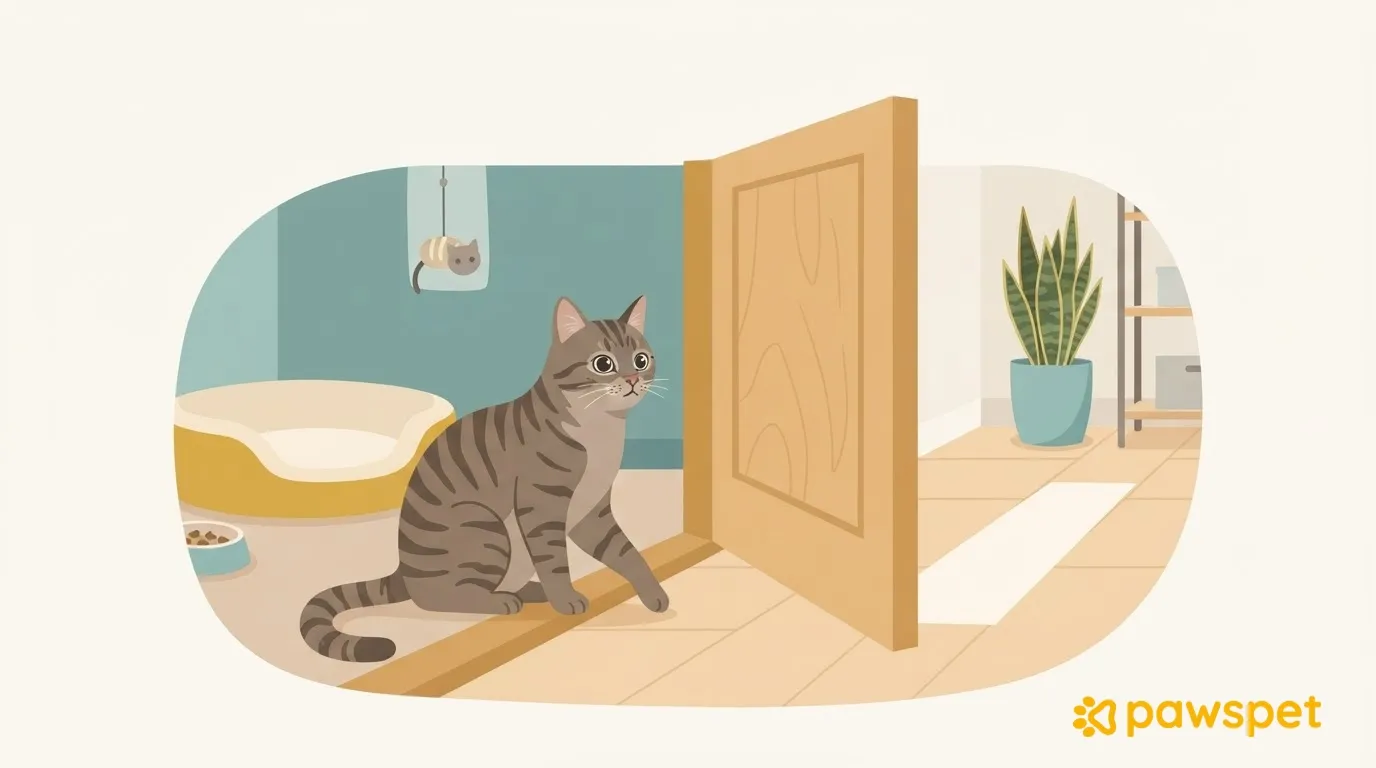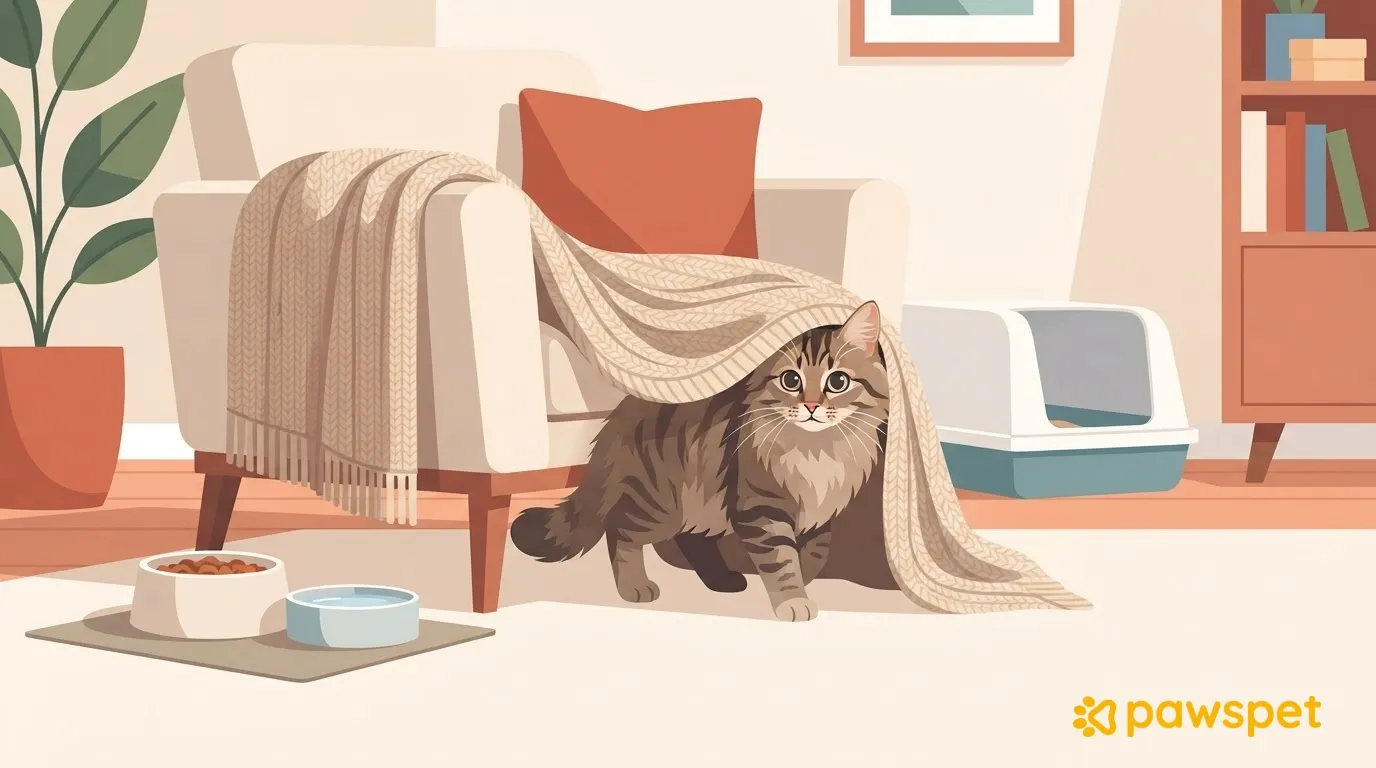
If you're about to bring home an adult cat from a shelter, rescue, association, or foster home, it's a good idea to prepare a small room with a door that closes and little foot traffic: a complete home base where they can find everything without having to face the rest of the house. Home and people are unfamiliar to them; for you, the room is a place to observe how they eat, drink, and use the litter box. This is a temporary arrangement: their behavior, not the calendar, will tell you when to give them access to more space.
Which room to choose
Choose the room before setting it up, based on these criteria:
- a door that really closes;
- little foot traffic, away from the entrance and noisy appliances;
- a comfortable temperature and natural light;
- space for you to sit on the floor without crowding them;
- few pieces of furniture, so there are fewer inaccessible gaps.
A study, guest bedroom, or another little-used room will work. A bathroom can work only if it's large enough and used infrequently enough to keep the litter box away from food; otherwise, another room is better. If no room is perfect, choose the one with the door that closes best, the least foot traffic, and the fewest gaps.
How to organize the space
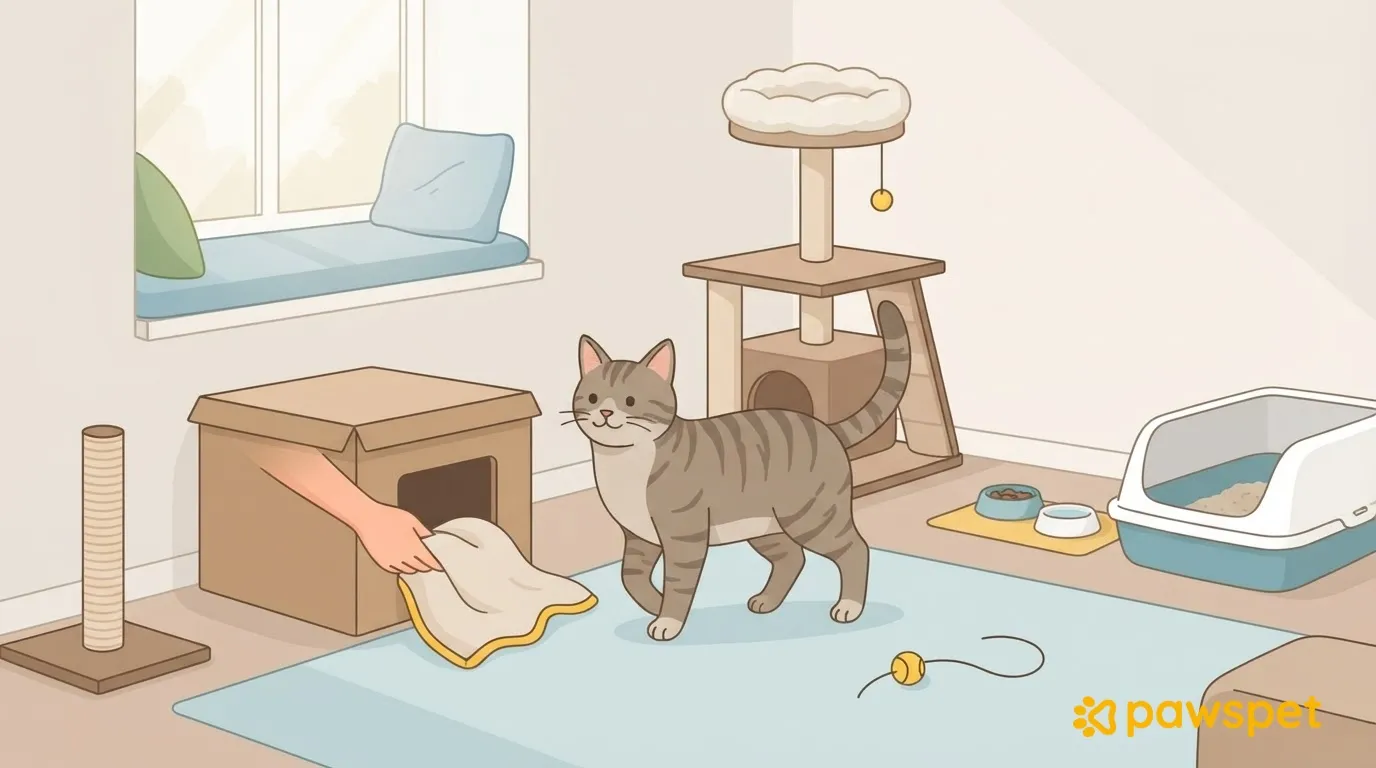
Four zones are enough, each with a specific purpose:
| Zone | Where | Why |
|---|---|---|
| Hiding and resting | In the corner farthest from the door, with at least two options: for example, a box with two openings and the carrier left open with a blanket | Being able to choose where to hide helps them feel safe, and a box with two openings keeps them from feeling trapped; the carrier becomes a familiar place, useful for future visits too |
| Food and water | In a quiet spot, away from the litter box | Cats generally prefer to keep food separate from where they relieve themselves, and you can quickly see how much they eat and drink |
| Litter box | In a quiet, easy-to-reach corner, away from bowls and the door | They can use it without feeling exposed or disturbed, and you can quickly tell whether they use it |
| High perch and scratching post | A sturdy shelf or tall scratching post, plus a scratching post near the resting spot | From up high, they can survey the room; with a scratching post near their resting spot, they can stretch and scratch as soon as they get up |
The idea is simple: keep the routes between zones short, without making the cat cross exposed spaces. That way, the cat can move around safely and you can observe without making them uncomfortable.
Making the room safe
- Windows: Keep them closed when you're not there, and take care with tilt-and-turn windows too, where a cat can get stuck. At the end of spring, warmer weather means windows are opened more often, but an ordinary insect screen is not cat-proof.
- Inaccessible spaces: Securely block off spaces behind and under furniture, storage beds, and sofas, and provide a hiding place they can get into instead.
- Cords and small objects: Remove cords, curtain cords, elastic bands, threads, and small objects.
- Plants and products: Move any plants whose safety you haven't confirmed with your veterinarian, and keep cleaning products and other household products closed away.
- Door: Open and close it carefully, always knowing where the cat is, and agree on the rule with the whole family.
What to ask the shelter and bring home
Before pickup, ask the person caring for the cat:
- which litter and type of litter they use;
- what food they eat and at what times;
- where they like to rest or hide;
- how they react to people, noise, and being handled;
- what health information and documents you'll be given.
For the first few weeks, it's a good idea to keep using the same litter and food as the shelter: they're familiar constants in a new place. Make any changes gradually and in consultation with your veterinarian. Also ask for a blanket with their scent, put it in the resting area, and don't wash it right away.
To keep the documents you've received close at hand, when you create your cat's profile in the PawsPet app, the final step prompts you to upload them right away, for example the adoption document and health record.
Mistakes to avoid
- Leaving the door open to see if they come out. Keep it closed: in an unfamiliar home, they could squeeze into a place you can't reach.
- Pulling them out of their hiding place. Leave them where they are and check from a distance that they eat, drink, and use the litter box.
- Putting the bowls next to the litter box. Keep them at opposite ends of the room.
- Rearranging the room every day. Leave everything as it is: finding things in their usual places reassures them.
- Keeping the TV or music loud, or using strong air fresheners. Low volume and neutral scents are better: a cat's hearing and sense of smell are very sensitive.
- Leaving toys with strings unattended. Use them only when you're there and put them away right after.
- Inviting friends over in the first few days. Put visits off: for now, the people who live in the home are enough.
Checklist before pickup
- Room chosen and checked point by point.
- Four zones ready.
- Blanket with their scent, requested from the shelter.
- Same food and litter as at the shelter.
- Carrier ready.
- Phone numbers for the shelter and a veterinarian.
- Family rules agreed on, starting with the door.
The day before, get down on the floor and look at the room from the cat's height: gaps, cords, and places they could squeeze into are much easier to spot from there.
FAQ
How long should they stay in the starter room?
There's no set length of time: appetite, litter box use, and willingness to explore are what matter. Until you see all these signs, it's best not to give them more space; if anything concerns you, ask your veterinarian.
Does it make a difference if there are other animals in the home?
Yes: the room also keeps them separated, so choose one the other animals don't need to pass through and make sure the door closes properly. Introductions are a separate, gradual process that shouldn't be rushed.