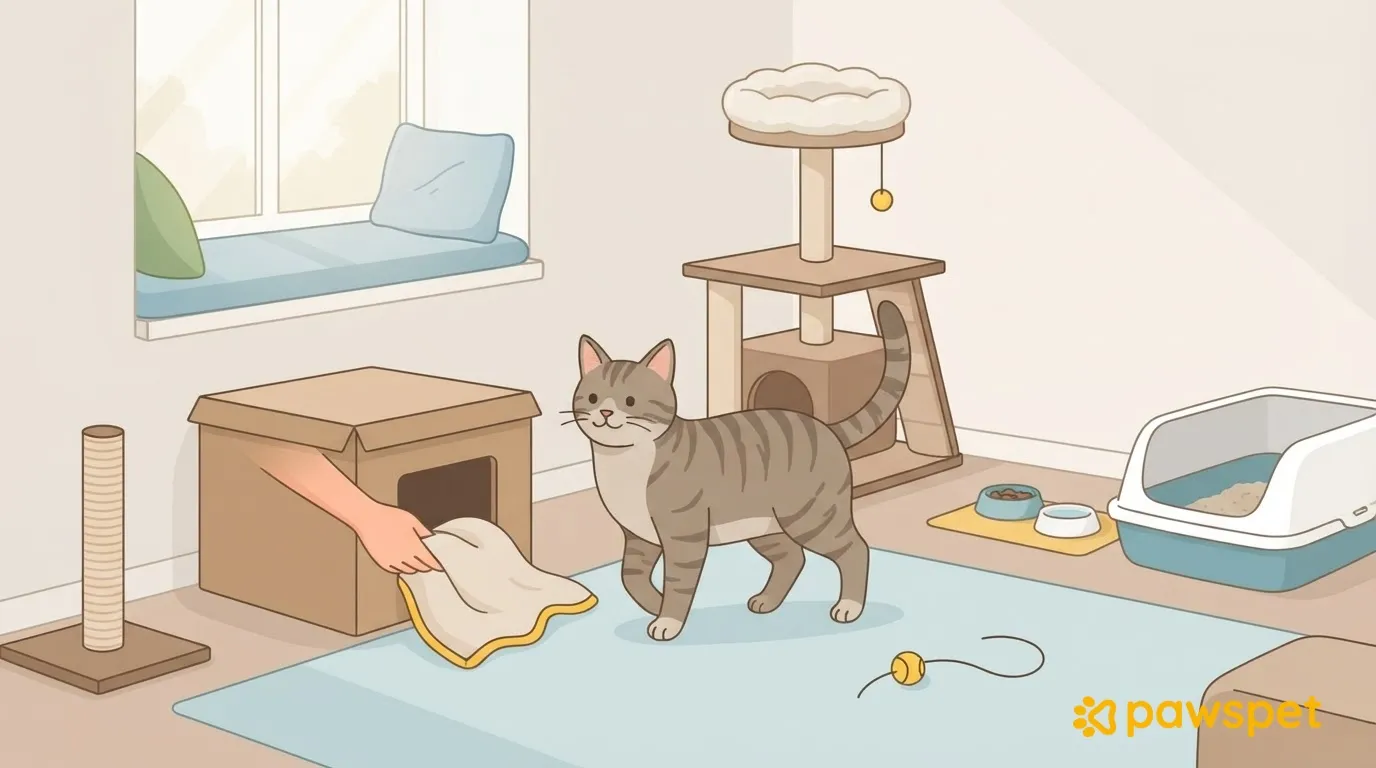
There’s no fixed date for letting a newly adopted adult cat out of their starter room. Open up the rest of the home when they treat that room as their own territory and the home is ready. Expand their territory in circles, one area at a time, leaving the starter room as a safe base they can return to. Your cat will tell you when to move forward: curiosity is a green light; unease is a sign to slow down.
Signs they’re ready
Look for consistency, not a single good moment. It’s a good time if your cat:
- eats regularly, including while you’re in the room, and uses the litter box without any problems;
- explores the whole room and rests outside their hiding place;
- stays calm when you enter and with the usual sounds of the home;
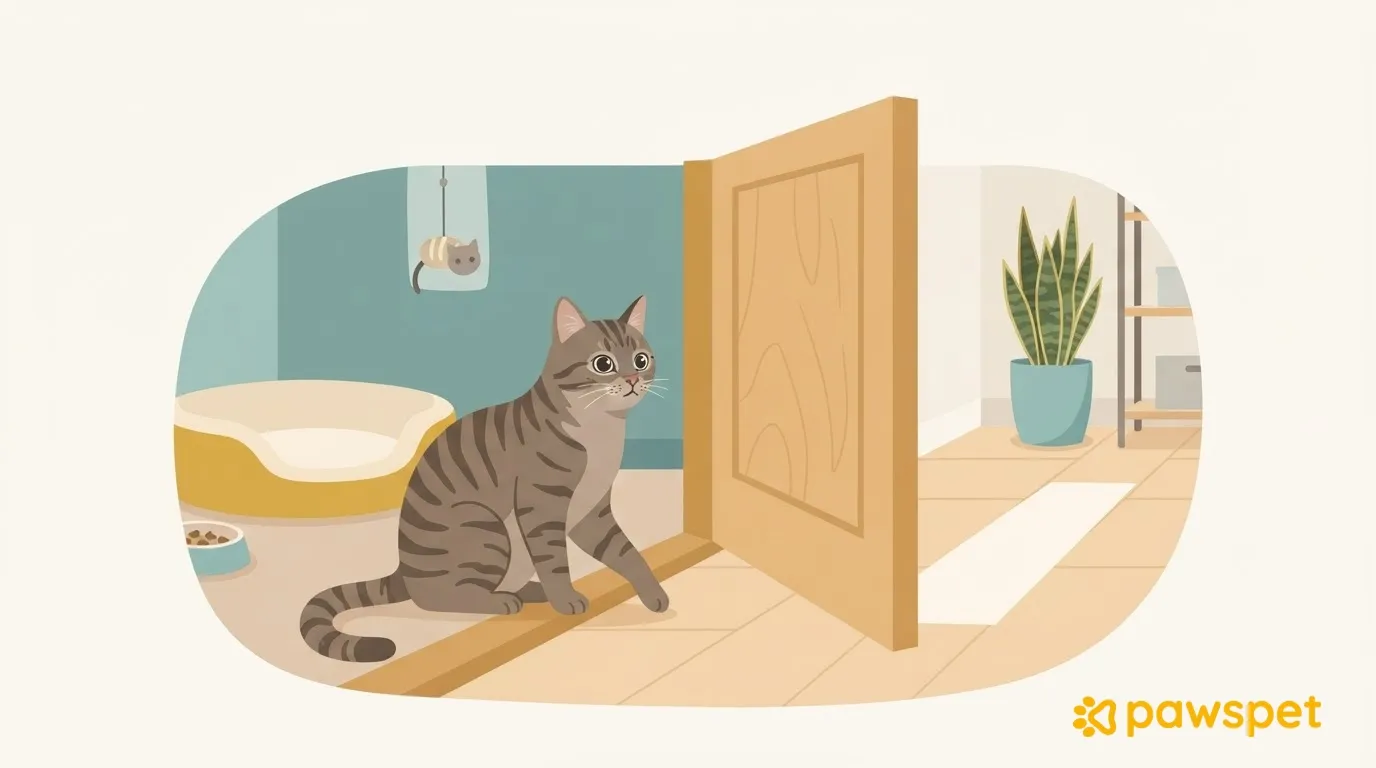
- approaches the door, sniffs underneath it, and watches it curiously.
It’s better to wait if your cat:
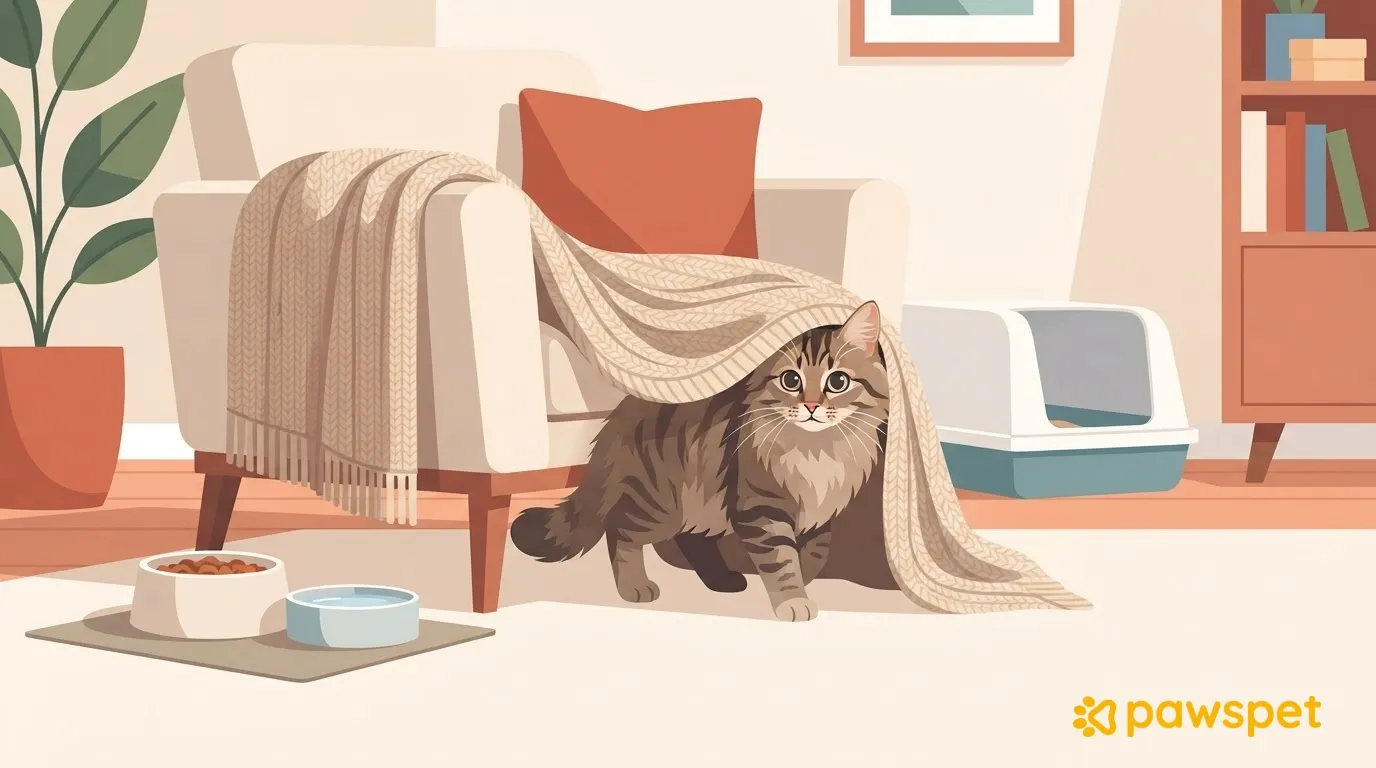
- hides as soon as you enter;
- walks with their body low, almost flattened against the ground;
- only eats when they’re alone.
In this case, waiting isn’t wasting time: the room doesn’t fully feel like theirs yet. If the signs are there, though, there’s no need to put it off: a curious cat may get bored in a room they’ve already explored completely. But the rest of the home also needs to be ready. Choose a quiet day, with no guests, work, or furniture to move.
Prepare the home and reduce the risk of escape
In warm weather, windows and balconies are often left open, and a frightened cat will immediately look for a way out. Before opening the room door, check:
- Front door: keep it closed; everyone should check where the cat is before opening it.
- Windows and balconies: close or secure them appropriately; a tilted-open window can be especially dangerous.
- Washing machine, dryer, and dishwasher: check inside before starting them.
- Furniture: block off spaces behind and inside it where it would be difficult to retrieve your cat.
- Cords, small objects, and household products: put them away safely.
- Plants: remove them or check with your veterinarian which ones are safe to keep.
- Along the route: leave safe hiding places and high spots where your cat can retreat if frightened.
- Starter room: leave the litter box and food and water bowls where they are.
Think about identification, too: it matters if your cat gets away and you need to report them missing. Ask the shelter or rescue organization how to update the microchip registration after adoption in your area. A microchip can only help identify you if the information is up to date. Keep recent, clear photos ready as well. To keep these details close at hand, you can store your cat’s microchip number in their PawsPet profile. You can copy it with one tap from the “Anagrafica” tab, and store up to six up-to-date photos.
Open up one area at a time
A gradual transition isn’t about showing your cat the home; it’s about letting them choose when to come out. Here’s how:
- Choose a quiet time and stay home. Close off rooms that aren’t ready yet. At first, your cat should only have access to the area closest to their safe base, such as the hallway.
- Open the room door and leave it open. Don’t carry your cat out or encourage them to leave: no pressure.
- Sit in a nearby room without following them, and let them come and go on their own. If they don’t come out, don’t insist. If they sniff around, pause, and calmly turn back, that’s curiosity. If they run to hide or flatten themselves against the floor, it’s too much for them: limit their space again.
- Once they move around calmly in that area and rest in the open, add the next area: their territory grows in circles.
- Keep the starter room accessible at all times, with a clear route in and out: it’s their safe place.
- Don’t move the litter box all at once. If you need a second one in a large home, add it in a quiet spot.
- Until you know their habits, you can close them in their safe base when you leave home.
People, noise, and visitors
Agree on a few rules with the family: no chasing or picking the cat up. Children should sit down and let the cat approach them, without chasing. Put off visitors or limit them to one calm person at a time. If guests do come, make sure the cat is in their safe base with the door closed before they arrive.
Keep vacuuming and noisy work away from the areas your cat is exploring. If there are other animals in the home, plan a gradual introduction specifically for them rather than leaving it to chance by opening all the doors.
If they start hiding again: take a step back
After a fright, such as a loud noise, a slamming door, or a visit, your cat may start hiding again. That happens, and it doesn’t erase their progress. Limit their space again, remove whatever frightened them, keep up their meal and play routine, and try again later, without scolding them or pulling them out of hiding.
If the change happens suddenly without an obvious reason, or if you notice reduced appetite, litter box problems, or low energy, contact your veterinarian: it may not be just fear.
Before opening the door again, walk through the home at your cat’s level, even on all fours, and make a note of what needs to be closed off or moved.
FAQ
Can I let them go out on the balcony or into the garden?
Not while they’re settling in. In a place they don’t know well yet, a frightened cat may wander off or squeeze into a spot you can’t reach. A balcony is only an option if it’s properly secured. Outdoor access is something to consider later, once you know your cat and have talked it over with your veterinarian—not as part of the settling-in process.
They’re scratching at the door to get out, but the home isn’t ready. What should I do?
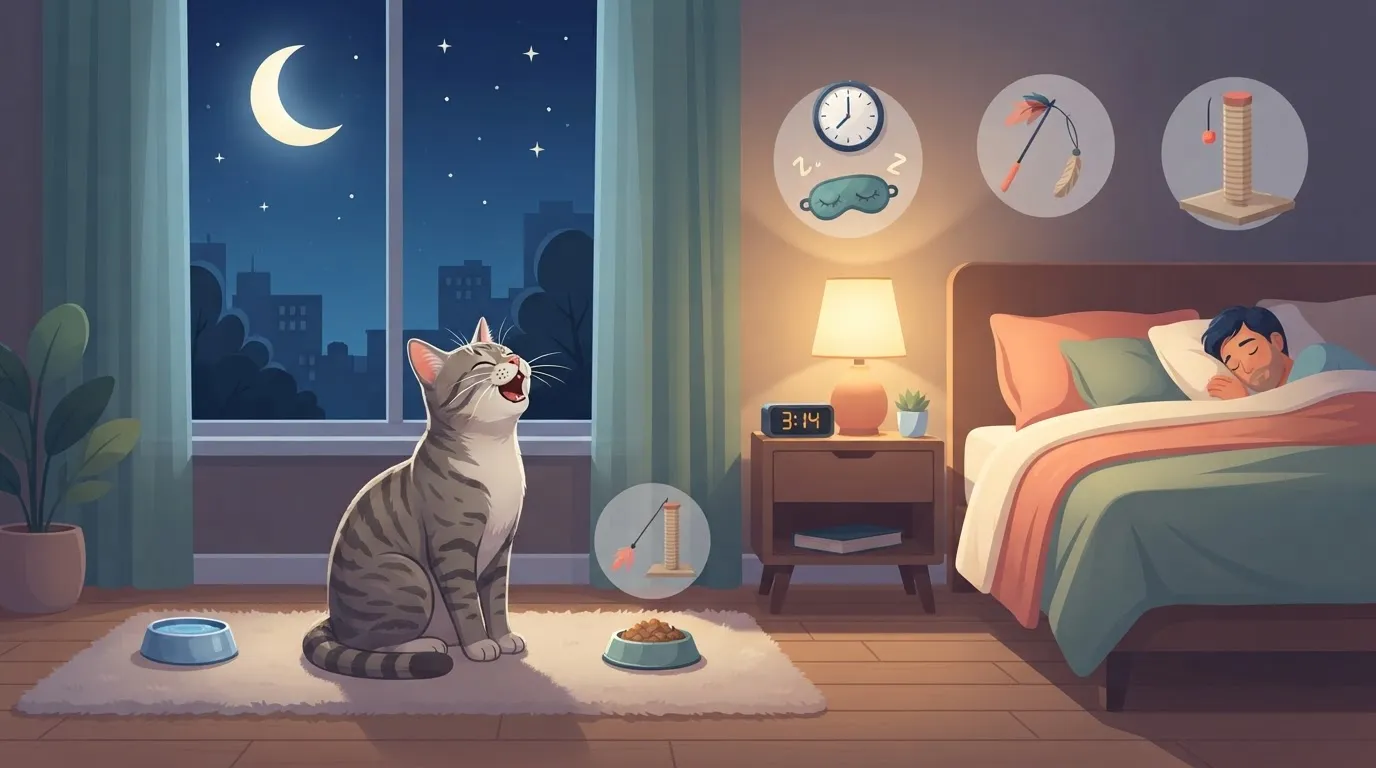
Give their curiosity another outlet in the room: more play, food hidden in small places for them to find, or a raised spot where they can observe. Don’t open the door while they’re insisting: that would be a decision made under pressure, and you risk reinforcing the behavior. Use the time to finish preparing, and open the door when you decide, at a quiet moment.