Play biting is normal during the first few months, and if everyone at home reacts differently, no one is to blame. Puppy biting tends to decrease when all the adults respond in the same way. A shared response means following a simple, punishment-free protocol: prevent, redirect to a toy, calmly interrupt, reward calm behavior, and let a tired puppy rest.
Why puppies bite and when it is more than play
During the first few months, when puppies bite hands and clothes, they are usually exploring, playing, or releasing excitement with their mouths. Ankles, shoelaces, and sleeves move and are always within reach: easy targets.
It may be more than play if you notice:
- bites that break the skin;
- a stiff body while biting;
- growling while guarding food or objects;
- fear or sudden reactions when touched in certain places.
If you notice these signs, go to the section on getting professional help: this protocol is for normal play biting.
A shared four-step response
Prevent
Don’t wrestle with your hands: to a puppy, they become toys to bite. Keep chews and suitable toys in every room where the puppy spends time, always within reach. Tug games are fine only with a long toy and rules everyone has agreed on: who plays and how the game ends.
Swap right away
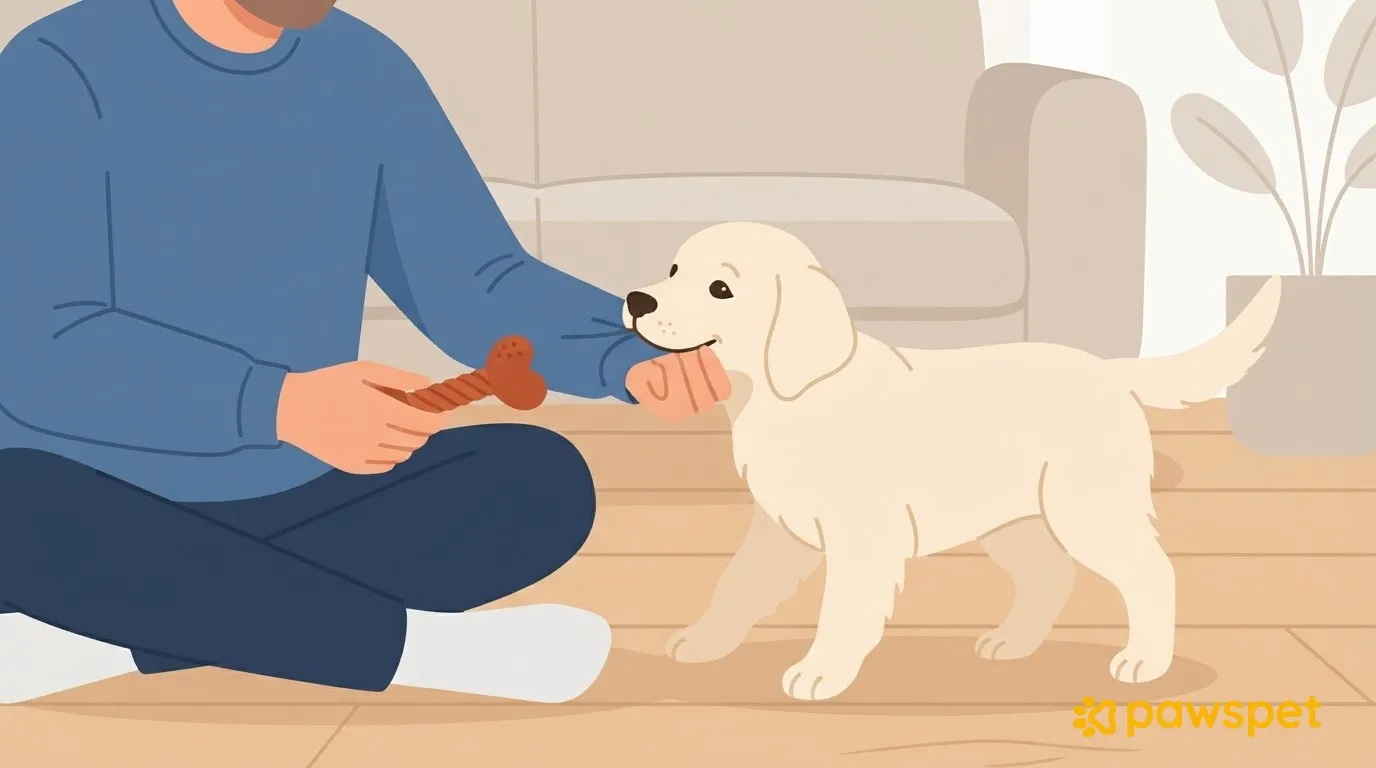
As soon as teeth touch skin or clothes, offer a toy and praise the puppy when they take it. For example, if the puppy bites your ankles in the hallway, stop and place a toy on the floor nearby.
Calmly interrupt
If the puppy keeps biting, the game is over: stand up and walk away, or leave the puppy briefly behind a baby gate, without scolding; then calmly resume. No raised voices or chasing.
Reward calm behavior
Notice calm moments too: when the puppy licks, lets go of your hand, or lies down, praise them in a soft voice or give them a small treat.
What to avoid
- Yelling: a loud voice can excite or frighten the puppy.
- Hitting: it frightens the puppy and doesn’t teach them what to do instead of biting.
- Squeezing or holding the muzzle shut: it frightens the puppy and can make them wary of hands.
- Rolling the puppy onto the ground: this is a struggle that can excite or scare them.
- Pulling your hand away suddenly: a sudden movement can look like an invitation to chase it.
- Allowing some people to play with their hands: this confuses the puppy because the rule keeps changing.
When puppies bite more
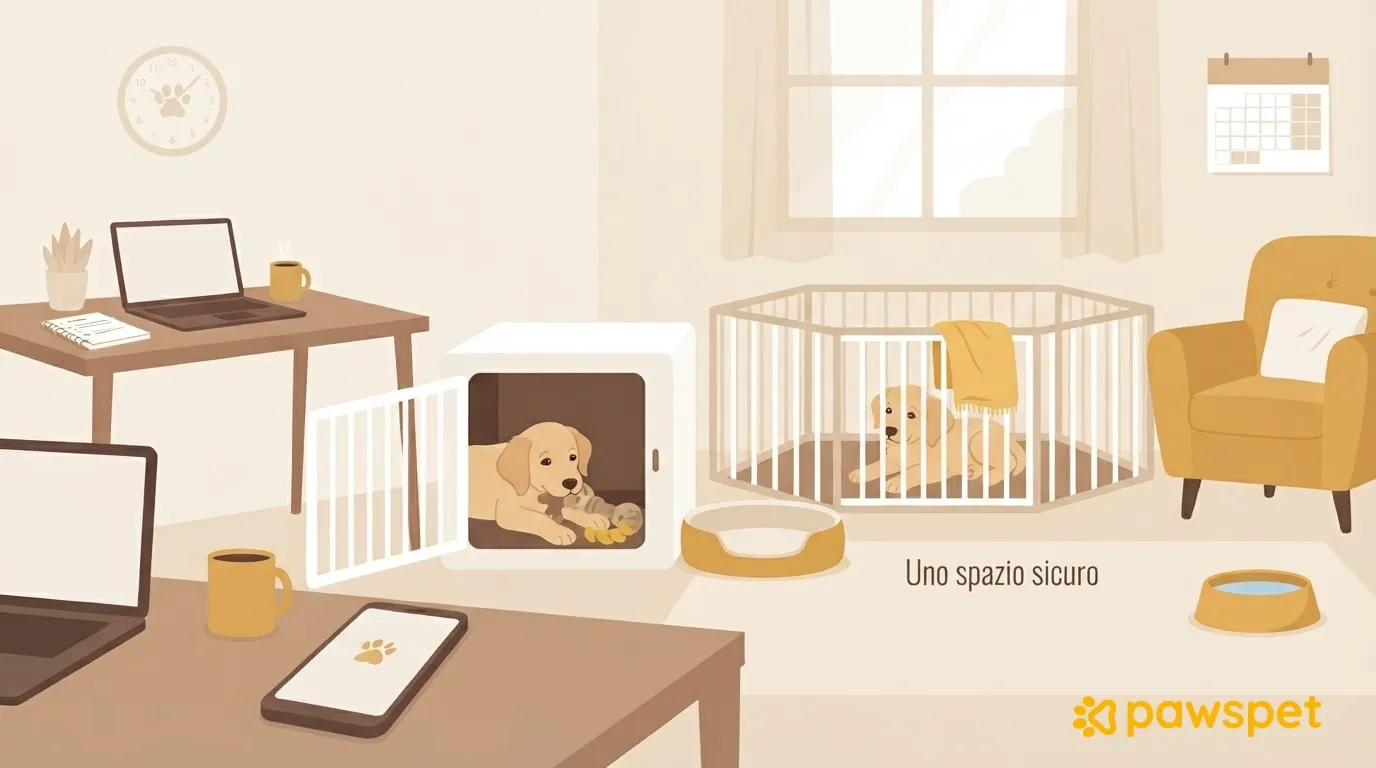
Biting often increases in the late afternoon and evening, after vigorous play, during cuddles on the sofa, when greeting people, and when guests arrive. A tired or overstimulated puppy is more likely to bite: at those times, protected rest in a quiet place, such as a playpen or crate, may help more than another game. Guide them there without scolding: this is rest, not punishment. Also decide who will take the puppy to rest in the evening.
One set of instructions for adults, children, and guests
Write down a few rules and keep them somewhere visible, such as on the fridge or in the family chat: the shared word for ending play (said calmly), which toys to use, who plays tug, and where the puppy rests.
| Situation | What the adult does | What to avoid |
|---|---|---|
| Bites your ankles while you walk | Stops and places a toy on the floor nearby | Walking faster or waving your feet |
| Bites your sleeves during cuddles | Stops cuddling, offers a chew, and resumes when the puppy is calm | Pulling the sleeve away suddenly |
| Bites while you dry or brush them | Takes a break, offers a chew, and resumes as soon as the puppy is calm | Insisting or holding them still to finish quickly |
| Bites a child playing on the rug | An adult steps in: the child stops, and the puppy gets a toy | Leaving them together without an adult nearby |
| Bites while greeting a guest | Offers a toy or takes the puppy to their own space; the guest greets them when they are calm | Greeting them in a high-pitched voice with excited hand movements |
Children. They are not responsible for managing the biting: they should stop, keep their hands close to their bodies, and call an adult. Children should play with the puppy only when an adult is present.
Grandparents and guests. When they arrive, two simple reminders are enough: “Greet the puppy calmly, without playing with your hands” and “If the puppy bites you, stop and call us.”
When to contact a trainer or veterinarian
Contact your veterinarian if the puppy seems to be in pain when touched, or if their appetite or energy levels change.
Ask a dog trainer or behavior consultant for help if, after a few weeks of consistency, the biting hasn’t decreased, if bites break the skin, if fear or growling appears, or if children are often involved. If you decide to get support, you can use the Services section of PawsPet to find trainers and behavior consultants in your area, read profiles and reviews, and check availability before booking.
How to get started today
- Spend five minutes together as adults and choose the shared word for ending play.
- Place chews and suitable toys in the rooms where the puppy spends time.
- Write down the rules and keep them somewhere visible.
- For one week, observe and note when the biting increases.
FAQ
Should I say “ouch” or yelp like another puppy would?
It isn’t essential: some puppies stop, while others get more excited by high-pitched sounds. If your puppy gets worked up, stick to the calm break in the protocol.
Do puppies bite more because they’re teething?
It can happen, but only a veterinarian can assess your puppy’s mouth. Offer chews suited to their size and age, ask your veterinarian which ones to use, and report any persistent discomfort or pain.