With a puppy, teaching them to stay alone isn’t enough. In the first few months, when the days at home come to an end, you need four things in place: a map of the hours when no one is home, absences introduced gradually, people to cover the longer stretches, and a safe area for the rest of the time. How long a puppy can stay alone depends on the individual puppy and should be assessed with a veterinarian or trainer.
Start with a schedule: who is home, and when
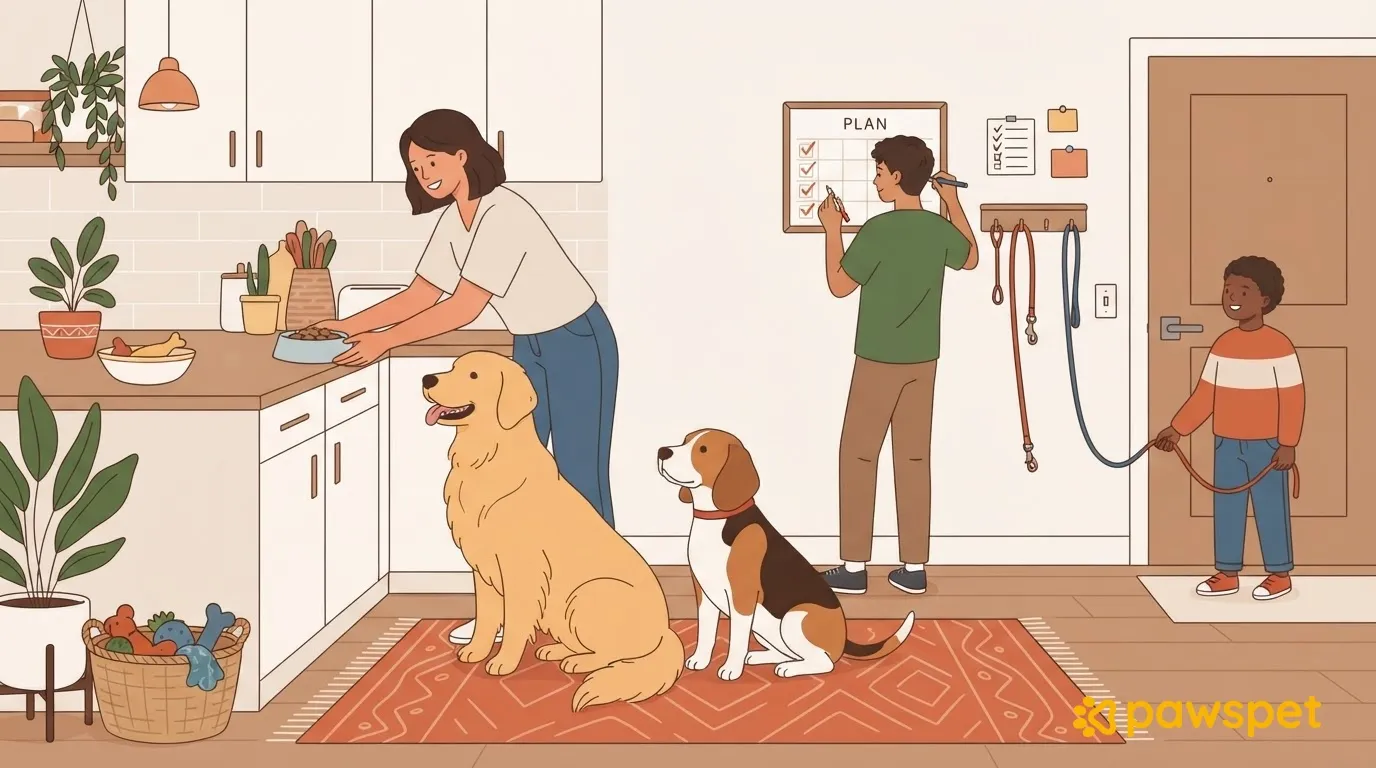
Copy the table below onto a sheet of paper, which you can share with the other adults in your household, and fill it in. The time slots are just an example, not recommended hours: adapt them to your work schedules.
| Time slot | Monday–Friday | Weekend | Who is home | Needs covering |
|---|---|---|---|---|
| Early morning | ||||
| Mid-morning | ||||
| Lunchtime | ||||
| Afternoon |
Under “Monday–Friday” and “Weekend,” write where you’ll be (home, office, shift); under “Who is home,” note who will stay with the puppy; and under “Needs covering,” note the hours when no one will be there. These are the gaps you need to fill. Review the schedule when work shifts change.
Before looking for outside services, discuss the simplest options as a family: stagger days at home among the adults during the first few weeks, alternate remote-work days where possible, come home at lunchtime, or ask family members or neighbors for help.
Teach your puppy to stay alone, one step at a time
To get your puppy used to being alone, follow this order:
- The puppy stays in another room, behind a baby gate, while you’re at home.
- Then try brief outings from the house.
- Then try longer absences, only if the puppy remains calm.
At every stage, leave and return without making a fuss: keep your tone calm and don’t make a scene. When you go out, leave a chew or enrichment toy suitable for a puppy.
Let your puppy set the pace, not the calendar. If you notice continuous crying, attempts to get out, destruction, or accidents caused by distress, go back to the previous step and start again more slowly.
Who can cover the hours when no one is home
The gaps in your schedule need to be covered by people, not just training. Options include:
- Family and neighbors: reliability, consistent schedules, and following the same house rules are important.
- Pet sitter: a visit to your home in the middle of the day.
- Dog walker: only if your veterinarian confirms that your puppy can go outside and meet other dogs.
- Group services, such as dog daycare: only after asking your veterinarian when they’re appropriate and checking the service’s requirements.
When choosing, look for experience with puppies, continuity with the same person, and a willingness to have a trial meeting with an adult from your household present and follow your rules. For a midday visit, you can use the “Services” section of the PawsPet app to search for pet sitters in your area, read their profiles and reviews, and check their available hours before booking.
A safe area for the hours without an adult
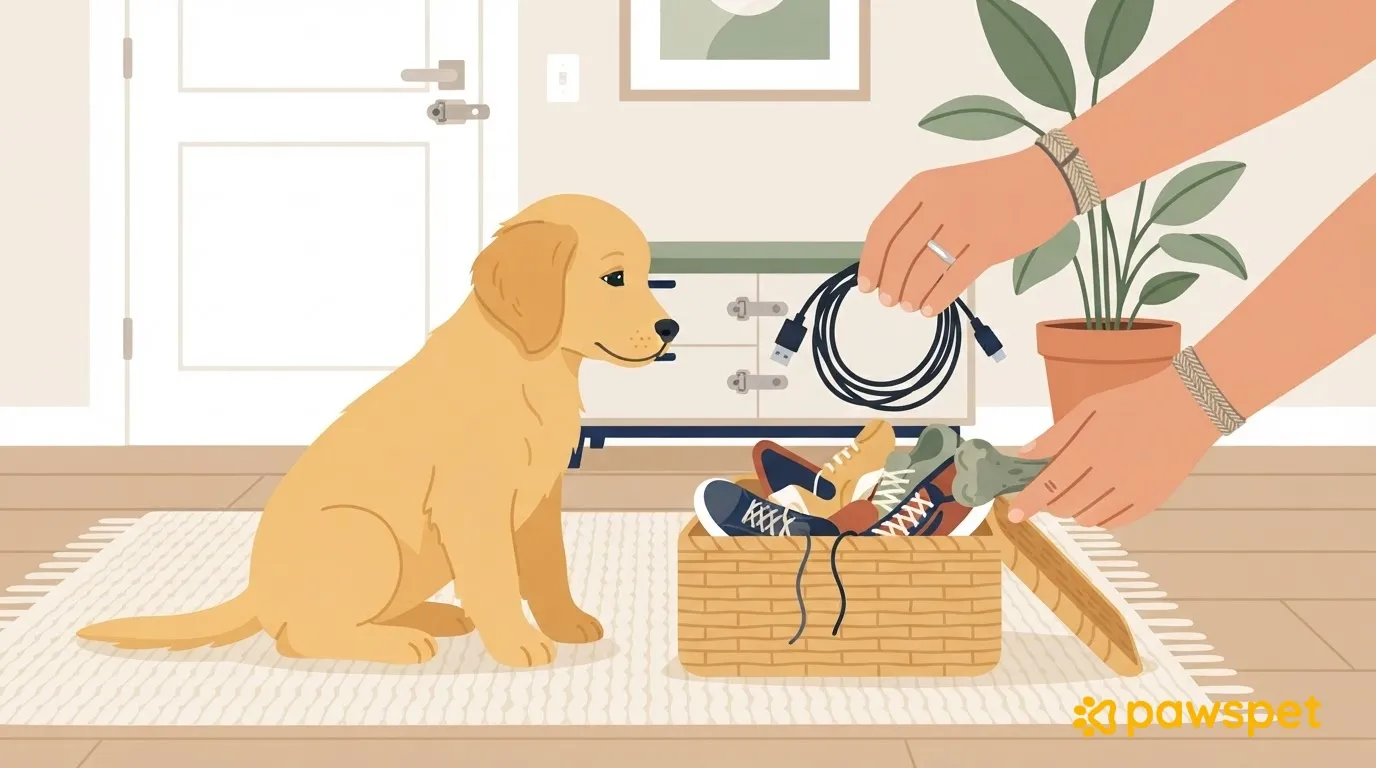
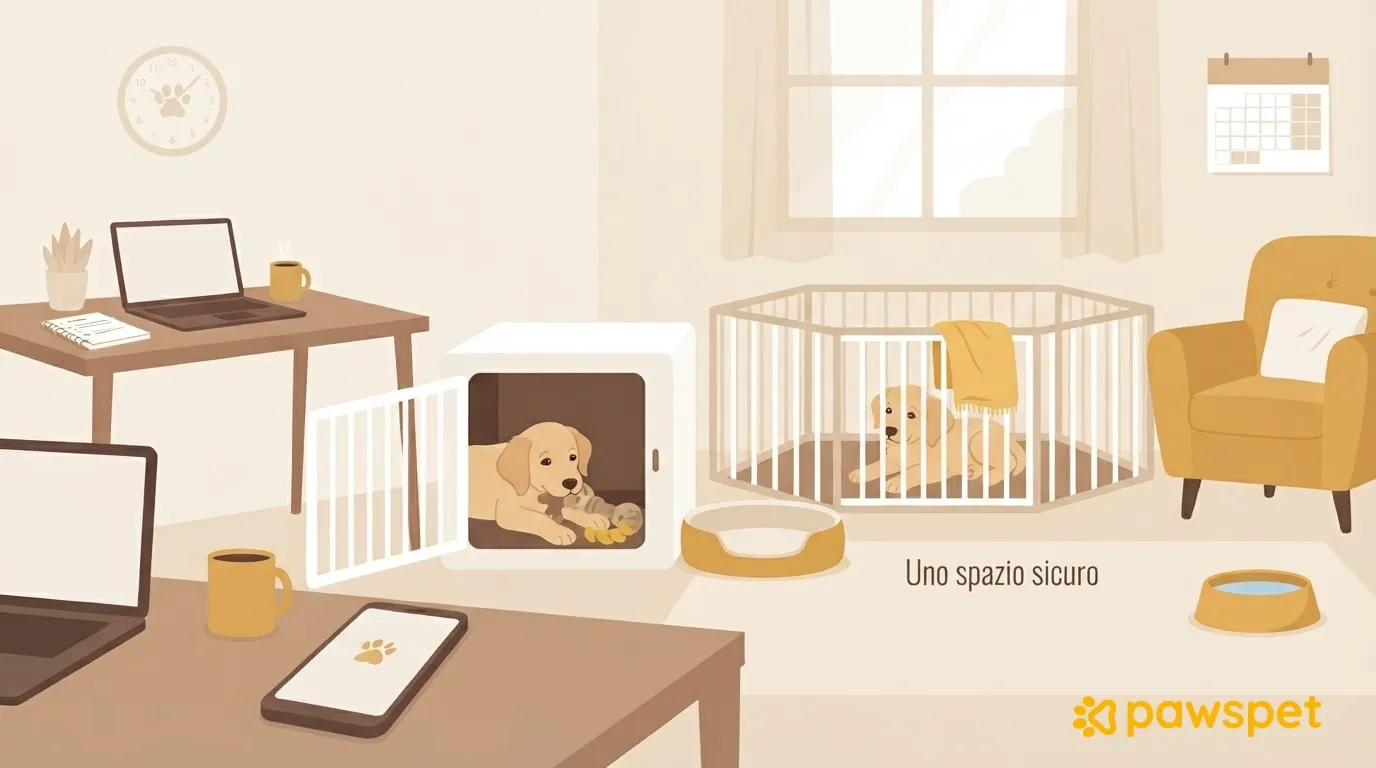
When your puppy is home alone, they need a space of their own: a playpen or a room closed off with a baby gate. Set up an area for resting, water, suitable chews and, if you use one, a puppy pad. Remove cords and anything they could swallow. Make the rest of the house safe, too.
In summer, the area must not overheat during the hottest part of the day or be in direct sunlight, and water must always be available.
A closed crate isn’t intended for long absences. If your puppy is very distressed, discuss how to manage the space with your veterinarian or trainer.
Instructions to leave for anyone helping
Anyone helping you should be able to act without having to ask you about every detail. A one-page sheet is enough:
- times for walks and meals, and where the food is kept (decide on quantities with your veterinarian);
- the word you use for toileting and the usual spot;
- house rules: biting, the sofa, greetings;
- what not to give the puppy;
- what to note: toileting, appetite, mood;
- the veterinarian’s and emergency veterinary clinic’s phone numbers;
- what to do if the puppy seems unwell: call the veterinarian right away and notify an adult family member.
Keep it in a fixed place and update it when schedules or rules change.
PawsPet offers two ways to share your puppy’s information. If the person has an account, you can add them as a collaborator from the card’s three-dot menu (“Collaborators”) and choose their permissions, including view-only access; their access stays active until you remove them. If they don’t use the app, you can enable a read-only link from the same menu (“Sharing”): the page shows basic profile information and a health summary, including details such as the microchip and location if entered, but not documents. Anyone who receives the link can open the page, so turn off sharing when it’s no longer needed; if you enable it again, the same link becomes valid again.
Signs to slow down and ask for help
The absences may be too long or may have started too soon if you notice:
- continuous vocalizing;
- destruction near doors and windows;
- accidents throughout the house;
- ignoring food when left alone;
- intense agitation when you return.
These aren’t a diagnosis: they’re just a sign that it’s time to slow down. Shorten the absences and involve a dog trainer or behavior consultant; contact your veterinarian if physical symptoms appear. Make a note of when it happens and what happened beforehand, and take your notes to the trainer or veterinarian.
Tonight, fill in the weekly schedule with the other adults in your household.