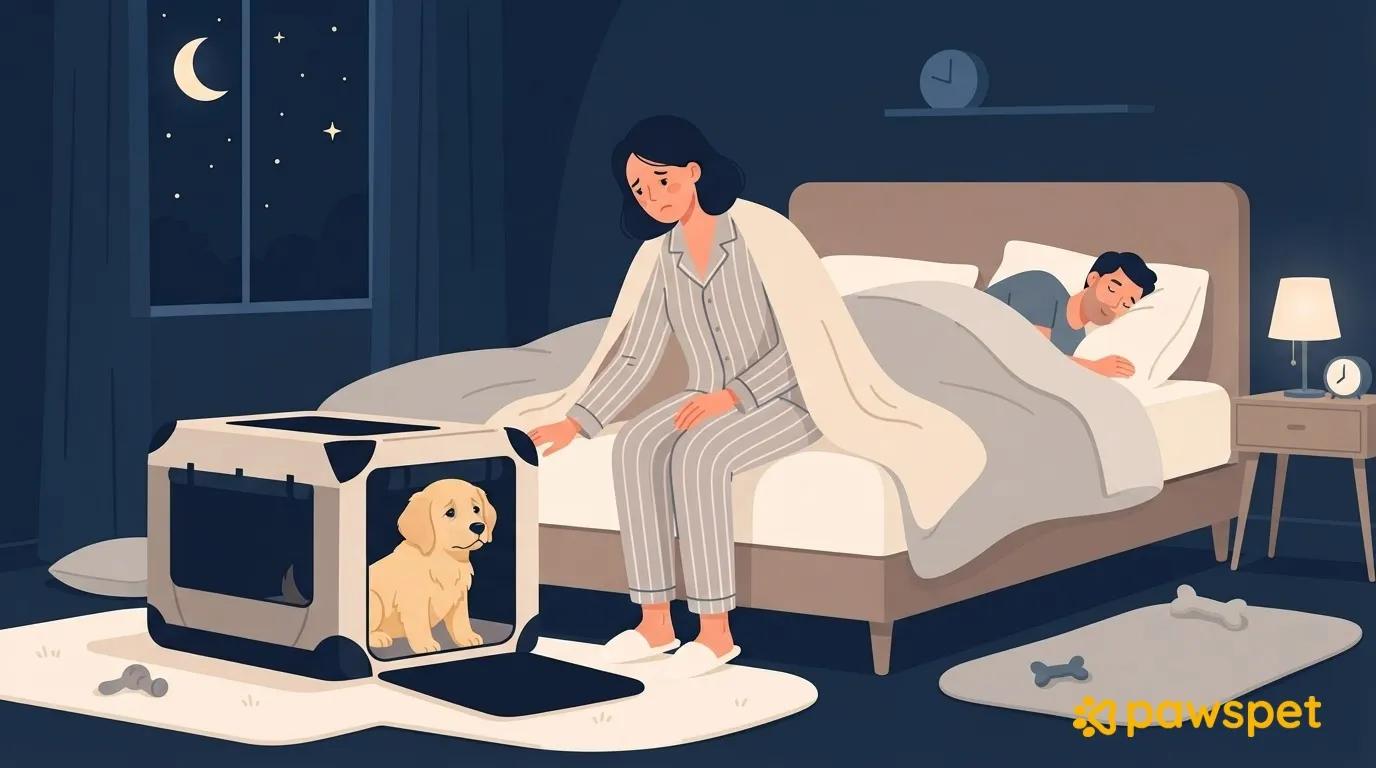
During the first few weeks, keep a safe sleeping area near the adults and follow the same evening routine. When the puppy wakes, one adult on duty takes them outside briefly, without excitement, then settles them back to sleep. Nights lengthen as the puppy grows; don’t rush it.
The plan should work for every adult in the household and be agreed on before tonight, so you’re not debating every night where the puppy sleeps, who gets up, and whether to respond to the crying.
Where to let your puppy sleep during the first few weeks
Three possible options, none of them required or inherently wrong:
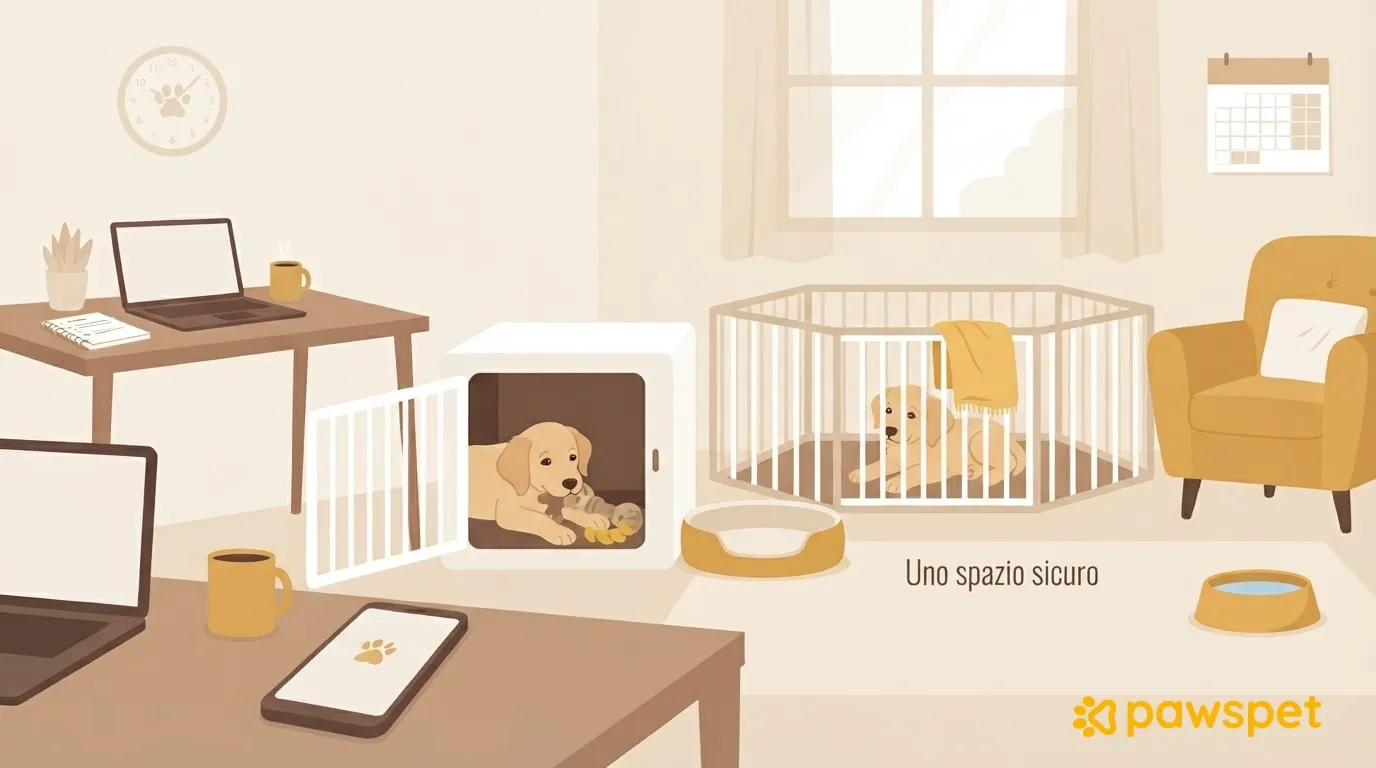
- Pen next to the bed: the puppy is within earshot, and you can hear when they move around.
- Open crate inside a pen: a cozy corner to retreat to, with space around it.
- Bed in a nearby room separated by a baby gate: more distance, but you’ll still hear the puppy with the bedroom door open.
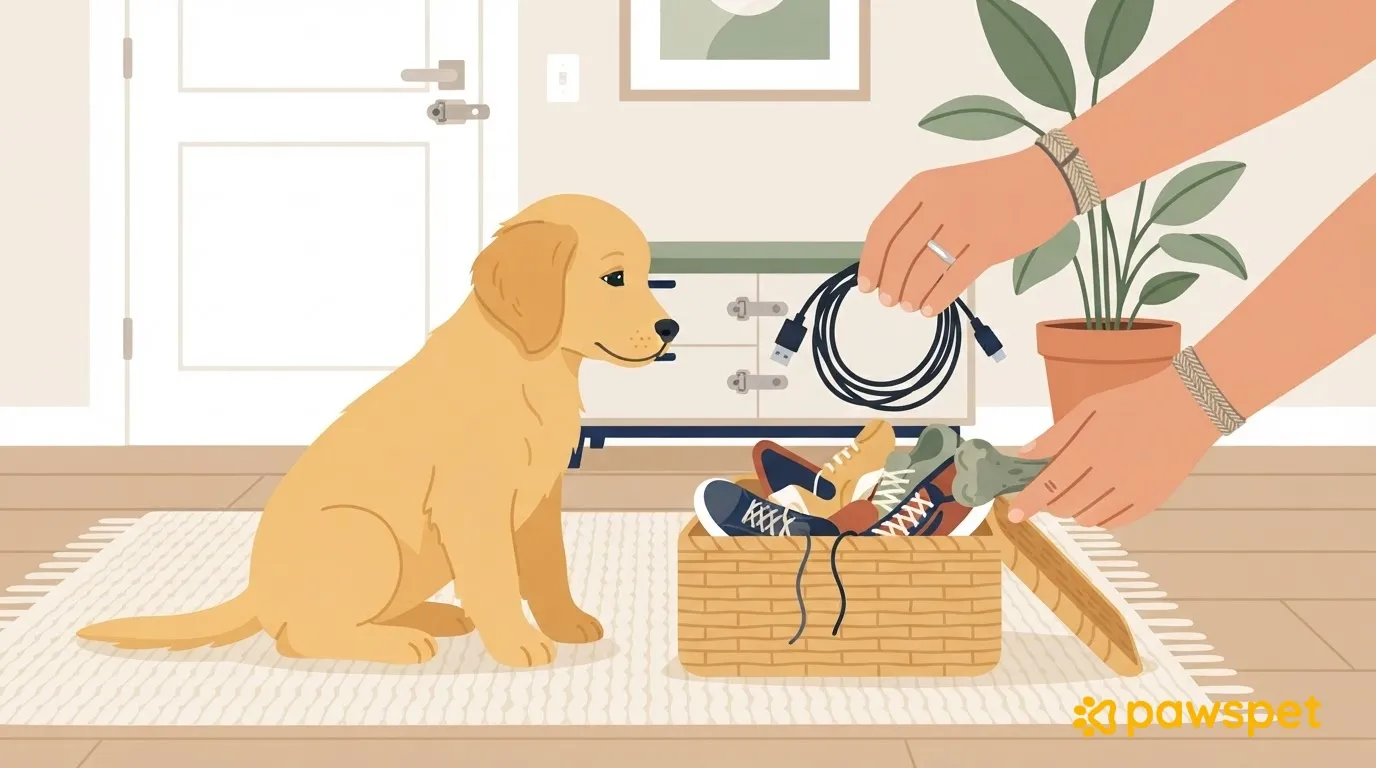
Always check that the sleeping area is close to the adults, free of cords and anything the puppy could chew, has a washable floor, and includes a blanket or toy the puppy already knows. On warm early-summer nights, keep the sleeping area well ventilated. Follow your vet’s guidance about water.
Decide now whether the permanent sleeping spot will be your bedroom or another room. If it’s another room, you’ll need to move the puppy there gradually later on.
The evening routine, always in the same order
Predictability matters more than the exact time. Every evening, follow the same order:
- Last potty break.
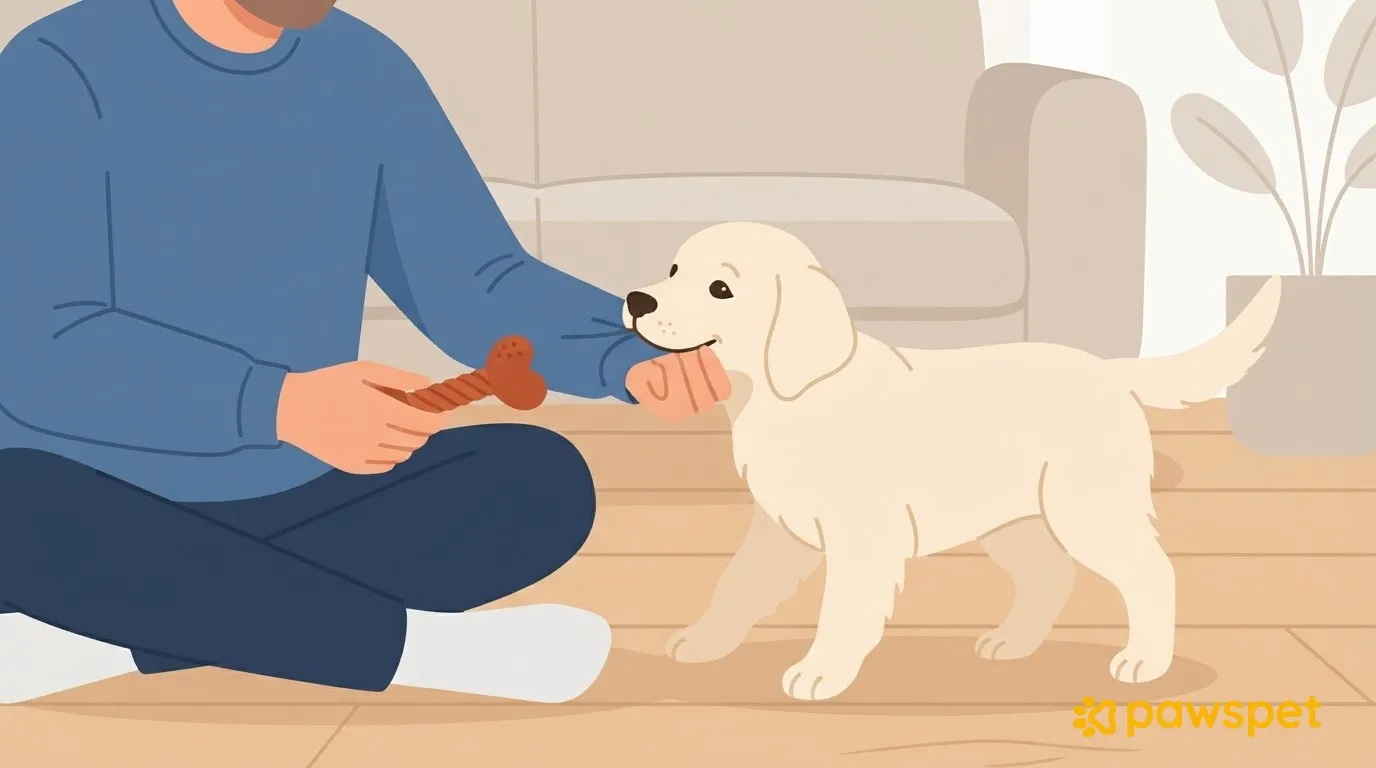
- A quiet moment: a suitable chew, some calm cuddles.
- Dim the lights.
- No exciting games before bed.
- Always use the same word or gesture to signal that it’s bedtime.
Follow your vet’s guidance about the evening meal and water. Also decide who will take the puppy out for the last potty break: one person on weekdays, the other on weekends. If different adults handle the last potty break of the evening and the first one in the morning, you can mark them as recurring activities in PawsPet, set a reminder, and check them off when they’re done, so it’s easy to see if anything has been missed.
When the puppy wakes up: what the adult on duty should do
When the puppy cries or wakes up, just one adult responds, always in the same way:
- Keep the leash or harness and shoes ready next to the bed.
- Speak as little as possible and keep the lights dim.
- Go outside for a short trip to the usual spot.
- If the puppy goes potty, praise them calmly and give them a small treat.
- Go straight back to the sleeping area without playing.
- If the puppy doesn’t go after a few minutes, go back inside anyway.
Does the puppy need to go potty or just want company? Look for clues rather than following strict rules: if they wake up agitated, pace, and sniff around, they probably need to go outside; if they settle as soon as they hear your voice, they may just want company. During the first few weeks, if in doubt, take them outside.
Avoid scolding the puppy or leaving them to cry alone for a long time. At night, they won’t connect a scolding with what they did, and being left alone to cry rarely calms them down; more often, it makes them more agitated and keeps everyone awake. A brief, boring response teaches them that nighttime is quiet.
Adult shifts that can work for weeks
The plan works if everyone knows who gets up and who gets to sleep. Three common arrangements:
| Arrangement | How it works | Pros | Limitations |
|---|---|---|---|
| Alternating nights | One adult gets up one night, the other the next | Easy to remember; the off-duty adult can rest | The adult on duty handles every wake-up that night |
| Split the night in two | One adult covers the first half, the other the second | No one is on duty all night | You need to agree on a handover time; wake-ups don’t always divide evenly |
| Weekdays and weekends | During the week, the adult who can sleep in the next morning gets up; on weekends, the other adult does | Takes everyone’s schedule into account | Needs to be reviewed if schedules change |
A few practical rules:
- The adult who is off duty should get proper sleep, using earplugs or, if possible, sleeping in another room.
- A message or a whiteboard with the time of the last potty break tells the adult getting up what has already happened.
- The first morning potty break is for whoever gets up first.
Making the nights longer without rushing things
As the puppy grows, the nights get longer, but there’s no need to speed things up. Signs of progress:
- The puppy wakes up later.
- Some nights pass without accidents.
- The puppy falls back asleep on their own.
If nighttime accidents happen often, one option is to get ahead of the puppy’s usual wake-up time: set an alarm a little earlier, take them outside, then gradually set the alarm later.
If you’ve decided the puppy will sleep in another room, move the sleeping area gradually: at each step, move it a little farther from your bedroom, keeping the same blanket and toy, and move to the next step only when the puppy sleeps calmly. If one step is too much for them, go back to the previous one.
When to contact a vet or a trainer
- Vet: if you notice very frequent urination, straining to pee, blood, diarrhea or vomiting at night, signs of pain, or lethargy. If symptoms are severe or come on suddenly, contact your vet right away. You don’t need to figure out what’s wrong on your own.
- Dog trainer or behavior consultant: if the crying remains intense for weeks despite a consistent routine, if the puppy panics in the sleeping area, or if your family can’t agree on a shared plan.
What to get ready before tonight
- A safe sleeping area you’ve chosen.
- The evening routine written down and shared.
- An adult assigned to tonight’s shift.
- Leash and shoes ready next to the bed.
- Your vet’s number saved in your phone.
FAQ
Can I let the puppy sleep in bed with us?
That’s a family decision; what matters most is being consistent over time. With a small puppy, consider the risk of falling off the bed and decide right away whether this will be a permanent rule.
What if the puppy goes potty in the sleeping area?
Clean it up without scolding and remove the odor thoroughly, then review the last evening potty break and the time the puppy woke up. If it happens often, especially along with very frequent urination or other symptoms, contact your vet.