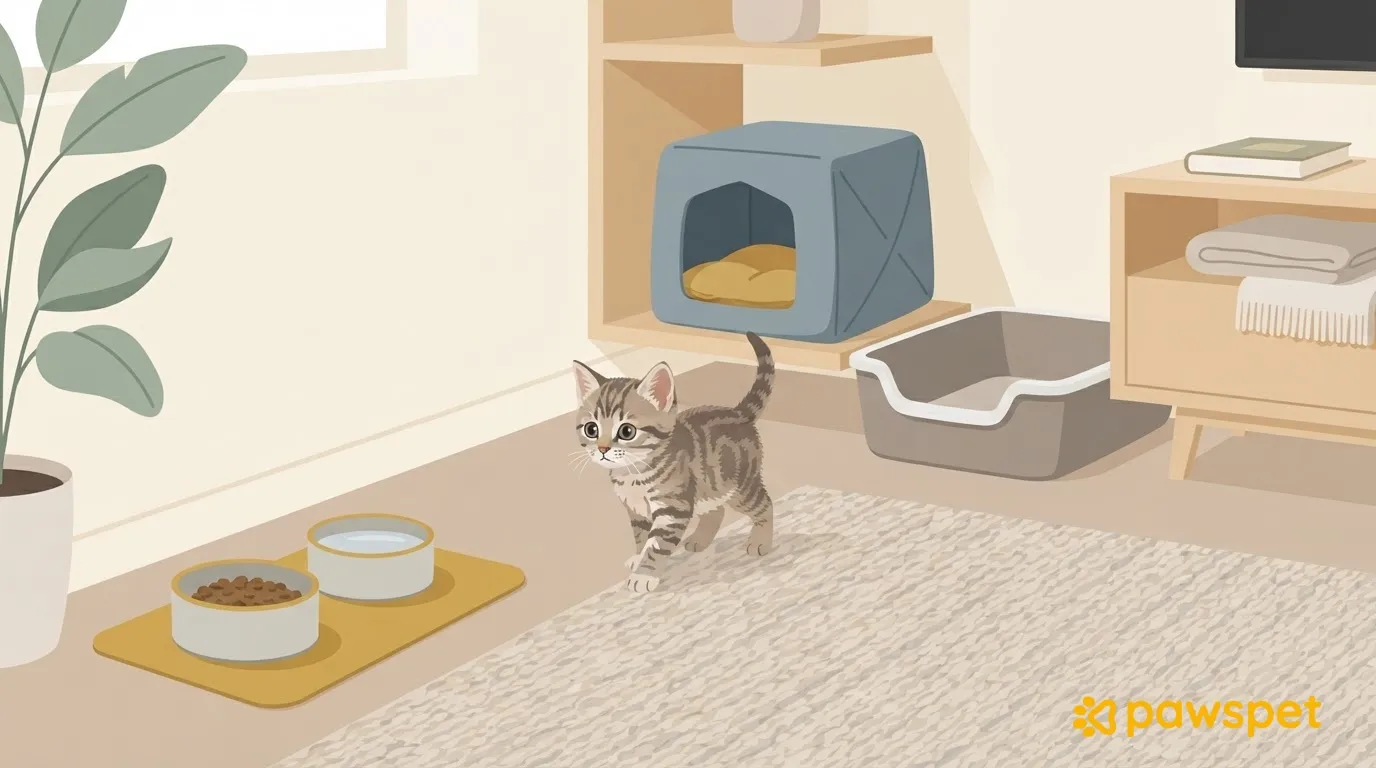
A kitten can use their resources easily when they are close to where they spend their time, accessible for their size, and separate from one another: the litter box in one place, water and food in another, and a quiet hiding spot. So it helps to start with the room where they live and set up their resources there. When you later open up other rooms, add more spots instead of suddenly moving the ones they already know.
Litter box: nearby, quiet, and easy to step into
For a small, inexperienced kitten, these criteria matter:
- A quiet area with little foot traffic, but not isolated from where the kitten lives.
- A low entrance, or at least one lowered side, so they can get in and out easily.
- A spot away from bowls and noisy appliances, so they are not startled while using it.
- In a large or multi-story home, one spot for each area they spend time in, so they do not have to travel far.
- At first, use the same litter box and litter as the breeder or shelter. Ask which ones they use before the kitten arrives or, if they are already home, as soon as possible.
Once you find the right spot, do not move the litter box without a good reason. If you have to, see the steps in the table below.
Water and food: two separate spots
Low, wide, stable bowls work well for easy eating and drinking. Place them on a non-slip surface: on a smooth floor, a mat under the bowls can help keep them in place. Put the food somewhere the kitten can eat quietly, away from walkways. Water should have its own separate spot, since many cats prefer to drink somewhere different from where they eat. If the home is large or the kitten already has access to several rooms, add another water spot along their usual routes. Never place food or water next to the litter box. In a small apartment, the opposite corner of the room may be enough: the important thing is not to put them side by side.
Accessible hiding and resting places
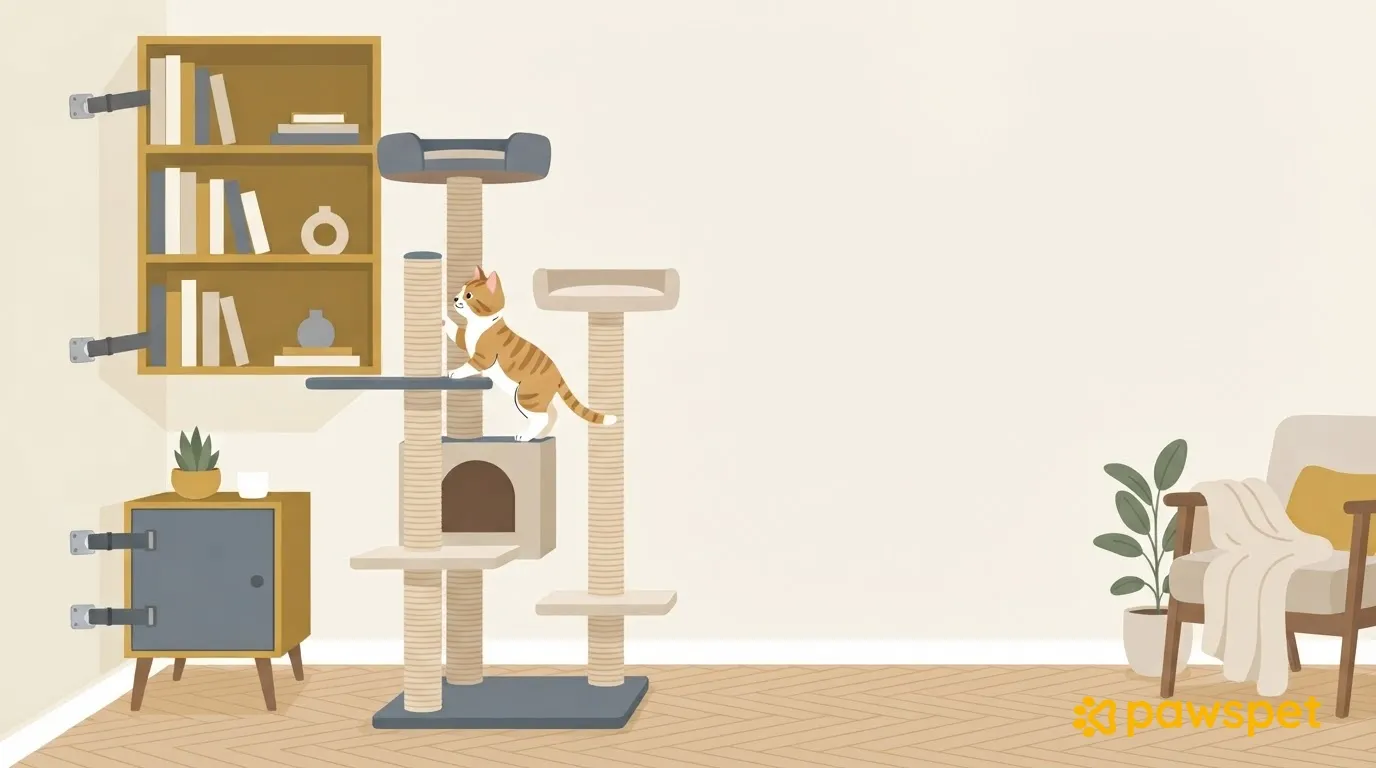
Set up at least one ground-level hiding place near the main room, where the kitten spends most of their time: a box with a wide opening or a covered bed will work. This lets the kitten hide and rest without having to climb. Elevated spots can come later and only make sense if the kitten can reach them using a step or an intermediate platform. Place the bed away from drafts, busy areas, the litter box, and bowls. You choose the hiding places: keep washing machines, drawers, and gaps closed so the kitten cannot find their own.
When the kitten explores a new room
Open up rooms one at a time, staying with the kitten the first few times, and adjust their resources as follows:
| Situation | What to do |
|---|---|
| You open a nearby room | Add a water bowl and leave the litter box where it is. |
| You open a distant area or another floor | Add a litter box and water there too. |
| You want to move the litter box they use | Put a new one beside it and remove the old one only once they use the new one, or move it a little at a time. |
| The room has not been checked yet (cords, appliances, tall furniture) | Keep it closed. |
Gradual changes help because the kitten can always find familiar spots and calmly explore new ones. If you move everything at once, they may not be able to find what they need when they need it.
Cleaning and replenishing: a simple routine
Every day, at a set time, check all the resource spots: remove waste from the litter box and change the water, washing the bowls. Wash the litter tray periodically too, following the litter manufacturer's instructions. If you notice changes in litter box use (they do not use it, go much more often than usual, or seem uncomfortable), tell your veterinarian.
With several resource spots, it is easy to forget one, especially one you do not see every day. To keep track, you can create a recurring task in the PawsPet app, for example, “Litter box cleaning” with the type “Hygiene and care,” set it to repeat every day and add a reminder, then mark each occurrence as done from the calendar.
Before changing anything
Before moving or adding anything else, do these four checks today:
- Identify where the kitten sleeps and spends most of their time.
- Check that the litter box is accessible and separate from the bowls.
- Put water in at least two spots if the home is large.
- Set up a ground-level hiding place.
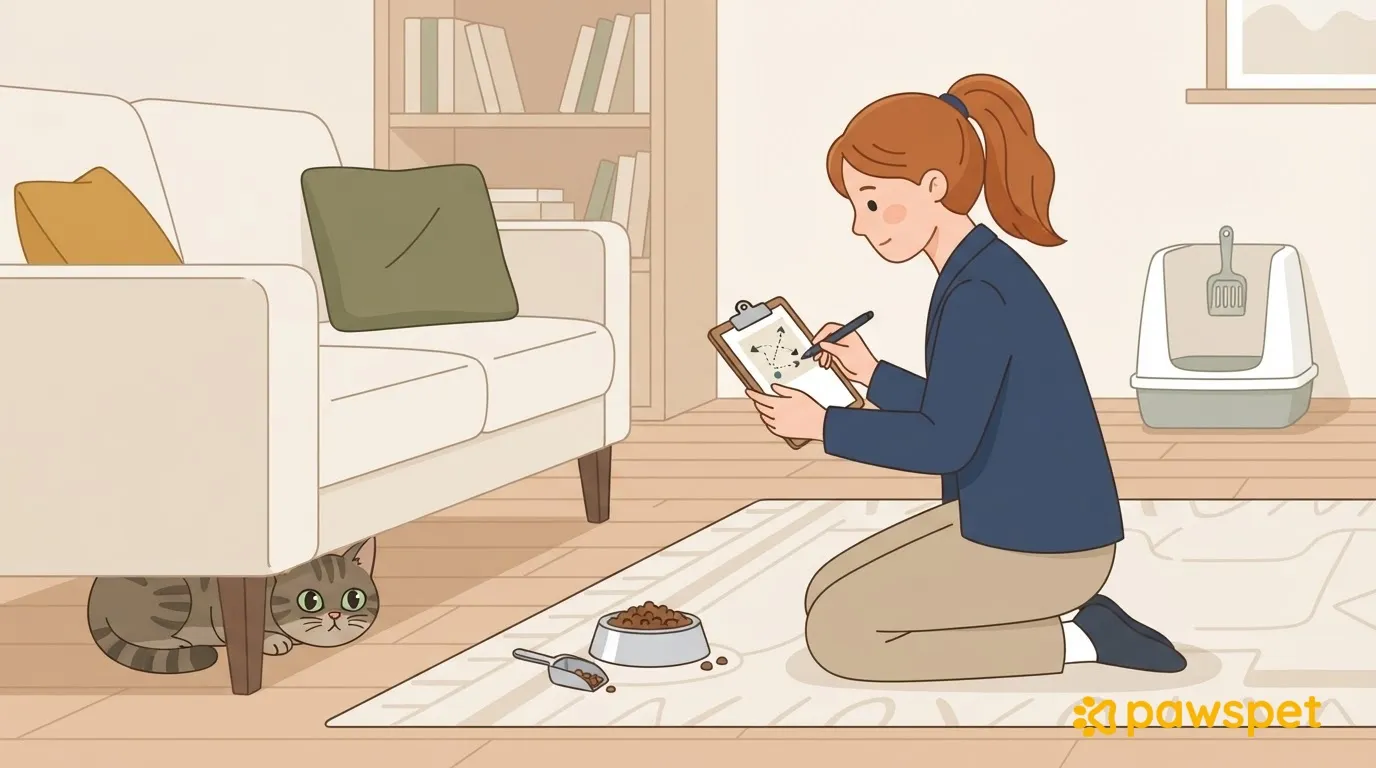
Then observe the kitten for a few days: where they rest, where they eat, and whether they can reach the litter box easily will tell you if the resources are in the right places. If you have already set everything up differently, do not start over: adjust one spot at a time, only where the kitten is having difficulty.
FAQ
Can I keep everything in one room during the first few days?
Yes, a base room can help the kitten get used to the home. Put the litter box on the opposite side from the food and water, and place the hiding spot away from the door. When you open up other rooms, follow the table above.