Kittens often climb up before they know how to get down safely. The risk is not climbing itself, but what can give way, fall, or leave an opening. Secure anything that could tip over, clear the shelves your kitten can reach, and offer stable routes with short steps.
Secure furniture to the wall
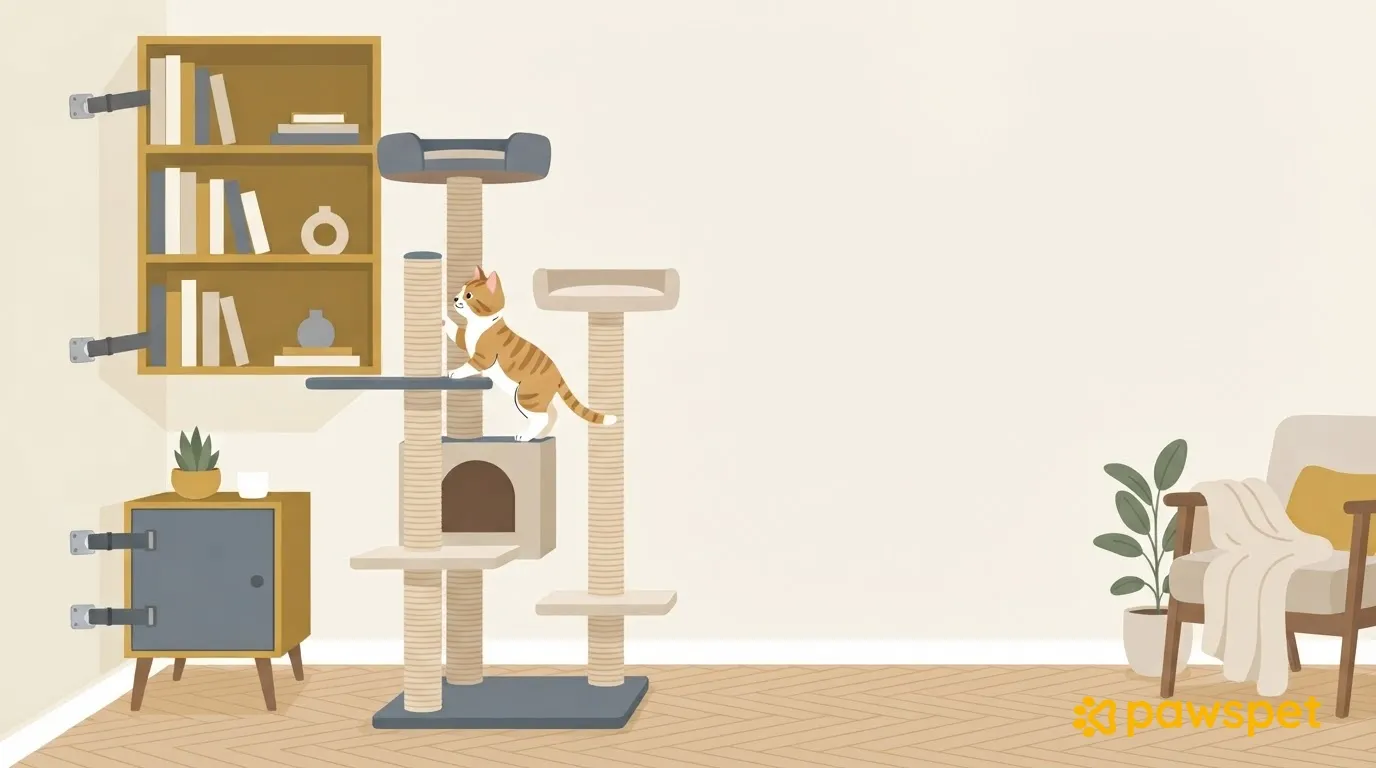
A kitten that clings on and pushes off can make an unsecured tall piece of furniture tilt, potentially falling on top of them. Pay particular attention to:
- tall bookcases;
- dressers;
- TV stands and televisions on stands;
- mirrors leaning against the wall;
- floor lamps.
Use anti-tip brackets or straps to secure them. Install these according to the manufacturer's instructions, after checking what type of wall you have, since the right fixings differ from one wall to another. If you're unsure, ask someone with experience to help. Check from time to time that the brackets and straps are still secure. Keep heavy items on lower shelves so the furniture is less top-heavy. If you rent, check with your landlord before attaching anything to the wall.
Shelves, ledges, and objects that could fall
Also consider anything your kitten can reach by jumping from a chair or another piece of furniture. Don't leave fragile (glasses, glass frames), heavy (ornaments, bookends), or sharp (scissors, knives) objects on reachable shelves. Three situations need extra care:
- Heavy, precariously balanced pots: move them to a stable spot out of your kitten's reach.
- Lit candles: never leave them unattended, and keep them away from shelves your kitten can reach.
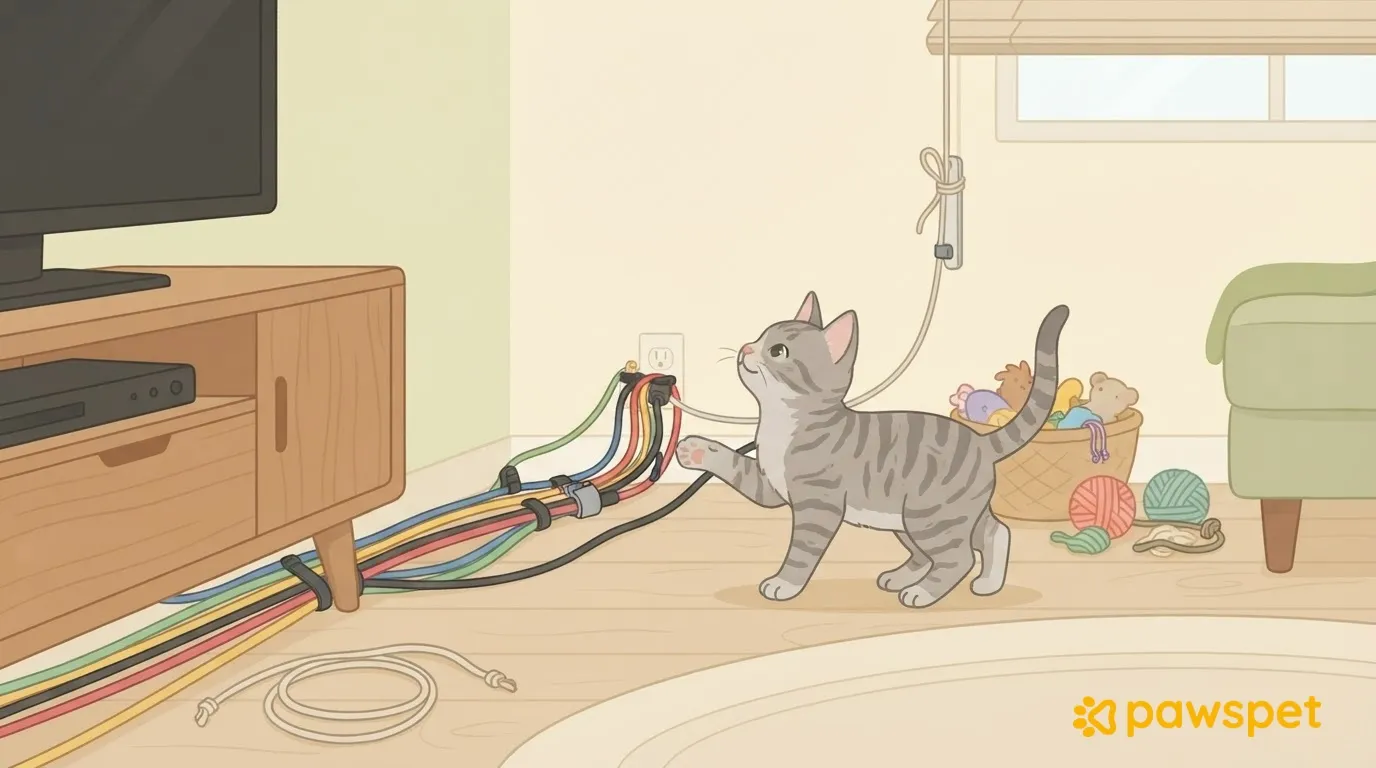
- Curtains and curtain rods: during the first few months, they can become a ladder. Consider temporarily raising or tying them out of your kitten's reach.
Open stairs, mezzanines, and high beds
The danger here is the gap, more than the climb. Get down to your kitten's level and check closely for:
- gaps between the spindles on stairs and railings;
- stairs without risers, which are open at the back;
- gaps in mezzanine railings;
- openings in bunk beds and high beds.
As a temporary solution, use clear panels or mesh secured without leaving gaps; until you have fixed the problem, keep access to these areas closed. A baby gate may not be enough: a kitten may climb it or squeeze between the bars.
A route for climbing up and down
You don't need to forbid your kitten from climbing; they need stable footholds close together, including for getting back down. Think in terms of a sequence of small steps rather than one big jump, and start at moderate heights, increasing them only when your kitten seems confident.
| Where they want to get | How to help |
|---|---|
| Sofa or bed | A stable stool or step placed nearby that won't wobble or slide |
| Shelf or tall piece of furniture | Intermediate shelves close together for climbing up and down in small steps; furniture secured to the wall |
| Tower cat tree | A wide, heavy base; if it's tall, secure it to the wall |
Choose non-slip surfaces for shelves and steps, wide enough for all four paws, and place a firmly secured rug beneath the spots your kitten jumps from most often. Before letting them use the cat tree, gently push it with one hand: if it moves, secure it to the wall or choose one with a wider, heavier base. Then watch how your kitten climbs up and down: if they hesitate, slip, or jump from too high, add an intermediate foothold.
After a fall: when to call the veterinarian
Contact your veterinarian right away if your kitten has fallen from a significant height, or if they:
- limp;
- have difficulty breathing;
- are bleeding;
- seem lethargic or behave unusually.
If in doubt, call anyway: explain where they fell from, when it happened, and how they are acting now, and follow the advice you receive. Do not give them medication without veterinary advice, and move them gently into their carrier.
Quick room-by-room check
Check these five things in every room today, and repeat the check when your kitten starts reaching new heights or when you rearrange the furniture:
- Tall furniture, TVs, mirrors, and lamps: are they secured or stable?
- Reachable shelves: are there any fragile, heavy, or sharp objects, or open flames?
- Curtains and curtain rods: could they act as a ladder?
- Stairs, mezzanines, and high beds: are there any gaps or open access points?
- Routes: are the steps and shelves stable, the surfaces non-slip, and there a rug where your kitten jumps?
If you can't fix everything right away, start with the spots where you most often see your kitten climbing. Check windows, top-hinged windows, and balconies separately.