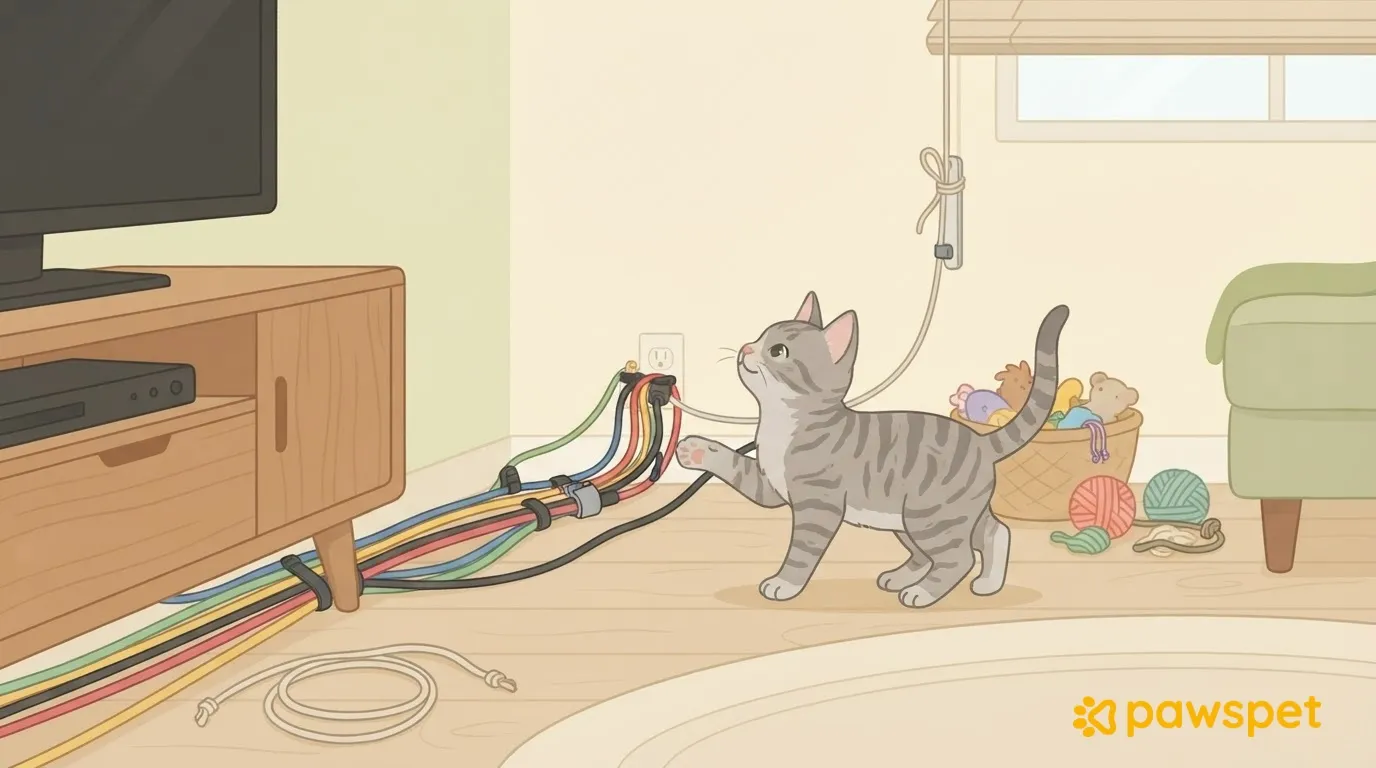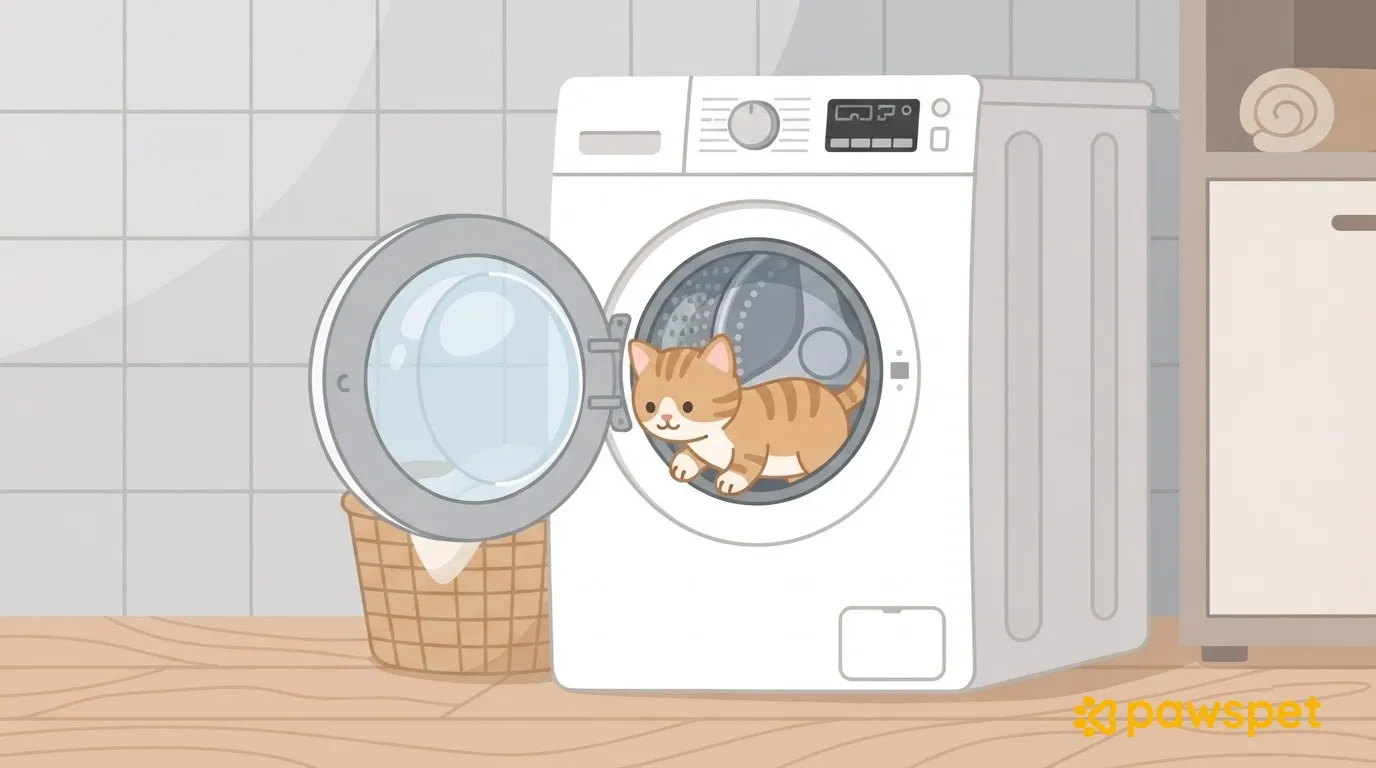
In their first few months, kittens tend to seek out warm, dark, enclosed spaces. At home, some of these can switch on, close, or fold up—for example, a washing machine, a drawer, or a sofa bed. Keeping them safe comes down to three habits: keep anything you aren’t using closed; check inside before starting, closing, or reclining anything; and block gaps where a kitten could get stuck. These simple habits are for everyone who lives in or visits your home.
Why kittens choose these places
Curiosity, a search for warmth, and a need for shelter are usually behind it, and their small size makes it easy for kittens to squeeze into places a person might not think to check. Not all kittens behave the same way, but it’s best to assume yours can get into any space they can reach.
The most common traps and the habits that prevent them
| Where | Why it’s a risk | Habit |
|---|---|---|
| Washing machine and dryer | The drum may be warm or contain laundry, and a kitten can be hard to spot among the clothes | Keep the door closed when not in use; check the drum before every cycle |
| Dishwasher | A kitten can climb in while you’re loading or unloading, and sharp cutlery could injure them | Close it right away and check inside before starting it |
| Oven | It retains heat after use, and if you leave it open to cool, a kitten may climb inside | Don’t leave it open to cool while your kitten is in the kitchen, and check inside before turning it on |
| Refrigerator and freezer, including chest freezers | A kitten can climb in while the door or lid is open and become trapped if you close it without checking | Check before closing and don’t walk away with the door open |
| Drawers, cupboard doors, and closets | A kitten can slip behind a drawer or into a cabinet and become trapped inside | Check inside, then close slowly; keep unused ones closed |
| Sofa beds, recliners, beds, and storage ottomans | Folding or reclining mechanisms and enclosed compartments can hide a kitten | Check underneath and inside before closing or reclining |
| Bags, purses, and suitcases, including those left open for summer vacations | A kitten can get tangled in the handles or become trapped inside | Put away plastic bags and check before closing anything |
How to block gaps and access points
As well as doors and lids, watch out for openings that aren’t immediately visible. Check in particular:
- loose kitchen plinths;
- spaces behind and underneath the refrigerator, washing machine, and dishwasher;
- the space under the bathtub;
- openings in cabinets.
Close them off with panels, refitted plinths, or temporary barriers so a kitten can’t squeeze in, and make sure they’re secure and don’t leave any new gaps. If closing a gap requires work on utilities or appliances, call a qualified technician. When you’re not home, keep the laundry room and storage room doors closed.
Rules to share with everyone who lives in or visits your home
Tell family members, grandparents, guests, and pet sitters, or write these rules down and post them near the washing machine:
- Before starting the washing machine, dryer, or dishwasher, check inside.
- Before closing the sofa bed or reclining the chair, check underneath and inside.
- Keep doors and drawers closed when you leave the room.
- Refrigerator, freezer, and oven: don’t walk away with the door open.
- Can’t see the kitten? Don’t start or close anything until you find them.
If you can’t find your kitten in the house
Stay calm and follow these steps in order:
- Don’t start any appliances or close or recline any furniture until you’ve found your kitten; let everyone else in the house know, too.
- Check warm, enclosed places first: drums, the dishwasher, the switched-off oven, closets, drawers, storage compartments, and, to be safe, the refrigerator and freezer.
- Use a flashlight to look behind and underneath furniture.
- Keep quiet, call your kitten calmly or use a sound they know, then listen: a frightened kitten may stay still and silent.
- Check doors and windows; if you think your kitten got outside, start looking around the house right away.
If you find your kitten trapped or injured, don’t try to force them free; contact a veterinarian right away.
To reduce the chance of this happening again, remember the three habits: keep doors and drawers closed, check inside before starting, closing, or reclining anything, and block off gaps. They work when everyone follows them, every time.