Balconies and terraces are not essential for a kitten’s well-being. If you decide to let yours out, first secure every gap in the railing and the sides facing neighbors with complete, sturdy protection, move anything that could act as a launching point away from the edge, and stay with your kitten at all times at first. In summer, shade, water, and keeping the patio door open also matter.
First, decide: is the balcony a space for your kitten?
In summer, the house stays more open, and it’s natural to think about letting your kitten outside. But make this decision before choosing any netting or accessories. Keeping your kitten indoors is a perfectly valid choice: they can still enjoy a little sunshine and watch what’s happening outside from indoors, in a comfortable spot beside a closed patio door.
If you decide to open the balcony, first set rules for when and how: what times of day, for how long, and who will supervise. At first, never leave your kitten alone outside or shut out on the balcony. If you can’t close every gap or stay with your kitten, keep the balcony closed for now.
Railings and sides facing neighbors
A kitten can squeeze through places an adult cat couldn’t: if in doubt, treat every opening as a gap that needs to be closed. A terrace may have a longer perimeter to check, but the rule is the same. Here’s where to look for gaps:
- between the railing bars;
- under the handrail or at the base, where there may be an opening toward the drop;
- along the sides, where a space may be open to the outside or toward neighbors;
- on the handrail, if your kitten could use it as a walkway;
- where it connects to neighboring balconies or awnings.
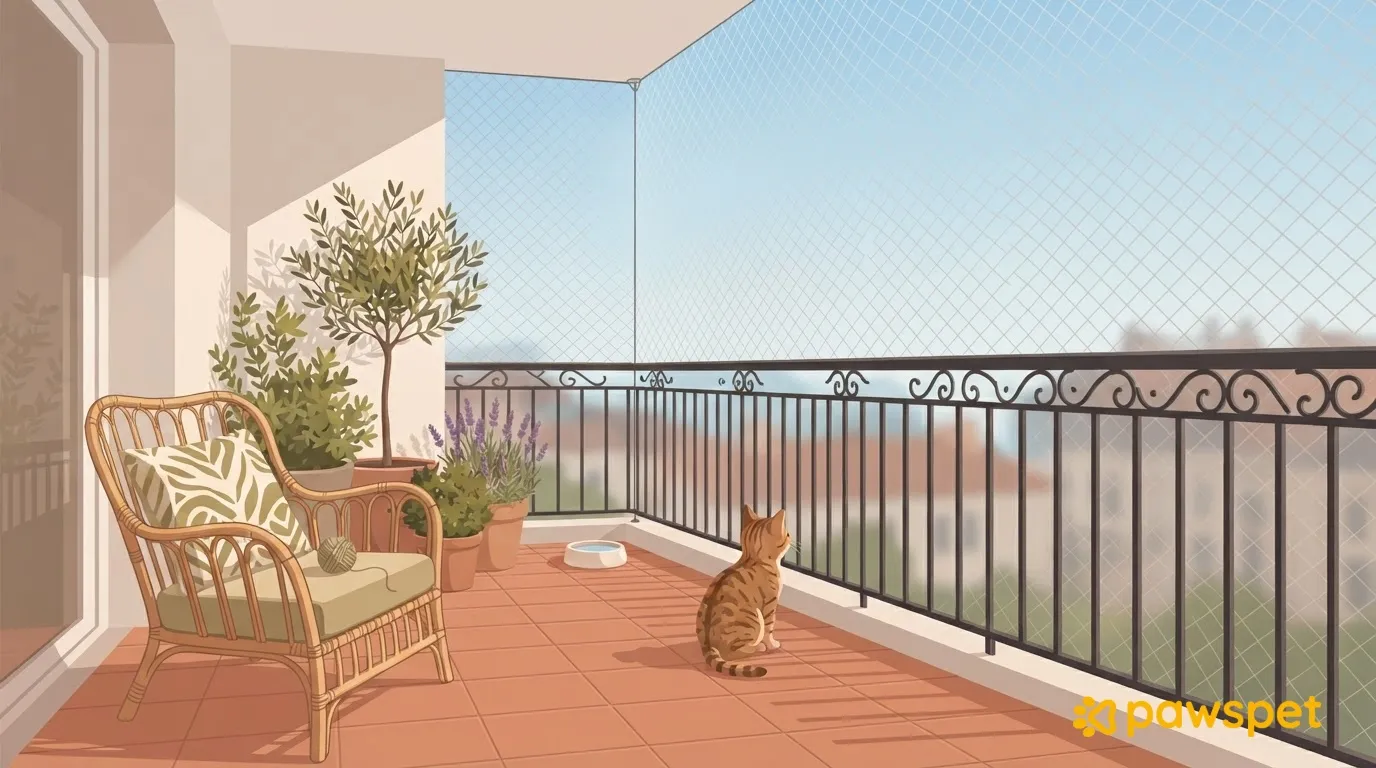
The solution is cat safety netting that closes off the sides and, if possible, the top as well. It must be securely fastened, with no gaps along the edges, and checked regularly for tears or loosened fastenings. Mosquito screens and privacy screens are not fall-protection barriers: don’t rely on them to close a gap, even if they cover the entire railing.
In an apartment building, check the rules and ask the building manager before installing anything permanent; if you rent, get the owner’s agreement. If you don’t know how to install the netting, contact an installer.
Tables, chairs, and planters near the railing
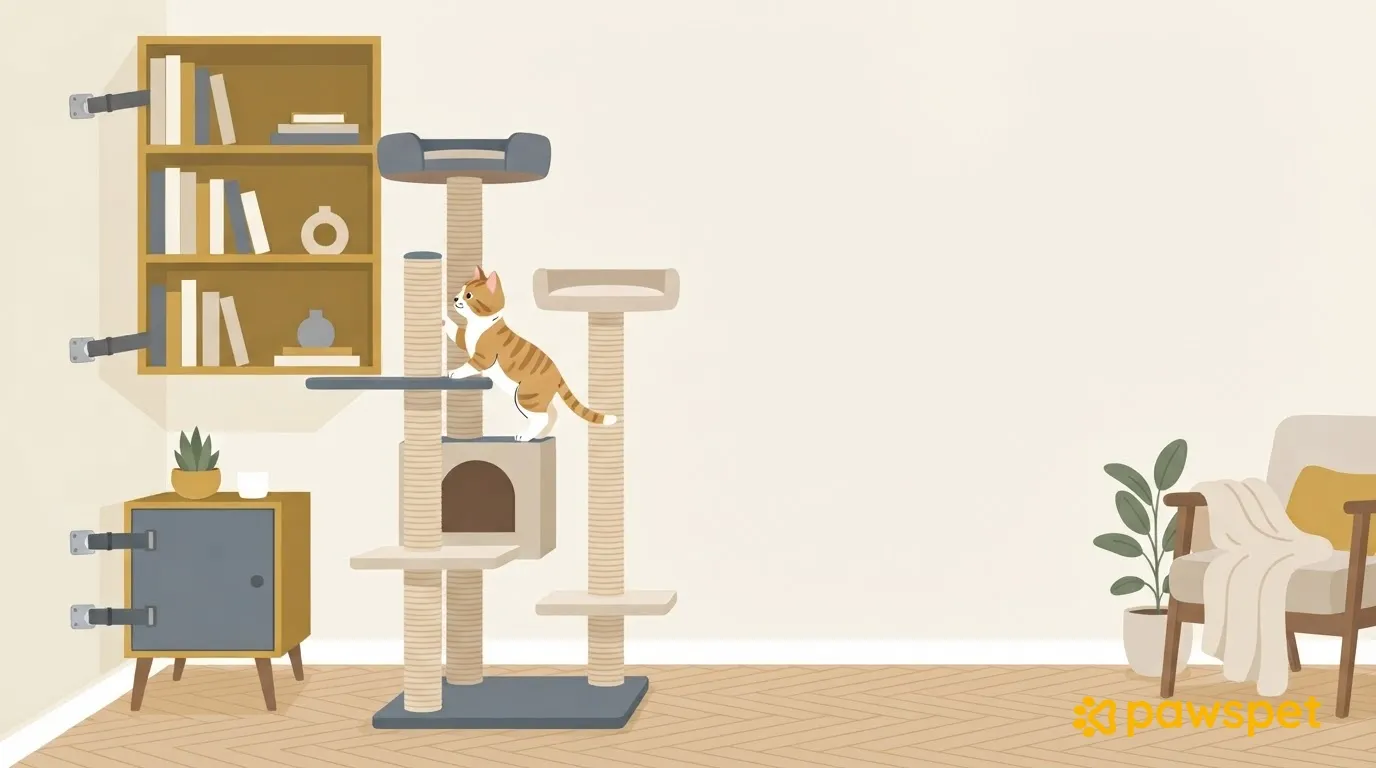
Tables, chairs, planters, and containers can become steps toward the edge: move them to the center of the balcony or against a wall, and remove hanging planters from the railing too. Make sure heavy pots are stable, and store fertilizers, plant pesticides, and insecticides in a closed container.
Ask your veterinarian which plants are suitable for the balcony, and consult them before using products in places where your kitten goes.
Heat, shade, and water
Dark tiles, metal, and artificial grass can get very hot in the sun. Always provide a shaded area and fresh water: put the bowl in the shade and change the water when it gets warm. The shade moves throughout the day, so check where it falls when you take your kitten outside. Avoid going out during the hottest hours. Keep your kitten away from barbecue grills and lit mosquito-repellent candles.
If your kitten seems to be struggling with the heat, take them to a cool place immediately and contact your veterinarian.
The patio door: unnoticed outings and a kitten shut outside
When you air out the house, your kitten may get onto the balcony without you noticing, or may be left outside when you close the door. Before opening it, make sure you know where your kitten is; before closing it, check that they haven’t been left outside. At first, keep the patio door closed when you leave the house. Explain these rules to family and guests so no one opens or closes the door without checking. Windows, including tilt-and-turn windows, need separate checks that we don’t cover here.
Checklist before the first outing
If even one item isn’t in place, postpone the first outing:
- every gap in the railing, base, and sides is closed with complete, sturdy protection;
- the barriers are intact and securely fastened;
- tables, chairs, and planters are away from the railing;
- there is shade and fresh water, and it isn’t the hottest time of day;
- fertilizers, pesticides, and insecticides are stored in a closed container;
- you are there with your kitten the entire time.
Repeat these checks at the start of every summer and after any changes to the balcony. During the first outings, watch where your kitten tends to climb: those are the places to check again.