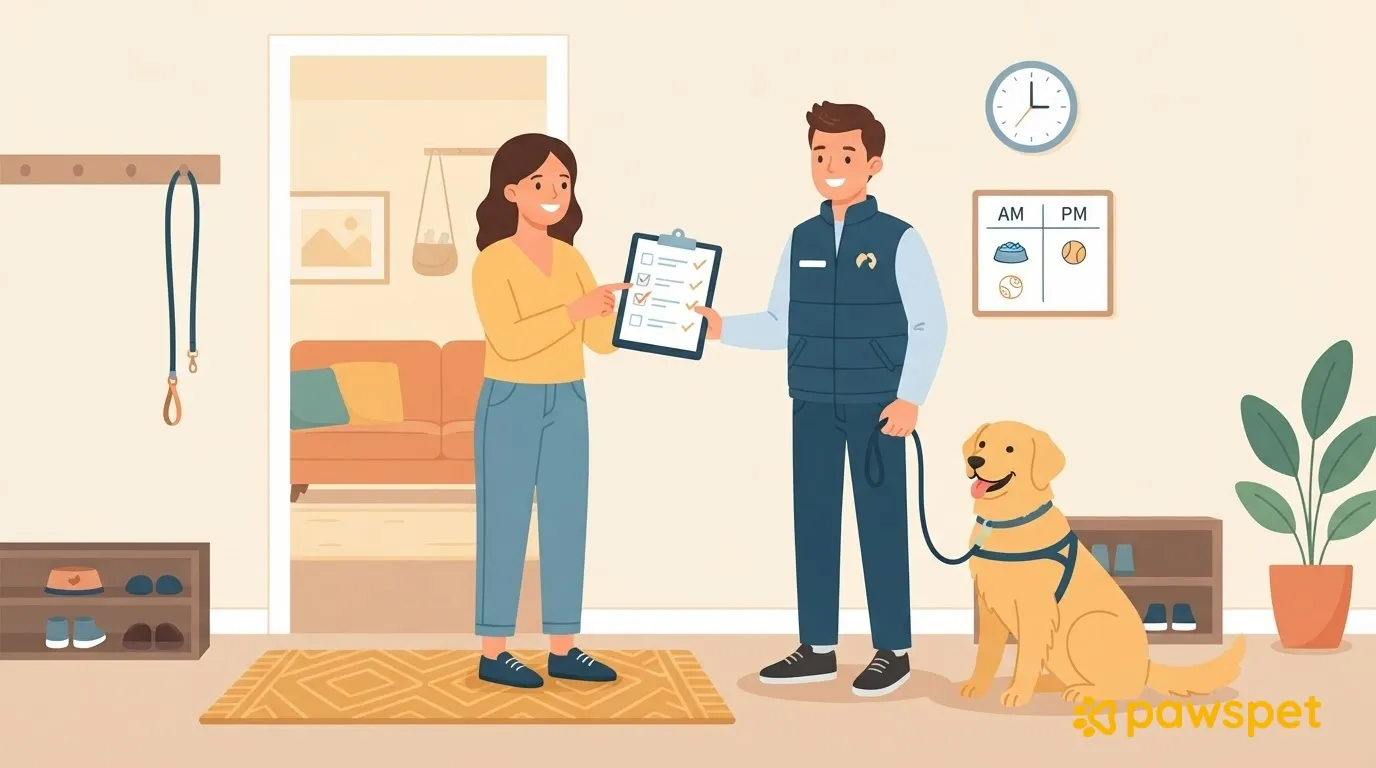
Write tasks by time of day and, for each one, say what to do, when, how much, where to find what’s needed, how to tell it’s done, and what to report to you. Before you leave, have the pet sitter read through and try out the sheet. The test is simple: if the pet sitter has to call you to understand an instruction, it isn’t finished.
What to include in the instruction sheet and what to leave out
Prepare no more than one or two pages, with these sections:
- Essential details: name, species, age, and how to tell the animals apart if there’s more than one.
- Routine by time of day: morning, afternoon, evening, and, if needed, overnight.
- House rules: doors, rooms, and access points.
- Habits and signals: normal behavior and changes to report.
- Supplies and locations: food, litter supplies, and items for outings.
- Contacts: your details and those of a backup contact.
Put contacts and emergency decisions on a separate page. Leave out long stories, conflicting instructions, and exceptions the pet sitter doesn’t need to follow.
The five-question rule for every task
For each task, ask what, when, how much, where, and how to tell it’s done; add “what to report to me.” Serving a portion is an action; finding leftovers is an observation to report.
Vague: “Give them some kibble.” Verifiable: “At the time listed, take the bag labeled for that meal from the kitchen shelf and pour its contents into the blue bowl; report any leftovers.”
The examples don’t set universal amounts or frequencies: before handing over the sheet, replace the placeholders with your own routine and actual details.
| Task | When | How much and where | Done if | Report to me if |
|---|---|---|---|---|
| Meal | At the usual time you specify | Your usual portion, already divided into meal-labeled bags on the shelf; blue bowl | Portion served in the specified bowl | Food is left over |
| Water | At each visit | Fresh water up to the mark in the kitchen and hallway bowls | Check the level before changing the water, then replace it | The level doesn’t go down or a bowl is tipped over |
| Litter box | At each visit | Remove all waste; bags and litter are in the cabinet beside it | Waste removed and bag tied closed | You don’t find any signs it’s been used |
| Dog walk | During the usual time window you specify | Usual route described in the sheet; harness and leash on the hook | Walk completed; bathroom breaks and any changes noted | The dog pulls a lot, limps, or refuses to go out |
To keep the same routine on your phone, create recurring activities in the PawsPet owner app from “Activities” → “+”: choose the type (“Food and supplies” or “Hygiene and care”), assign the pet, set the frequency with “Repeat” and a reminder using the bell, enter the amount and location of the supplies in “Notes,” then tap “Save.”
House rules the pet sitter needs to know
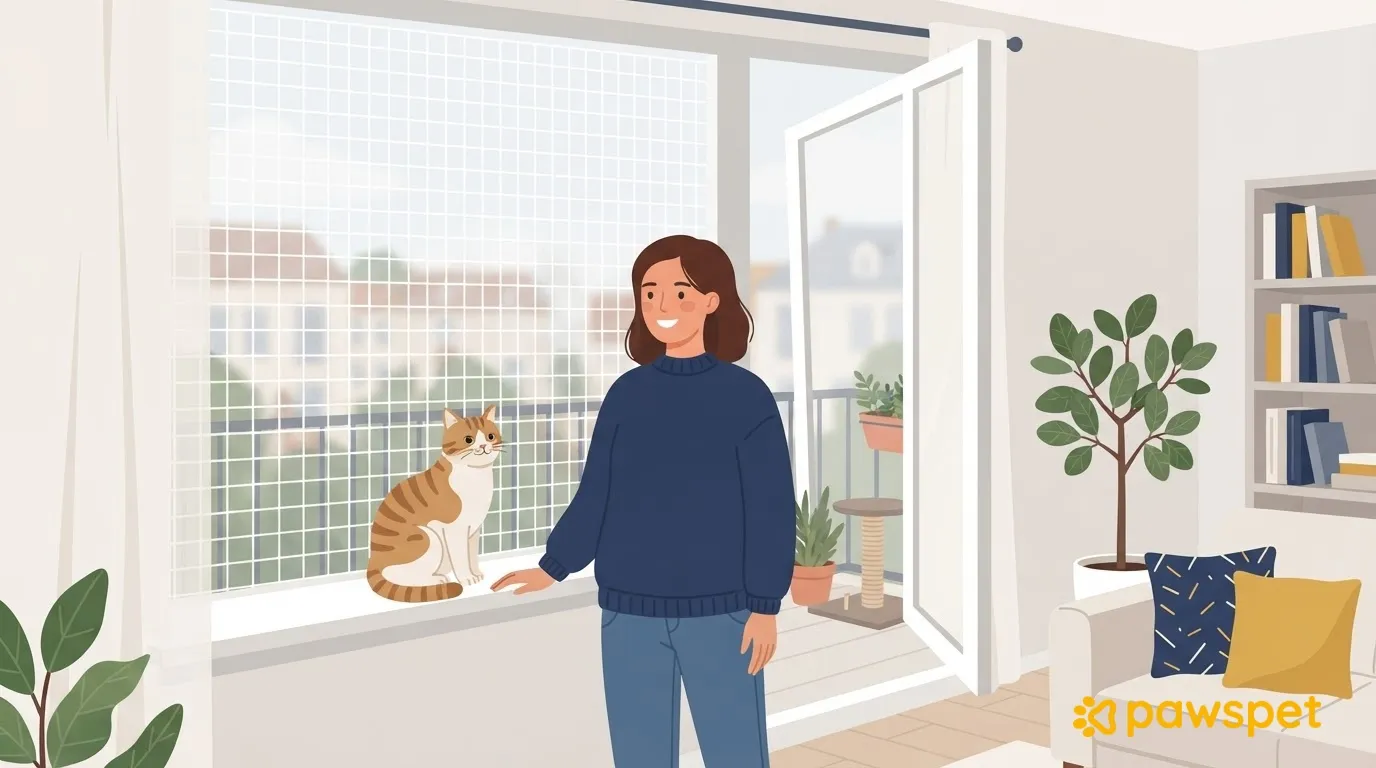
Specify which doors must stay closed, which rooms are off-limits, and which windows or balcony doors must not be opened, especially if you have cats. Practice coming in and going out: say where the pet should be while the door is open to prevent escapes.
Note where the carrier and spare leash are, and store cleaning products and medication out of reach.
Hand over the keys and practice using them to enter and operate the alarm, noting the steps required.
Habits and signals: describe your pet to someone they don’t know
Don’t just write “shy”: describe what someone can see, for example, “When a new person arrives, they hide behind the sofa.” If your pet eats slowly or sleeps a lot, explain how you recognize what’s normal for them.
Note what scares them, such as the doorbell, vacuum cleaner, or thunderstorms, and how they ask to go out or play: for example, they stop in front of the door or bring you a toy. Use descriptions that truly fit your pet: the pet sitter shouldn’t have to interpret, but should describe what they observe and let you know if anything seems different from usual.
If your pet is on a treatment plan, leave written instructions from the veterinarian.
Try out the instructions and agree on updates
Schedule a visit together before you leave: the pet sitter reads the sheet aloud and completes a full routine in front of you. Every question reveals an item to clarify: correct it and update the sheet the day before you leave.
If the pet sitter already has a PawsPet account, you can share the pet’s profile from the ⋮ menu → “Collaborators” → “Add collaborator,” granting “View” access to “Activities” and checking during the practice run that they can see the activities you created.
Agree on a set time for an update with four brief items: food, water, bathroom, notes. When needed, ask for a photo of the bowl or litter box: for these details, it’s more useful than a selfie with the pet. Report any unusual signs as soon as they appear, without waiting for the update.
Leave a paper copy in a fixed spot in the house and a digital copy on the pet sitter’s phone, both up to date.
Today, start with your pet’s day yesterday: write the first version of the instructions and schedule a practice run with the pet sitter.