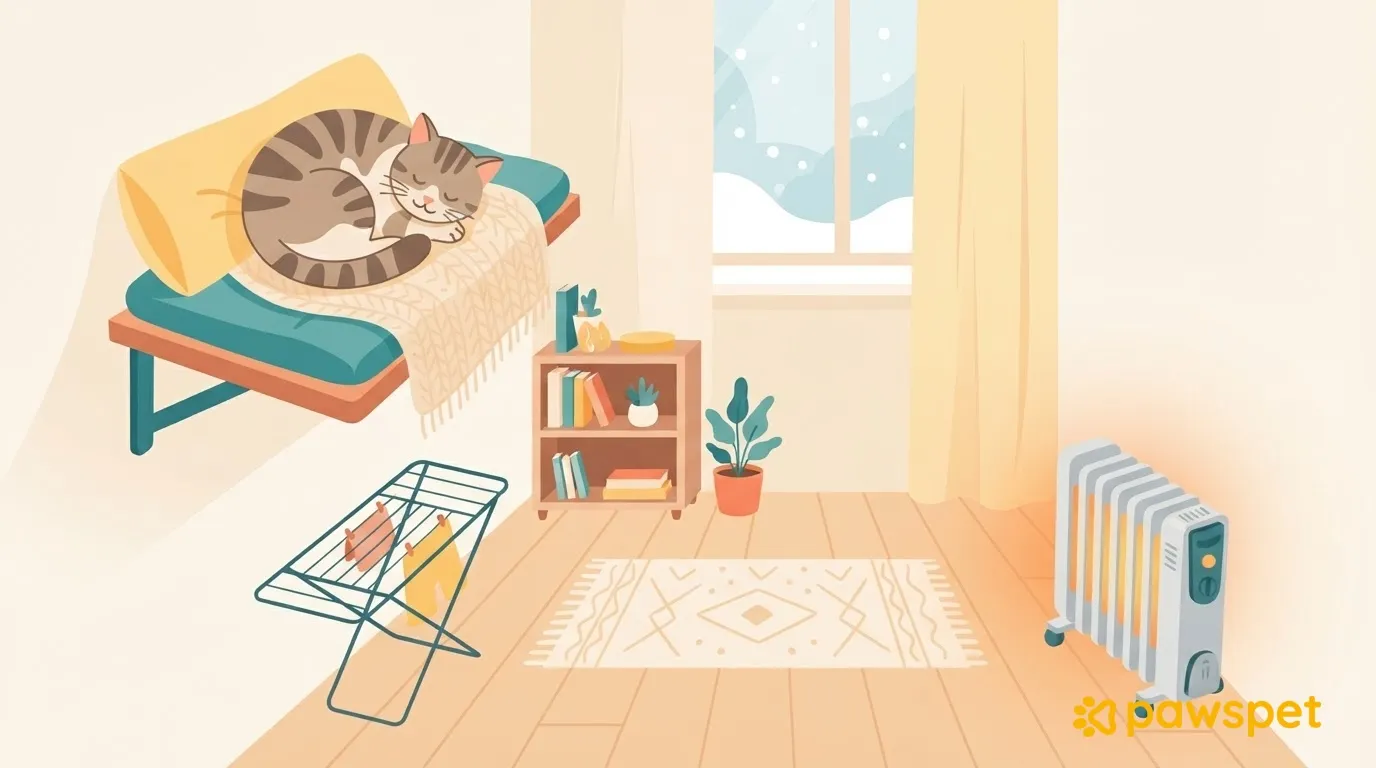
When it’s cold, cats seek out the warmest spot in the house. If they can’t find a suitable one, they may settle for a risky alternative, such as a space heater or fireplace. Prepare at least one warm spot raised off the floor, away from drafts and near a heat source such as a radiator, but not touching it. When you’re not home, keep flames, heaters, and space heaters out of your cat’s reach.
Where cats look for warmth
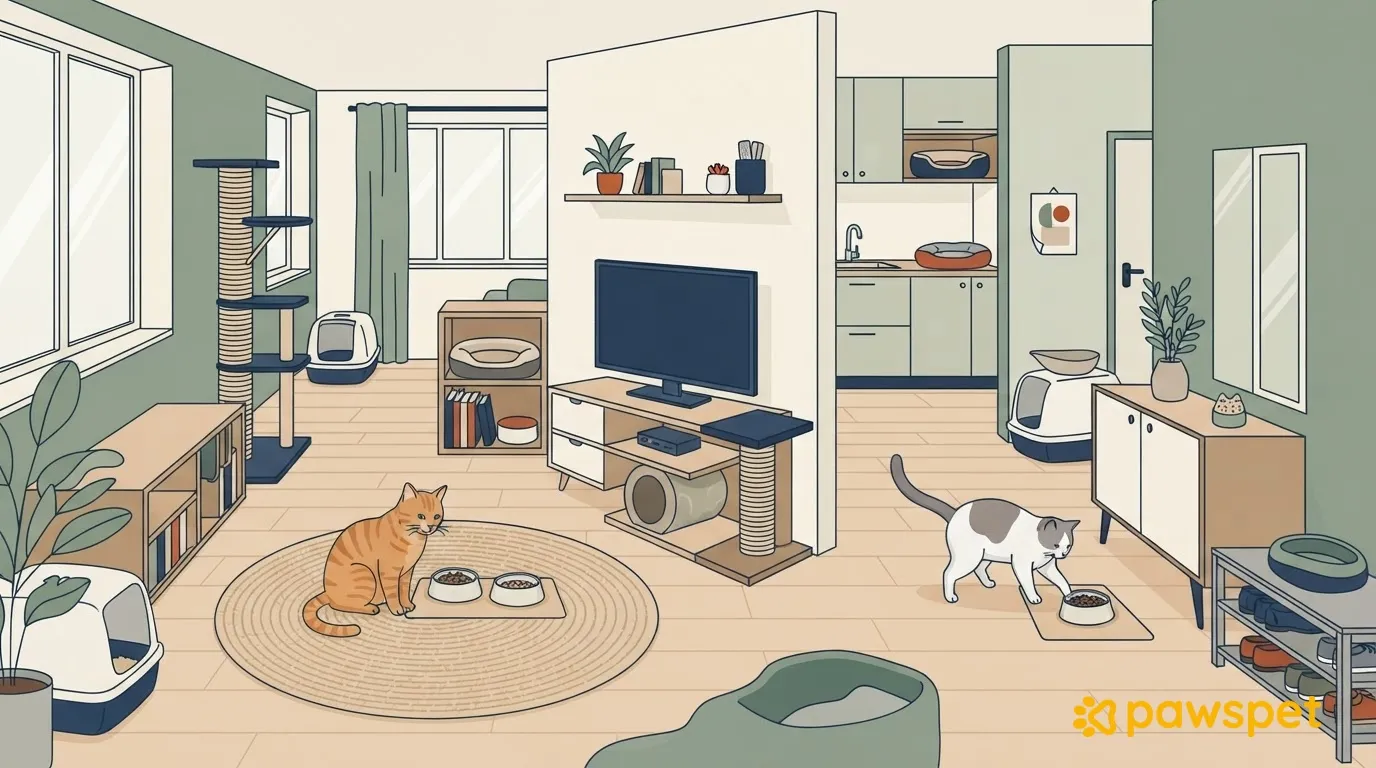
In a small home, cats quickly find the warmest spots: they usually avoid cold floors and drafts coming from the front door and windows, and seek out sunny corners, radiators, and any appliance that’s switched on. These preferences are understandable, but the options are not equally safe: a sunny cushion is not the same as a switched-on space heater or a hot stovetop.
Because space is limited, a few well-chosen alternatives are enough to keep your cat from settling near the space heater or stove. Notice where your cat spends time during the day: that’s where it makes sense to prepare warm spots.
Three warm spots to prepare
Start with one; if space allows, prepare two or three.
A raised, sheltered bed
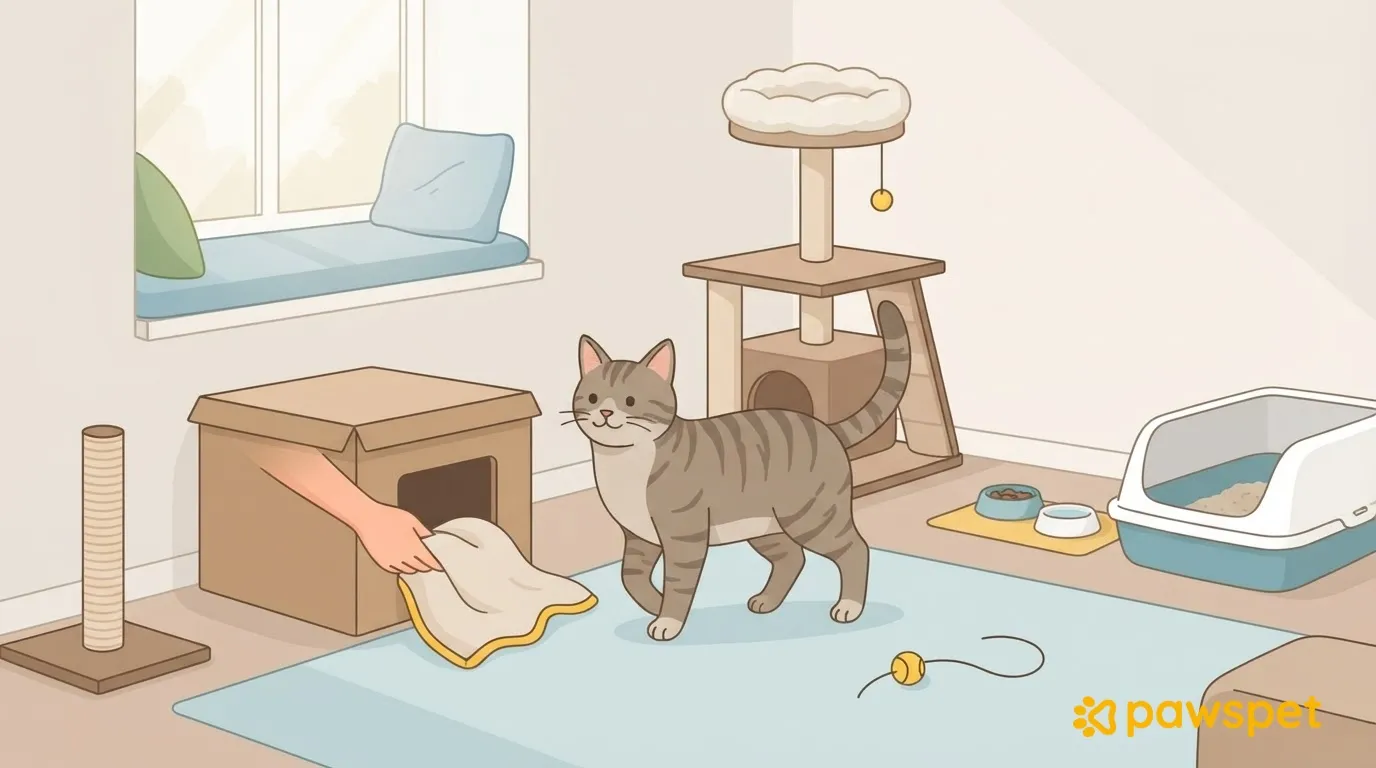
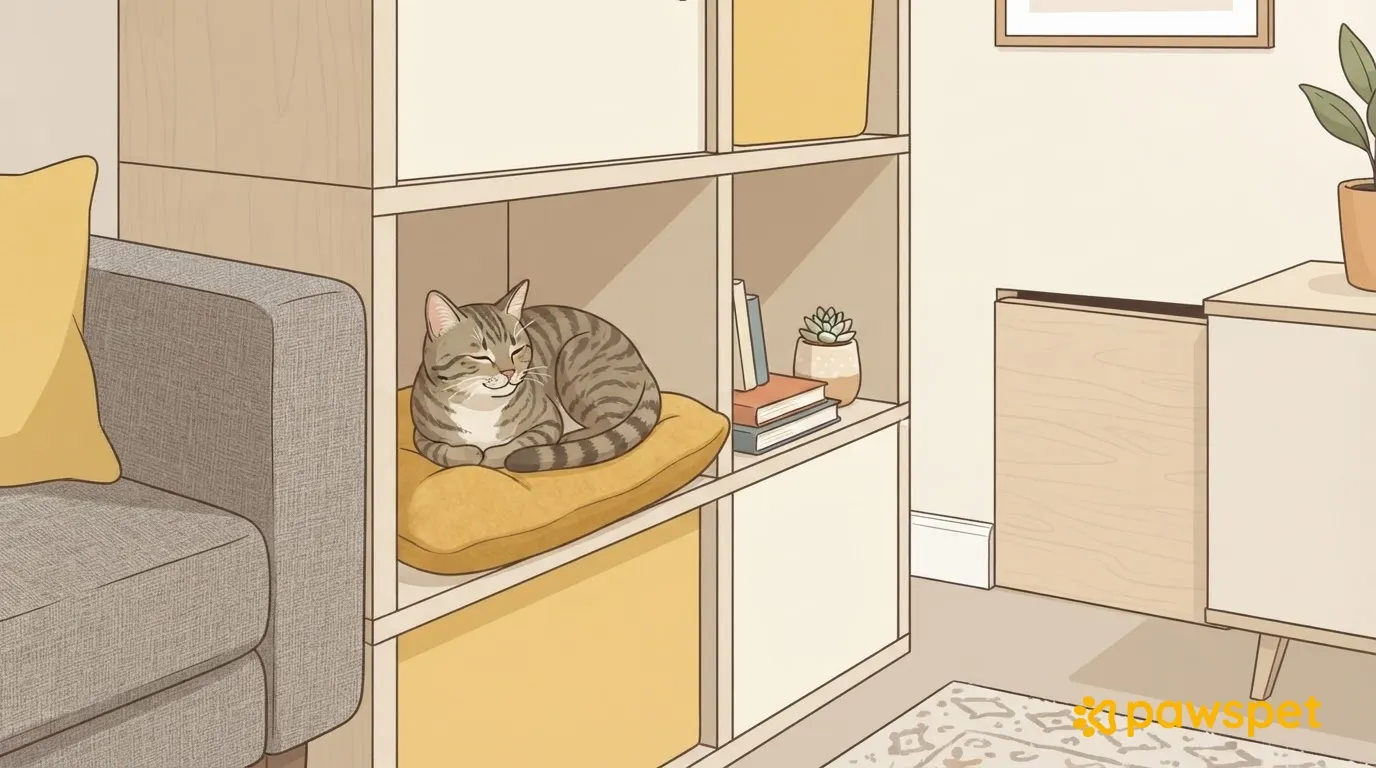
Choose or prepare a bed raised off the floor, away from doors, windows, and space heaters, with a washable blanket. A box lined with a soft cloth works too: what matters is that it’s stable and your cat can get in and out easily.
Older, very thin, or recovering cats may seek extra warmth and need a spot they can reach without jumping: choose a low base or add a step. If, however, your cat’s habits change suddenly at any age (sleeping much more than usual, eating less, or withdrawing), don’t put it down to the cold; talk to your veterinarian.
To warm the bed, choose a heating pad or another warming product designed for pets, use it according to the manufacturer’s instructions, and make sure your cat can move away from it. Don’t use overly hot hot-water bottles or leave electric blankets made for people switched on with your cat on top.
A sunny spot
A shelf or indoor windowsill that gets sunlight provides warmth without appliances. This works with the window closed or protected; otherwise, the windowsill isn’t a suitable spot for your cat. Lay down a soft cloth and make sure the surface is stable.
Near the radiator, not on it
Place a bed a short distance from the radiator: your cat will feel the warmth without resting against the surface. If you choose a radiator hammock, check that it’s stable, that your cat can get down easily, and that the surface doesn’t get too hot. Check it by placing your hand on it (if you can’t keep your hand there comfortably, it’s too hot for your cat too) and follow the manufacturer’s instructions.
Heaters, space heaters, and fireplaces: household rules
When you have a heat source at home, follow the same rules every day:
- Fireplace and stove: Put up a barrier or fireguard, following the manufacturer’s instructions.
- Electric space heater: Keep it stable, out of walkways, and with the cord out of reach; never cover it with cloths, and turn it off when you leave.
- Candles and open flames: Never leave them unattended when your cat is loose in the house.
- Kitchen: Don’t put beds or high perches next to the stovetop where they might tempt your cat to climb up.
- After contact with a heat source: Show singed fur or reddened areas to your veterinarian.
Drying racks and laundry in a small space
A drying rack can attract your cat: dangling clothes, cords, and a high perch to watch from. In a small home, place it against a wall, out of the routes to the litter box, food and water bowls, and resting spots, so your cat doesn’t have to walk through it to reach them. Fold it away when not in use and, if possible, keep it in a room where your cat isn’t left alone.
Put away socks, laces, elastic bands, and string right away, because your cat could swallow them. If you suspect your cat has swallowed one, call your veterinarian. Keep detergents and fabric softeners tightly closed. Before starting the washing machine or dryer, check that your cat isn’t inside the drum.
Ventilate safely
Freshening the air is useful, but with a cat at home, every open window is also a way out. Open windows only if they have safety screens or after closing your cat in another room, and leave them open for just a few minutes while staying nearby. Tilt-and-turn windows, in particular, should only be opened with suitable protection.
Pay attention to the balcony door too: check where your cat is before opening it.
Checklist before the next cold spell
- Prepare a warm spot raised off the floor, away from drafts, with a washable blanket.
- Turn off space heaters when you leave, and never leave flames unattended.
- Move the drying rack against a wall, out of walkways.
- Put away socks, laces, and elastic bands; close detergents and fabric softeners securely.
- Open windows only if they have safety screens or your cat is in another room.