For the first week after the holidays, first put the home back the way your cat is used to, restoring its quiet resting spots. Then set a few daily anchors at regular times and shift routines gradually, rather than changing everything on the first day.
What changed during the holidays
Later wake-ups, irregular meals, visitors, and noise may have changed your cat’s days; you may also have moved beds and scratching posts, taken your cat on a trip, or left it with someone else. Returning to work or school brings the opposite change: long periods away after days of constant company.
Many cats feel more settled when important things happen in roughly the same way. During the first few days, watch for whether your cat:
- asks for food or attention more insistently;
- follows you everywhere;
- hides more or sleeps in unusual places;
- has changes in appetite or litter box habits.
Note what changes without automatically attributing it to the return to your usual routine.
Put the home back in order before setting times
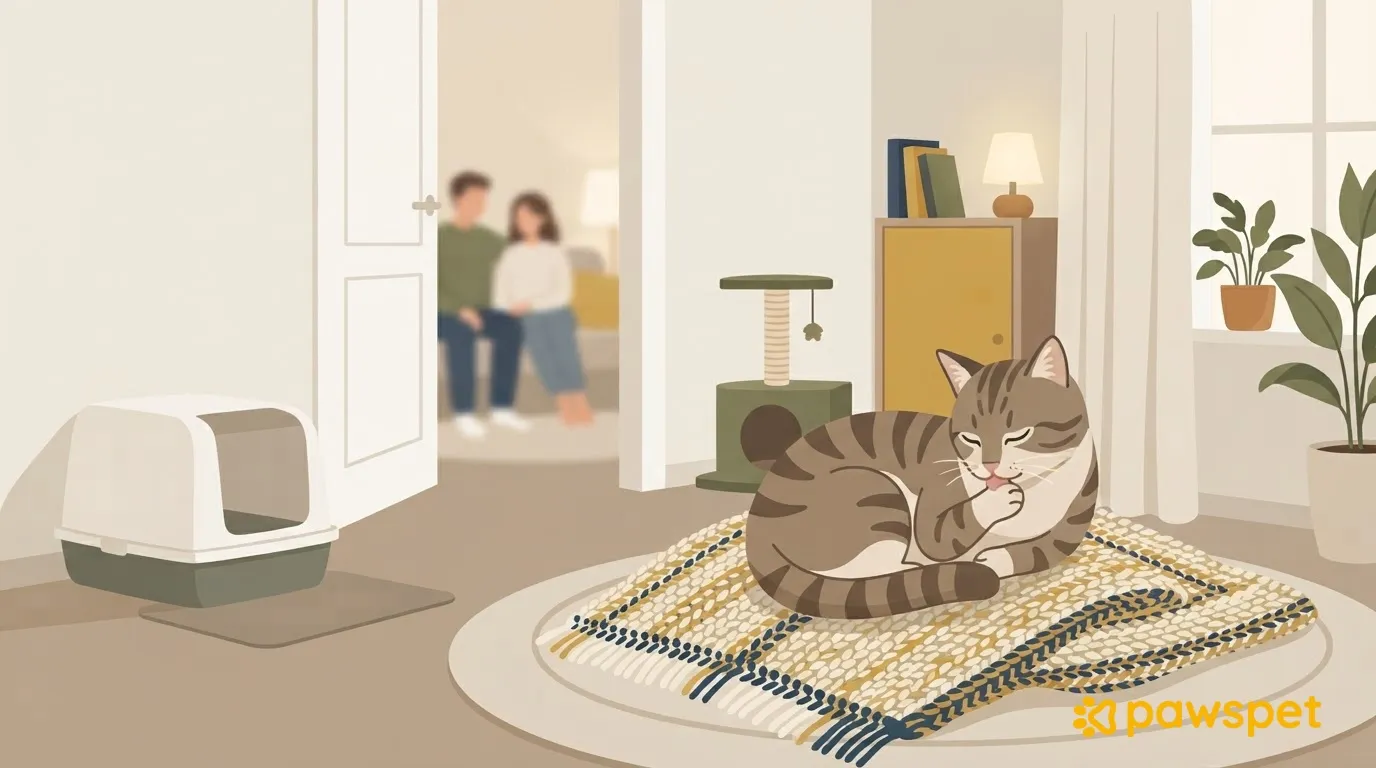
Move beds, hiding places, scratching posts, the litter box, and food and water bowls back to their usual places if you moved them. Clear suitcases and boxes from the quiet area where your cat rests.
Wash blankets and cushions one at a time, not all together, to preserve some familiar scents. After taking down decorations and putting away gifts, check that no ribbons, strings, or hooks are left on the floor.
Four daily anchors
These times are an example for someone who leaves in the morning and comes home in the evening: adapt them to your schedule and your cat’s habits.
| Anchor | Example time | What to do |
|---|---|---|
| Wake-up and first meal | 7:00 | Offer the first meal. |
| Play before leaving | 7:30 | Play actively for a few minutes with a feather wand, then offer a small portion from the daily ration. |
| Return home | 18:30 | Greet your cat calmly, then play or offer a meal. |
| Evening | 21:30 | Final play session, final meal, then quiet time. |
The table organizes the day; it does not change the daily ration recommended for your cat. Keep the same anchors on weekends, allowing for small variations. Agree on the times with everyone at home and decide who is responsible for each activity.
If you take turns caring for your cat at home, you can set meals and play as recurring activities with a reminder in the PawsPet app to keep track of the times.
In “Activities,” tap the yellow “+” to add an activity, select the pet, set the times, and choose a required type from the “General” category: “Food and supplies” or “Free play and walks.” Use “Repeat” with “Every N days” or “N times a day” (up to 6 times). In the “Set reminder” row, tap the bell to enable reminders, choose when to receive them, and tap “Confirm,” then “Save.” Mark completed activities using the circle.
Add family members who are already registered from the cat’s profile, menu ⋮ → “Collaborators”: under “Activities,” grant “View” access so they can check them, and “Edit” access as well so they can log them.
From holiday schedules to work schedules
If meals and play were later, move them gradually toward the new times: 15 minutes a day is an example, not a rule. If you have already gone back to your usual routine, first stabilize the anchors you can stick to.
Keep departures and returns brief and consistent, without long, excited goodbyes. While you are away, leave a food-search game with part of the daily ration, a safe spot to look outside from, and your cat’s bed in its usual place.
Don’t make up for time away with constant attention one evening and no interaction the next: the goal is to make time together predictable too. Offer recognizable playtimes and space to rest.
After a cat sitter or boarding stay
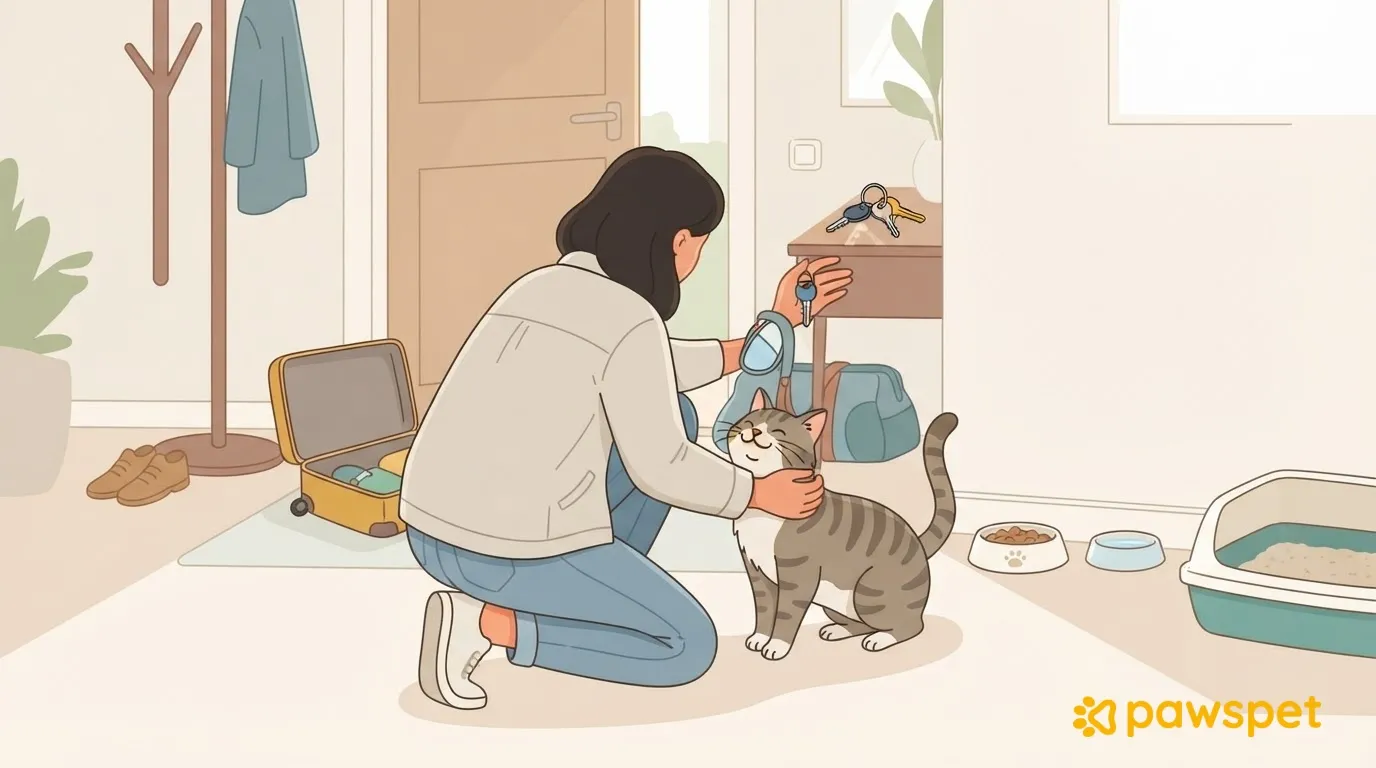
After a stay away from home, let your cat explore calmly and make sure it can find its bed, litter box, and water right away. If your cat stayed at home with a cat sitter, ask what times they followed for meals and play so you know where to start.
Resume the anchors from the first day and avoid visitors and furniture changes in the following days.
When to contact the veterinarian
Tell your veterinarian about these changes, especially if they last more than a few days or get worse:
- eats very little;
- hides almost all the time;
- urinates or defecates outside the litter box;
- has a significant change in activity.
To describe the changes, note when they started.
If your cat repeatedly goes to the litter box but cannot urinate, or stops eating, contact the veterinarian right away. Don’t wait for the routine to resolve the situation.
The first-week checklist
- Restore the usual places for beds, hiding spots, scratching posts, the litter box, and bowls.
- Clear the resting area and wash fabrics one at a time.
- Keep the anchors on weekends too, without adding extra portions.
- Shift the times gradually and keep greetings calm.
- Watch appetite, litter box habits, and hiding; report changes to the veterinarian.
- Today: write down the four anchors and their times and put them somewhere the whole family can see them.