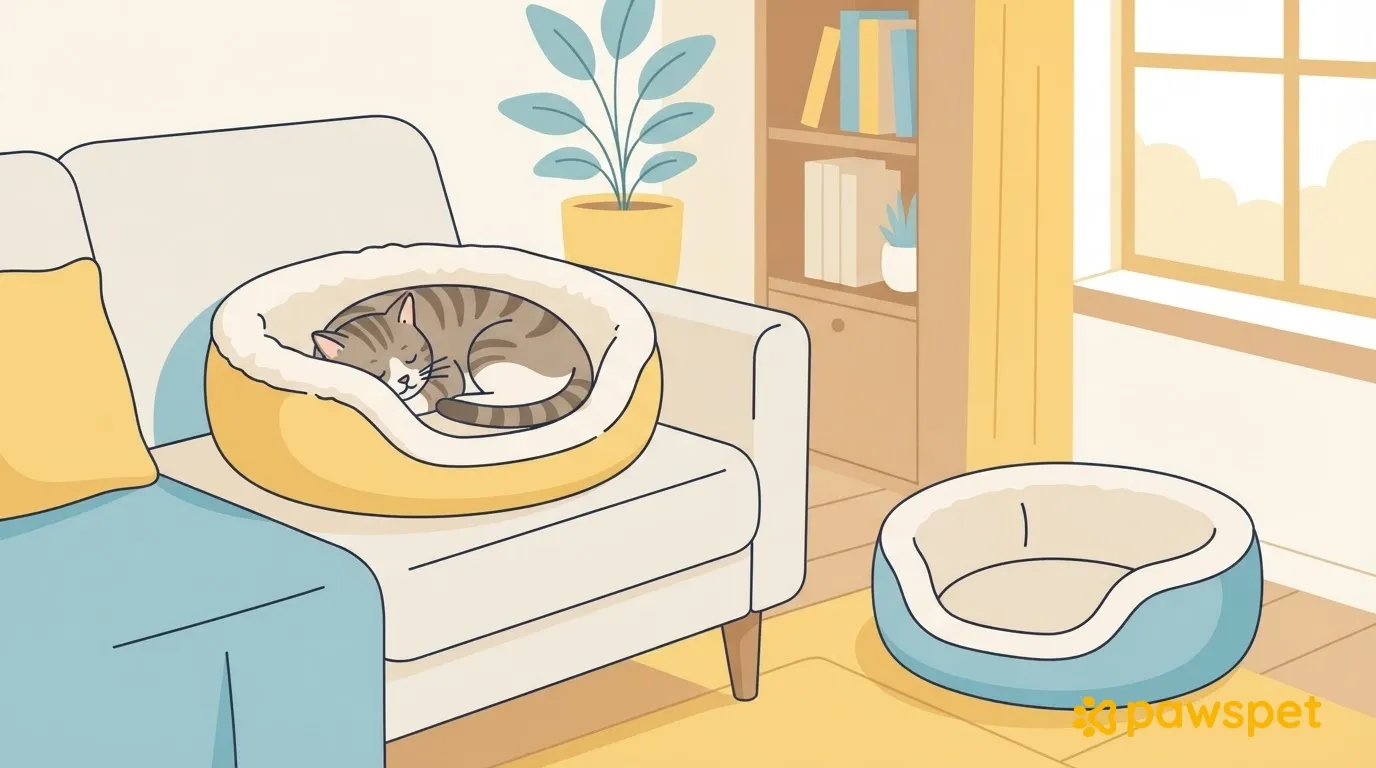
If your cat won’t use their new bed, the reason is usually its location, smell, or shape—or the fact that they were put in it by force. Before buying another one, watch where they already rest: that can help you figure out what to change, without making them use it.
Before changing the bed, see where your cat sleeps
For a few days, observe where they rest without intervening each time. Ask yourself:
- What time do they sleep, and where in the house?
- Do they look for high or low spots, covered or open ones?
- Do they stay near people or prefer a secluded room?
- Do they stretch out or curl up? Do they choose soft or firm surfaces?
- Do they seek warmth or look for cool spots?
The answers can point you toward both the right location and the right shape. If they like sleeping near you, don’t start with the most secluded room just because it seems quiet. If they lie on the floor, don’t assume they want very soft padding.
Location matters more than the model
Start with their favorite spot, or a place right next to it. Choose a corner away from entryways and hallways, and keep it away from doors that open frequently. Avoid placing it near the washing machine, dishwasher, or television.
Keep the bed separate from the litter box and food and water bowls. A wall behind it, a view of the room, and a stable surface are better.
In a small home, you could try:
- beside the end of the sofa where the family sits;
- under a desk, away from the chair’s movement;
- on a clear bookshelf shelf, if they like being up high and can reach it safely.
If they seek warmth, choose a warm spot, never one in contact with hot surfaces.
Smell and materials: make it familiar
Air out the bed to reduce the smell of the packaging. Then add a blanket or cushion they already use: everything shouldn’t be new at the same time.
Avoid strong detergents and fragrances, and don’t wash all their blankets on the same day, so a familiar fabric remains available. Start with the material they prefer, not the one that seems softest to you.
Shape, size, and stability
Before replacing it, see if you can adapt the bed you have. When choosing the size, consider how your cat sleeps, too: they should be able to get in, turn around, and settle without being squeezed by the sides.
| What you notice | What to try |
|---|---|
| They sleep stretched out | A wide base with a low edge. |
| They climb into boxes | A covered bed, or a blanket securely draped over an open bed, leaving the entrance clear. |
| They like leaning against something | A raised edge they can lean on. |
| They prefer firm surfaces | A thin cushion or a folded blanket. |
| The bed slides or wobbles | A non-slip base or a more stable location. |
A raised or hanging bed must stay stable when your cat climbs onto it. If they have trouble jumping, choose a floor-level spot and a low entrance; if the difficulty is new, tell your veterinarian.
How to introduce it without forcing them
Don’t put them inside by force or shut them in the bed. Leave it in the same place instead of moving it every day. You can create a positive association by leaving a small treat on the edge or playing a short game nearby, without holding them there.
Their favorite box can also help bridge the gap: put the bed inside it, if it fits comfortably, or place the two side by side. Once they use the bed comfortably, try leaving it outside the box, then gradually move the box farther away.
Change one thing at a time: this helps you work out whether location, fabric, or stability matters. It may take days or even a few weeks; there’s no guaranteed timeline, and your cat may continue to prefer other spots.
When the problem isn’t the bed
Ignoring a newly arrived bed, on its own, isn’t enough to suggest a health problem. But if your cat stops using all their usual spots, hides much more than usual, has trouble jumping, or you notice changes in their appetite or litter box habits, talk to your veterinarian. Don’t wait for them to accept the bed before asking for advice.
Also consider any new noises, renovation work, or changes to the furniture: these may have disturbed their resting spot.
A sequence to try
- Observe where and how your cat rests at different times of day.
- Move the bed close to their usual spot, away from traffic and noise.
- Make it familiar with a blanket they already use, and check its shape and stability.
- Wait without forcing them, while keeping their other resting spots available.
Try today: put a blanket your cat already uses in the bed and place it beside their favorite spot.