Seeking warmth is normal for a cat, especially in winter. Offer a warm spot and a cooler one, and let your cat move away whenever they want. Hot surfaces, appliances that could tip over, cables, and enclosed spaces should be made safe.
Why cats seek warmth in winter
Many cats choose the warmest spots in the home; this preference can vary with coat, age, and build. The rule is to offer warmth without forcing it: avoid setups that prevent your cat from leaving, and always provide an accessible cooler alternative.
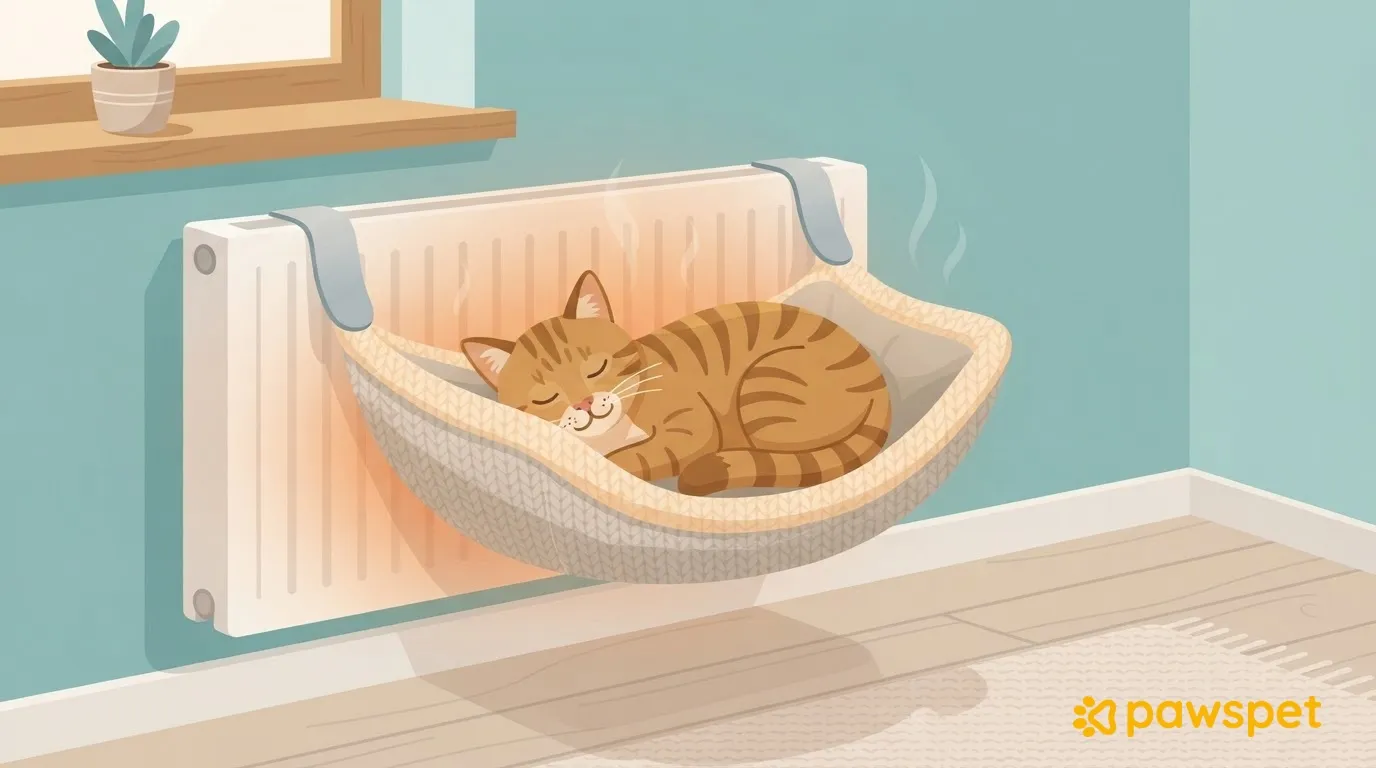
Radiators: use a hammock or bed only if the surface is not too hot
A cat radiator hammock or suspended bed needs secure fittings that can support your cat’s weight: check the manufacturer’s instructions. Check the hooks and fabric regularly, especially if you notice loosening or wear.
Carefully assess the surface your cat will rest on, including the radiator cover: if you cannot comfortably keep your hand on it for a few seconds, consider it too hot for a prolonged rest. Don’t insist if it feels hot. This test does not guarantee that the spot is safe; repeat the check while the heating is on.
Avoid direct contact with hot metal. Alternatively, place a chair, a stable shelf, or a cat bed near the radiator, but not on top of it.
Stoves, space heaters, electric blankets, and other warm spots
| Heat source | What to check | What to do |
|---|---|---|
| Electric space heater | It could tip over; hot surfaces and cord. | Place it in a stable position, with the cord out of reach. Never leave it on unattended while your cat is loose in the room; follow the manufacturer’s instructions. |
| Pellet or wood stove and fireplace | Hot glass and surfaces, tools, and ash. | Block access with a barrier or fireguard, and keep tools and ash out of reach. Don’t let your cat rest on or against it. |
| Heating pad or electric blanket for people | Cords your cat could chew and heat they cannot control. | Don’t leave your cat sleeping on it unsupervised; they must be able to move to an unheated area. |
| Hot-water bottle | It could burn your cat or leak. | Use it only when warm, covered, and checked, and leave your cat room to move away. |
| Laptop in use | Resting directly on the device. | Offer a bed beside your workspace, separate from the device: an open laptop is not a cat bed. |
| Washing machine and dryer | Your cat could hide in the drum, even among the laundry. | Check the drum before every cycle, even if you have already loaded the laundry; keep the door closed when not in use. |
| Duvet, wardrobes, and drawers | Your cat could get trapped under the covers or shut inside. | Check under the duvet before sitting down, and check wardrobes and drawers before closing them. Always leave an exit clear. |
Warm spots your cat can leave whenever they want
You don’t need to have your cat rest on a switched-on appliance to provide a warm spot:
- A raised bed, easy to reach and away from cold floors and drafts.
- An enclosed bed with a fleece blanket, in a quiet corner, with the entrance always clear.
- A throw in the sunniest spot, behind a closed, secure window.
- A self-warming, non-electric mat that retains body heat.
- A pet heating pad, used only according to the manufacturer’s instructions, with the cord protected and part of the bed left unheated.
Always provide a cooler spot too: you don’t need to overheat the whole house, just give your cat a choice.
Older, underweight, or recovering cats: ask your vet first
If your cat is older, very underweight, has limited mobility, is recovering from surgery, or has a chronic illness, ask your vet before using electric heat sources. They may not be able to move away in time if they get too hot.
Tell your vet about these signs:
- They seek warmth much more than usual and are also more tired, eat less, lose weight, or have difficulty jumping.
- Red skin or patches of hair loss appear after contact with a heat source: stop the contact and call your vet.
Note when you first notice the changes and your cat’s weight, if you have measured it, but don’t delay contacting your vet to collect this information.
To find this information during your appointment, you can note your cat’s weight and add notes in «Measurements» in the PawsPet app, and record visits in «Health» on your cat’s profile.
Quick check before switching on
- The resting spot is warm, with no contact with surfaces that are too hot.
- The space heater is stable; the hammock fittings can support your cat’s weight.
- Cords are protected and out of reach.
- Stoves and fireplaces have a barrier or fireguard.
- The washing machine and dryer drums have been checked before starting a cycle.
- A warm spot and a cooler spot are both available and accessible.
Tonight, carefully test the radiator resting spot with your hand and prepare an alternative beside it, not on top.