First check the care label or the manufacturer's instructions and remove hair and dirt while dry; then wash the cover separately from the filling, treat the filling according to its material, and dry everything thoroughly before putting the bed back together. A dog or cat bed that gets a little regular care lasts longer and needs fewer full washes. It’s also the more sustainable choice because it saves water, energy, and detergent.
Before washing: care label, materials, and dry hair removal
Look for the care label: it is usually sewn inside the cover, near the zipper or on a side seam, and the filling may have its own label. The symbols or text indicate whether the bed can be hand-washed or machine-washed, the maximum temperature, and whether tumble drying is allowed. If you have the manufacturer's instructions, follow them over any general advice, including the guidance here.
Next, check how the bed is made:
- Removable cover: the cover comes off and can be washed separately.
- Non-removable cover: the fabric and filling are one piece and need to be treated together, with extra care.
- Loose filling: soft, loose fiber, often enclosed in an inner liner.
- Solid filling: foam or memory foam in one compact piece.
If there are no instructions, choose the gentlest method, such as hand-washing with a mild soap, and test it first on a hidden area of the fabric.
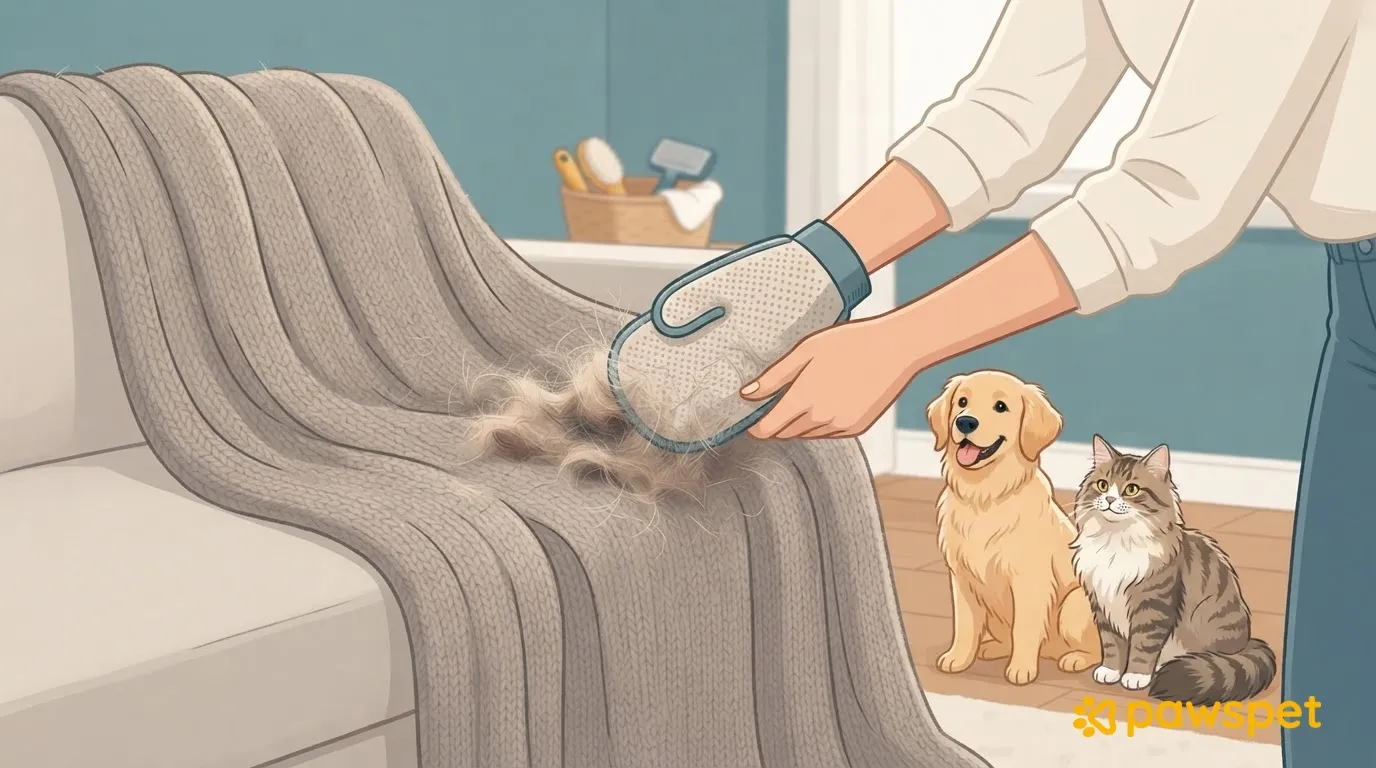
Before getting anything wet, remove hair and dirt while dry: shake the bed outdoors, vacuum it with an upholstery attachment, and use a brush or rubber glove on the hairiest areas. This means less hair ends up in the washing machine, and often one wash is enough.
Washing the cover
If the bed has a non-removable cover, go straight to the section on the filling.
In the washing machine
- Zip the cover closed and turn it inside out.
- Wash it with other pet fabrics (blankets, cushions), not delicate items, to fill the drum without overloading it.
- Use a mild, fragrance-free detergent in the amount recommended by the manufacturer.
- Choose a cycle and temperature permitted by the care label.
- Make sure the rinse cycle is complete: no detergent residue should remain in the fabric.
By hand or if it won't fit in the washing machine
Fill a basin or bathtub with water and mild soap, gently scrub only the stains, and rinse thoroughly until no soap residue remains. For very large beds, consider using a laundromat, checking first that it accepts pet fabrics.
The filling: wash it or freshen it up
What you can do depends on the material and the manufacturer's instructions.
- Loose filling: wash it only if the manufacturer says it is washable, keeping it inside the inner liner so it does not scatter.
- Foam or memory foam blocks and non-removable beds: as a rule, spot-clean only where needed with a barely damp cloth, then air-dry, unless the manufacturer says otherwise.
Dry completely before putting the bed back together
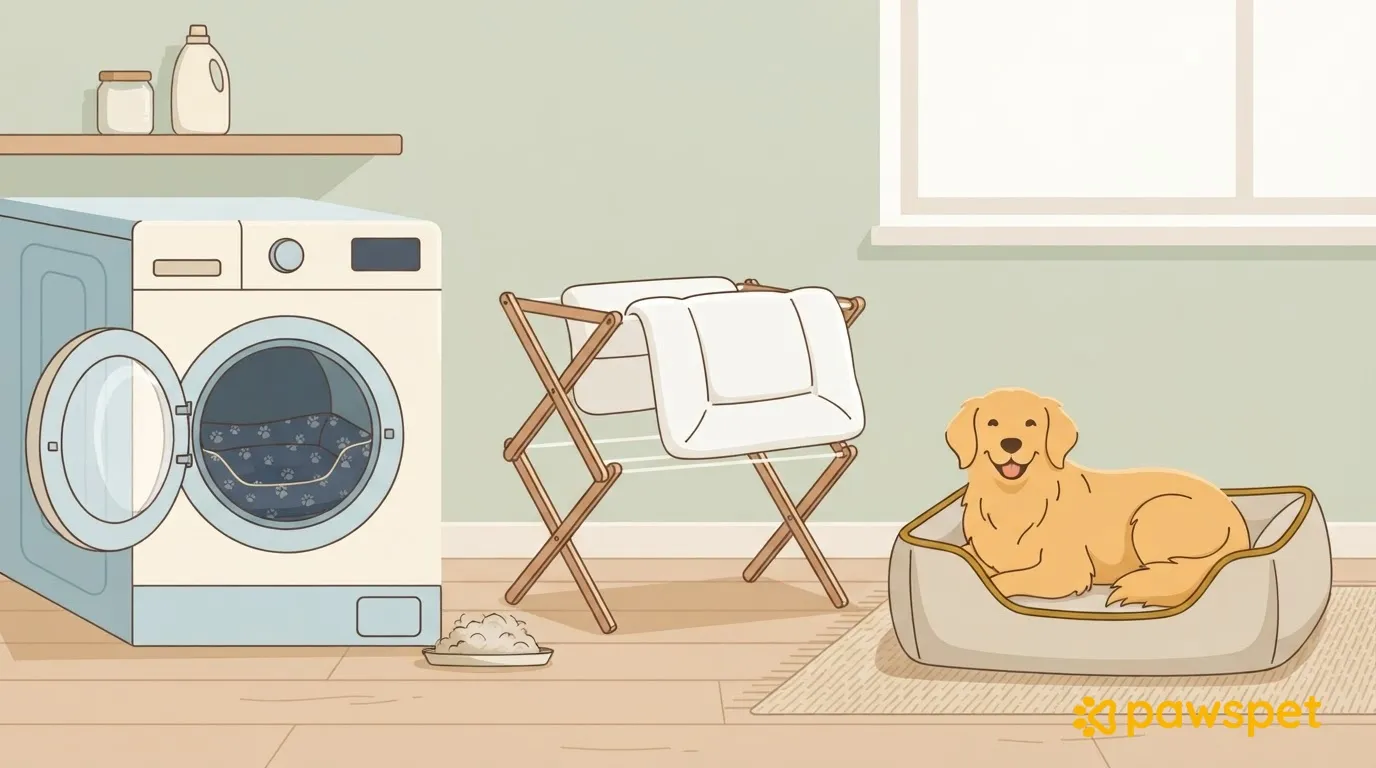
Air-dry the cover and filling in a well-ventilated place, turning the filling over several times. Use a tumble dryer only if the care label allows it.
Before putting the bed back together, check that the inside is dry too: by touch (press the center), by weight (it should not feel heavier), and by smell (it should not smell damp). If it isn’t dry, wait: damp filling can develop an unpleasant odor. In the meantime, give your pet a blanket or a second bed.
An easy routine with a spare cover
A few habits are enough; adjust them to how often the bed is used: remove hair as soon as it builds up, wash the cover when it gets dirty or starts to smell, and spot-clean right away after vomit, urine, or mud. If your pet has skin problems, parasites, or is undergoing treatment, follow your veterinarian's instructions for cleaning its fabrics.
A second cover lets you swap out the one being washed right away, while a washable blanket over the bed protects it and can be washed instead, reducing the need for full washes. Then group your pet's fabrics to run full loads. To remember regular cover washes, you can create a recurring activity in the PawsPet app with «Repeat» and a reminder with «Set reminder», choosing the schedule yourself.
When to replace the bed
Consider replacing the bed if the filling is flattened or lumpy and does not regain its shape, if the odor remains even after a proper wash, or if there are tears or the zipper is broken. If the filling is coming out, take the bed away from your pet right away: they could chew or swallow it. If you think that may have happened, contact your veterinarian.
Before throwing everything away, consider these more sustainable alternatives:
- replace only the cover or only the filling, if the manufacturer supplies them or they come in standard sizes;
- reuse intact fabric as cleaning rags;
- ask a local shelter or organization whether a bed that is still in good condition could be useful;
- dispose of the rest according to your municipality's recycling and waste-sorting rules.
You can start with two simple steps today: check the bed's care label and get a spare cover or blanket.