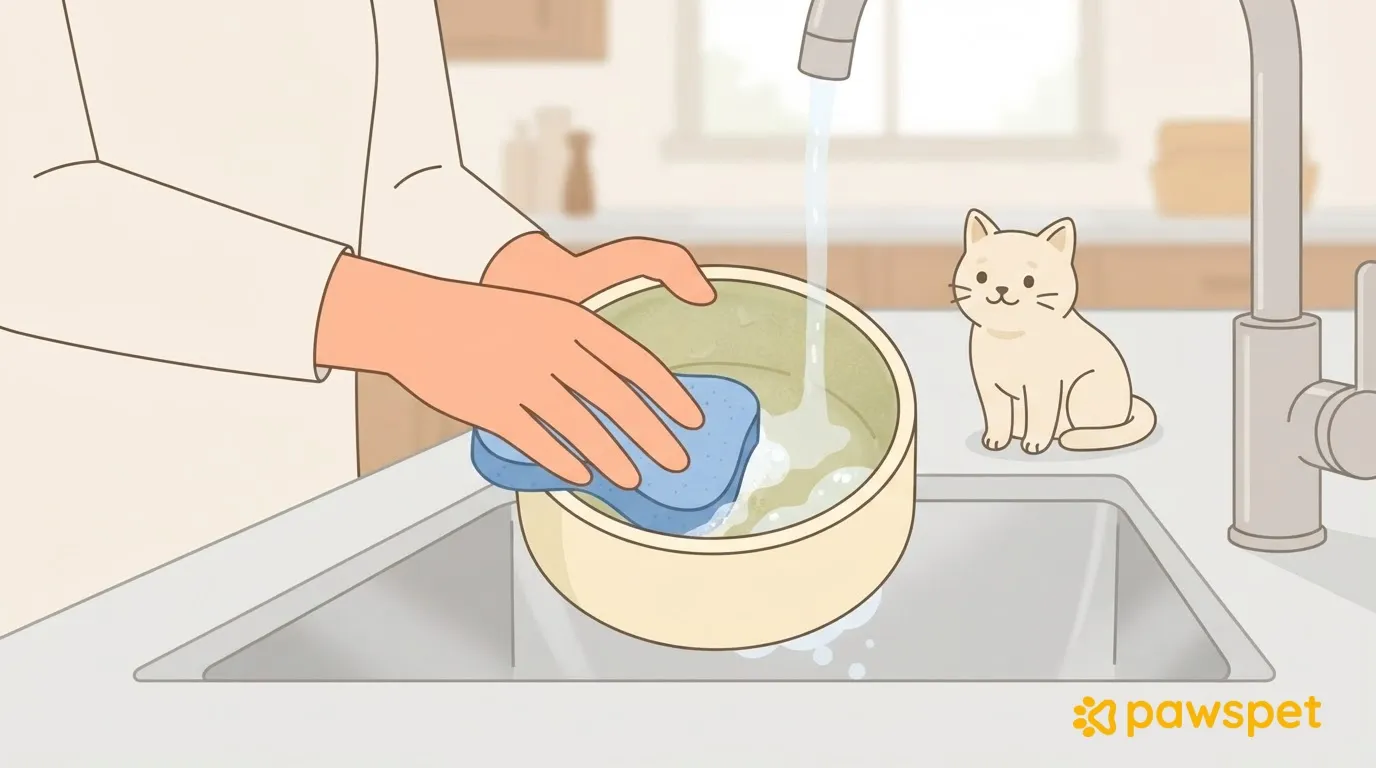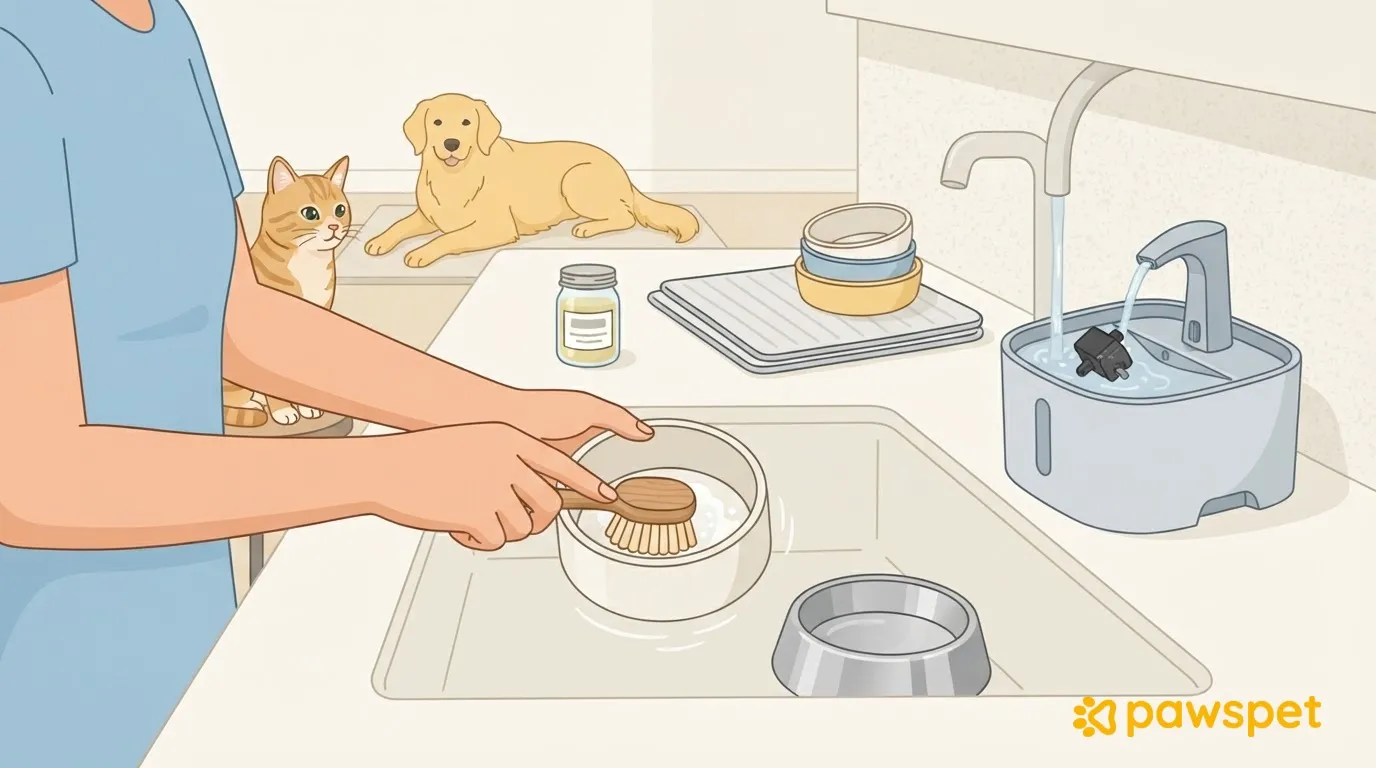
Wash bowls regularly with a little water and dish soap using a dedicated sponge, then rinse well and dry. Refresh the water often and wash the bowl before a slippery film forms, clean the fountain by taking it apart as directed in the manual, and replace bowls that are cracked or heavily scratched. The idea is to use fewer products and fewer disposables, with more consistency and attention to wear.
How often to wash them: a routine to adapt
As a starting point:
- Wet or homemade food: Remove leftovers right after the meal and wash the bowl before filling it again.
- Dry food and water: Refresh the water often and wash the bowls regularly, for example every day, without waiting for a film to appear. If the bottom feels slippery to the touch, you’ve waited too long.
These are habits, not scientific rules: adjust them based on how many animals use the bowls, your local climate, and what they eat. In a home with a dog and a cat, for example, bowls in different colors (blue for the dog, green for the cat) are easy to tell apart, and you can wash them all together without giving it a second thought.
Hand-wash with little water and dish soap
Hand-washing takes just a few steps:
- Dispose of food scraps according to your municipality’s waste collection rules.
- Lather with a sponge or small brush used only for the bowls, and a little dish soap.
- Scrub the bottom, inner sides, and base carefully.
- Rinse until no suds or soap smell remain.
- Dry with a reusable cloth or leave to air-dry.
To waste less, turn off the tap while lathering, wash all the bowls together, use the minimum amount recommended on the dish soap label, and avoid disposable wipes.
Dishwasher: only if the manufacturer allows it
Not all bowls are dishwasher-safe: it depends on the material and the manufacturer’s instructions, so check the label or packaging before putting a bowl in. Non-slip bases and plastic parts in particular may not be suitable. If you can’t find instructions, hand-wash it.
If the dishwasher is allowed, add the bowls to a full load so you don’t run a cycle just for them, and remove rubber bases or detachable rings: wash them separately by hand and clean the surface they cover, too.
Fountain: disassembly, filter, and pump as directed by the manual
Every model is different, so the manufacturer’s manual comes first. In general, follow this sequence: unplug the fountain before touching it, empty it, and take it apart. Clean the basin and components with a small brush, and check the pump only as described in the instructions.
For the filter, follow the manufacturer’s schedule: replace it or, only if the manual says so, wash and reuse it (the same applies to sponges). Then reassemble the fountain and fill it to the indicated level. Maintenance and filter changes are easy to forget: in the PawsPet app, you can set them as recurring tasks (“Repeat”) with a reminder (“Set reminder”), so you can keep track of the due dates.
Scratches, cracks, and materials: when to replace a bowl
When you wash a bowl, inspect it: scratches and cracks make cleaning more difficult because dirt can remain in the grooves. The table isn’t a ranking: each material has practical advantages and limitations, and the label always determines whether it’s dishwasher-safe.
| Material | What to check when washing | Practical note |
|---|---|---|
| Stainless steel | Deep scratches, dents, dirt under any rubber base | It won’t break if dropped, but it’s usually lightweight and may slide around while your pet eats |
| Glazed ceramic | Chips, cracks, damaged glaze | Usually heavy and stable, but may break if dropped: check the rim and bottom after every impact |
| Glass | Chips on the rim, cracks, visible hairline fractures when held up to the light | Usually heavy and stable, but may break if dropped; because it’s transparent, you can immediately see if anything remains on the bottom |
| Plastic or melamine | Deep scratches, cracks, warping, dirt under rubber bases | Usually lightweight: it can slide or tip over easily, so a non-slip base is better |
A bowl that is cracked, chipped, or heavily scratched should be replaced. For your next purchase, choose durable, easy-to-wash materials and a simple shape that you can scrub everywhere: that way, you’ll buy fewer bowls over time.
One note: if your pet drinks much more or much less than usual, or suddenly avoids food and water, talk to your veterinarian.
Do this today: Check all the bowls for scratches and cracks, and look in the fountain manual to see how often the filter needs changing.