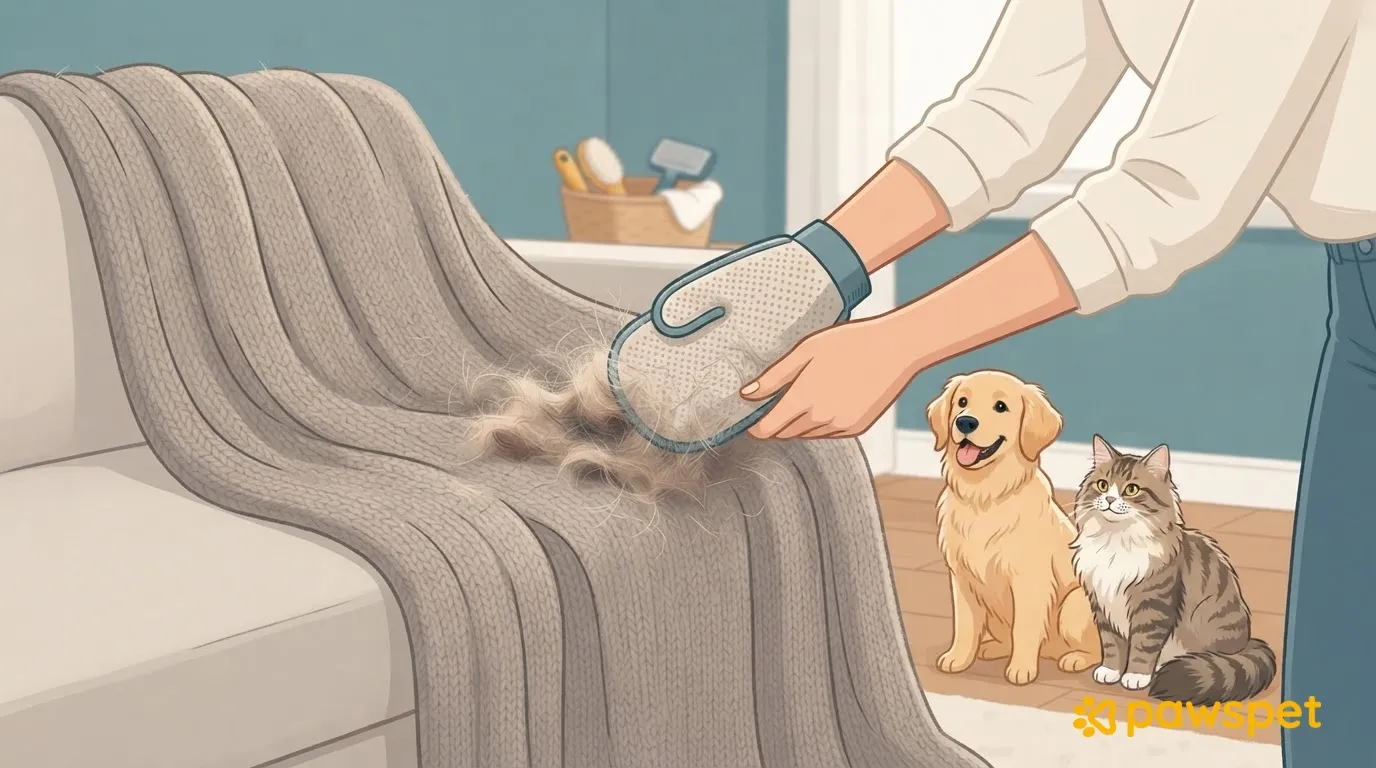
To remove dog or cat hair from blankets and sofa covers, first remove most of it while the fabrics are dry: shake them out, go over them with a rubber brush or glove, then vacuum. Only then wash the pet’s fabrics together in a full load, following the care label, and at the end of the cycle clean the drum, seal, and filter as directed in the washing machine manual; brushing your pet regularly reduces loose hair at the source. How much hair a pet sheds and when it sheds vary by coat, breed, age, and environment: many owners notice more hair around the home from late winter through spring, but this is not true for everyone.
Why remove hair before washing
In the washing machine, wet hair sticks to fabrics and stays in the drum and filter, so a second wash is often needed. Removing hair while the fabrics are dry before washing avoids repeating the cycle, saves water and energy, and protects other clothes from collecting hair during the wash.
Reusable tools and the order to use them
Follow this sequence, moving on to the next tool only when the previous one no longer removes much hair:
- Shake the fabric outdoors, somewhere the hair will not bother others.
- Use a rubber brush or glove, slightly damp if the fabric allows it, always moving in the same direction: the hair tends to gather into clumps that are easier to remove.
- Vacuum the hair left between the fibers using an upholstery attachment.
- Use a reusable lint brush to finish any areas that are still hairy.
- Save disposable sticky rollers for final touch-ups: this way, you use fewer and create less waste.
Work on small sections and collect the hair as it comes loose so it does not fall back onto the fabric. If you are not sure the fabric can handle moisture, test a small, inconspicuous area first.
In the washing machine: loads, cycle, and cleaning after the wash
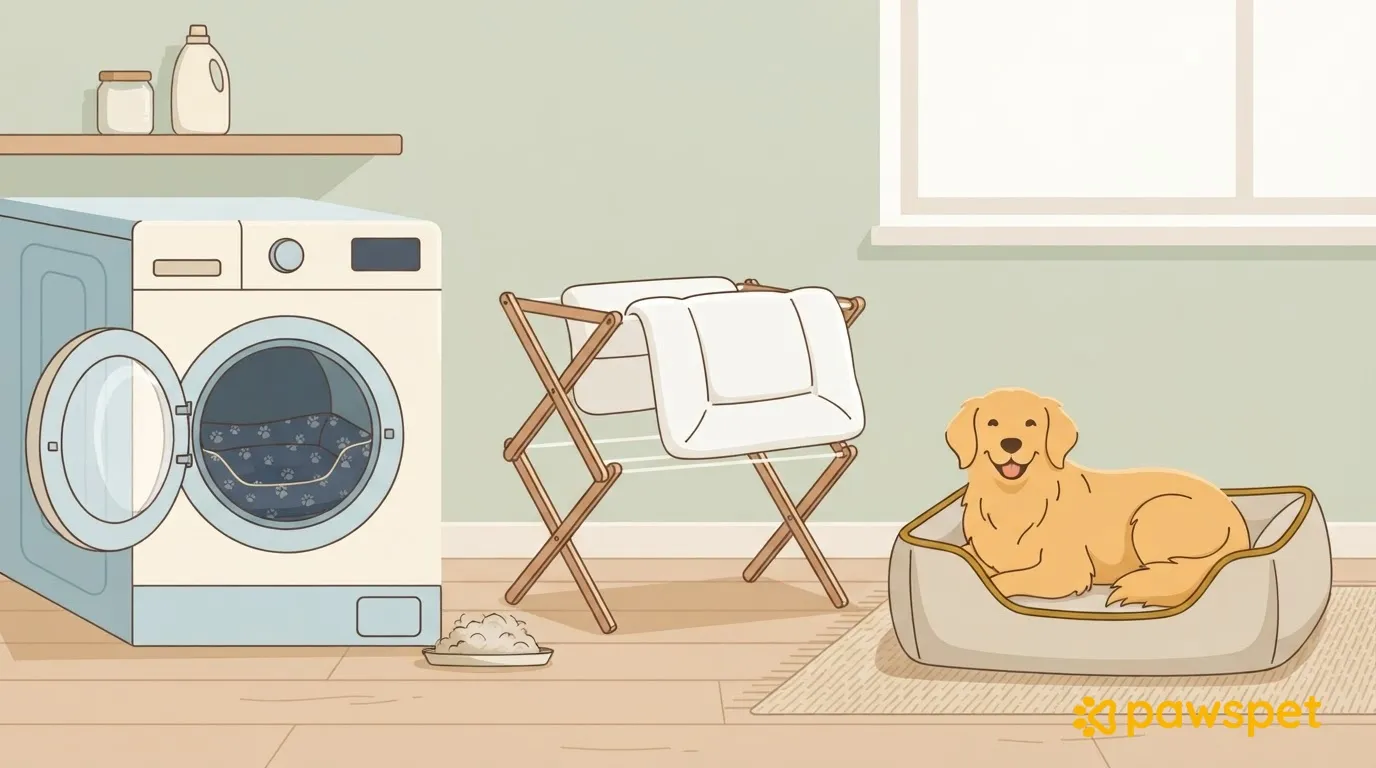
Wash the fabrics your pet uses (blankets, throws, sofa covers) together, keeping them separate from delicate items. Fill the drum without overloading it, staying within the maximum load listed in the manual, and choose the cycle and temperature shown on the care label. Use the amount of detergent stated on the packaging, preferably one without added fragrance.
If you use a tumble dryer, do so only if the care label allows it, and clean the dryer filter afterward.
At the end of the cycle, wipe the drum and seal with a cloth to collect any remaining hair, then clean the washing machine filter as described in the manual for your model: its location and how to clean it can vary from one machine to another.
Alternate dedicated sofa covers and blankets
In the places where your pet rests, use washable throws or sofa covers and keep a second set to rotate: while one is in the wash, the other is in use. Shake them out often and wash them when needed, following the care label: this means the sofa and mattress need fewer deep cleans.
If a sofa cover is not machine washable, stick to dry cleaning methods and follow the care label; if hair remains after washing, go over the fabric while it is dry instead of washing it again.
Notice which household fabrics are easiest to remove hair from: this will help when you need to choose a new throw or sofa cover.
Reduce loose hair at the source with brushing
Brushing your pet regularly, especially during periods when it sheds more, collects loose hair before it ends up on fabrics. Do it outdoors or on a washable cloth, using a tool suited to your pet’s coat: short hair, long hair, and a thick undercoat may require different brushes. Short, calm sessions are best; stop if your pet becomes agitated. Shake the cloth out outdoors and put it in the next load of pet fabrics.
If your pet has a thick coat or brushing at home is difficult, a groomer can take care of it: in the «Services» tab of the PawsPet app, you can search for groomers and view their price lists, availability, and reviews.
A routine for shedding weeks
During weeks when you find more hair around the home, keep this checklist handy:
- Brush your pet regularly in short sessions.
- Shake out and brush blankets and sofa covers often.
- Group washes of your pet’s fabrics together and run full loads.
- After these washes, wipe the drum and seal with a cloth and clean the washing machine filter.
If you notice bald patches, persistent itching, red skin, or obvious dandruff, have your pet checked by a veterinarian: no fabric-cleaning routine can replace a visit.
Prepare a set of dedicated blankets and a rubber tool to use before your next wash today.