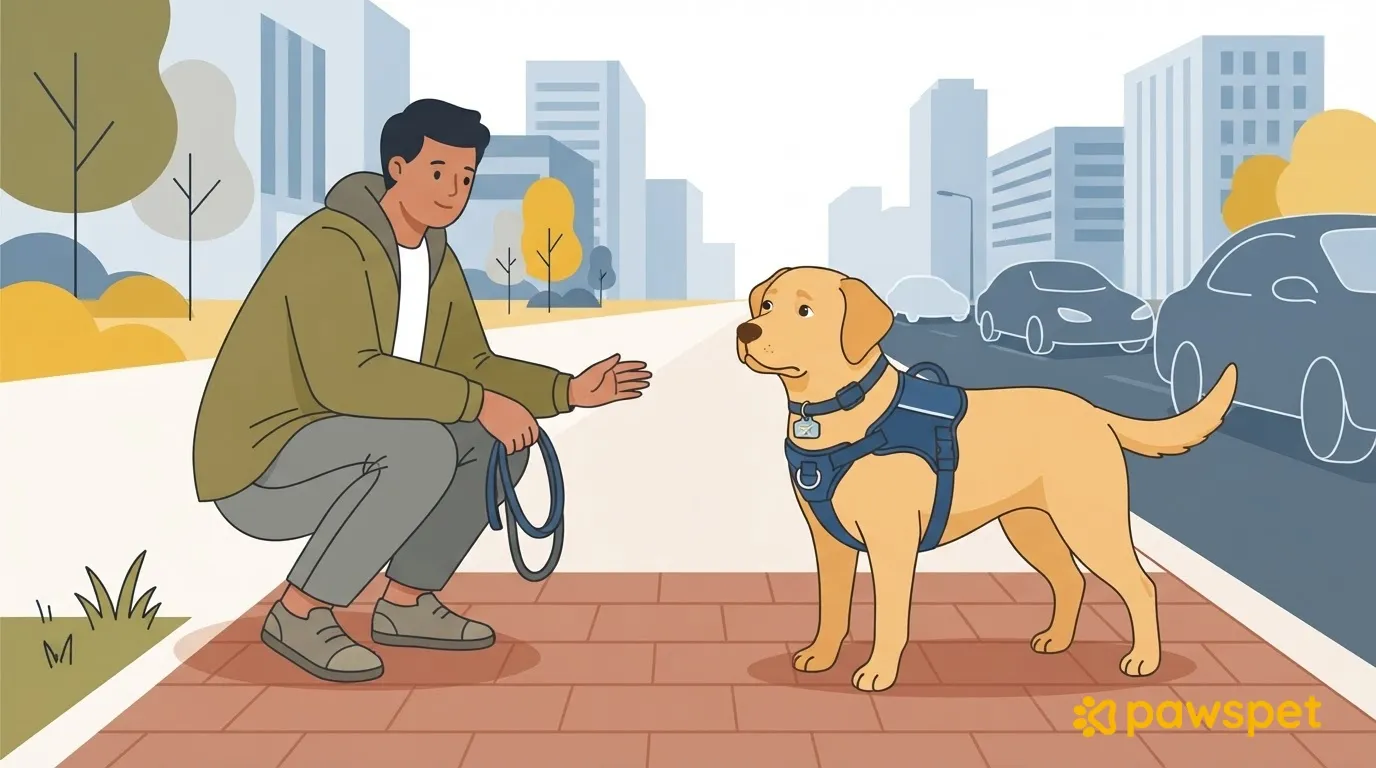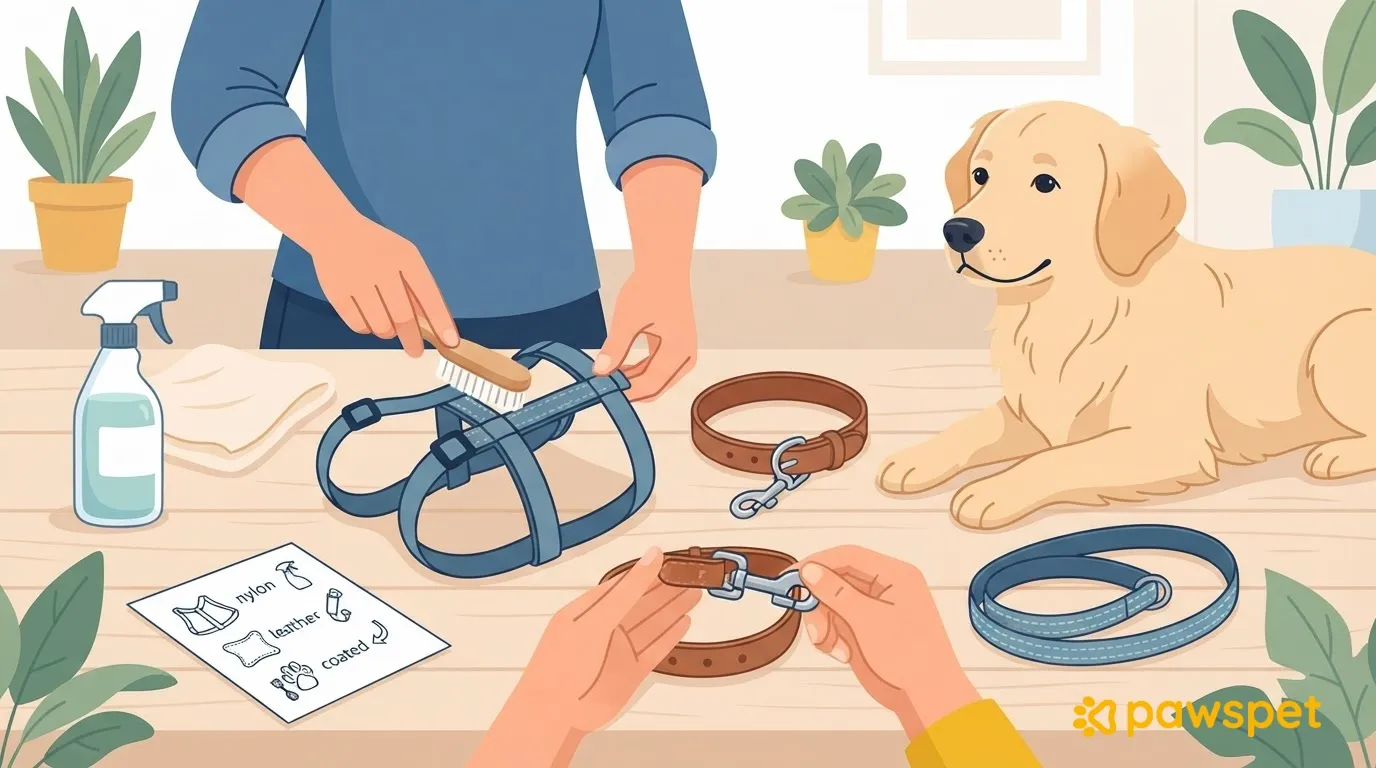
Let mud dry and brush it off, then remove tags and devices. Clean the accessory according to its material and the manufacturer's instructions, and let it air-dry before using it again. Carefully cleaning a leash, harness, and collar helps them last longer and is also the best time for a safety check: while you have them in your hands, inspect the stitching, buckles, and snap hook.
Before washing: instructions, tags, and devices
Look for the label or the manufacturer's instructions: they take priority over general advice, including this guidance. If you can't find them, start with the gentlest method: a barely damp cloth and mild soap. Then prepare the accessory:
- Brush off the mud once it's dry. Wet mud tends to smear, while dry mud comes off more easily.
- Remove the ID tag, lights, bag holder, and tracker before soaking or washing. Clean them only as directed by their manufacturers.
- Fasten buckles and hook-and-loop closures so they don't come undone or get caught during washing.
How to clean each material
Whatever the material, avoid bleach, solvents, and homemade mixtures: water and mild soap are the place to start, and if the manufacturer recommends a specific product, use that.
Nylon and synthetic fabrics
Soak the accessory in lukewarm water with a little mild soap, then hand-wash it, scrubbing the dirtiest areas with a small brush, especially the stitching and folds. Rinse thoroughly until no more suds come out. A washing machine is an option only if the manufacturer allows it: if so, use a laundry bag, wash the accessory with other pet fabrics, and follow the recommended cycle and temperature.
Leather
Don't soak it unless the manufacturer says to. Wipe it with a barely damp cloth and a little mild soap, then use another clean, barely damp cloth to remove any residue, and blot it with a dry cloth. If you want to use a leather-care product, choose one according to the accessory manufacturer's guidance and test it on a hidden area first.
Coated or waterproof materials
Wipe with a damp cloth and mild soap, rinse with a clean, damp cloth, then dry thoroughly. Even if the surface is waterproof, check that the stitching, folds, and buckles aren't holding water or dirt.
Drying and a spare set
Blot excess water with a towel, then let everything air-dry while hanging, away from radiators and other direct heat sources. This is a general precaution; always check the manufacturer's instructions.
Before using the accessories again, run your hand over the stitching, buckles, and folds, where moisture may linger. If the harness has padding, make sure it's dry inside too. Don't put a damp accessory back on your dog: it's uncomfortable for them, and odors may linger.
Keep a second leash or a second harness in the right size so you can head out without rushing while the first one dries. After washing, check the harness fit again before putting it back on your dog.
Wear check: what to look for after each wash
Once the accessory is clean and dry, inspect it closely, section by section; open and close the buckles and snap hook several times, and slide the adjusters. Do the same with your spare set. Look for:
- loose or frayed stitching;
- cuts or bite marks;
- cracked buckles or buckles that come undone easily;
- a snap hook that doesn't close properly or has a weak spring;
- bent or rusty rings;
- cracked or very dry leather;
- adjusters that slip.
If you use the same accessories every day, repeat the check between washes too. To help you remember, you can create a recurring task in the PawsPet app, for example once a month, and set a reminder.
When to replace an accessory right away
If a component that keeps your dog secure is damaged (a snap hook, ring, buckle, or stitching that bears the pull), replace the accessory rather than repairing it at home: home repairs to load-bearing parts are not recommended. If in doubt, stop using the accessory and replace it.
If your dog is strong, pulls, or is reactive, make this check a priority: don't put it off.
When an accessory needs to be thrown away, you can reuse non-load-bearing fabric parts as rags; dispose of the rest according to your municipality's recycling rules.
Today, check the snap hook and stitching on the leash you use most.