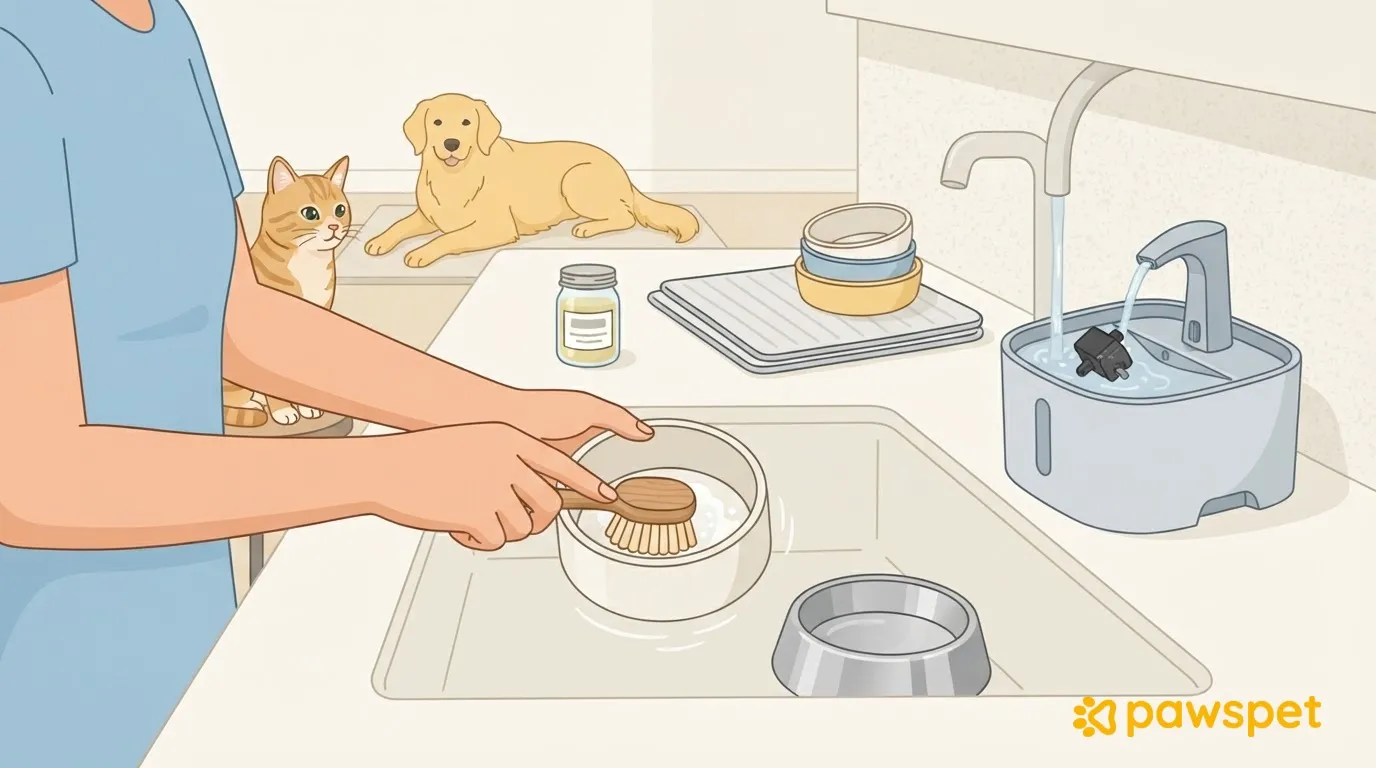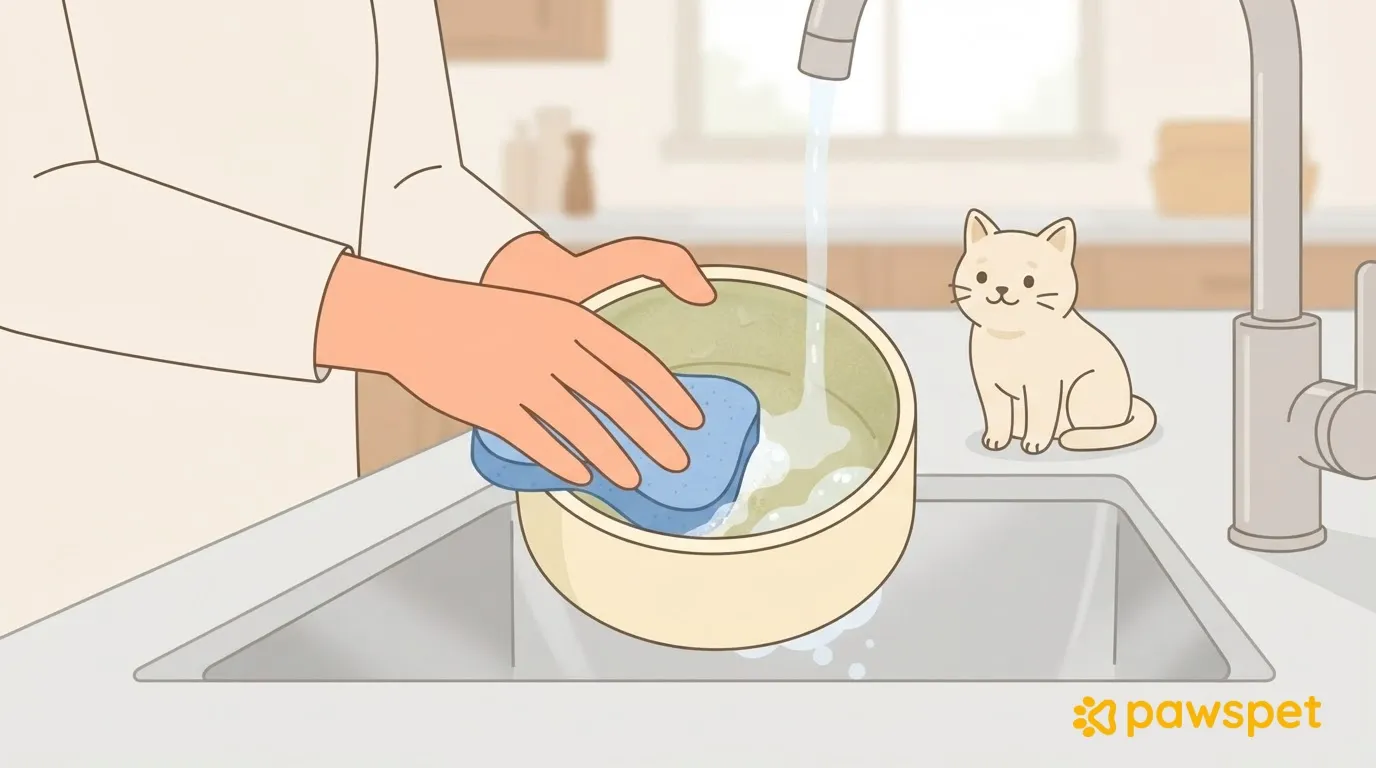
The slippery film that forms in dogs’ and cats’ water bowls, sometimes with an unpleasant smell, is biofilm: a layer of microorganisms and residue (saliva, crumbs, hair, dust) that sticks to the bottom and sides. Emptying and refilling the bowl is not enough: you need to scrub it. Treat the bowl like a kitchen utensil used all day: provide fresh water and wash it daily with a dedicated sponge, hot water, mild dish soap, and a thorough rinse, alternating between two bowls.
What the film is and why changing the water is not enough
The bowl provides a favorable environment for biofilm: constant moisture and a steady supply of residue. Saliva left on the rim with each sip, food carried into the water on the muzzle, and hair and dust settling on the surface all feed it. If the water bowl is next to the food bowl, crumbs are even more likely to get in.
Changing the water removes what is floating in it, but leaves the layer stuck to the sides. If you do not scrub it off, new residue builds on what is already there and the film forms again, even with freshly poured, clear water.
How to wash the bowl in five steps
- Empty the bowl.
- Scrub the bottom, sides, and rim with a sponge or brush used only for pet bowls.
- Use hot water and mild dish soap, preferably unscented, as you scrub.
- Rinse until there is no foam or smell left: residue can make the water unappealing.
- Dry the bowl or switch to a second, already-clean bowl, then fill it with fresh water.
With two bowls, you always have a clean one ready: each day, put the washed and dried bowl into use, then wash the one you have just taken out. After rinsing, run a finger over the sides: if they still feel slippery, scrub and rinse again.
Use the dishwasher only if the manufacturer expressly says the bowl is dishwasher-safe. Disinfectants are not needed for daily cleaning; if you choose to use them, follow the product label and rinse thoroughly.
How often: a realistic routine
For dogs and cats, the rule is simple: replace the water at least once a day and whenever you see hair, food, insects, or dust. Wash the bowl with a sponge every day, too: make it a habit, not something you do only when the film is already visible. Some situations call for more frequent checks:
| Situation | What to do |
|---|---|
| More than one pet uses the same bowl | Check the water more often and consider setting up a second water station |
| Your dog drops food into the water | Check the bowl several times a day and change the water as soon as it gets dirty |
| The bowl is on a balcony or in the yard | Check more often for insects, leaves, or dust |
| The bowl is next to the food bowl | Move the bowls apart: fewer crumbs will end up in the water |
If you tend to forget the daily wash, you can set up a daily recurring task in the PawsPet app, with a reminder, and mark it as done when you finish.
Materials and signs that it is time to replace the bowl
A smooth, intact surface is easier to clean. Options include:
- Stainless steel: smooth and impact-resistant.
- Glazed ceramic or stoneware, provided the manufacturer says it is suitable for food contact: heavy and stable, but check for cracks and damaged glaze.
- Tempered glass: smooth surface; check the edges.
Plastic gets scratched with use, and residue can be hard to remove from the scratches, so check it often if you use it. If the film comes back quickly despite careful washing, the surface may be the cause.
Replace the bowl when you notice:
- deep scratches
- cracks or chips
- dull or damaged glaze
- an odor that remains after washing
If you use a fountain
The same principle applies, but there are more parts to clean:
- Take it apart and clean the reservoir and pump as directed in the manual.
- Replace the filter, if there is one, as often as the manufacturer recommends.
- Leave out a spare water bowl while the fountain is disassembled and, once you have reassembled it, check that it starts working again.
The spare bowl can be the second bowl in your two-bowl rotation.
When the problem is not the bowl
If your pet suddenly drinks much more or much less than usual, or refuses water even when the bowl is clean, talk to your veterinarian and note when it started.
If a cat repeatedly goes into the litter box but cannot urinate, contact a veterinarian immediately. Do not wait to see if it passes.
To get started, wash the bowl today using the five steps and set up the second bowl to rotate in starting tomorrow.