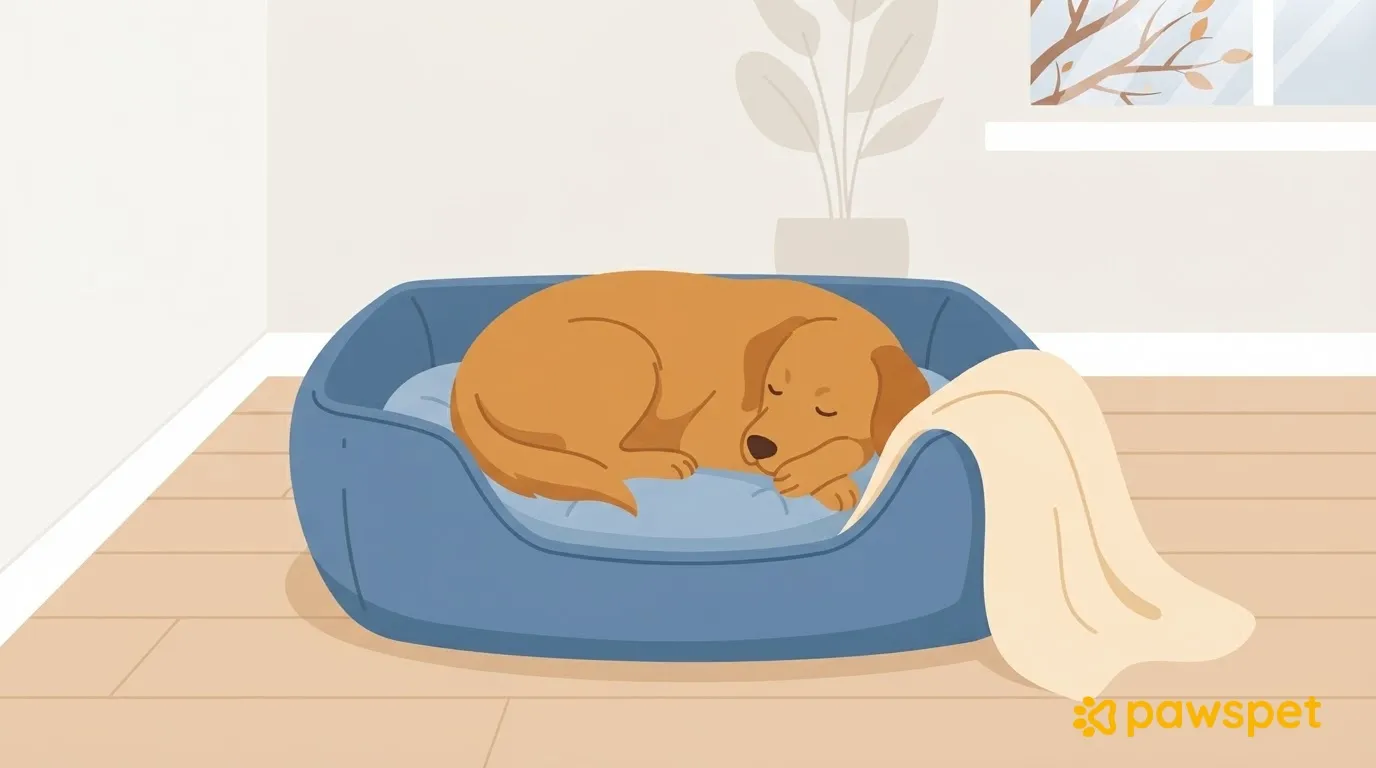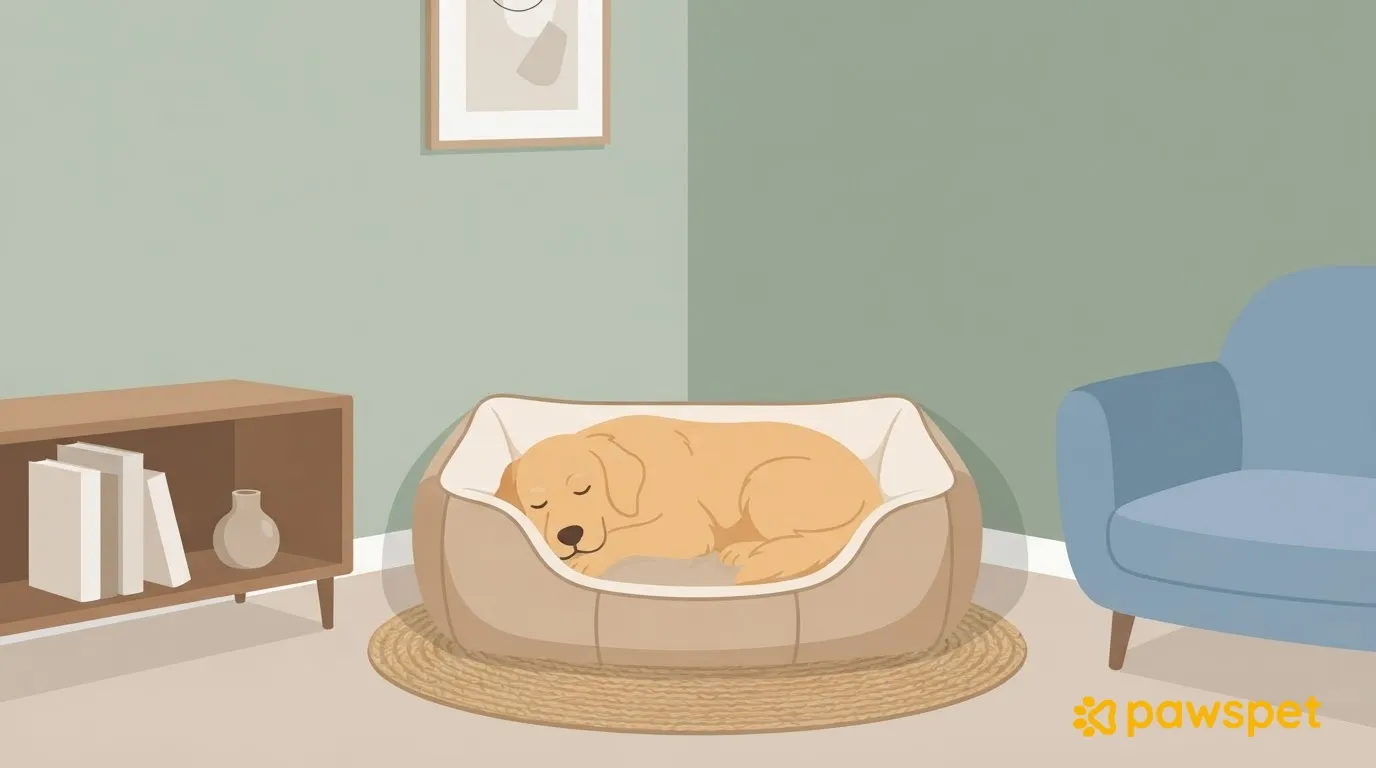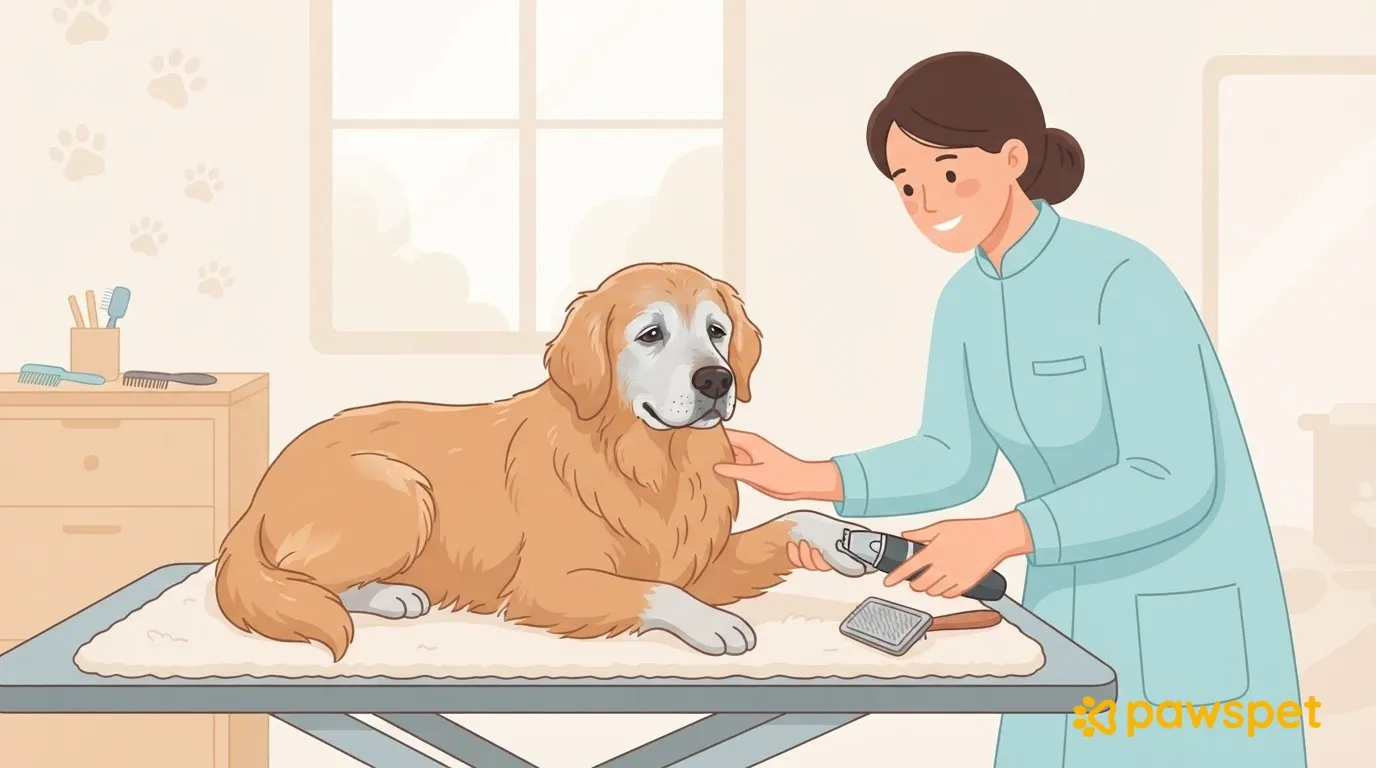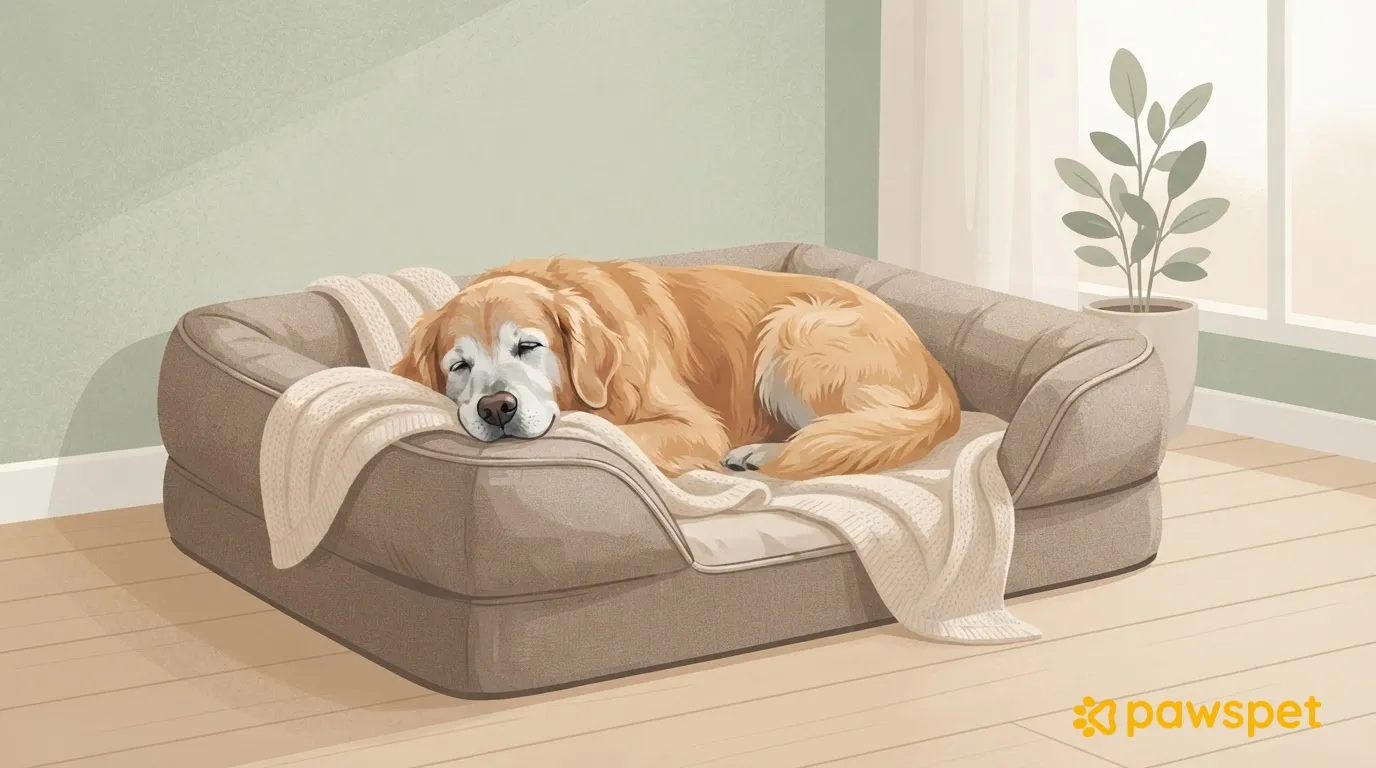
A good bed for an older dog is large enough for them to stretch out fully, supportive enough to keep them from touching the floor, and easy to get into without climbing over an edge. It should also be stable, washable, and placed near the family but away from busy walkways. Labels alone don’t tell you much: three practical tests are enough, and you can do them in a store or at home.
Signs the bed is no longer suitable
For a few days, observe where and how your dog sleeps. They can’t tell you, but they can show you:
- they sleep on the floor even when the bed is empty;
- they climb in reluctantly and get out often;
- they sink into it;
- the filling is compressed in one spot;
- they keep changing places or look for cool corners.
When the weather first gets warm, seeking cooler spots may have to do with the fabric and location: we’ll discuss that below. Pain or difficulty getting up is a different matter, covered in “When the problem isn’t the bed.”
Three tests instead of relying on the label
Words like “orthopedic” or “memory foam” don’t tell you on their own how supportive a mattress is: you need to test it. You’ll need a tape measure, the palm of your hand, and, if possible, your dog.
- Size. Measure your dog lying on their side, from nose to hind paws, and add some extra room: they should be able to stretch out and turn without leaving the mattress. Compare this with the bed’s interior dimensions, not its outside measurements.
- Support. In a store, press down firmly in the center with your palm: you shouldn’t feel the floor underneath. At home, with your dog lying down, their hips and elbows shouldn’t touch the ground.
- Entry. Look for a low edge or at least one open side: your dog should be able to walk in, not climb over.
If you buy online, check the return policy first and do the three tests as soon as it arrives.
The table shows the three tests and three other useful checks:
| Criterion | How to check it | Sign of a problem |
|---|---|---|
| Size | Measure your dog lying down, add some extra room, and compare with the interior dimensions | Head or paws extend beyond the mattress |
| Support | Press the center with your palm; observe your dog lying down | You feel the floor; hips or elbows touch the ground |
| Entry | Watch how your dog gets in: low edge or open side | They lift their paws to climb over or hesitate |
| Stability on the floor | Push the bed with one hand at home | The base slides under your hand or when your dog gets in |
| Cover | Fully removable, washing instructions on the label; add an inner waterproof layer if needed | Cover is sewn on or not washable |
| Fabric for warm weather | Described as breathable; dry to the touch, not plastic-coated | Retains heat; your dog leaves it for the floor |
Where to put it at home
Place it near the family, but away from hallways and doors where people are constantly passing. Keep it away from drafts, radiators, and stoves. When the weather first gets warm, also avoid windows exposed to direct sunlight and choose a well-ventilated spot.
Consider a second resting place: one in the living area and one in the sleeping area, so your dog doesn’t have to cross the house to lie down. Place a non-slip surface in front of the bed for your dog to put their paws on when getting up.
For example: the bed leaves the entryway, where everyone passes, and moves to a corner of the living room next to the sofa; a second one near the bedroom is for nighttime.
Cleaning and maintenance
Wash the cover regularly: choose an interval you can stick to. If small urine leaks happen, an inner waterproof cover protects the mattress, but it doesn’t explain them: mention them to your veterinarian without interpreting them.
Check the filling every time you wash the cover: when pressed, it should return to shape, and if it stays compressed, it needs replacing. To remember to wash and check it, you can create the “Cover wash” activity in the PawsPet app from the “Activities” Tab (the “+” button): choose a type (for example, “Hygiene” and then “Hygiene and care”), set “Repeat” every few weeks, and add “Set reminder” to receive a notification.
When the problem isn’t the bed
If your dog has difficulty lying down or getting up, keeps changing position, whines, pants while resting, or avoids lying down even on a suitable bed, book a veterinary appointment. Don’t wait if the signs appear suddenly or get worse. A better bed may make resting more comfortable, but it doesn’t explain these signs: tell your veterinarian what you’ve observed and when it started.
Try it tonight
Do the three tests on the bed you already have and decide whether to replace it, adapt it, or move it:
- Replace it if it fails the size or entry test: the dimensions and edge can’t be changed.
- Adapt it if only the support fails (replace the filling, if possible) or if it slides (put a non-slip mat underneath).
- Move it if it passes everything but your dog avoids it: try a cooler, well-ventilated spot away from busy walkways.
If your dog keeps avoiding it or has difficulty getting up, talk to your veterinarian.