If your dog has known health conditions or has changed recently, the first step is to ask the veterinarian what limits to observe during grooming. Then tell the groomer how your dog moves, hears and sees, and how quickly they tire, and agree on a shorter appointment with breaks and practical assistance. The groomer can adapt the service and observe your dog, but health assessments are the veterinarian’s responsibility.
Before the appointment: questions to ask the veterinarian
It’s a good idea to check with the veterinarian before booking if your dog has ongoing health conditions, known pain, has recently had surgery, or has suddenly changed the way they move. How much your dog can manage is for the veterinarian to assess: don’t guess or leave it to the grooming salon.
Useful questions to ask at the appointment:
- How long can my dog stand without getting tired?
- Which positions or areas should be avoided during grooming?
- Are there any instructions to follow for bathing or products?
- Would it be better to postpone grooming for now?
Write down the answers in your own words: you’ll need them to explain the situation to the salon.
What to tell the groomer
Prepare a brief written description—just a few lines—and share it with the salon when you book, not on the day of the appointment. That way, they can plan the timing and space. The table lists what to remember, with example phrases to adapt to your dog.
| What to tell them | Example phrase |
|---|---|
| Mobility: difficulty getting up, weak hind legs, difficulty climbing | “He has trouble getting up, his hind legs are weak, and climbing is hard for him.” |
| Hearing and vision: how your dog notices someone approaching, and how they prefer to be approached and touched | “He doesn’t hear well and has poor eyesight: sudden touch startles him. It’s best to approach slowly and give him time to notice you.” |
| Fatigue and recovery time | “He gets tired after a while and needs to lie down. He recovers, but needs time.” |
| Areas they don’t like being touched, or that the veterinarian has identified | “There are some areas he doesn’t like being touched, and one the veterinarian asked me to avoid. I’ll show you where before you start.” |
| Ongoing treatments or instructions | “He’s receiving treatment. I’ve written down the veterinarian’s instructions to keep in mind here.” |
| Changes since previous grooming appointments | “Compared with last time, he gets tired sooner and is less comfortable being handled.” |
Update the description at every appointment: needs change with age, and what worked last time may no longer be enough.
Adjustments to agree on
Before confirming, agree on these points with the groomer:
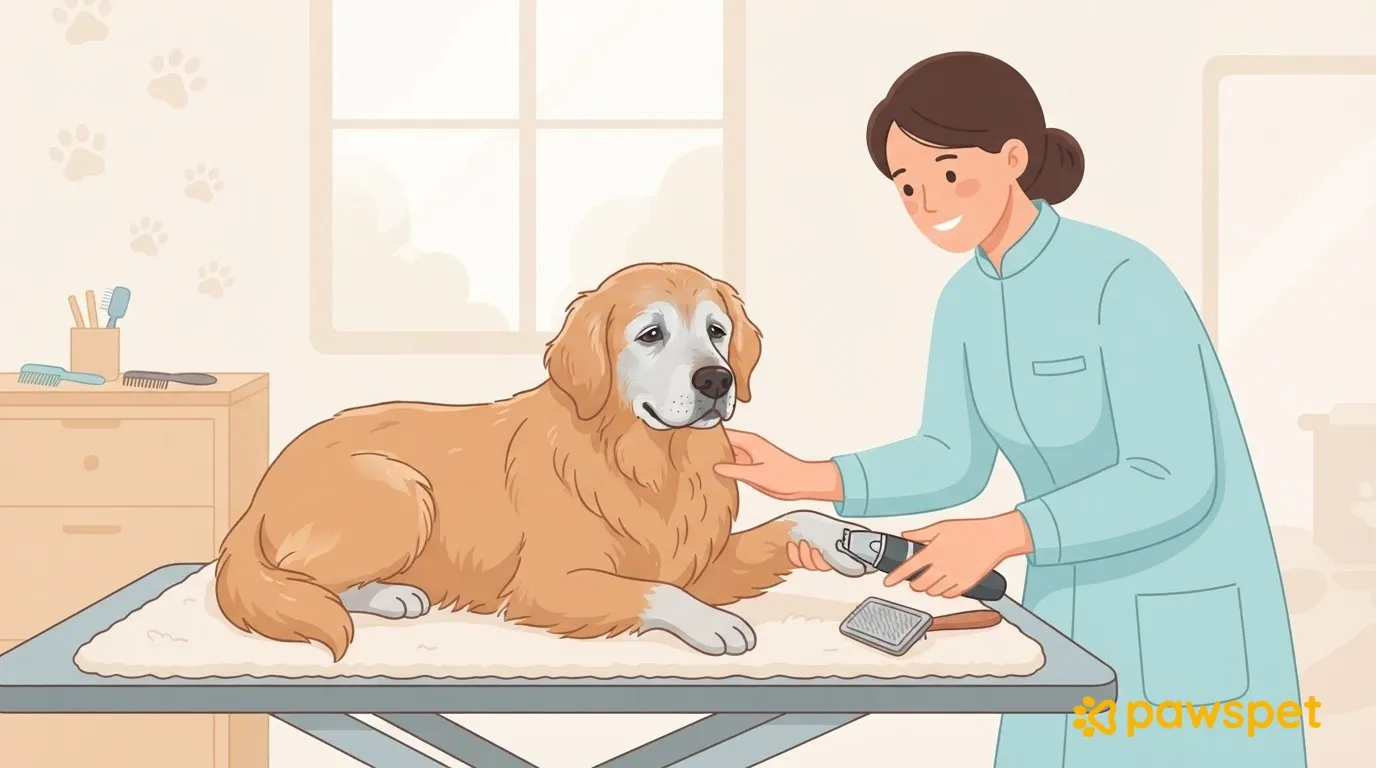
- a shorter session, or two appointments, with breaks to lie down;
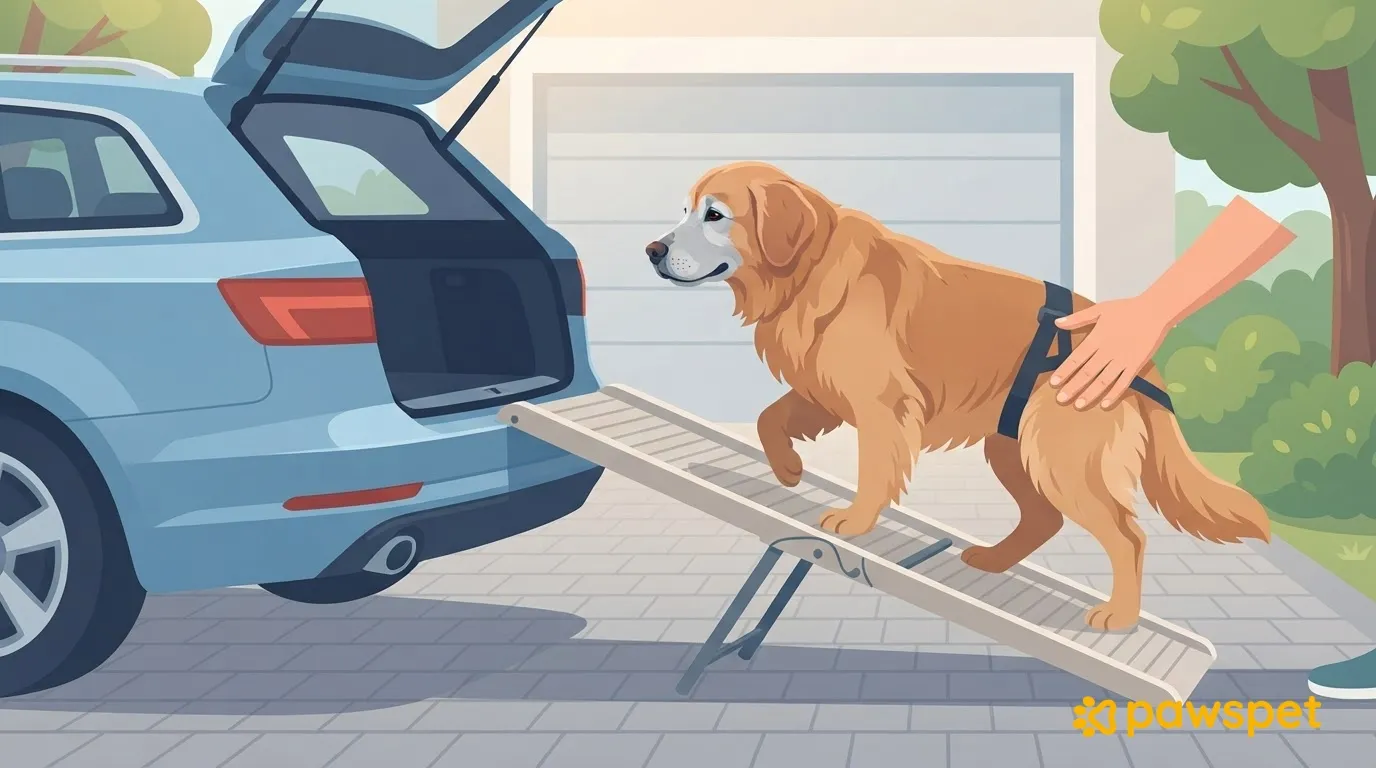
- help getting on and off the table and into and out of the bath, without making your dog jump;
- a clear explanation of how the salon prevents slipping;
- a shorter wait and pickup as soon as your dog is ready;
- a time of day when your dog is usually more rested;
- a practical, easy-to-maintain trim that prioritizes hygiene and comfort over appearance.
If something isn’t possible, it’s better to know before you book. In-home grooming is an option to discuss with the professional: it depends on the dog and how the service is carried out, and it isn’t necessarily the best choice.
At pickup: what to ask and what to tell the veterinarian
When you pick up your dog, ask the groomer:
- how your dog managed during the appointment;
- whether they needed breaks;
- whether the groomer noticed anything, such as lumps, redness, sensitive areas, or damaged nails.
If the groomer points something out, ask where it is and write down what they observed without interpreting it: groomers observe, but they don’t diagnose. Then tell the veterinarian, who is responsible for assessing it. To help you remember everything, you can use the dog’s “Health” section in PawsPet to record appointments and the veterinarian’s instructions, and add follow-up notes. That way, you can easily find the limits to share with the salon and observations to bring up at the next appointment.
When to postpone or change the approach
It’s a good idea to reschedule, reduce the services, or ask about an alternative if:
- your dog seems uncomfortable or very tired that day;
- the veterinarian has advised you to wait;
- your dog came home very worn out last time.
Let the salon know as soon as you can and, if your dog seems uncomfortable, check with the veterinarian too.
Before the next appointment, update the description of your dog’s limits with anything new you’ve learned from the veterinarian and the last pickup, and send it to the salon.