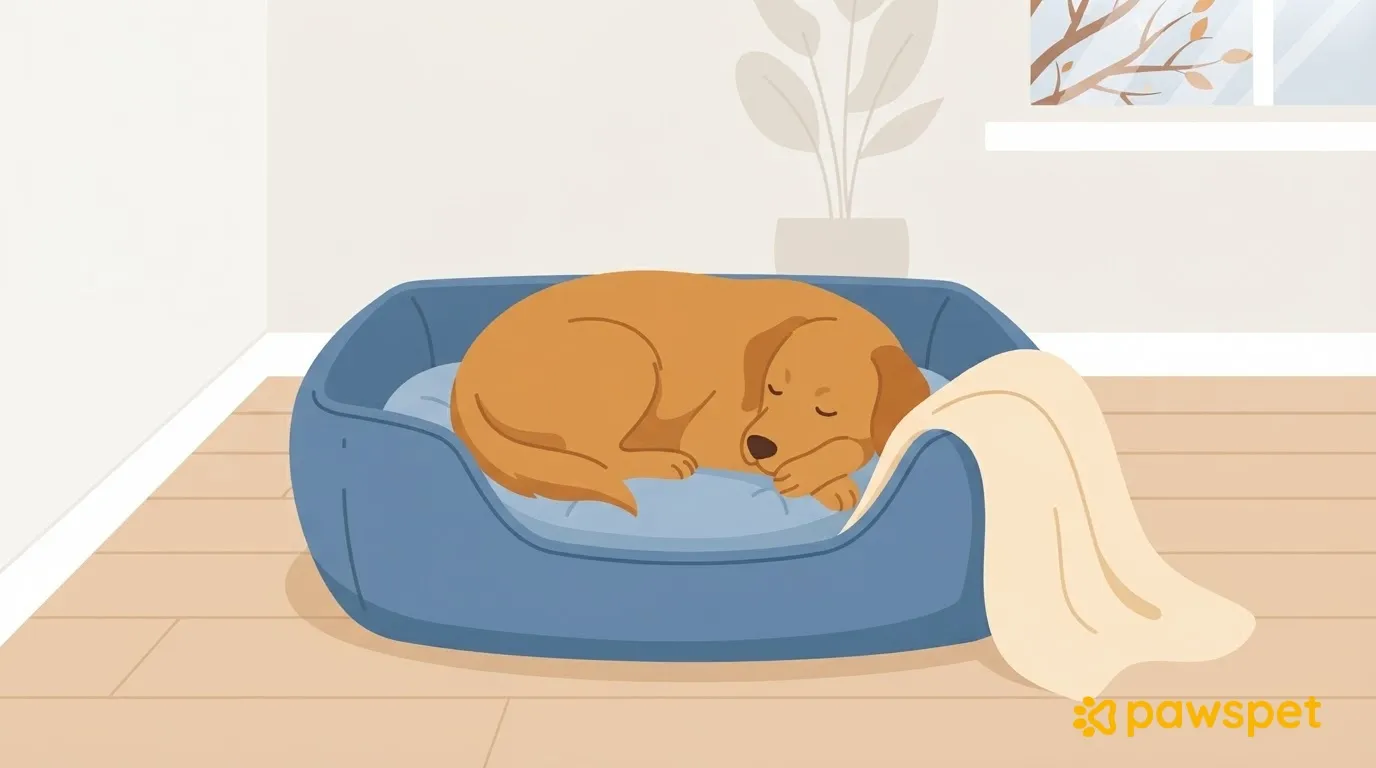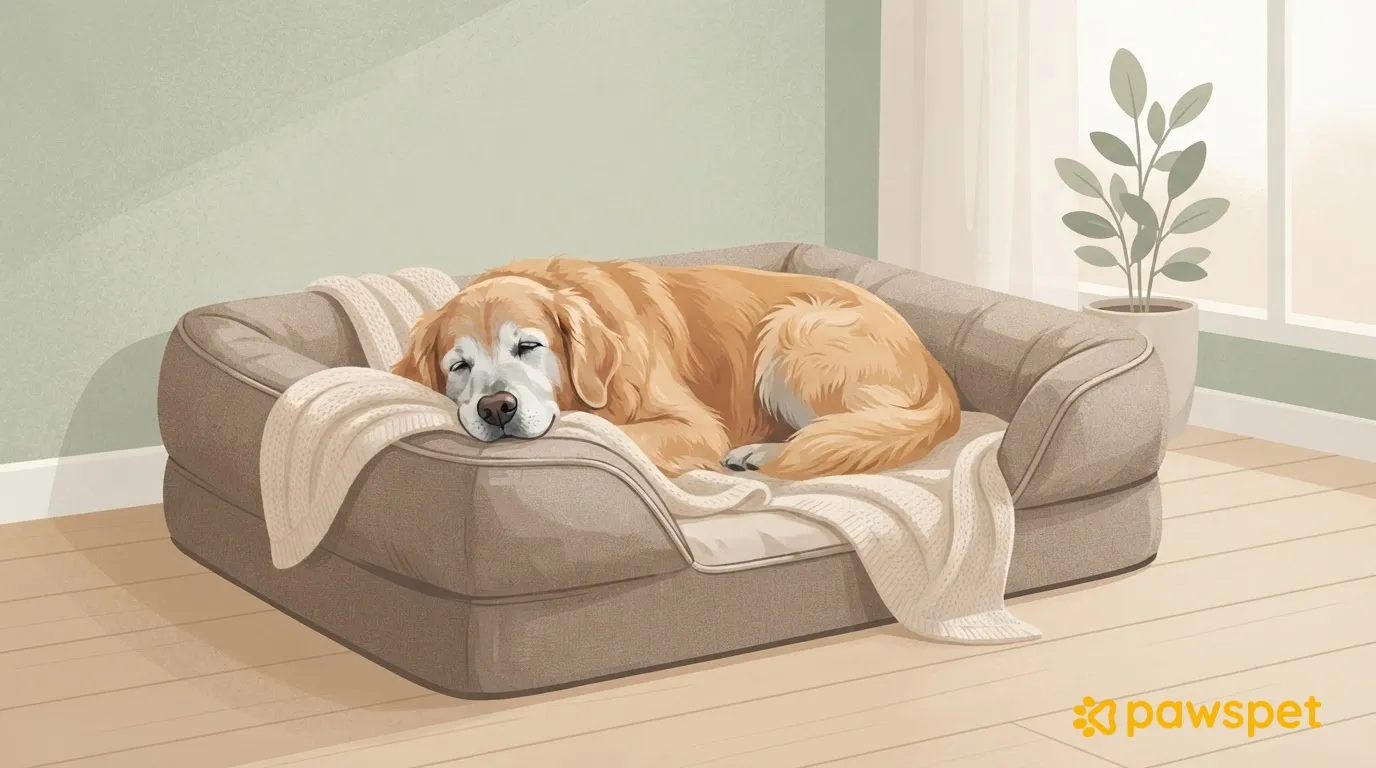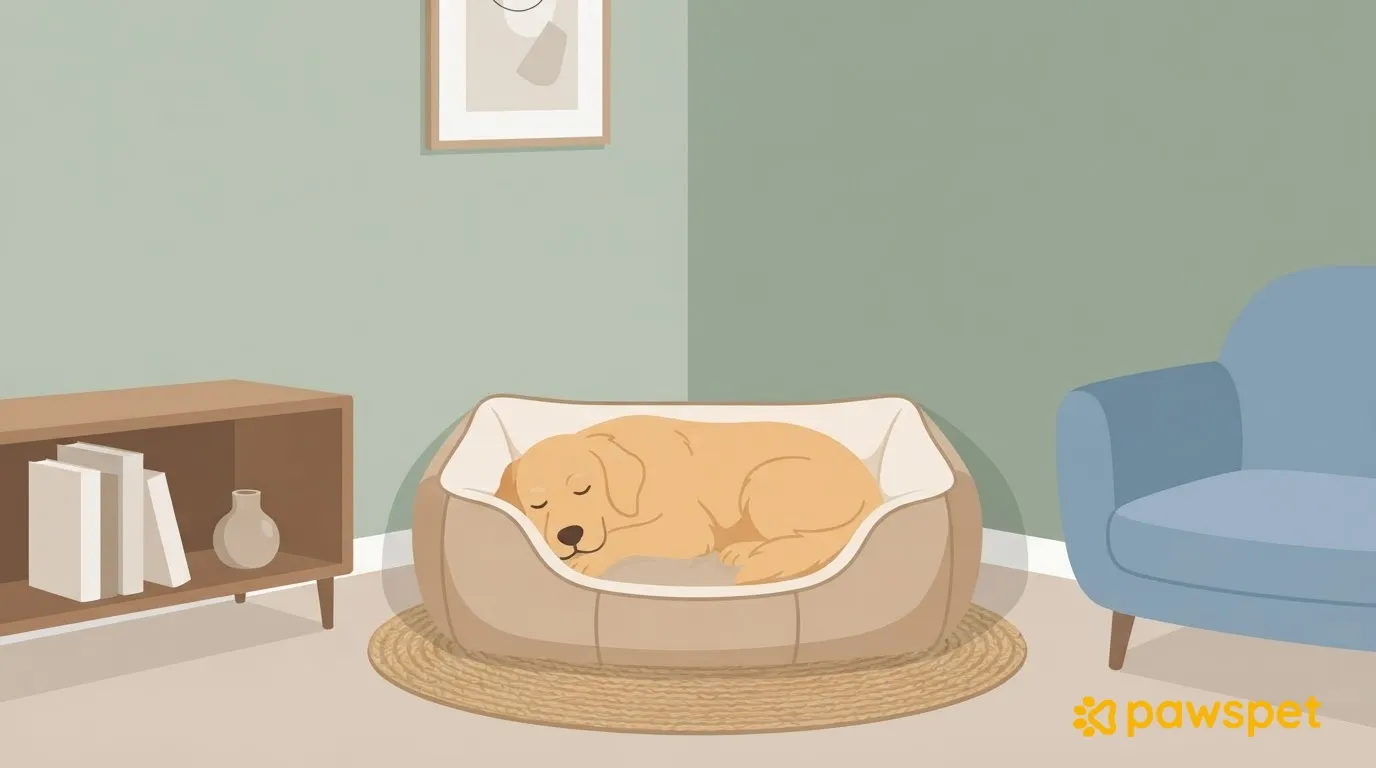
The best place for a dog bed is usually a quiet corner in the area where the family spends time, with a wall behind it and away from walkways. Keep it away from the front door and doorbell, noisy appliances, radiators, heaters, and drafts: from there, your dog can see the family without being stepped over or constantly woken. To find the right spot, map the paths and sounds in your home at three times of day.
A quiet corner, not an isolated room
Quiet does not mean isolated: a laundry room, storage room, balcony, or garage deprives your dog of company and often adds noise or temperature swings, so these are not good primary locations. At the other extreme, the middle of the living room, where your dog is exposed on every side, and a constantly used hallway do not allow for restful sleep.
There is no one right room for every dog: what matters is how your dog responds. A dog that gets worked up by every sound needs a more sheltered corner; one that sleeps in the hallway is often looking for company and a view of the home, and a well-chosen corner can provide both without the constant foot traffic.
Five criteria for choosing the spot
- Away from walkways. Every nearby footpath risks interrupting your dog’s rest. For example, avoid the space in front of a door, the entrance to the kitchen, and the route to the bathroom.
- Away from sudden noise. Abrupt sounds can wake your dog and put them on alert. For example, don’t place the bed next to the entrance, doorbell, washing machine, dishwasher, or TV speakers.
- Temperature and drafts. It should be neither too hot nor too cold, especially in winter. For example, don’t place it right next to radiators, heaters, or a fireplace, or under a drafty window; if the floor is cold, add a raised bed or a rug. In summer, avoid direct sunlight for hours.
- A view and a sense of shelter. With a wall behind them and the room in front, your dog can keep an eye on the family without feeling exposed. For example, if they react to passersby, don’t place the bed in front of a window facing the street.
- Space and access. Your dog should be able to stretch out fully on a nonslip floor; avoid stairs for puppies and older dogs. For example, they may not be able to stretch out between the sofa and the wall, and they may slip on smooth tiles.
Room by room: pros and cons
| Room | When it can work | What to check |
|---|---|---|
| Living room | Usually the best choice: your dog can be with the family while still having a quiet spot | Make sure the corner is away from regular walkways and far from the TV and radiators |
| Hallway and entrance | Rarely: these are busy areas near the door and doorbell | If your dog already sleeps there, try a nearby corner away from the foot traffic |
| Bedroom | If your dog is calm at night and everyone in the family agrees | Check that noises don’t disturb them and that nobody trips in the dark |
| Kitchen | Only in a tucked-away corner, if your dog isn’t unsettled by activity | Noisy appliances, heat sources, slippery flooring, and walkways |
| Isolated room | Only as an extra retreat, for example when guests visit | Make sure your dog chooses it freely and is never shut inside |
One spot for daytime and another for nighttime
Offering two spots can help when your dog wants to be close to the family during the day but needs a more sheltered corner at night or when guests are over. Both spots should meet the five criteria.
If you have two dogs, it’s best to provide separate beds, arranged so neither dog has to pass the other to get up. If there’s a cat in the home, the bed shouldn’t block the cat’s route to the litter box, food and water bowls, or high-up spots. Finally, no one should disturb your dog when they’re in their bed: it’s their refuge.
How to move the bed without disorienting your dog
Take it one step at a time:
- Set up the new spot and leave the old one available for a few days.
- Put a blanket with your dog’s scent in the new spot.
- Reward them calmly, without making a fuss, when they choose it on their own.
- Don’t drag them or shut them in the new spot: if they move away, let them.
Then observe where your dog actually sleeps and what wakes them for a few days. If they still prefer the old spot, check the five criteria again before insisting. To keep track of these observations day by day and share them with your veterinarian or dog trainer, you can log an activity in the PawsPet app’s Activity section, using the “Behavioral Monitoring” type (“General” category) and adding a note.
Signs the spot isn’t working and when to contact your veterinarian
You may have chosen the wrong spot if your dog:
- changes spots often;
- gets up at every sound;
- sleeps on the floor, away from the bed;
- moves away from the heat while panting;
- sleeps curled up and trembling.
If you notice any of these signs, reassess walkways, noise, heat, and drafts; if they continue even after you move the bed, talk to your veterinarian.
Other signs may point to pain or discomfort and may not be related to the location: difficulty lying down or getting up, new nighttime restlessness, licking the joints, or sudden changes in sleep. If you notice these, schedule a veterinary visit: moving the bed won’t be enough.
If your dog is breathing heavily while resting or can’t get up, contact your veterinarian immediately, without trying another spot first.
Try mapping your home
Observe your home at three times: at breakfast, in the evening with the TV on, and at night. At each time, mark where people walk and what noises you hear, even if it’s just on a sheet of paper with a floor plan. Then choose the quietest spot at all three times, or two spots if needed, and check for a week whether your dog rests there without waking up constantly.