If your cat bites your hands while you play or ambushes your ankles, it is often hunting play directed at the wrong target and fueled by too much excitement, not meanness. In the moment, stop and don’t punish your cat; then offer a toy that keeps your hands away from their teeth. To prevent it, use short, regular sessions, stop in time, and follow one simple rule: hands and feet are never toys.
If the bites come with hissing, flattened ears, and attempts to escape, or happen while you’re petting your cat, that’s a different situation and should be assessed separately: this article is about play.
Why cats target hands and feet
To a cat, wiggling fingers or feet moving down a hallway look like prey: they move, are within reach, and react. Biting and scratching are part of the hunting sequence (stalking, pouncing, grabbing) and don’t necessarily mean your cat is attacking you. Usually, several factors are involved:
- A habit learned as a kitten. If you played with your kitten using your fingers, they learned that hands are toys. It was understandable: it hurt less back then.
- Unspent energy. If your cat has few chances to chase and catch something during the day, that energy comes out when you walk by.
- Rising excitement. As play heats up, your cat may find it harder to stay in control, and the nearest hand becomes the target.
- Ankle ambushes. This is hunting from cover: your cat waits behind a corner or under a piece of furniture, then leaps out as you pass and may bite your ankles.
What to do when your cat bites
- Stop. Stop moving your fingers and feet: a still hand is less interesting than one that’s waving around.
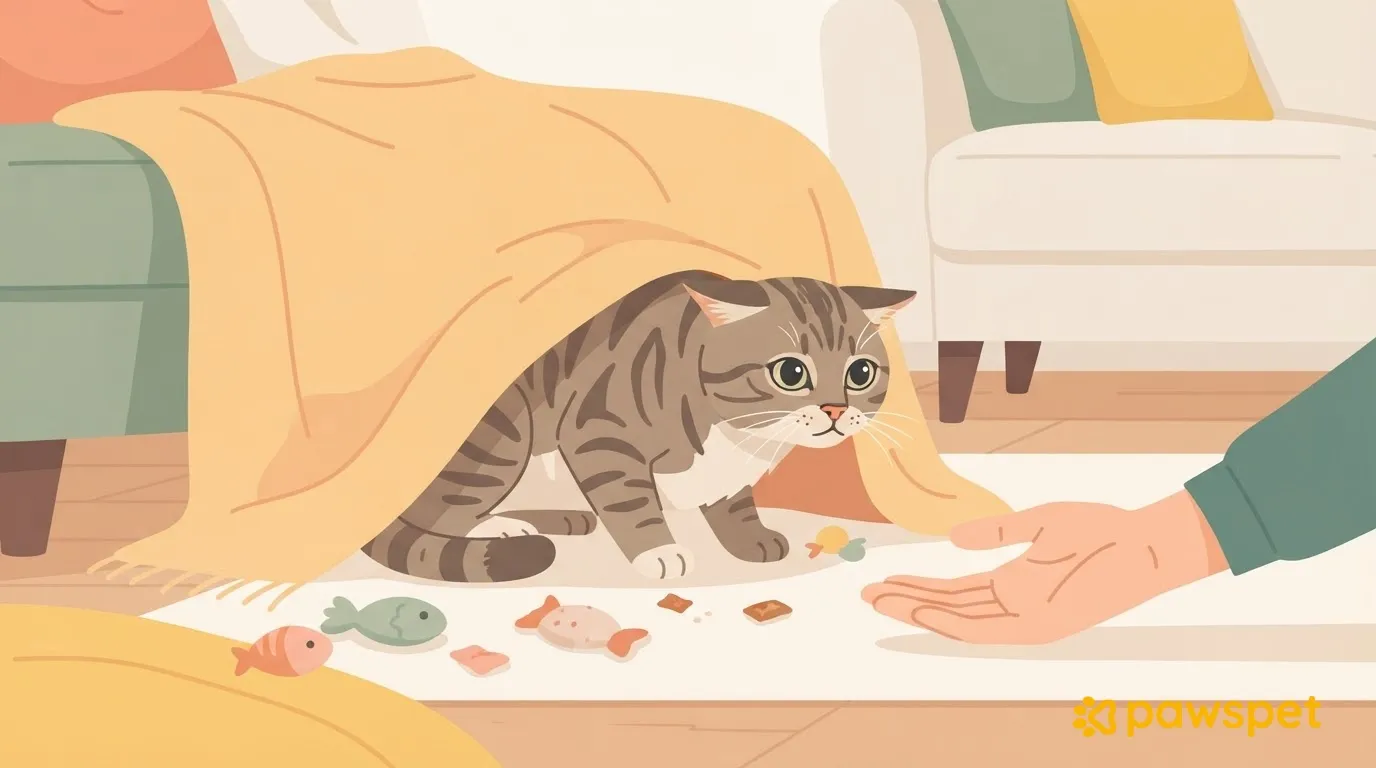
- Avoid sudden reactions. Yanking away, yelling, hitting, spraying water, or startling your cat can increase fear and defensive reactions.
- End the interaction calmly. Step away for a few moments without scolding; once your cat has calmed down, offer an appropriate toy.
Redirect play: give your cat the right target
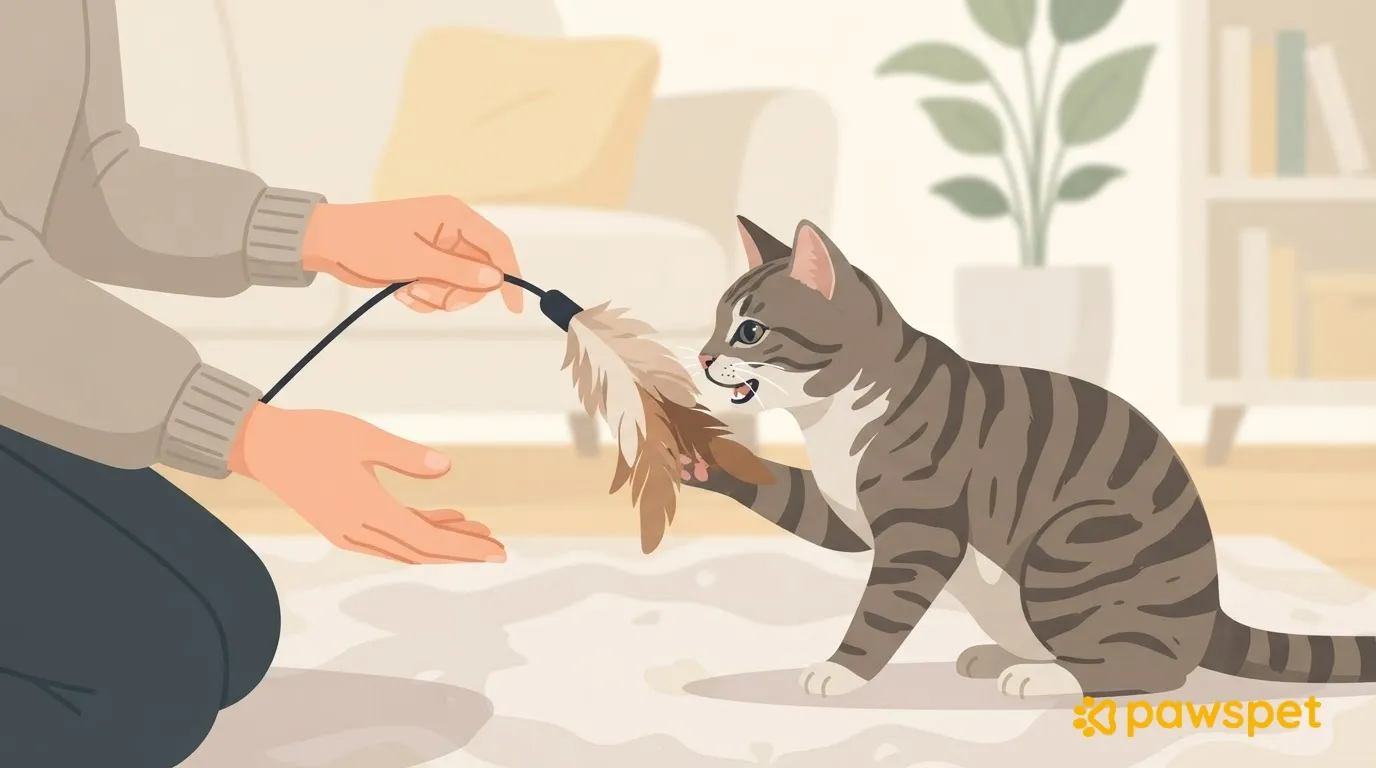
Your cat needs to hunt, so offer prey that isn’t your skin.
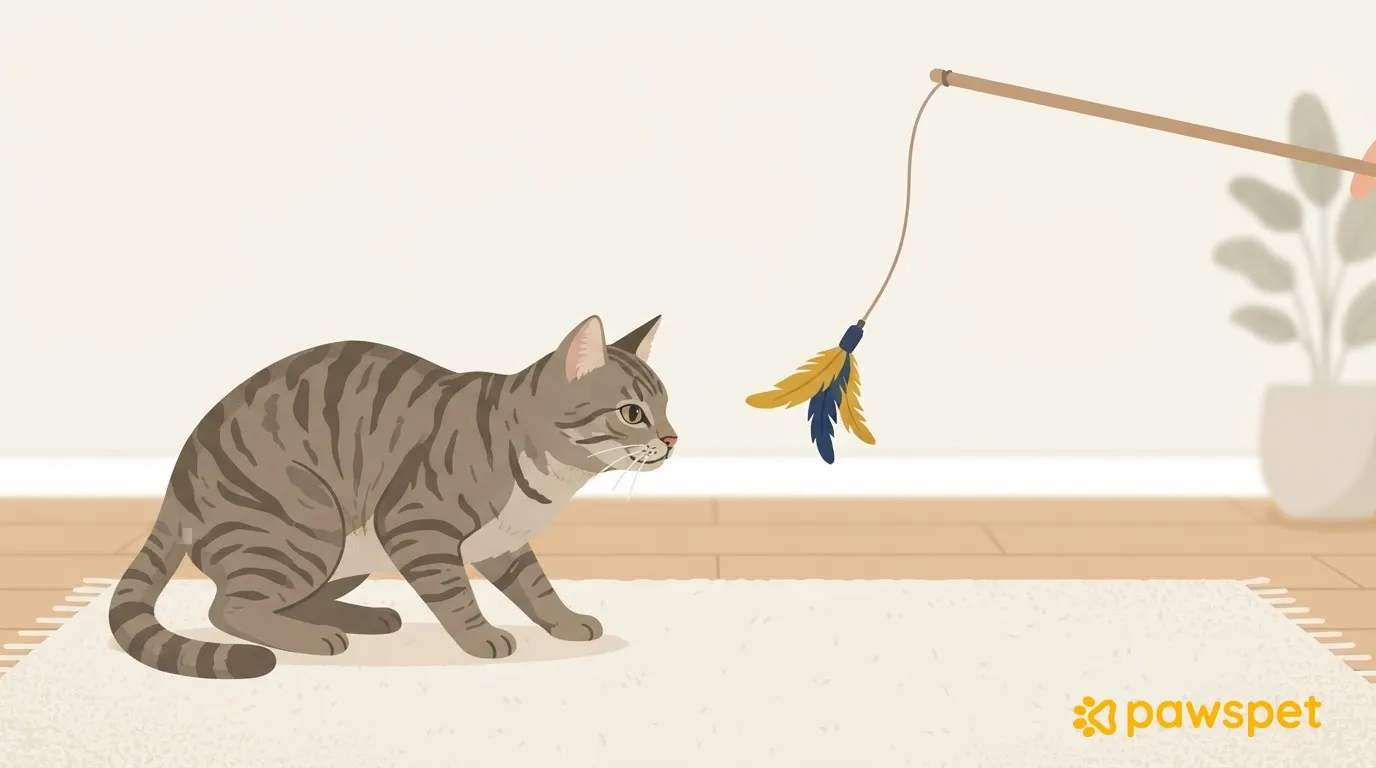
- Long wand toy. Keeps hands and feet at a distance. Move the end in short bursts, hide it, then pause—like prey would.
- Long plush toy. Long enough for your cat to grab with their front paws and kick with their back paws, so they can satisfy their urge to grab and kick without involving you.
- Throw a toy away from you. If you see your cat waiting by your feet, toss a toy away from you before they pounce.
Ambushes happen in predictable places and at predictable times: the hallway, the entrance, beside the bed, or when you come home. Keep a toy handy in those spots and start playing before the ambush begins.
Short sessions and signs of overstimulation: how to stop in time
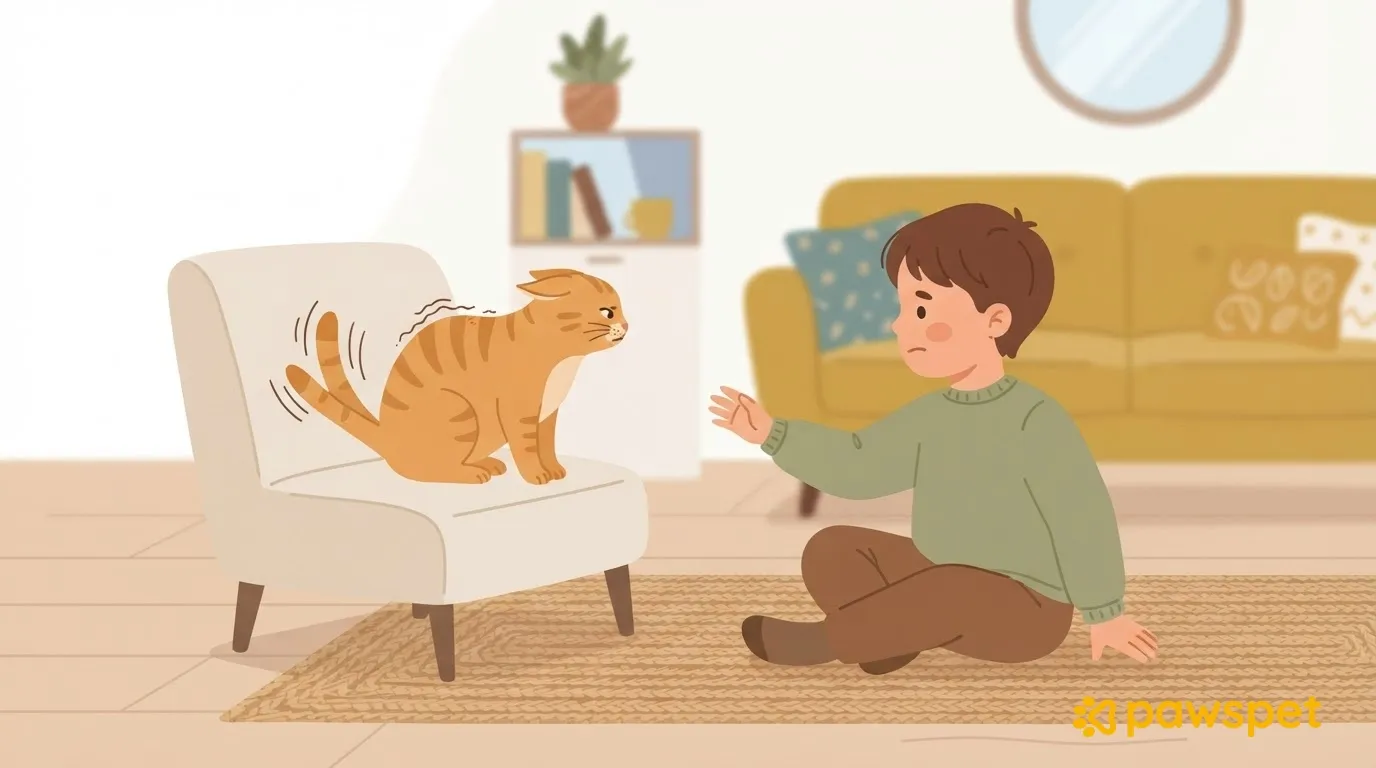
The best time to stop is before excitement peaks, not after a bite. While playing, watch for these signs:
- a lashing or thumping tail;
- ears turning back or flattening;
- very dilated pupils;
- rippling skin along the back;
- sudden stillness before a leap toward you.
At the first signs, slow the toy’s movements and finish with a final catch: let your cat grab it, then stop and give them some space. If hissing or attempts to escape start during play, stop right away.
Several short sessions spread throughout the day usually help more than one long, frantic session. The right length depends on your cat: watch their signals, not the clock.
When to ask for help
From your veterinarian: if this behavior appears suddenly in an adult cat who didn’t do it before, if your cat reacts when you touch certain areas, or if you notice other changes in their habits.
For yourself: if a bite or scratch breaks the skin, wash the wound thoroughly and consider contacting a doctor, especially if it becomes red, swollen, or painful.
From a behavior professional (a veterinarian with expertise in behavior or a behavior consultant who works with cats): if the bites remain frequent despite following the rules, if they injure you, or if there are young children in the home. If you decide to seek support, you can look for «Behavioral Consultation» in your area among PawsPet’s services, checking the description to make sure the professional works with cats.
Consistent household rules, including for children
Consistency matters: if even one person plays with their fingers, the habit may persist. Agree on a few rules with the whole family:
- Play only with toys, never with hands or feet.
- Children should play with long wand toys and only when an adult is present.
- If the cat walks away or takes refuge, the session is over.
- No wrestling with hands, even with a glove.
This week’s action: have a few short play sessions each day at the times when ambushes usually happen, and keep a toy within reach.
Frequently asked questions
My kitten does this all the time: will they grow out of it?
Not necessarily. Consistency from the whole family and regularly redirecting your kitten to the right toys both matter: follow the rules above.
My cat also bites me when I pet them: is it the same thing?
No, that’s different from play. Notice how long it takes and where your cat reacts, shorten petting sessions, and stop at the first signs of discomfort. If it happens often, talk to your veterinarian.