A wand works when the game moves like prey trying to escape and your cat can complete the hunting sequence: watching, stalking, chasing, pouncing, and grabbing. Let your cat catch the toy several times, then allow one final catch after slowing things down, and put the wand away. A few short sessions are better than one long one.
Why a wand works only when it mimics prey
Your cat isn’t an audience member to entertain: they’re a hunter you’re giving chances to catch prey. Each step in the sequence calls for something different from the wand: watching calls for a small movement at a distance, stalking for cover, chasing for prey that runs away, pouncing for a sudden pause, and grabbing for something they can catch.
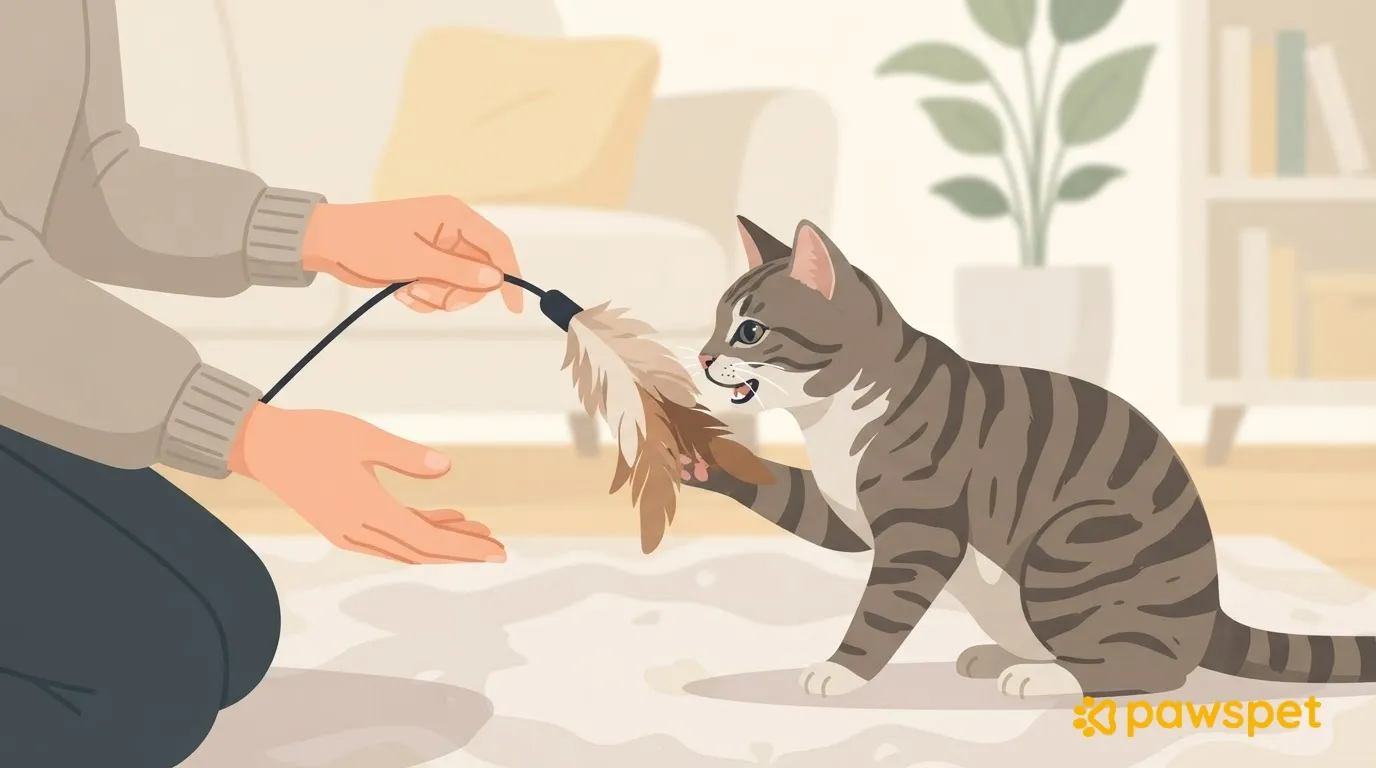
A common mistake is waving the wand in front of your cat’s face or moving it toward them. Real prey doesn’t behave that way: it runs away, hides, and suddenly stops. A toy fluttering an inch from their nose can be confusing: some cats lose interest within seconds, while others get so excited they bite the toy. Often, it’s the hunt that’s missing, not the desire to play.
Before you start: space, prey, and timing
- Cover. Choose a room with a few places where the prey can disappear: a chair, a box, the corner of a piece of furniture, or a cloth to slide underneath. These also give your cat places to stalk from.
- Prey. Feathers flutter and hop in midair, while a small toy crawls along the floor. Notice which movement engages your cat most and use that one more often.
- Timing. Choose a time when your cat is alert and awake. If you like, play shortly before a meal that’s already part of their routine.
The four stages of a session
Follow your cat’s reactions, not a timer: move to the next stage only when the previous one has worked.
Get their attention: small movements at a distance
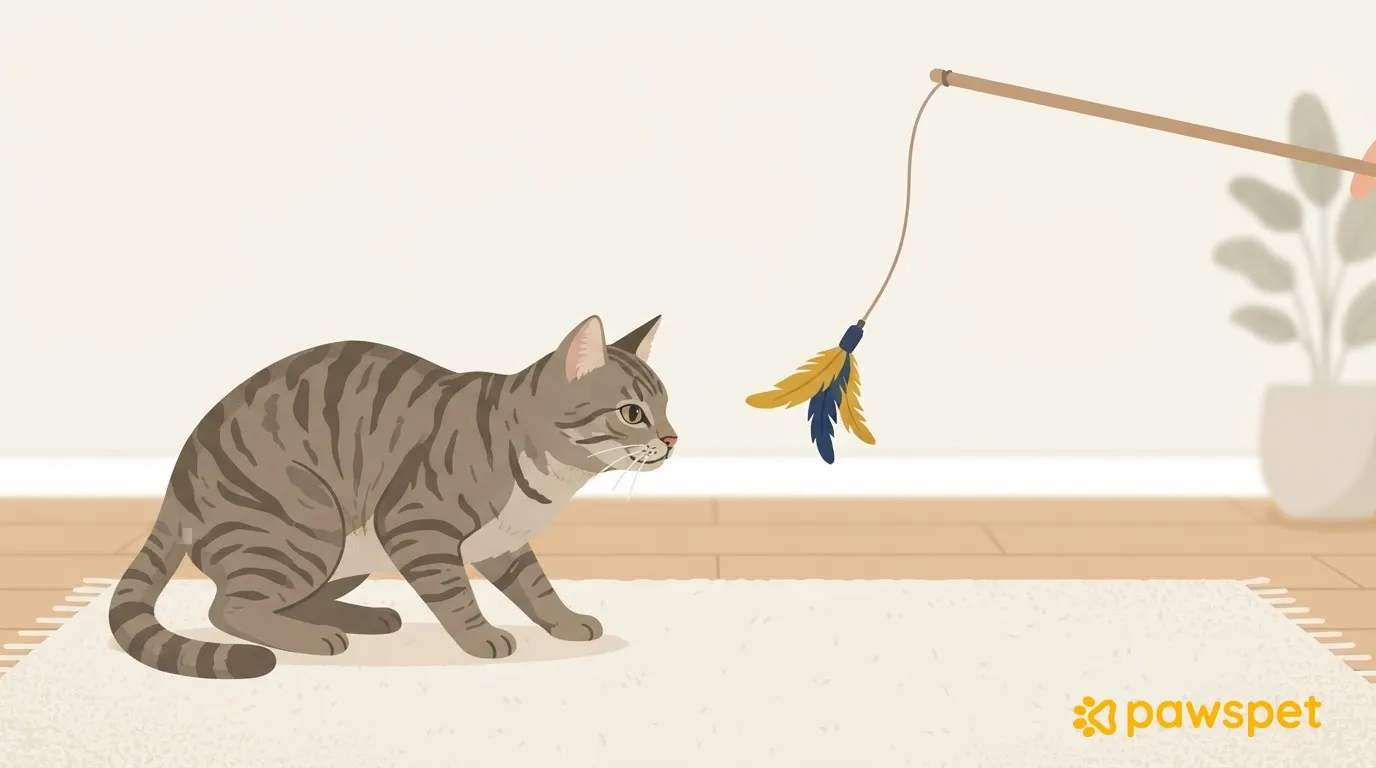
Start with the toy far away from your cat and almost still. Give it a tiny twitch, then drag it along the wall and let it disappear behind a chair leg. Watch for a focused gaze and ears, and a lowered body. Once your cat is crouched, move on to the chase; if they don’t react, try an even smaller movement or change the height: on the floor instead of in the air.
Chase: make the prey run away
Now the prey runs away. Alternate short bursts with still pauses, change speed, and make it turn a corner or disappear under the cloth. With feathers, try short, low hops. A wiggle of your cat’s hindquarters signals a pounce: keep the prey within paw’s reach instead of pulling it away at the last moment.
Catch: let your cat win several times
When your cat pounces, stop the prey: that’s their catch. Leave it under their paws and give them a few moments to hold on to it. Then make it move off slowly and start again: let your cat catch it several times during a session, not just once. Don’t pull it away: if they let go, start again; if they keep holding it, wait.
Slow down and finish
Make the movements slower and the pauses longer, like prey getting tired. When your cat slows down too, let them catch it one last time and hold it for a few moments. Then put the wand out of reach and put it away: that’s how the game ends, not with an interruption halfway through a chase.
How long should a session last, and how often should you repeat it?
There’s no set duration that works for every cat: your cat decides, not the clock. Start with a few minutes and only make sessions longer if your cat stays engaged. Several short sessions throughout the day are better than one long one—for example, in the morning and evening if your routine allows.
Signs it’s time to stop: your cat walks away, lies down, grooms, lashes their tail, pins their ears back, or starts biting the toy hard. If you see these signs, slow down, let your cat catch the toy, and end the session.
If your cat pants or breathes with their mouth open, stop and let them rest. If their breathing doesn’t return to normal soon, or this happens often, contact your veterinarian.
Common mistakes and safety
- Using hands or feet as toys. Your cat may learn that they’re prey and keep biting them outside play sessions.
- Never letting your cat catch the toy. A hunt that never ends with a catch can leave your cat frustrated or make them lose interest.
- Stopping abruptly when your cat is highly excited. They may still be worked up and take it out on hands and ankles: always slow down before ending the game.
- Leaving wands, strings, ribbons, or elastic bands out when you’re not there. Your cat could swallow them: put them away out of reach after every session. If you suspect your cat has swallowed a piece, contact your veterinarian immediately.
- Worn-out toys. Frayed feathers or toys that are losing pieces can end up in your cat’s mouth: replace them as soon as you notice wear.
How to get started tonight
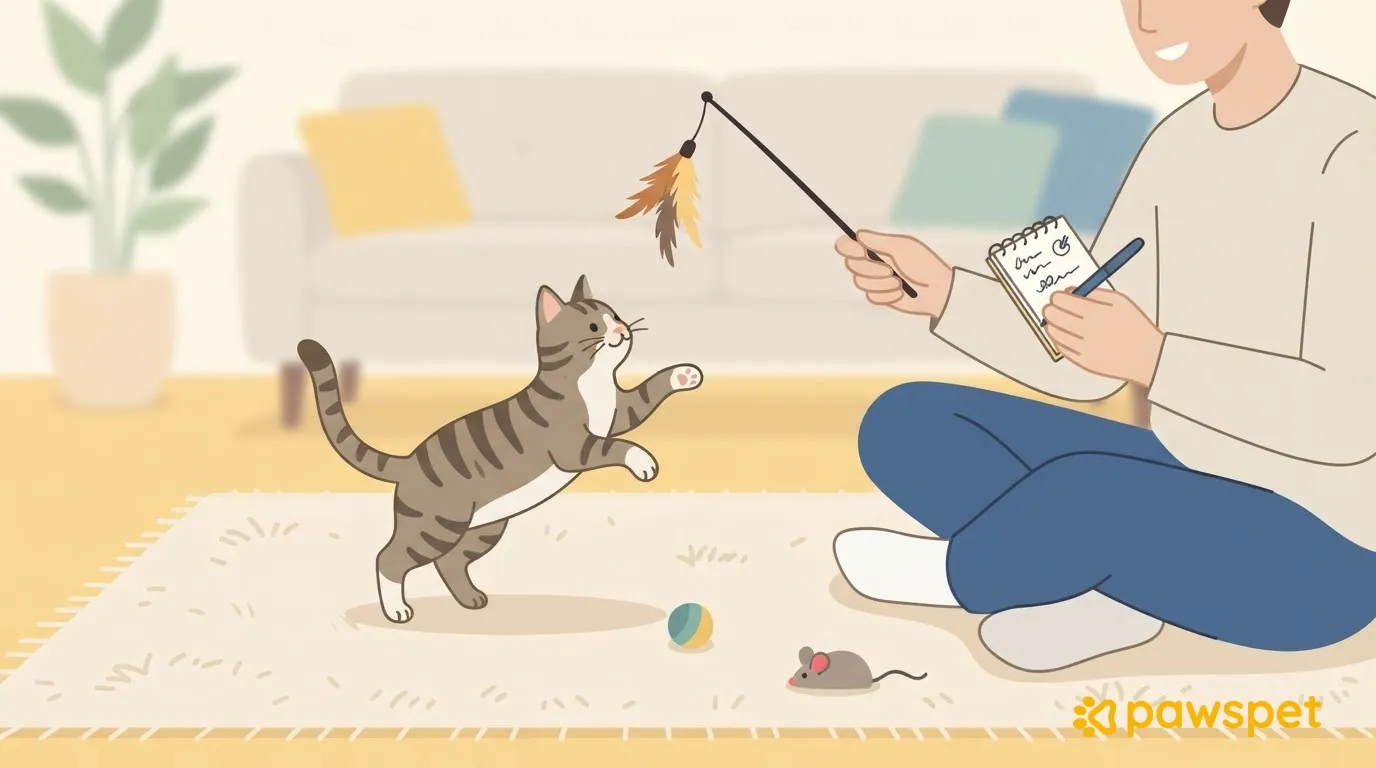
Have one session through all four stages and end with a catch. Then note how engaged your cat stayed and which movement worked best, such as pausing or dragging the toy along the wall. Tomorrow, repeat what worked and change just one thing at a time.
Frequently asked questions
Is a laser pointer okay?
It can be part of play, but it never offers a catch. Always finish with the wand so your cat can grab the prey at the end. Never point the beam toward your cat’s eyes.
My cat watches but doesn’t move: are they playing?
Following the toy with their eyes is already a form of engagement. Slow down and move the toy farther away: prey that’s escaping is more enticing than prey right under your cat’s nose. If a cat who used to enjoy playing suddenly stops, talk to your veterinarian.
Should I give my cat a treat at the end?
That’s optional. If you want to give one, take it from their daily food allowance; if your cat is on a prescribed diet, ask your veterinarian first.