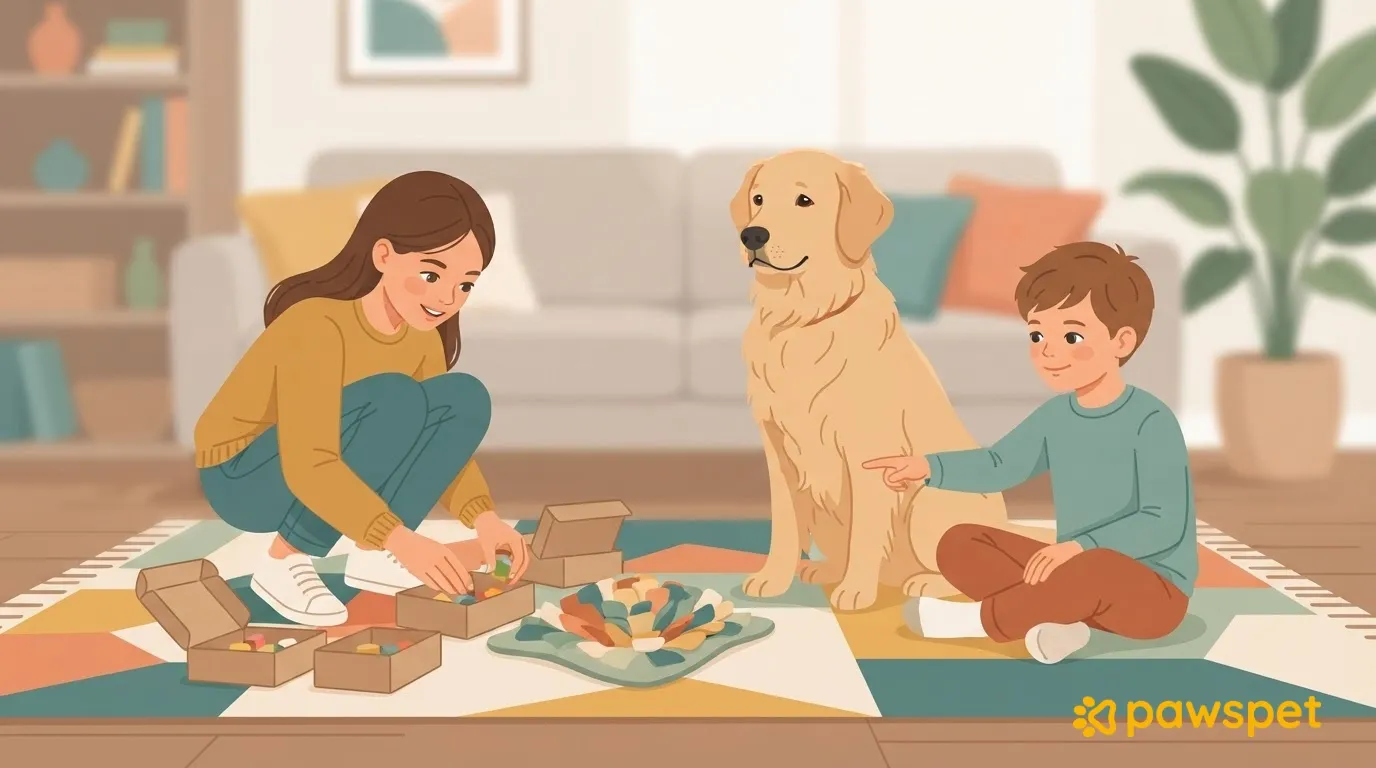
Children can take part in scent games if an adult supervises the entire session and the dog waits separately while the treats are hidden. Then they stay outside the search area, seated, while the dog searches and eats. These games may seem ideal for winter afternoons at home, but they bring food and movement close to the dog, so clear roles and a few rules are essential.
Before involving children: three checks
- The dog already knows the game. They should have played it with an adult, for example with open cardboard boxes.
- The dog has never shown tension around food or toys. If they have, don’t play food games with the children: ask a professional for advice first.
- An adult is available for the entire session and there is a space that can be separated off with a door or baby gate.
If even one check isn’t met, postpone the game with the children.
Who does what: the roles
Giving everyone a task helps prevent the game from turning into a race for treats.
| Who | What they do | What they don’t do |
|---|---|---|
| Adult | Manages the dog, starts and ends the game, collects any leftover treats | Doesn’t leave during the session or hand the dog over to the children |
| Younger children | Prepare or decorate the boxes before the session, watch while seated or from behind the gate, praise the dog in a calm voice | Don’t handle the treats or enter the area |
| Older children and teens | Hide the treats in the area agreed with the adult, then sit outside the area | Don’t keep treats in their pockets or on their clothes, and don’t stay in the area when the dog comes in |
Roles depend on each child’s age and ability to follow the rules, not on a fixed age: the adult decides for each child. Whatever their role, no child approaches the dog while they are searching or eating.
A family game, step by step
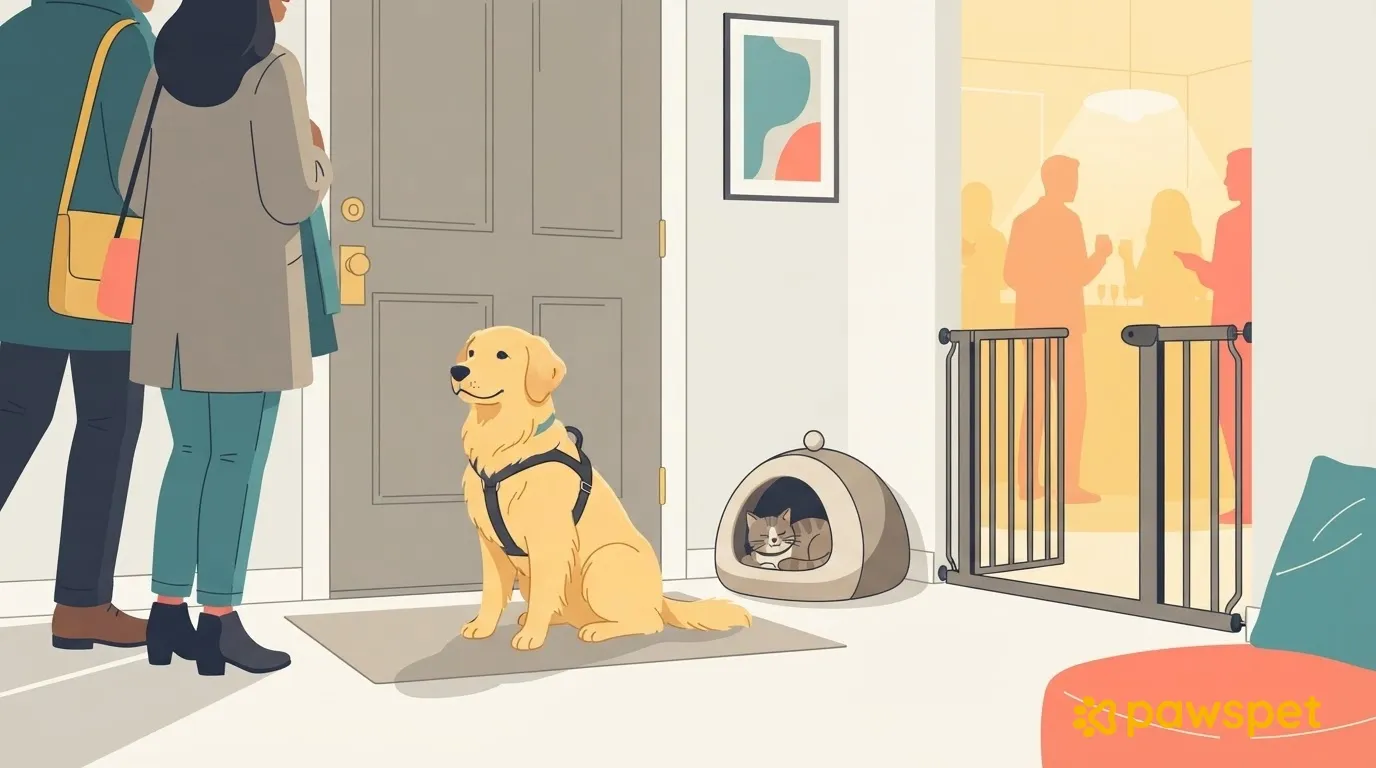
- The dog waits in another room with a second adult. If there is only one adult, the dog waits behind a door or baby gate.
- The adult prepares dog treats only, never the children’s snacks. No biscuits, chocolate, raisins, or sweets: these aren’t suitable for dogs and can be dangerous in some cases.
- Put away the children’s small toys before hiding the treats.
- One child at a time hides a few treats on the ground in the agreed area, including inside open boxes, away from plants, cables, medicines, and cleaning products.
- The children leave the area and sit down. Only then does the adult let the dog in.
- Watch and praise from a distance, in a calm voice.
- The adult ends the game and checks that no treats are left behind; then everyone washes their hands.
Signs to stop and when to ask for help
During the search, the adult watches the dog and the children, not the treats. These signs are commonly associated with discomfort or tension: the dog freezes over a treat, stiffens, stares, growls, raises their lip, or snaps. No list is complete, and a single signal doesn’t explain how the dog feels. If in doubt, stop: ending the game in time is part of playing, not a failure.
At the first sign, the adult calmly has the children leave the area or calls the dog away, and the session ends. A growl is a warning and should not be punished. If a child is bitten or scratched, take care of them first and contact a doctor.
If it happens more than once, or if the dog snaps, stop playing food games when the children are present. Ask a dog trainer or behavior consultant for advice. A sudden change in behavior also warrants a veterinary visit. For behavioral advice, in the «Services» section of the PawsPet app, you can look through the registered professionals in «Training» or «Behavioral consulting» and view their descriptions, reviews, and availability.
Rules to review with the children
Read them together before each session or post them where you play.
- No treats in pockets or on clothes: hold them only while hiding them, with the dog in another room.
- Don’t approach the dog while they are searching or eating.
- Never take treats or toys from the dog’s mouth: call the adult.
- No hugs or running while the dog is playing.
- One child hides treats at a time.
- Use a calm voice.
- When the adult says “that’s enough,” the game is over.
Review the rules and try a short session with just a few treats.