If your dog is on restricted rest after surgery or an injury, you can play several scent games with them while they’re lying down or almost still: which ones to choose depends on what your veterinarian has approved. The principle is simple: bring the game to your dog, keep it low and brief, and use a non-slip surface. This isn’t therapy and doesn’t replace your veterinarian’s instructions: it’s simply something for your dog to do without asking them to move more than they’re allowed to.
Before you start: what to ask your veterinarian
Restrictions vary from case to case. Before suggesting any game, ask:
- Which positions are allowed (lying down, sitting, standing), and for how long?
- Can your dog turn their head and neck? Can they use their paws to move objects?
- Can they chew paper or cardboard?
- Do the protective collar or bandage change anything? Never remove the collar without your veterinarian’s instructions, even for play.
- Should food portions be adjusted since your dog is moving less? If so, how?
- When will the restrictions be reviewed?
Write down the answers: they’ll help you choose among the games below.
Scent games with little to no movement
These are calm activities that use mostly household items. The games are arranged, broadly speaking, from requiring the least movement to the most. Only offer games your veterinarian has approved.
| Game | How to play | Movement required |
|---|---|---|
| “Which hand?” | Close both hands into fists, with a treat in one. Your dog sniffs and indicates with their nose; you open the right hand. | Small head movements |
| New scents to sniff | Bring household items with different smells up to your dog’s nose, such as a family member’s sweater or a canvas shopping bag. Don’t let them chew on the items. | Minimal movement |
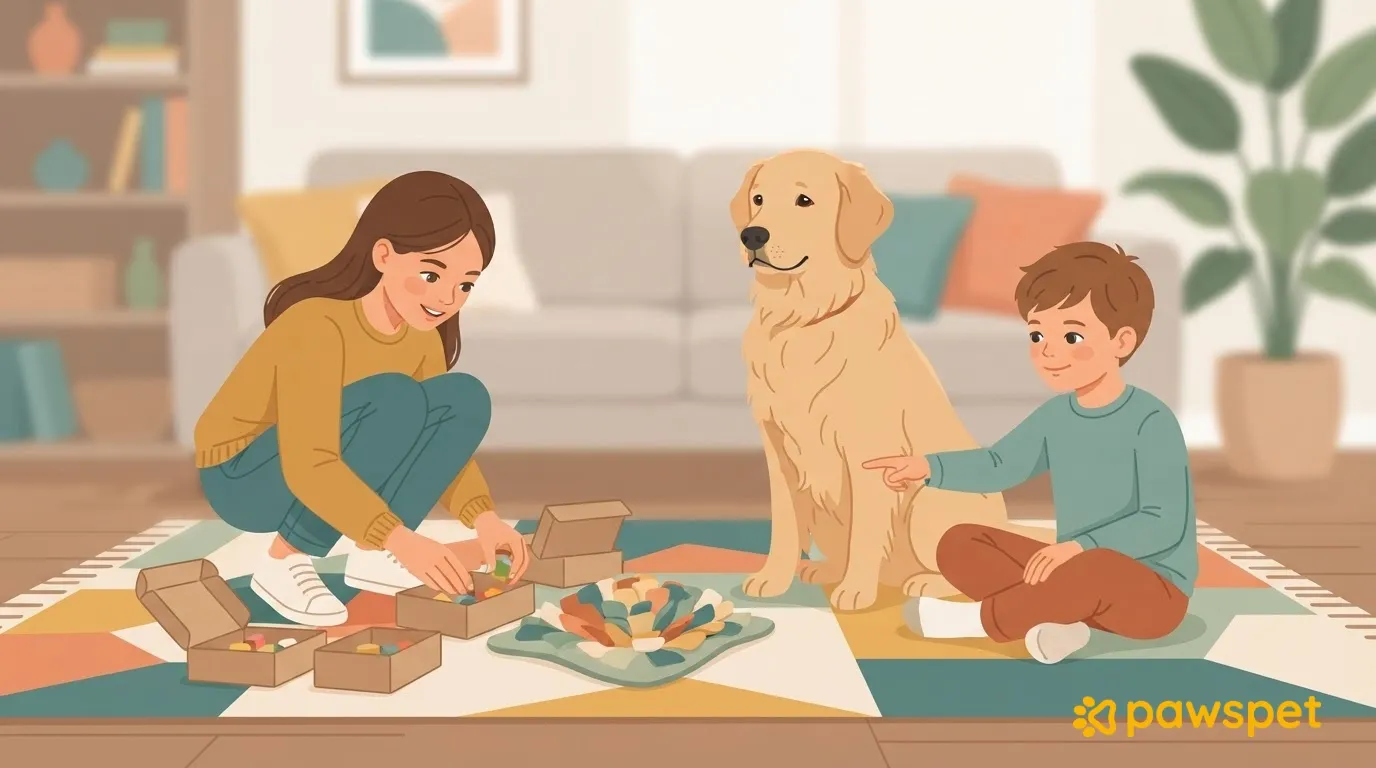
| Egg carton | Place a clean egg carton on the floor in front of your dog, with treats in the cups. Cover them with paper only if your veterinarian says it’s okay to move or chew it. | Head and neck |
| Rolled-up towel | Put treats inside a rolled-up towel and place it in front of your dog. Only if your veterinarian says it’s okay. | Nose and, sometimes, paws |
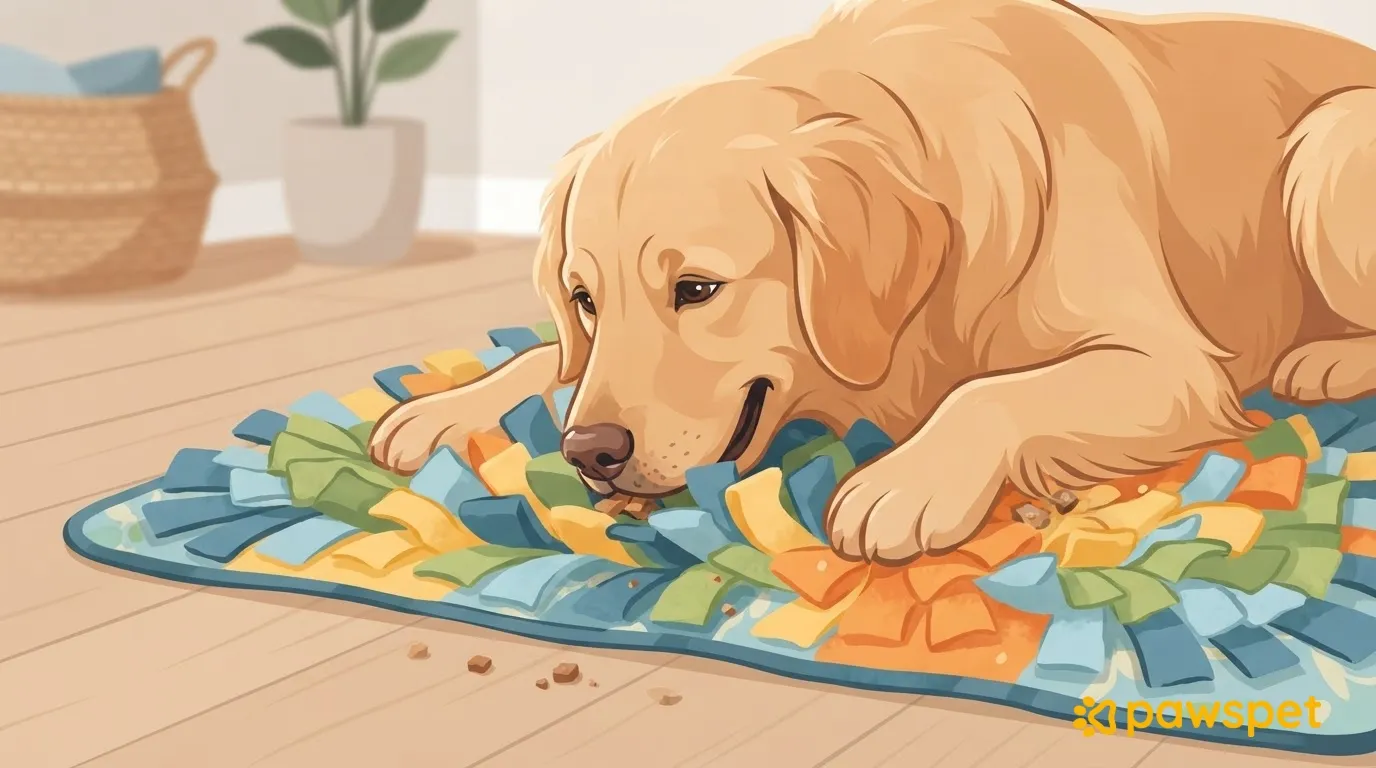
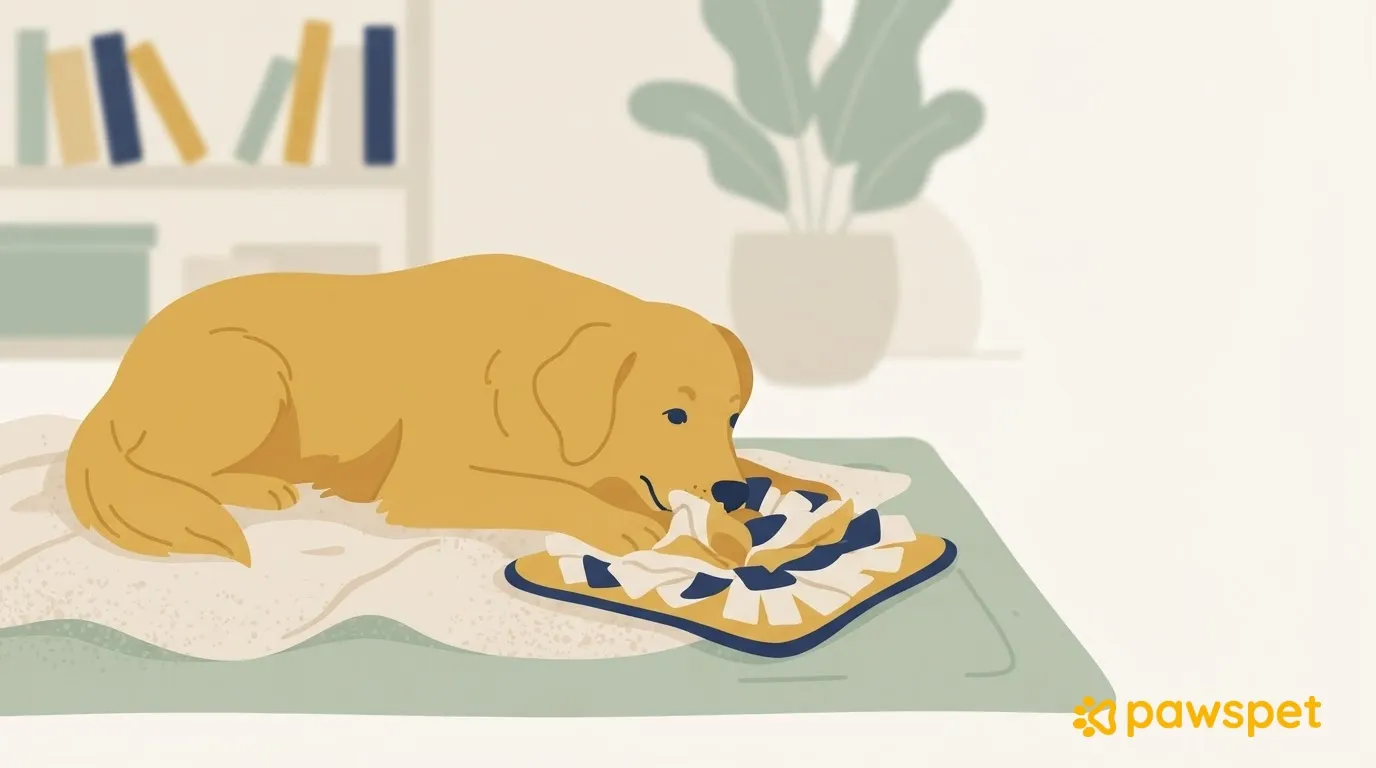
| Snuffle mat | If you have one, place it in front of your dog while they’re lying down and hide treats among the fibers. | Head and neck; sometimes standing |
The movement column is only a guide: every case is different, so check with your veterinarian. If none of the games are suitable, ask what your dog can do.
How to plan short, safe sessions
A few rules apply to all the games:
- Play where your dog rests, on a non-slip surface. Never on sofas, high beds, or near stairs.
- Bring the game to your dog, at nose level. Don’t call them from a distance, toss treats, or offer games that might make them dart or jump.
- One game at a time and just a few minutes, unless your veterinarian says otherwise. Stop while your dog is still calm; don’t insist.
- Use part of their daily food allowance or foods recommended by your veterinarian, without adding extra treats.
- Keep other animals away and stay beside your dog throughout the session.
- When you finish, or if your dog tries to get up, put the objects away and help them settle back down to rest.
Note your dog’s reactions for the next checkup
At the checkup, your veterinarian may ask how things went, and after a few days the details can be hard to remember. After each session, write down the date and what you observe, without interpreting it:
- which game you played and how long it lasted;
- how your dog moved, including whether they tried to get up;
- whether they seemed more agitated or calmer afterward;
- any limping or licking of the treated area.
A few words are enough, for example: “New scents: a few minutes, stayed lying down, calm afterward, no limping.”
A note for PawsPet users: the daily goals in the “Statistics” section are calculated by the app based on type, age, weight, height, and breed, and can’t be set manually, so follow your veterinarian’s instructions during rest.
If you recorded the visit or injury in PawsPet under “Health,” you can add observations from each session as dated “Updates” to the same entry and find them again at the checkup.
When to stop and contact your veterinarian
Stop the game and call your veterinarian if you notice:
- signs of pain;
- limping that gets worse;
- a wound or treated area that changes in appearance, or that your dog licks or chews;
- agitation that doesn’t settle;
- unusual labored breathing while resting;
- any concern.
Don’t wait until the next checkup: one more phone call is never too many.
Prepare the questions from the first section today to bring to your next call or visit.
Frequently asked questions
Does this also apply to an older dog who has difficulty moving?
The principles are the same: keep the game low and brief, on non-slip surfaces. If the stiffness is new or getting worse, your dog needs a veterinary checkup.
How many sessions per day?
It depends on your veterinarian’s instructions and how your dog responds. Fewer, shorter sessions are better.