If your dog is on a diet, isn’t very food-motivated, or gets too excited by treats, you can offer scent games without food: their favorite toy is both the object to find and the reward. As soon as they find it, a few seconds of play are enough instead of a treat. Teach the game in stages, starting with an object in plain sight.
When this approach helps and which toy to use
It can help if your dog is following a prescribed diet or a weight-management plan. It can also help with an elimination diet recommended by a veterinarian, for example to investigate a food allergy. In that case, even a small amount of food outside the plan can interfere with the veterinarian’s instructions. This approach may also be useful if your dog isn’t very interested in food or gets too excited by rewards. If your veterinarian allows treats, this method is an alternative, not a ban on using them.
Choose a sturdy toy that is large enough not to be swallowed and that your dog already loves. Save it for search games and put it out of reach between sessions so it stays interesting. Avoid socks, rubber bands, small balls, toys that fray or break into pieces, and small personal items such as gloves or keys. Swallowing an object or a fragment is a real risk: if it happens, or you suspect it has, call your veterinarian right away.
Teach your dog to find the toy, one step at a time
Do a few repetitions at a time in a quiet room, and move on to the next stage only when your dog can do the previous one without hesitation.
- Build interest: play with the toy for a few minutes.
- Put the toy a short distance away, in plain sight. Say your cue, such as “find it,” and play with your dog for a few seconds as soon as they reach it.
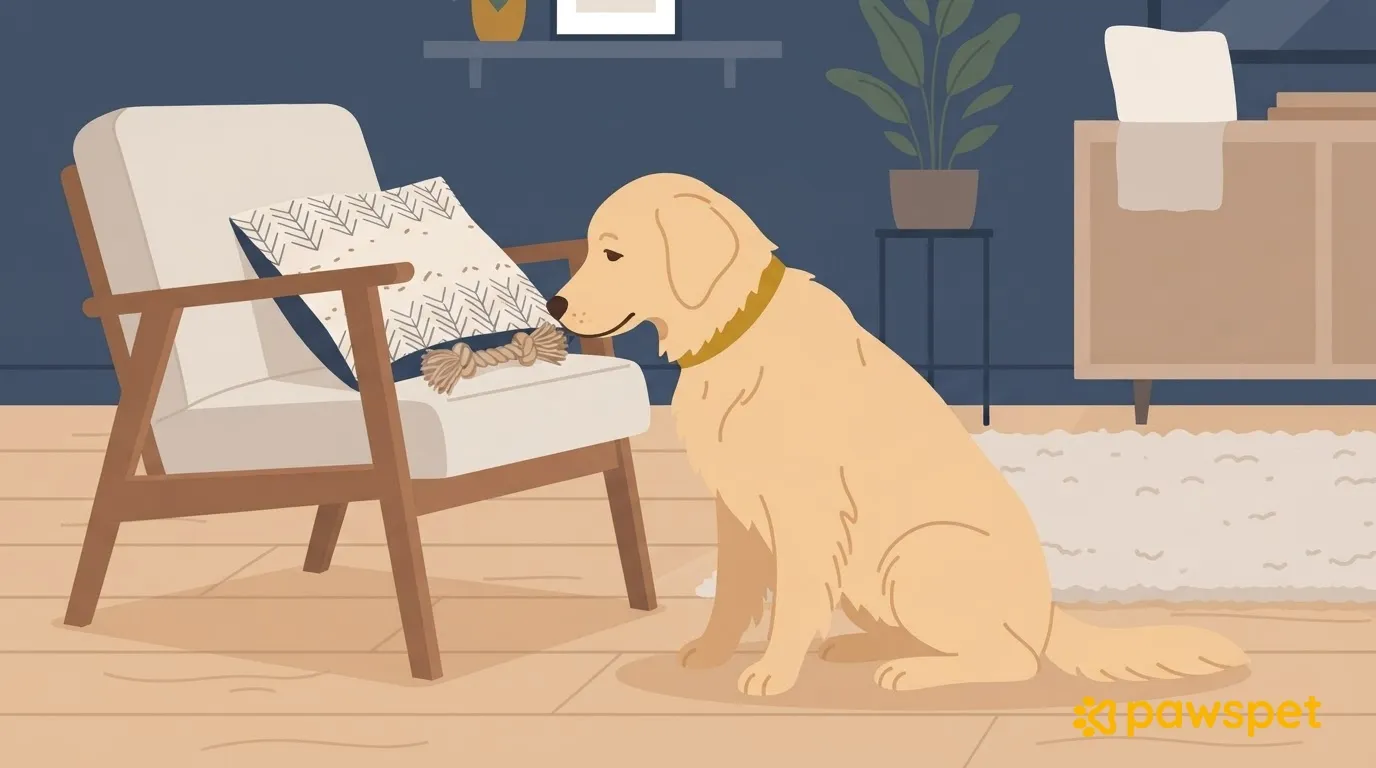
- Partly cover the toy with a towel or cushion. Use the same cue, then play as soon as your dog finds it.
- Hide the toy in the room where you’ll be searching while your dog waits with a family member or in another room. Then say “find it.”
- Move the search to other rooms, starting with easy hiding places.
End each search with a swap: have a second identical toy ready and offer it in exchange for the first. Don’t snatch the toy from your dog or chase them.
Variations using household items
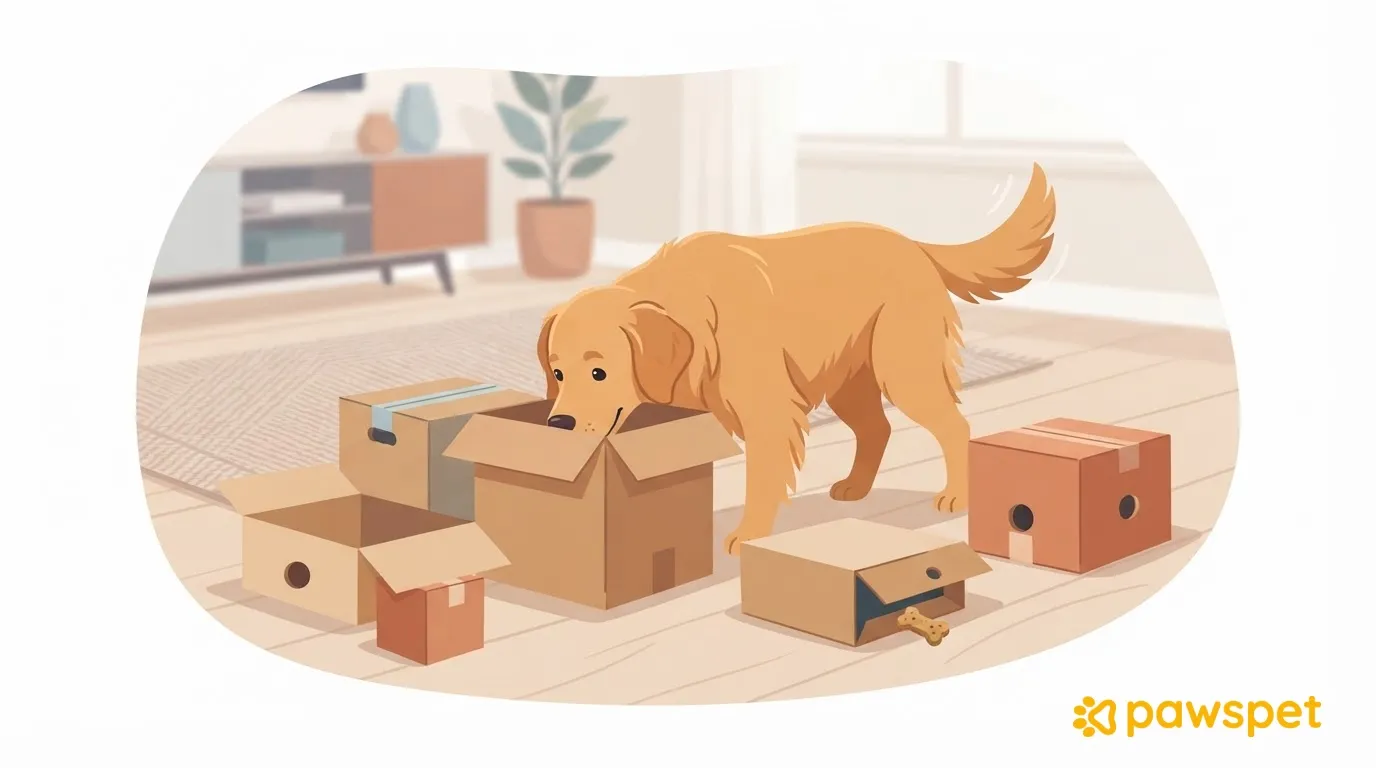
- Box: hide the toy in a box with crumpled paper, and remove the paper if your dog chews it.
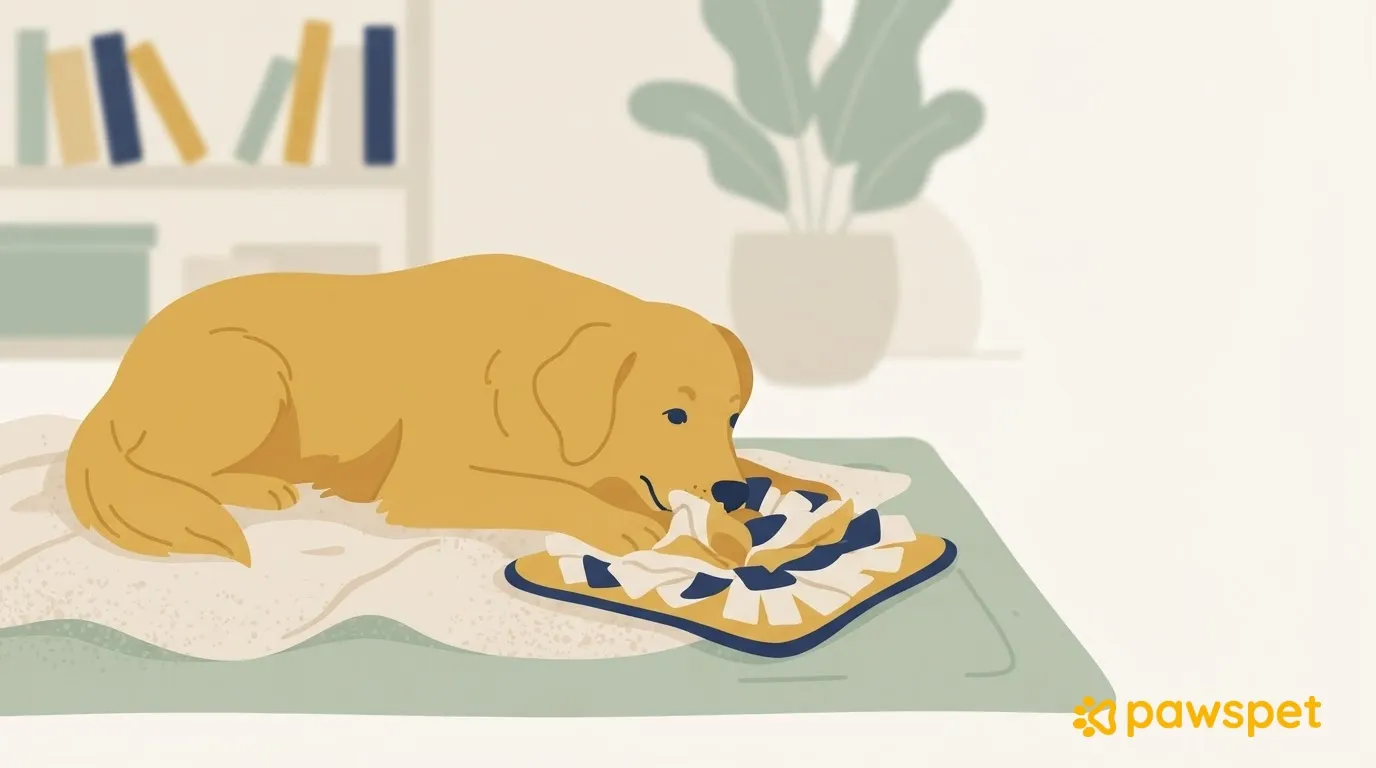
- Towels: fold three towels and put the toy under one of them.
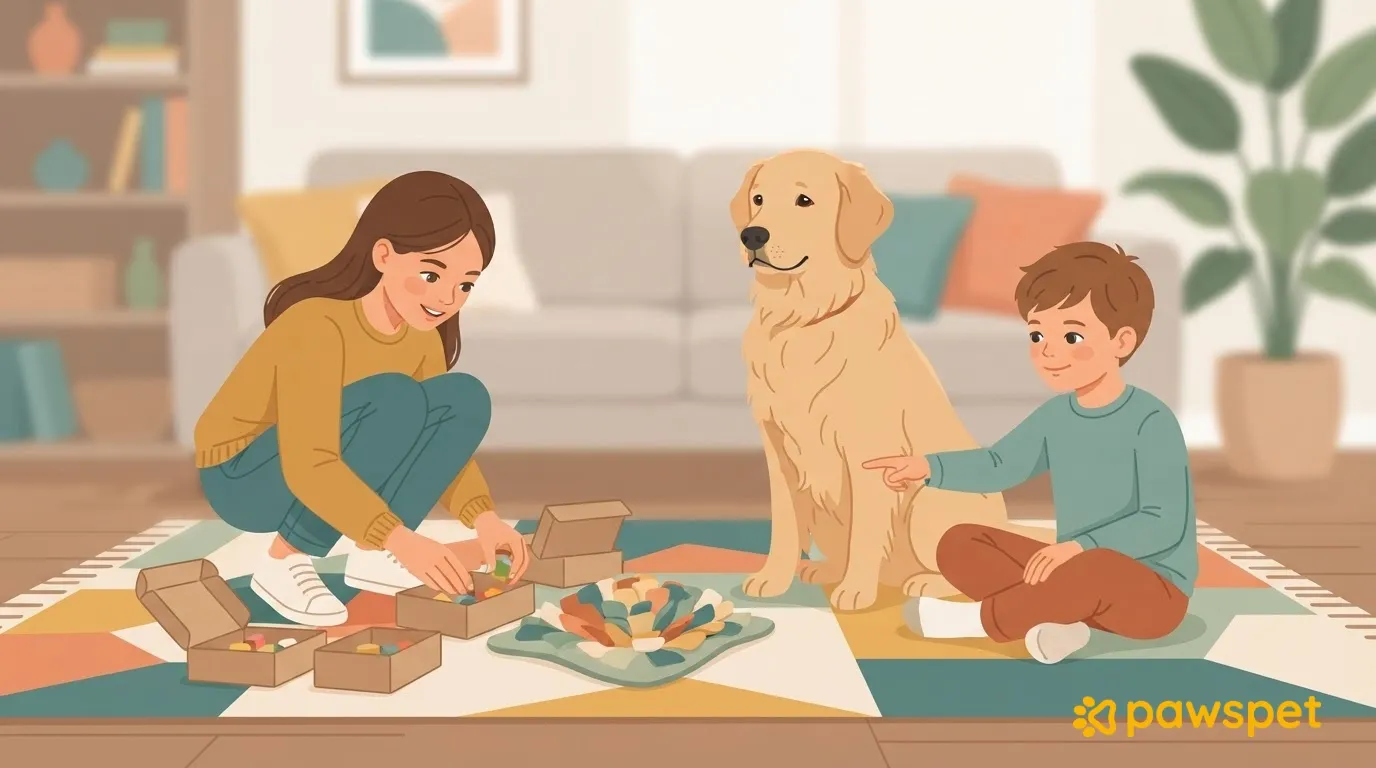
- Hide-and-seek: a family member hides, your dog finds them, and gets praise and a few seconds of play.
Stay close to your dog at all times: these activities should always be supervised.
Diet or allergies: tell anyone who plays with your dog
The plan only works if no one offers an extra treat out of affection. Family members, guests, and pet sitters need to know not to give treats outside the plan and which foods are off-limits. If you’re not sure what’s excluded, ask your veterinarian.
Give everyone one simple rule: “toys only, no treats.” Say it out loud and write it down, along with the list of excluded foods, somewhere everyone will see it: on the fridge or in a message to the pet sitter.
In PawsPet, you can record your dog’s diet in the “Health” profile and allergies or intolerances in the “Allergies and intolerances” section. You can then share them with family members as “Collaborators,” with permission to view health information (a PawsPet account is required), or with a read-only link from “Sharing” for anyone who doesn’t use the app. The link also shows other health and personal details: anyone who receives it can open it while sharing is active, and if you reactivate sharing, the same link becomes valid again.
Common mistakes and when to take a break
- Hiding the toy somewhere your dog has to jump or squeeze into: they could get hurt.
- Making the game too difficult too soon: if your dog struggles to find the toy, go back to the previous stage.
- Turning the game into a chase: if your dog runs off with the toy, don’t chase them; offer a swap instead.
- Keeping the game going until your dog gets overexcited: end the session calmly before they get too wound up.
If your dog growls or stiffens when you approach the toy, stop the activity and ask a dog trainer or behavior consultant for advice.
Try the first two stages today and note how far your dog gets. Start from there in your next session.
Frequently asked questions
My dog doesn’t play with any toys: what can I try?
Try moving the toy along the floor in very short sessions. Alternatively, play hide-and-seek with a family member.
Can I use an object that smells like me?
A sturdy toy is a better choice: small personal items such as gloves or keys are easy to swallow.