If your cat won’t play, they may not be rejecting play itself, but an invitation that’s too fast, too close, or too insistent. Whether they’ve just arrived and are hiding, tense up when they see the wand, or have slowed down with age, start again with short, slow sessions at a distance and near a safe hiding place. Count even a glance or a paw swipe as progress. But if a cat who used to play suddenly stops, contact your veterinarian first.
Why a cat may not respond to play
It’s not a failure on your part or theirs: the reasons may simply be practical:
- a movement that’s too fast or directed toward them, which feels more like a threat than prey;
- a toy that invades their space;
- the wrong time: they’re asleep or have just been disturbed;
- prey that doesn’t suit them: some cats prefer a feather in the air, while others like something that skitters along the ground;
- an environment that still feels uncertain: a new home, noises, or other animals;
- a slower pace with age.
Remember: watching the game is already taking part.
Short sessions: how to start without pressure
To encourage your cat to play, they don’t need to go wild at first: the goal is to make play feel safe.
- Sit on the floor, positioned to one side of your cat.
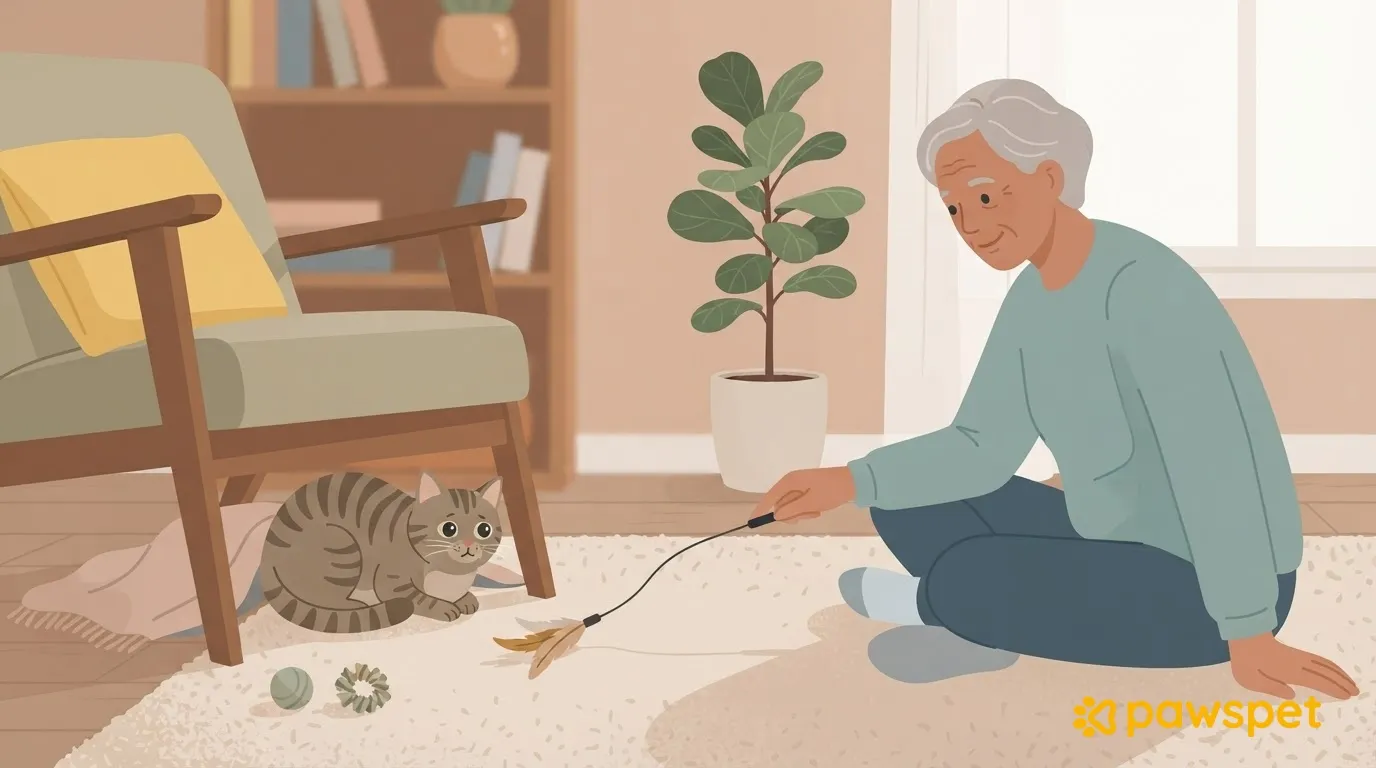
- Keep the toy away from them and move it so it travels away, along a wall or behind an object, like prey escaping.
- Use slow movements, with pauses.
- Offer a session at the same time every day to make it predictable.
- Keep it very brief: end while things are still going well and put the wand away.
- Have the session near a safe hiding place and always leave an escape route open.
If your cat doesn’t react at all, go even slower: simply sitting with the toy still, at a distance and without asking anything of them, counts as a session. Don’t chase them with the toy, push it into their hiding place, or pick them up to make them play. If they leave, that’s their way of saying no: respect it and try again tomorrow.
Adapt play to your cat’s situation
Newly arrived cat
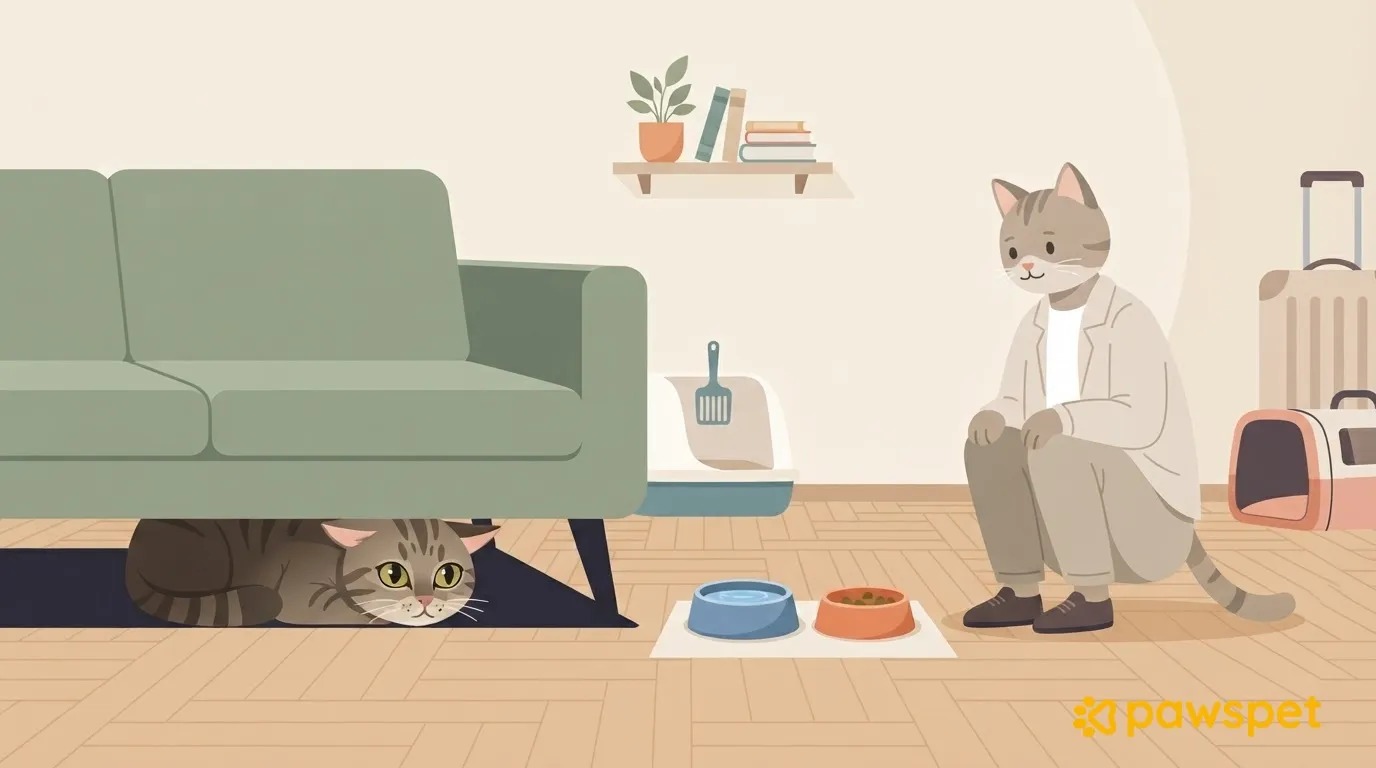
Offer play in the room where your cat feels safe, after they’ve eaten and explored, without rushing. At this stage, play is a way to build trust, not a goal to reach.
Shy or fearful cat
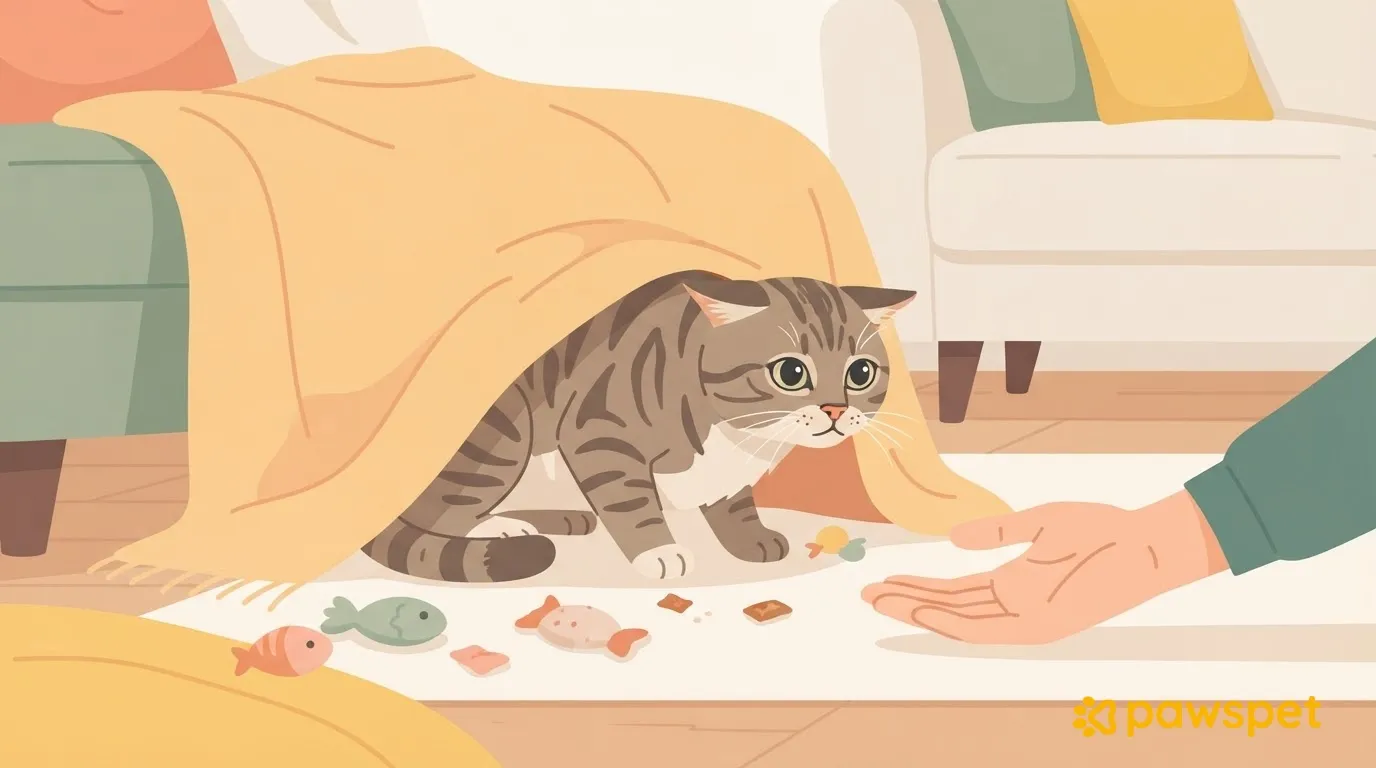
Use a long wand to keep your distance and try quiet toys first, saving bell toys for later. Keep safe hiding places within reach, avoid sudden movements, and let your cat decide whether to approach.
Older cat
Choose slow movements at floor level, in short sequences and on nonslip surfaces. Shorter, more frequent sessions are better. If your veterinarian has mentioned joint problems, ask which movements to avoid.
Signs of progress, even small ones
From smallest to biggest, your cat:
- stays in the room while you play;
- watches the toy;
- keeps their ears forward;
- crouches;
- swipes at the toy;
- chases it for a short distance;
- comes to look for the toy.
These aren’t required or linear steps: one day your cat may make progress, and the next they may take a step back. Don’t compare them with other cats.
When to tell your veterinarian about a drop in play
A cat who doesn’t play much isn’t necessarily unwell. However, talk to your veterinarian rather than trying to guess the cause if:
- a cat who used to play suddenly stops;
- the drop in play comes with changes in appetite, thirst, litter box habits, sleep, or routines;
- they hide more than usual;
- they avoid jumping or react when touched.
Note when the changes started and what changed so you can describe them accurately at the appointment. If symptoms are severe or sudden, don’t wait: contact your veterinarian or an emergency veterinary clinic right away.
If you don’t have a regular veterinarian, you can look for one in your area through PawsPet services (the app’s “Services” tab, service type “Veterinarian”). Availability depends on your location, and the search isn’t an emergency service.
A plan for the next two weeks
Two weeks isn’t a deadline: it’s a chance to observe calmly.
- Offer one short session a day at the same time (for an older cat, two or three very short sessions are also fine).
- Change just one variable at a time: the toy, the speed, or the distance.
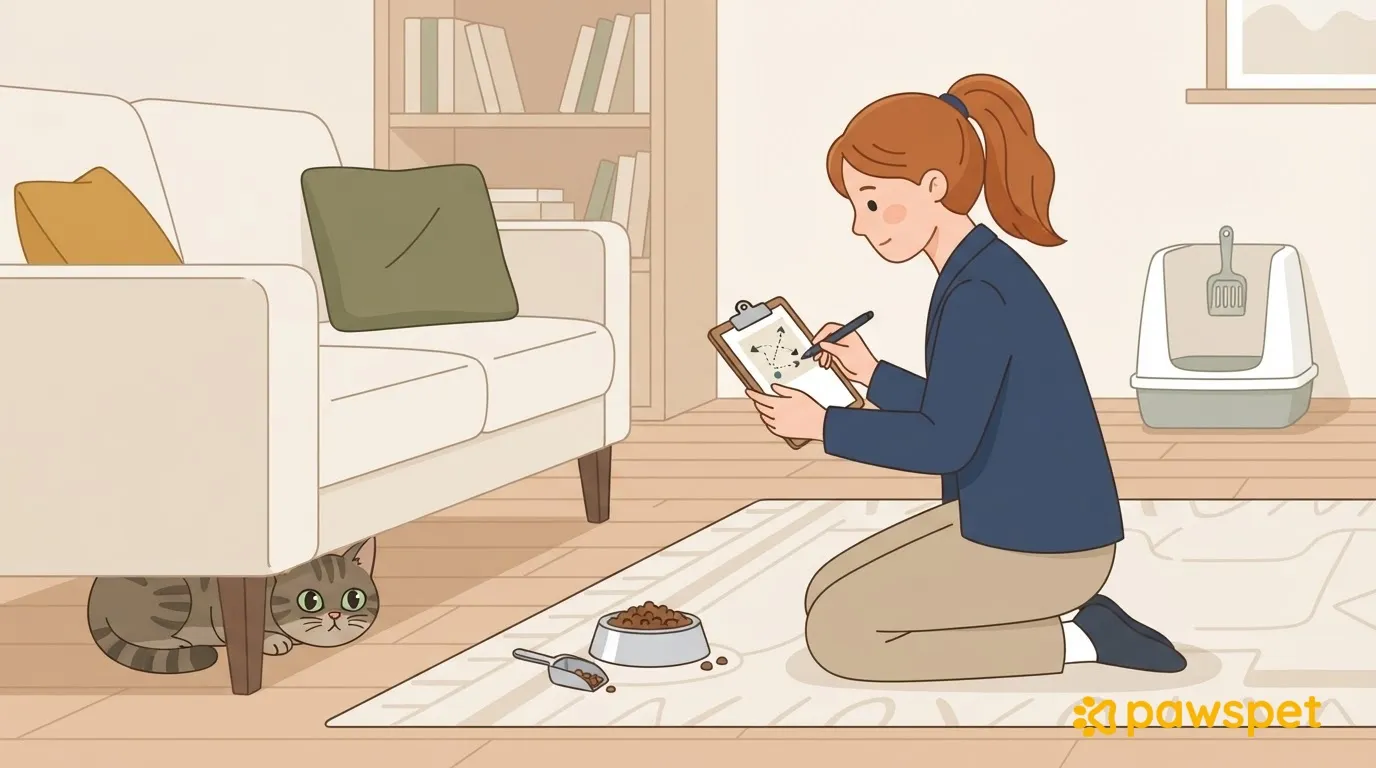
- Write a line of notes after each session: where your cat was, what they did, and what they watched.
- If you see signs of fear (they tense up, pin their ears back, or run away), stop and try again more slowly the next day.
- If you notice any of the changes listed above, don’t wait until the plan is over: contact your veterinarian.
Frequently asked questions
Is it okay if my cat only plays alone with toys on the floor?
Yes, that still counts as play. Leave safe, string-free toys available, and keep calmly inviting them to play with you, mimicking the movements they already enjoy.
Can catnip help?
Some cats are attracted to it, while others aren’t. If you want to try it, watch how your cat reacts and don’t insist if they ignore it. If your cat has health conditions or is on medication, ask your veterinarian first.