A dog with reduced sight or hearing may find their way around better in a home that stays the same, with tactile landmarks and communication based on gestures, vibrations, and predictable approaches. However, any sudden change should be checked by a veterinarian rather than automatically attributed to age.
First: what to have checked
Ask for a prompt veterinary assessment if you notice:
- a sudden decline in sight, hearing, or ability to find their way around;
- red eyes, tearing, a new cloudiness, or your dog rubbing their eyes;
- a tilted head or loss of balance.
If the decline is sudden or your dog loses their balance, call the veterinarian right away to find out what to do: adapting your home does not replace a veterinary visit.
For gradual changes without these signs, make a note of what happens and share your observations at the next checkup. Do they bump into things only in the dark? Do they fail to respond when called even when you’re nearby? Do they always hesitate at the same threshold? If the checkup is a while away or you’re unsure, ask the veterinarian whether to bring it forward.
If your dog sees less: a home that stays the same
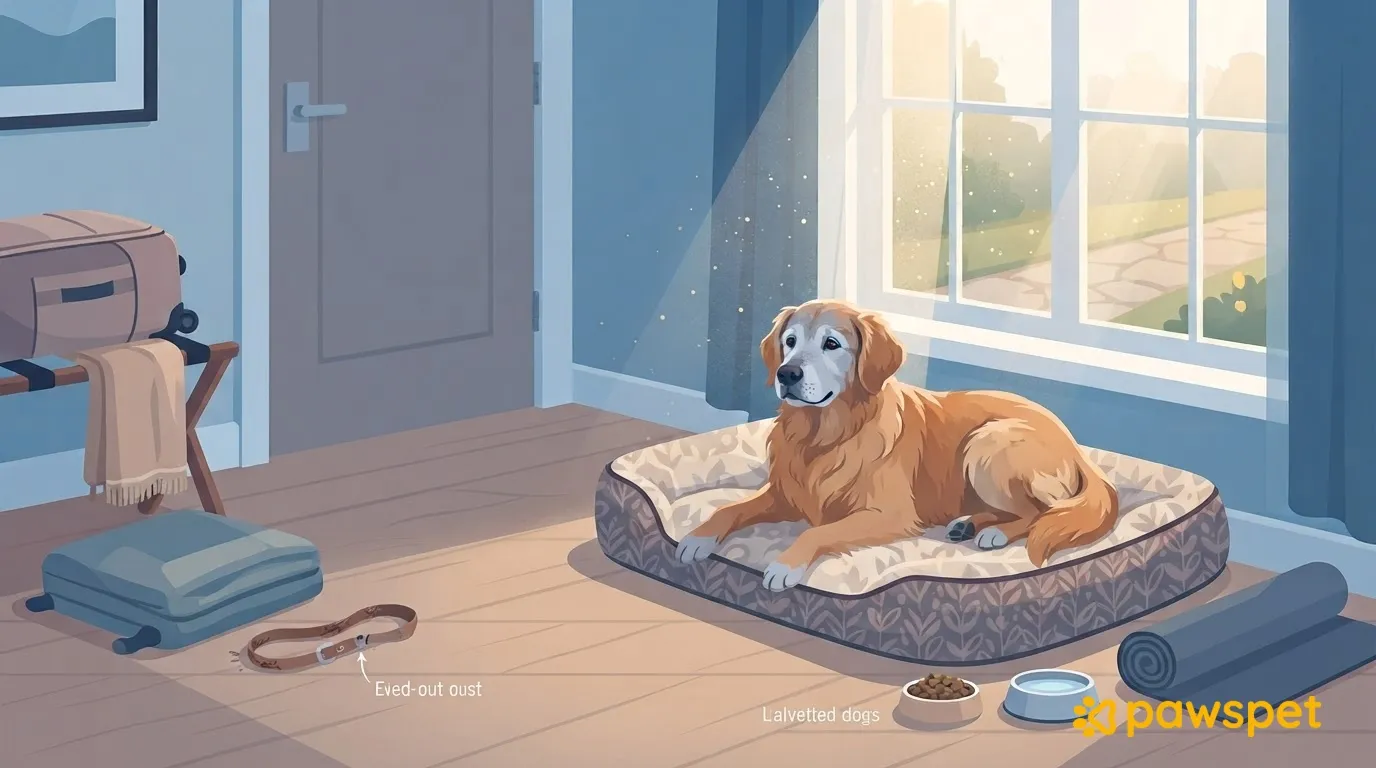
Walk around your home crouched down at your dog’s height: look for anything that sticks out, blocks the way, or interrupts a path. Pay particular attention to the routes between their bed, water, and the door, then make changes without overhauling the space.
- Keep things in place: furniture, bowls, and their bed should always be in the same spot.
- Clear the routes: move shoes, bags, and children’s toys out of hallways and away from thresholds; protect low corners.
- Block off risky areas: use suitable, securely fastened gates in front of stairs and balcony access points.
- Add light along pathways: a night light can help your dog move around when the home is dark.
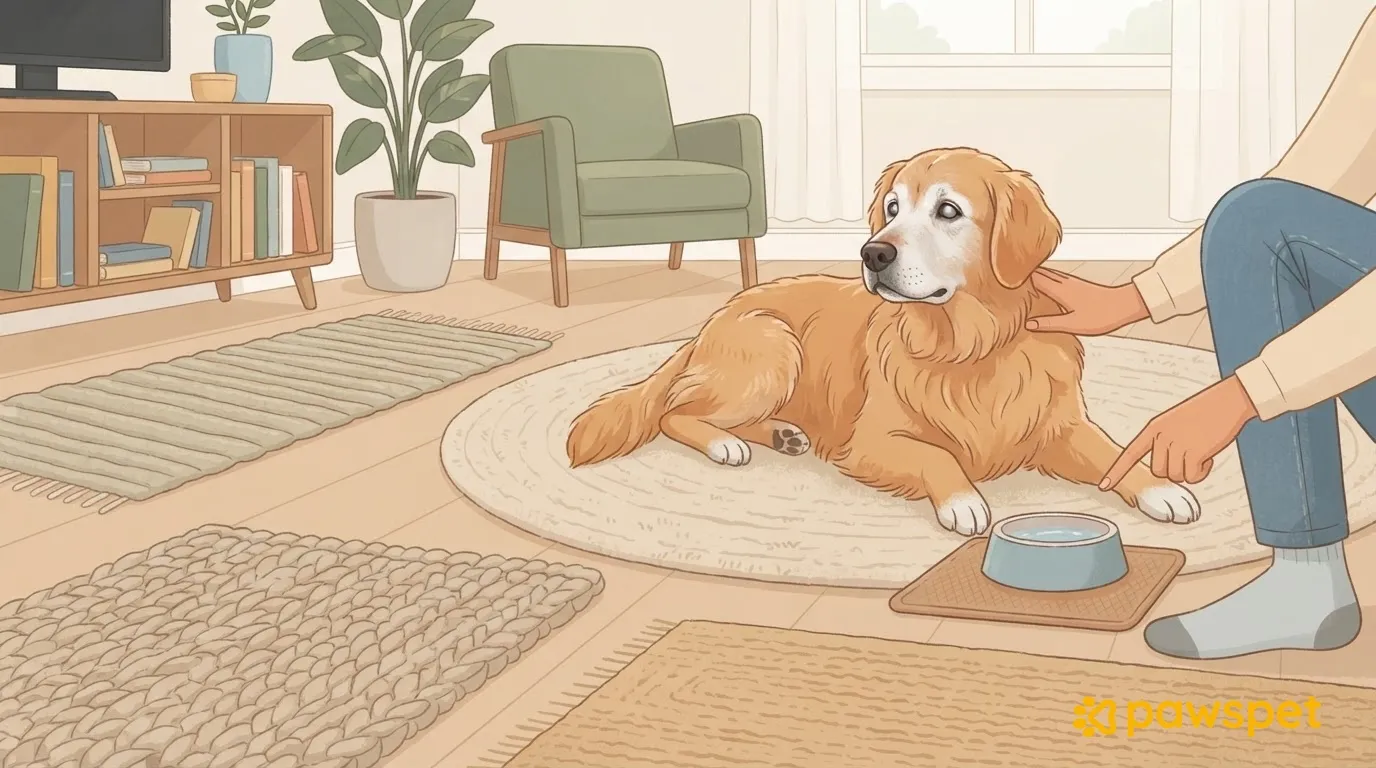
- Add landmarks under their paws: a runner along the hallway, or a different mat in front of the bowl or door.
Runners and mats should be stable and lie flat against the floor, without raised edges that could become new obstacles. You can leave a blanket that smells like home near their bed as a familiar landmark.
If your dog hears less: gestures, light, and vibrations
Build a small vocabulary of three or four gestures: for example, a hand motion toward you for “come,” an open palm for “stay,” a thumbs-up for “good dog,” and pointing to the door for “let’s go out.” These aren’t universal signals: choose the ones that are easiest for you, use them consistently, and reward the response you want, teaching one signal at a time.
To get your dog’s attention, tap your foot lightly on the floor and step into their field of vision; in the evening, you can switch a light on and off. Try these signals calmly, without persisting if they frighten your dog.
Gestures are useful if your dog can see you: if their eyesight is also declining, a predictable approach becomes even more important.
Outside, in areas that aren’t fenced, keep your dog on a leash: they may not hear you calling or hear vehicles.
Approaching without frightening your dog
Agree on the same sequence for everyone to follow, even when your dog is awake:
- Approach from the front, not from behind.
- Make your footsteps audible or create a gentle floor vibration.
- Hold your hand near their nose without touching them, and wait for them to sniff it.
- Only then pet them, if they’re comfortable with contact.
To wake your dog, avoid touching them suddenly. There’s no need to rush the sequence if they don’t notice you: give them time.
For example, your dog is sleeping in the hallway: your daughter approaches, tapping her feet softly, stops one step away, and waits for him to raise his head; then she offers her hand and waits before petting him. Teach children not to startle him while he’s asleep, and supervise them the first few times.
Let everyone know how to approach your dog
Leave a short note for family members, guests, and pet sitters, on paper if needed. Tailor it to your dog with practical instructions like these:
- “They see less in low light: leave the hallway light on.”
- “To get their attention, tap your foot softly.”
- “Don’t touch them unexpectedly while they’re asleep.”
- “Don’t move their bowl or mats.”
In the PawsPet owner app, you can enter these instructions in the free-text field “Distinguishing features” (the “Pets” tab » the dog » ⋮ menu » “Edit,” “Details” step), then share the profile with someone who already has a PawsPet account via ⋮ » “Collaborators” » “Add collaborator,” so their caregiver can find the information in the profile, which is always visible to collaborators.
Things to do today
Start with three practical steps:
- Walk around your home at your dog’s height and clear the route between their bed, water, and the door.
- Choose three gestures and agree on them with the whole family.
- Write a note for your dog’s caregiver and practise the approach routine together.
The goal is to make the day more predictable while respecting your dog’s pace.