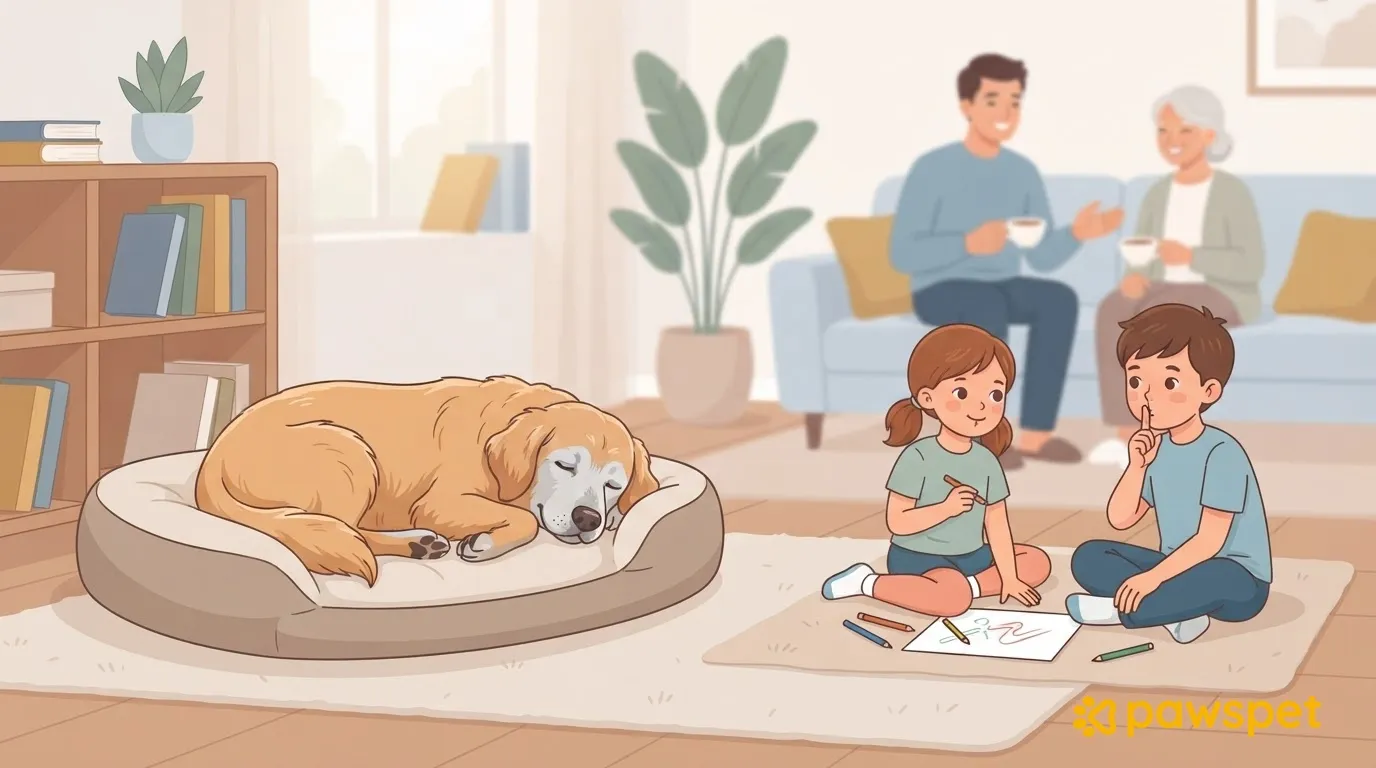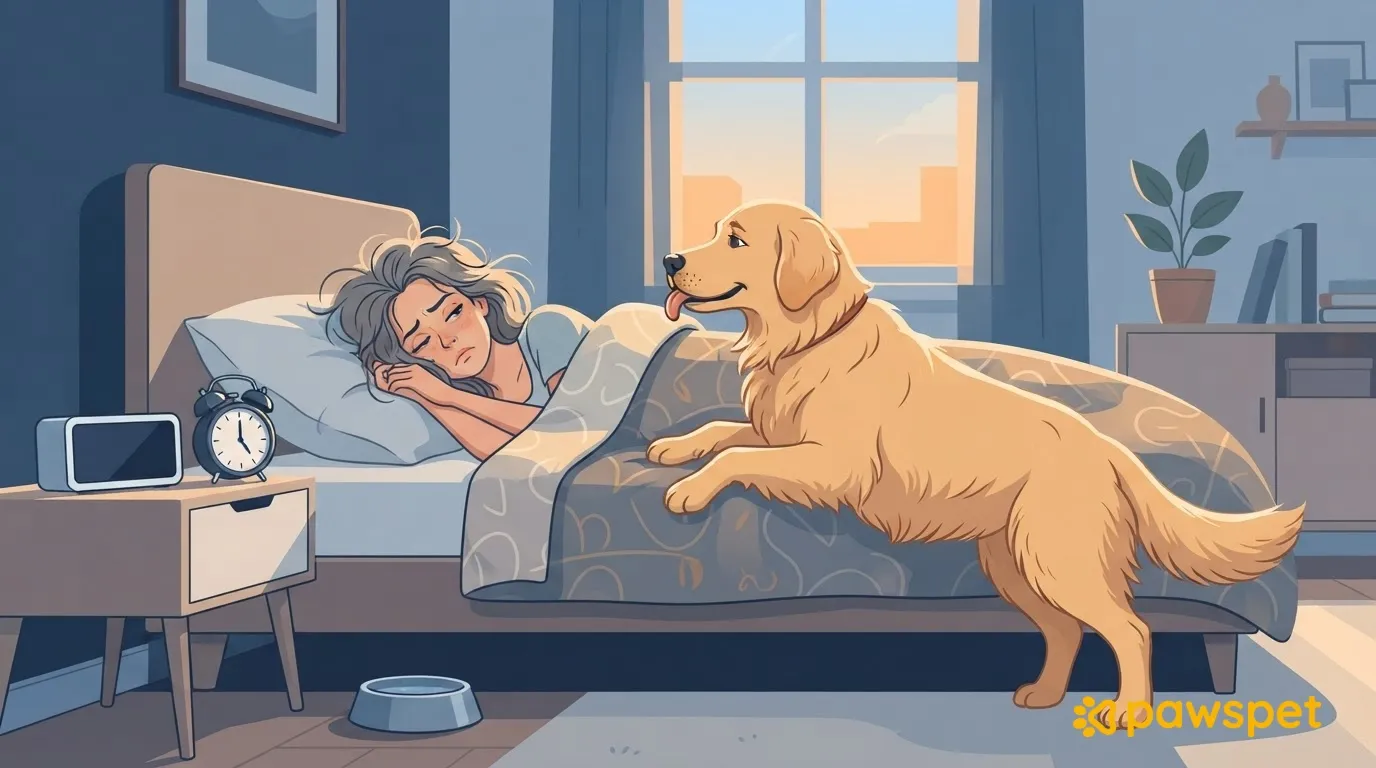
A senior dog who is restless at night, pacing, whining, panting, or asking to go outside may have various underlying reasons that a veterinarian should assess. In the meantime, a consistent evening routine and a calmer environment can help make nighttime easier. But if your dog is panting heavily, seems to be in pain, cannot urinate, falls, or appears very confused, call the veterinarian immediately.
Why a senior dog may wake up at night
It is not a whim, and your dog should not be punished: they are not waking up to spite you. It can be hard to understand why from home. Here are some possible reasons for a veterinarian to assess:
- needing to go outside more often;
- physical discomfort;
- feeling too hot or too cold;
- noises inside or outside the home;
- reduced vision or hearing, which can make the dark more disorienting;
- age-related changes in orientation and the sleep-wake cycle.
You do not need to guess the cause: observe methodically and report what you see.
An evening routine in five steps
Repeat these steps every evening, in the same order and at the same times:
- In the late afternoon, take a relaxed walk with time to sniff, followed by a few minutes of calm play.
- Serve dinner at the same time every day, following your veterinarian’s instructions.
- Keep fresh water available.
- Take one last short potty break just before bedtime.
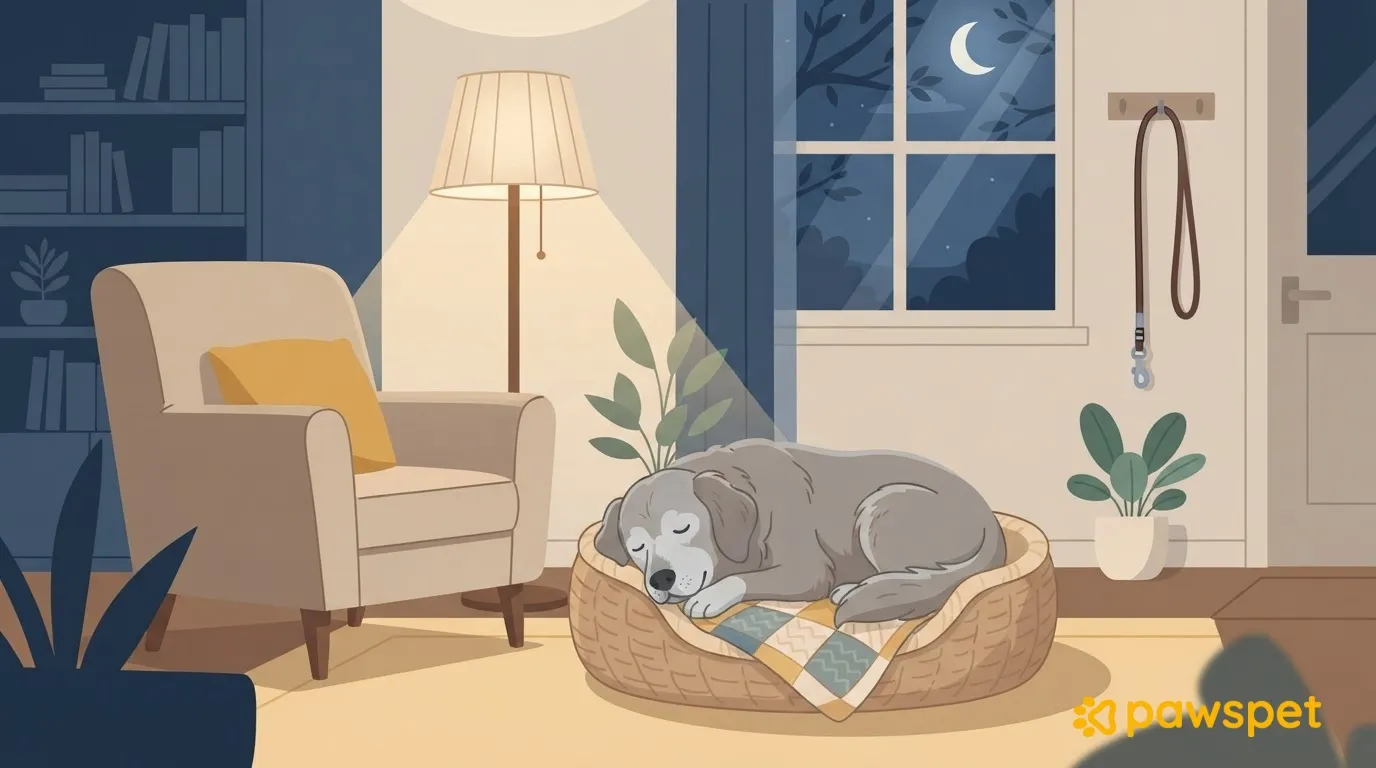
- Then provide their bed, soft lighting, and the same words each evening, such as a short phrase like “Good night, time for bed.”
As the days get longer and evenings get warmer, keep the same schedule even if it is still light outside. If you miss a scheduled time one evening, at least keep the steps in the same order.
Prepare the environment for nighttime
Before going to bed, check the following:
- the bed is near the bedroom or wherever your dog feels safe;
- a night light illuminates the hallway and pathways are clear;
- the room is cool and well ventilated;
- there is a non-slip surface in front of the bed, so your dog does not slip when getting up;
- water is within reach without having to cross the house;
- closed doors or gates keep your dog out of rooms where they could get stuck or hurt themselves.
These are practical measures: they do not address the cause, but they reduce obstacles for a dog moving around in the dark.
If your dog wakes up: how to respond
Speak calmly and move slowly. Check whether your dog needs to go outside: if so, take them out on a leash for a short break. Then guide them back to bed, using the same words you use each evening. Keep interactions brief and calm, with no games, and never scold or punish your dog.
Example: at three in the morning, your dog is pacing back and forth. Turn on the hallway light, take them outside for a few minutes, come back in, settle them in their bed, and make a note of the episode.
Keep a night diary for two weeks
For two weeks, make a note each time your dog wakes up, even in just a few words:
- the time and duration;
- what your dog was doing: pacing, panting, whining, asking to go outside;
- what helped.
Add anything new from the day: whether your dog is drinking or urinating more than usual, eating less, or struggling to get up. Example entry: “3:10, 15 minutes, pacing and whining, short potty break, then back to bed.”
The diary is not for diagnosing your dog yourself: it gives the veterinarian precise information to work with, collected over two weeks rather than a single evening. To avoid relying on your memory after a sleepless night, in the PawsPet app’s “Activity” tab, you can use the “+” button to set the final potty break as a recurring activity with an alert (“Repeat” » “Every N days,” “Set alert”) and record each restless night as a “General” » “Behavioral monitoring” activity, writing the details in the “Notes” field and finding them later with the “Category” filter.
When to call the veterinarian
Call the veterinarian immediately if your dog:
- pants heavily even at rest;
- seems to be in pain;
- falls or walks in circles;
- cannot urinate;
- vomits;
- appears very confused.
If you are unsure how serious what you are seeing is, call anyway and explain what you have noticed, how long it has been happening, and what has changed: the veterinarian will tell you whether an urgent visit is needed. In other cases, book an appointment without waiting for the two weeks to be over, and bring the notes you have collected up to that day. While waiting for the appointment, do not give your dog any medications, supplements, sedatives, or natural remedies on your own initiative.
Tonight
Choose a time for the final potty break and stick to it, turn on a hallway light, and start the diary by noting what happens tonight. You do not need to make major changes: consistency and clear observations to share with the veterinarian are what matter.
FAQ
Can I have my dog sleep in my bedroom?
Yes, if that works for your family and the bed is on the floor and easy to reach. It may help a dog who is seeking closeness.
Can I give my dog something to help them sleep?
Not without consulting the veterinarian: only they can assess the cause of the waking and recommend an appropriate treatment if needed. In the meantime, a routine and diary can help make the appointment more useful.