To protect a senior dog's rest when children are at home or visiting, you need three things: a place where no one ever disturbs them, a few clear rules for the children, and an adult to supervise. Make it a family agreement: the dog remains part of home life, and everyone knows what to do. If your dog's tolerance has suddenly decreased, have them checked by a veterinarian before working on their behavior.
Why senior dogs tolerate less contact and noise
As they age, many dogs sleep more, tire sooner, and often see or hear less. They may notice someone approaching later and be more easily startled if caught off guard: a high-pitched voice, someone running near their bed, or a hand appearing suddenly. Being woken abruptly or petted somewhere that hurts can trigger an unusual reaction, even in a dog that has always been gentle. It isn't spite: it's their way of saying, “That's too much.” So it's best to change the household routines rather than expect the dog to adapt.
Create a safe retreat that everyone respects
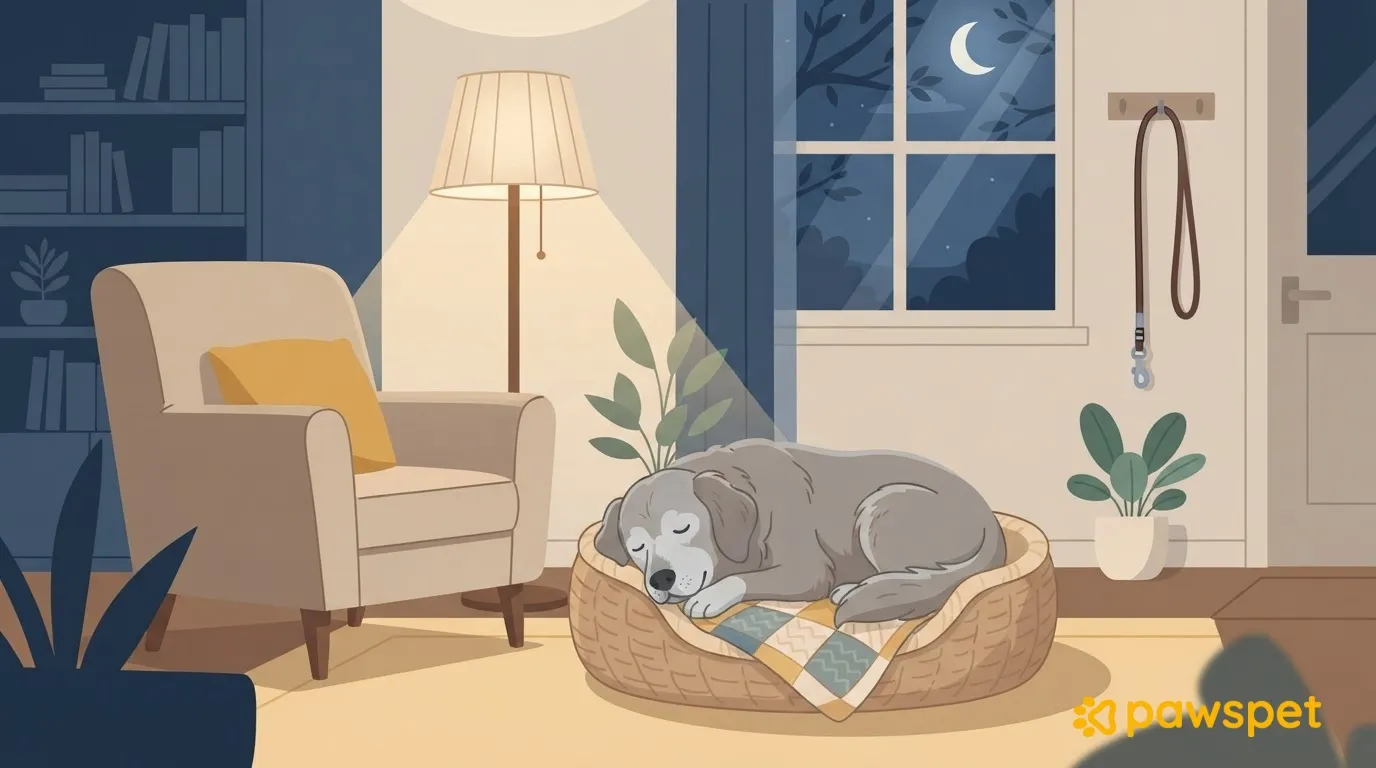
Choose a quiet but not isolated corner, away from busy walkways and play areas: the dog can hear the family without being in the middle of everything. Set it apart with a baby gate, a pen, or a room door left ajar, and put a comfortable bed there with water nearby.
There is just one key rule: when the dog is there, no one calls them, touches them, or brings them toys. It isn't a punishment: no one sends the dog there because they are a nuisance; it's their space.
Example: in a living room with a play rug, the bed is moved to a corner protected by a baby gate.
Rules for children, explained in their own words
Six short rules to repeat using these words:
- Call them and wait: if they want to, they'll come to you.
- Don't touch them when they're sleeping or eating.
- No hugging, kissing their face, jumping on them, or chasing them.
- Give them brief pets on the chest or sides, then stop: if they want more, they'll stay or come to you.
- Only give them food or toys when an adult is there.
- If they walk away, let them go.
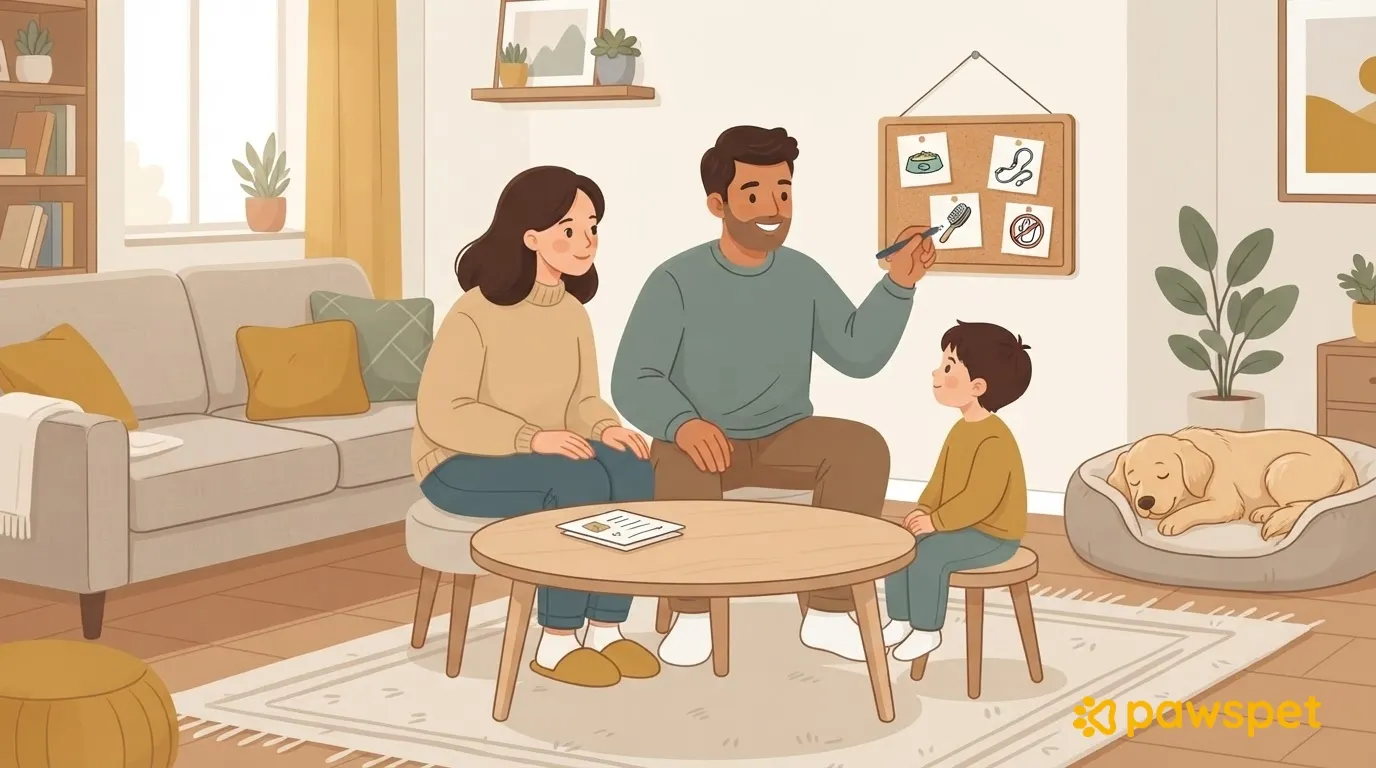
Write or draw the rules with the children and put them up at home: it's a family agreement, not a ban.
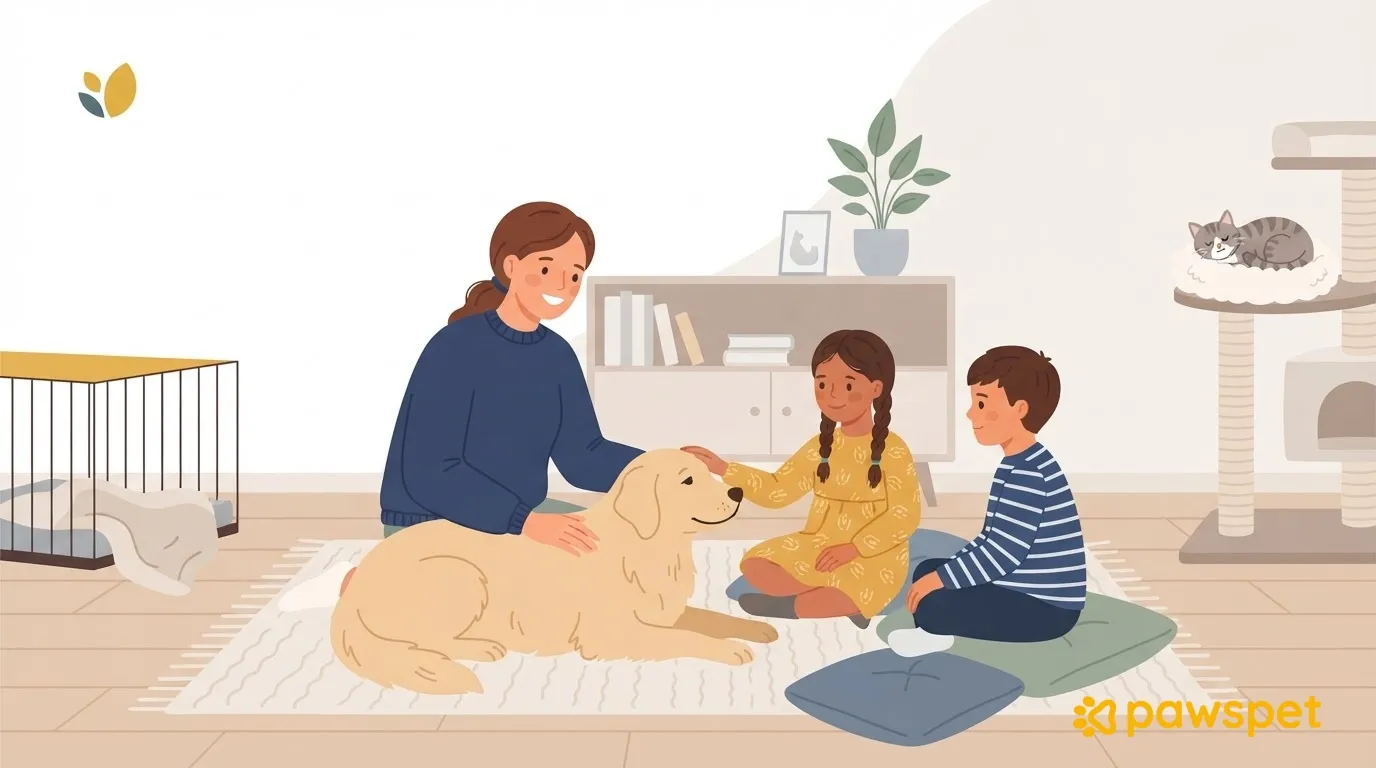
A suitable game is a nose-led treasure hunt: the children hide a few pieces of the dog's regular food in a room and the dog searches for them. An adult stays present; no running or jumping.
No rule replaces having an adult present: young children must not be left alone with the dog, not even for a few minutes.
Signs that mean it's time for a break
Teach everyone the signs of distress that tell you the dog is saying, “That's enough”: they move away, turn their head or body, stiffen, lick their lips, yawn when they're not tired, show the whites of their eyes, or growl.
A growl is a useful warning: don't scold or punish the dog, or they may stop giving warnings. Stop the interaction, give the dog space, and observe what triggered it: a touch, a noise, or a child getting too close.
Example: a grandchild sits next to the dog's bed, the dog stiffens and turns their head; the adult calls the child over to play something else.
Guests and busy days
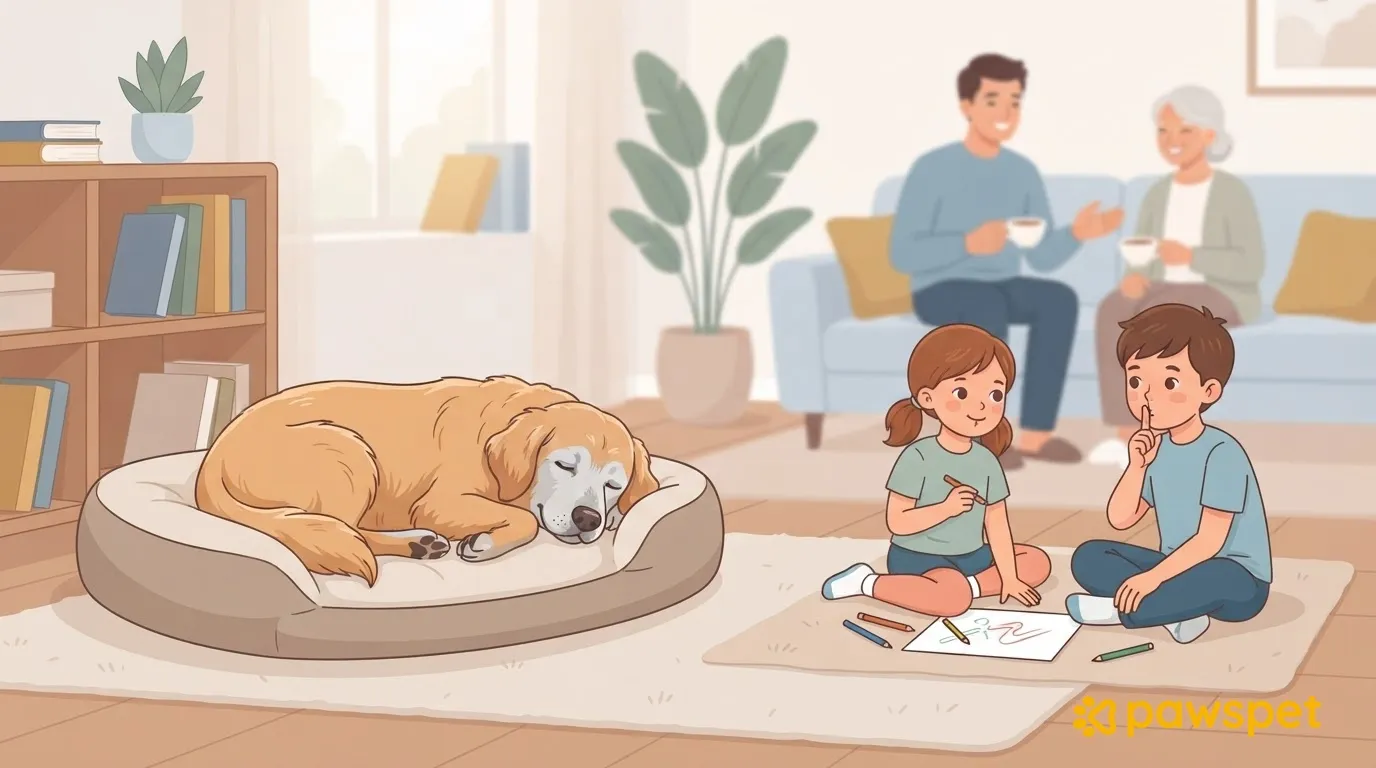
Lunches, long weekends, and visits from relatives—which are also frequent on spring weekends—bring noise, doors opening, and lots of hands ready to pet the dog. Before guests arrive, prepare the safe retreat, go over the rules with all the children, and choose the adult on duty: they keep an eye on the dog and children and can hand over to someone else halfway through the day.
Give guests a ready-made phrase: “Let the dog come to you, and when they're in their bed, let them sleep.”
Keep meal, walk, and rest times unchanged. Don't give the dog table scraps. If the house is very noisy, prepare a quiet room with the door closed: an adult should check in from time to time.
When to ask a professional for help
Ask for help if the change is recent or sudden, if the dog growls or nips more often, avoids being touched in certain places, or if their sleep, appetite, or movement changes. Start with a veterinarian to find out whether physical discomfort is behind the change; then, if needed, a behavior consultant or dog trainer can prepare a tailored plan. In the meantime, maintain the safe retreat and supervision, and note when the change started, when it happens, and what comes before it: these observations will be useful to the veterinarian. To arrange a visit, you can search for a veterinarian by service type and area in the “Services” section of the PawsPet app.
What to do today
- Choose a corner for the safe retreat and move the dog's bed there.
- Write the rules with the children and put them up at home.
- Decide who will be the adult on duty at the next visit.