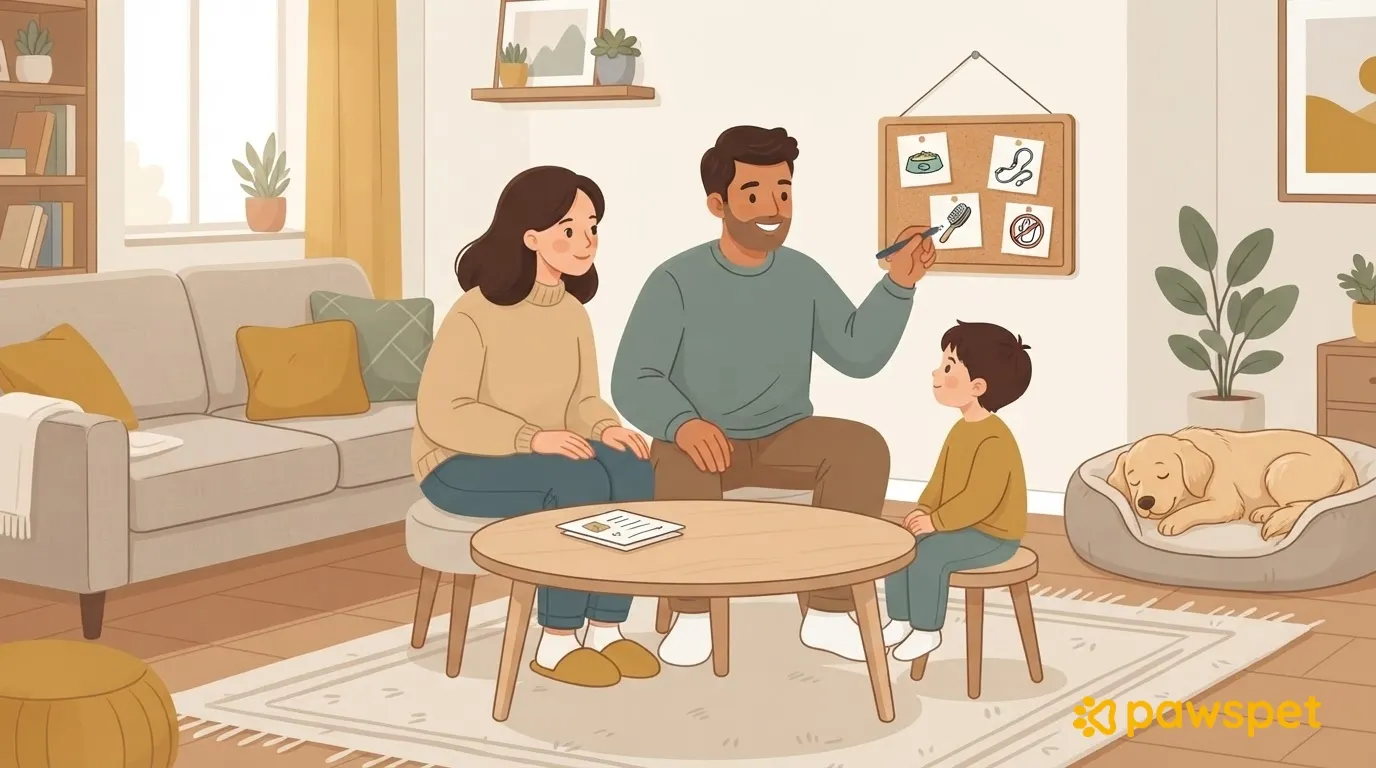
An adult dog settles in more easily when the people around them behave consistently and predictably. That’s why it helps to decide on household rules, shared words, rotations, and a few rules for children before bringing the dog home. Writing them on a sheet of paper—the family agreement to put up in the kitchen—helps prevent them from changing every day.
Household rules to choose together
There’s no single right choice: what matters is choosing one and having everyone, including adults, follow it. For example, one adult may let the dog onto the sofa while another tells them to get off. The dog doesn’t learn a rule; they learn that it depends on who’s there. Decide together:
- Sofa and bed: yes, no, or only when invited.
- Rooms: which ones are accessible and which stay off-limits.
- Where the dog sleeps: in a bedroom, in the hallway, or in a space of their own.
- Guests: who opens the door and where the dog waits.
It’s best for everyone to avoid giving the dog food from the table: if one person gives in, the dog will try again with everyone.
Same words, same gestures
Choose five or six words together for everyday requests, such as “sit,” “come,” “wait,” “enough,” and “let’s go.” With the same commands from everyone, the dog understands more quickly; if each person uses a synonym or a different gesture, the dog has to guess.
Pair the dog’s name with pleasant things, such as food, play, or affection, not scolding: if their name signals a reprimand, they may be less willing to respond.
Ask the shelter whether the dog already knows any words or gestures. If so, use the same ones: changing them would mean starting over in a new home.
Realistic rotations: walks, meals, and cleaning
Write down rotations that are doable, not ideal: a rotation no one follows is worse than no rotation. Each task should have a primary person and a backup, and an adult remains ultimately responsible, even when children help. Here’s an example, using made-up names:
| Task | Primary person | Backup |
|---|---|---|
| Morning walk | Marco | Elena |
| Meal | Elena | Marco |
| Evening walk | Sara | Marco |
| Cleaning the dog’s area and bowls | Sara | Elena |
| Contact with the vet and shelter | Elena | Marco |
In PawsPet, you can create recurring walks with reminders on your account and add family members who already have a PawsPet account as collaborators on the dog’s profile, choosing for each person whether they can only view or also edit profile, health, and activity information.
Children: a few clear rules and an adult present
Children follow a few simple rules better when they’re explained in plain language. Tell them the dog is new and needs time, then write down rules like these together:
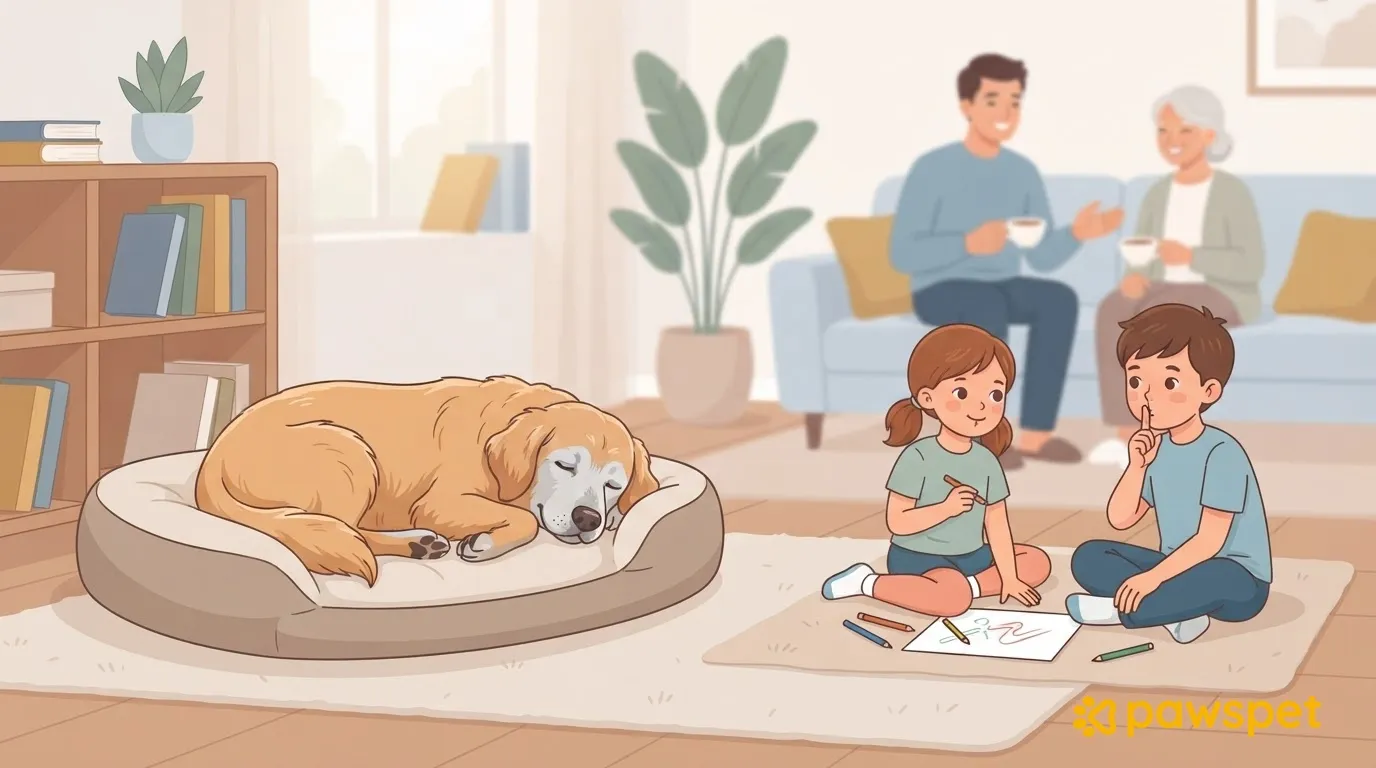
- We don’t disturb the dog when they’re eating, sleeping, or resting in their own space.
- No hugging, kissing the dog on the muzzle, or chasing them.
- We call the dog and wait for them to come over.
- An adult holds the leash of a dog the children don’t know yet.
- We help with age-appropriate tasks, such as changing the water, always with an adult.
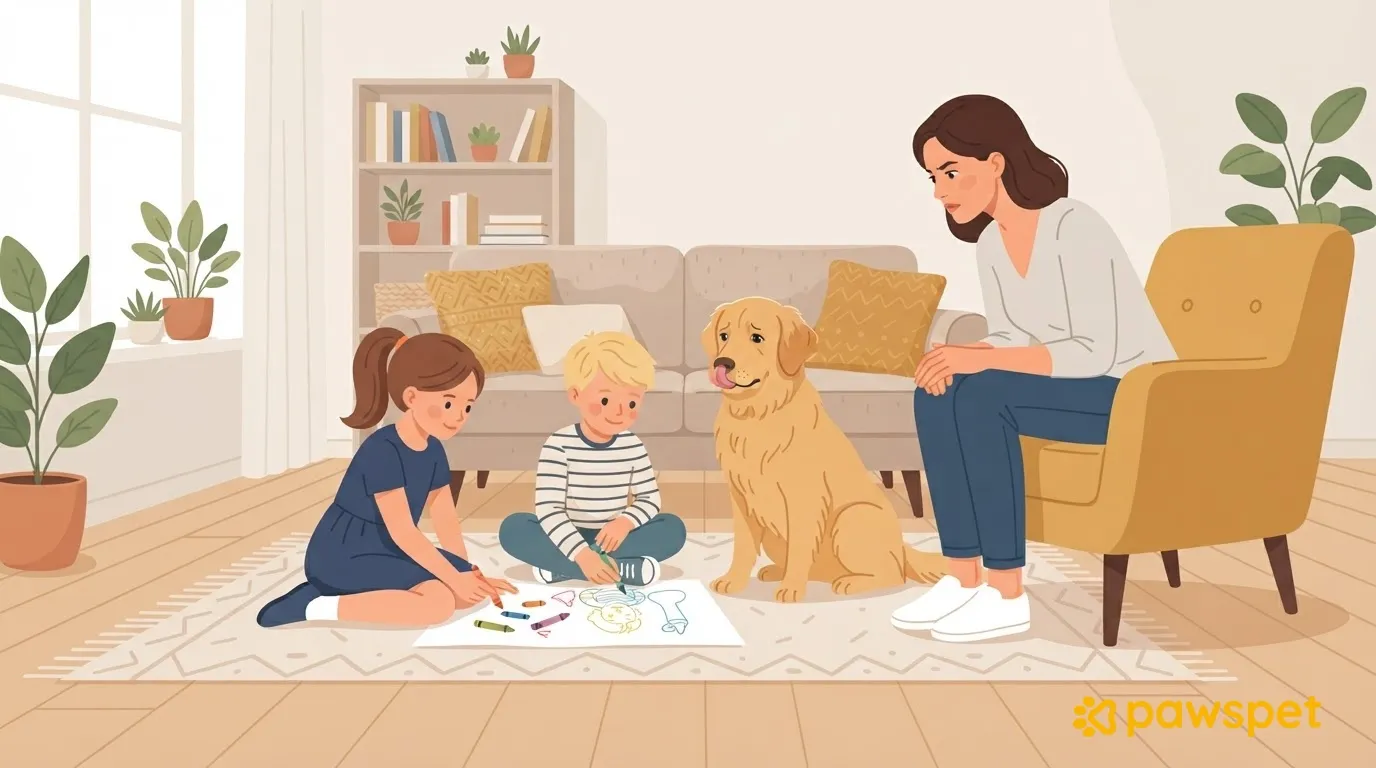
An adult should always be present when children and the dog are together.
Signs that the dog needs space
Before growling, dogs usually ask for space in other ways. Learn to recognize the most common signs and teach them to the children:
- turning their head or looking away;
- licking their nose or lips when they haven’t eaten;
- yawning out of context, when they aren’t tired;
- stiffening and remaining still;
- moving away or going to their own space;
- growling.
A single sign doesn’t tell you everything: the combination of signs and the situation matter. Growling is a warning and should not be punished: a dog who is punished may stop warning. Calmly move the child away without shouting, and give the dog space.
Guests and children’s friends
For the first while, put off parties and visits with large groups: lots of new people and noise can tire a dog who’s still learning about the home. Ask your children’s friends to follow the same rules, and let the dog stay in their own space during visits without making them greet anyone.
When to involve a professional
Before the dog arrives, ask the shelter whether they’ve lived with children before and how they reacted. If the shelter can’t answer, or if after the dog arrives you notice repeated growling, stiffness, or fear around children, contact a dog trainer or behavior consultant before the problem becomes established. If you suspect the dog is in pain, talk to your vet. Asking for help early isn’t a failure.
The family agreement to fill out tonight
Take a sheet of paper and fill in these seven items in a few lines:
- Household rules: sofa, rooms, guests, and food from the table.
- Shared words: the five or six choices, the same for everyone.
- Rotations and backups: who does what and who fills in.
- Rules for children: a few, in simple words.
- Sleeping place: where the dog sleeps and where they can retreat.
- Contact for the vet and shelter: one person’s name.
- Review date: the day you’ll read everything over together.
Put the sheet up in the kitchen and choose a day, after the first few weeks, to read it over together: keep what works and change what doesn’t, rewriting the page.