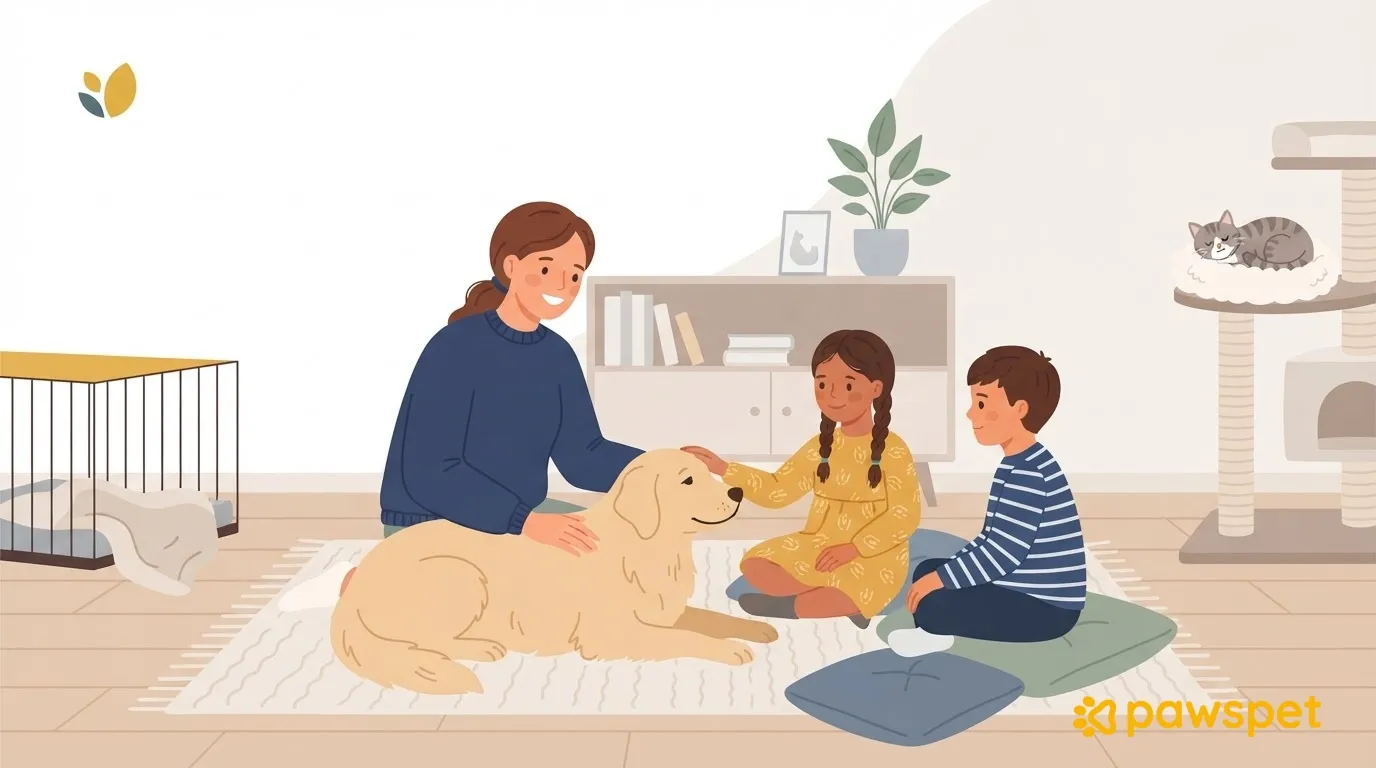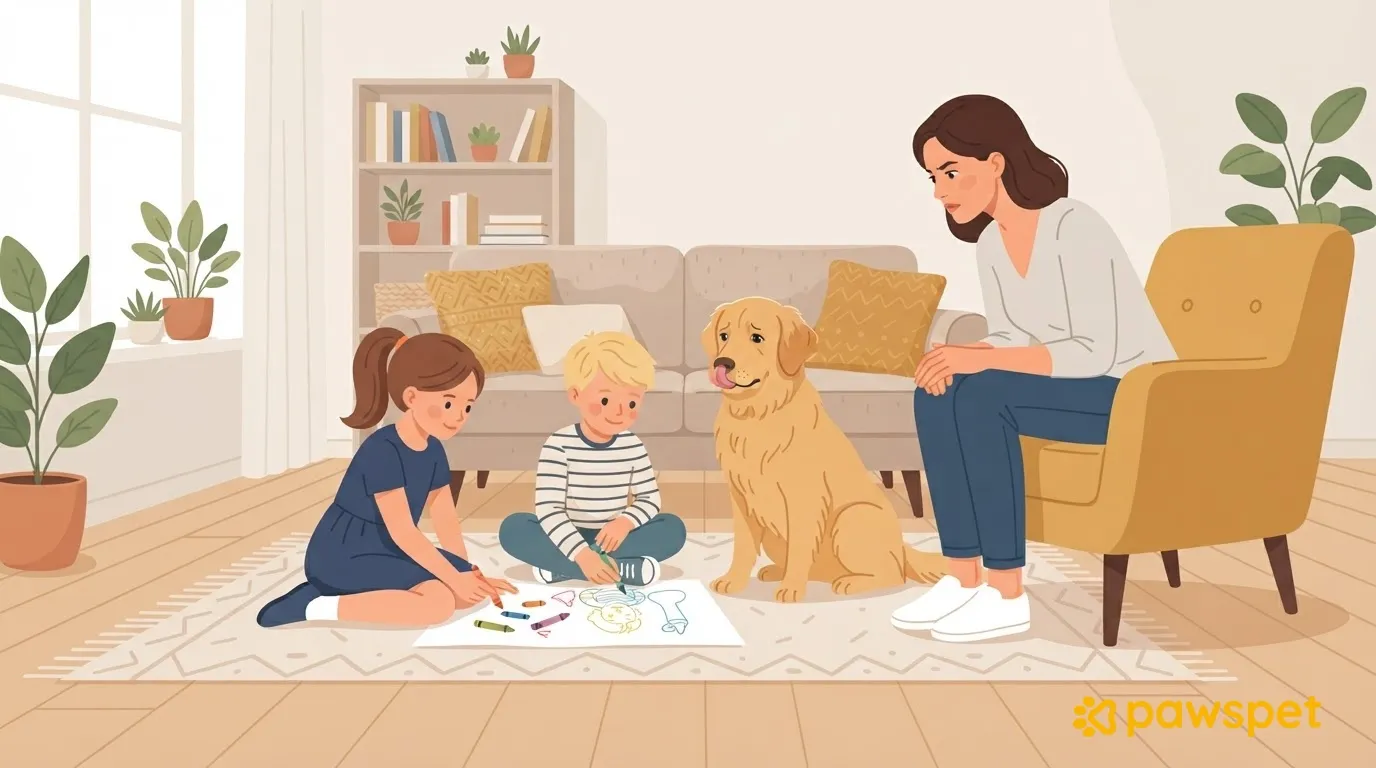
Active supervision means an adult is dedicated to watching the child and the dog: close enough to intervene, paying attention to both and not doing anything else. Being in the same room while you cook, answer the phone, or look after another child isn’t enough: when you can’t watch them, separate the child and dog with a barrier. You don’t have to wait for a growl to stop an interaction. Dogs usually communicate discomfort first through subtle signals, such as turning their head or moving away: recognizing them lets you give the dog space without scolding and protect both of them.
Being present doesn’t mean supervising
- Active supervision: You’re nearby and watching both of them, for example while the child pets the dog, without looking at a screen.
- Managing with a barrier: Need to drain the pasta or answer the door, even for just a few minutes? Separate them with a baby gate first.
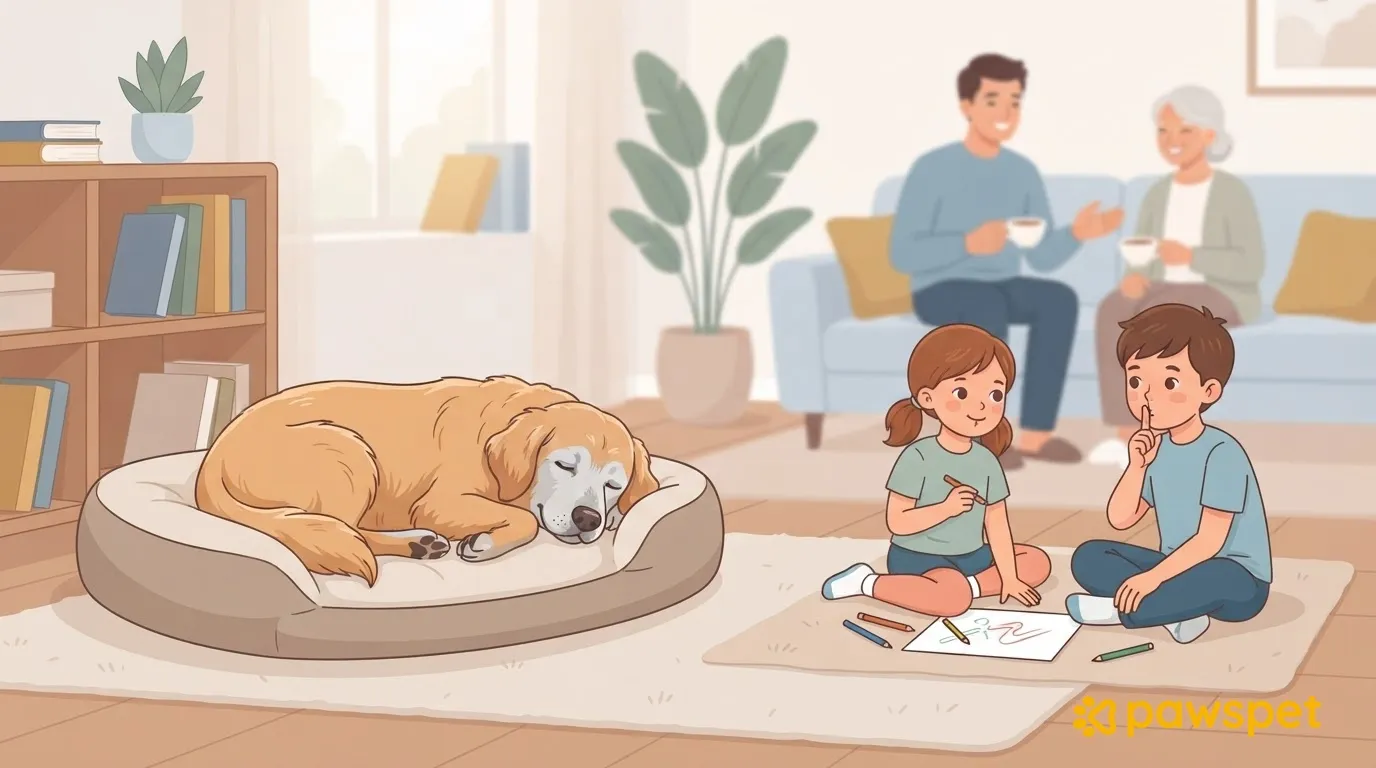
- Complete separation: When you have guests, things are hectic, or everyone is very tired, keep them in separate spaces.
Hand over supervision out loud: “You’re watching them now,” and wait for an explicit yes. Say, “I’m not watching now,” when you need to do something else: if no one takes over, separate them instead of assuming someone else will handle it.
Signs of distress, from subtle to more obvious
Read the context and sequence, not a single gesture: a yawn may simply mean the dog is sleepy. Signals don’t always follow a fixed order; don’t wait for them to escalate.
| Signal | What it may mean | What the adult should do |
|---|---|---|
| Licking the nose or lips outside mealtimes | Possible tension. | Stop contact and create space. |
| Yawning out of context | Distress, but also sleepiness. | Take a break and observe the overall situation. |
| Turning the head or body away | May want to end the interaction. | Call the child over without insisting. |
| Whites of the eyes showing | Possible tension in the situation. | Increase the distance from the child. |
| Ears back and tail low | Possible distress. | Stop the interaction and give the dog space. |
| Moving away or trying to leave | May be asking for distance. | Don’t let the child follow. |
| Stiffening or suddenly freezing | Possible increase in tension. | Move the child away and separate them. |
| Growling or raised lip | A warning to take seriously. | Separate them calmly, without scolding. |
What to do when you see these signs
- Interrupt calmly: Call the child over to you, suggesting a game or a small task.
- Don’t drag or grab the dog.
- Give the dog a way to move away, without the child following.
- Separate them with a barrier if needed.
Don’t scold or punish a growl: it’s a warning. Punishing it could teach the dog not to warn you, without removing the distress.
Afterward, ask yourself what happened just before: had the child come too close? Was the dog resting? Change the situation next time instead of trying again to see how the dog reacts.
What to teach children instead of hugging and chasing
- No hugging or kissing the dog’s muzzle, and don’t climb on or lie on the dog. Wait for the dog to approach: give a brief pet on the chest or side, then pause. Continue only if the dog stays relaxed or asks for more contact.
- No chasing or pulling tails or ears. Suggest games led by an adult: the dog searches for treats you hide, or the children take turns throwing a ball.
- Don’t approach the dog while it’s sleeping, eating, chewing, or in its crate. Suggest an activity for the child away from the dog: contact can wait.
With younger children, use simple phrases and physically guide them away from the dog when needed: saying a rule isn’t enough. Explain why to older children, while continuing to supervise.
When to involve a professional
Ask an animal behavior professional for help if you notice frequent signals, growling, stiffening, or snapping, or if the dog avoids children or certain rooms. A sudden change in a dog that used to be tolerant calls for a consultation with the veterinarian first, to rule out pain or other health problems. In the meantime, increase separation and don’t test the dog.
If a bite has occurred, immediately separate the child and dog and have the child assessed by a pediatrician or at the emergency department, depending on the severity. Only afterward arrange help for the dog.
Write down the date, context, and signals for each incident to show the professional. In PawsPet, you can record them from the «Attività» tab by creating a «Nuova attività» of type «Monitoraggio comportamentale», using the «Note» field.
For non-urgent help, in the «Servizi» tab in PawsPet you can search for «Consulenza comportamentale» or «Addestramento» and read the «Recensioni» in the service details; check qualifications and availability before choosing.
Rules to share with all the adults in the household
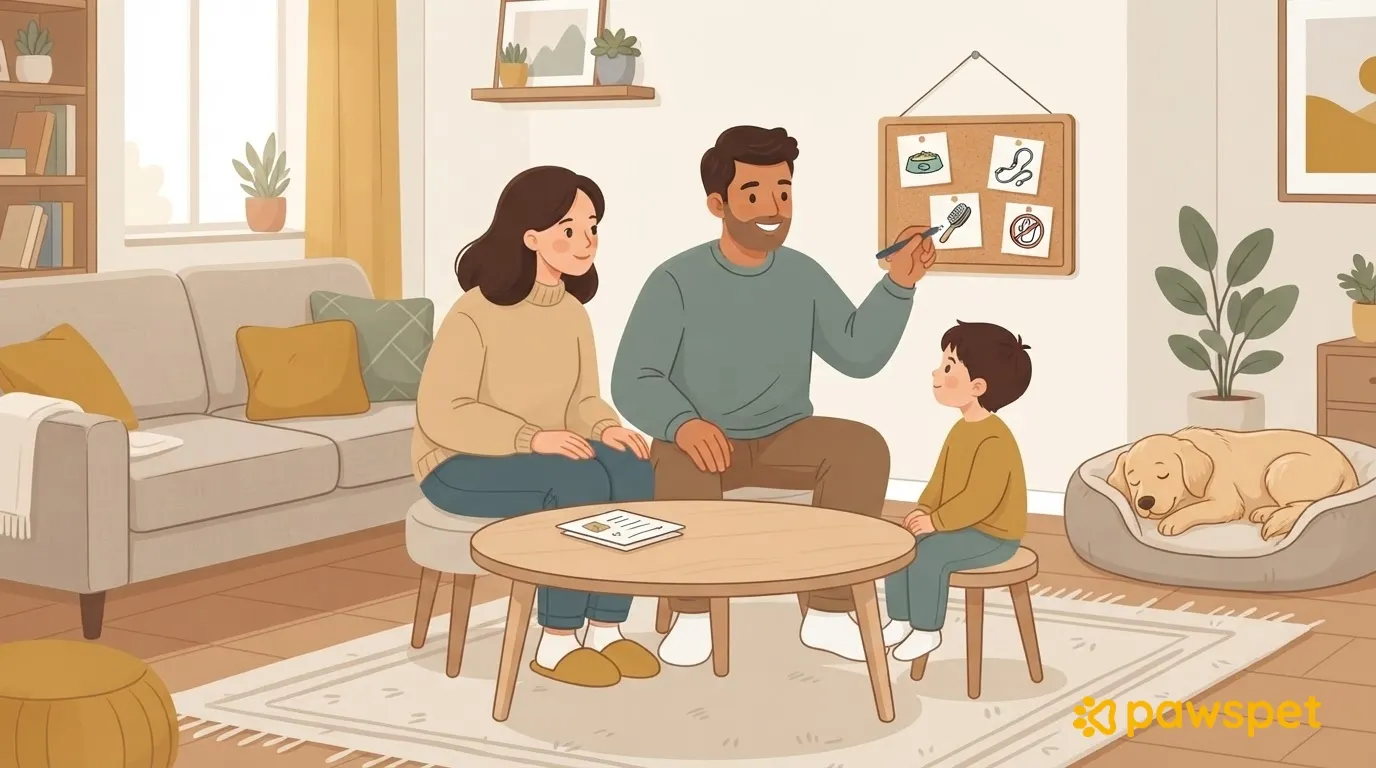
Write them down and share them with grandparents and babysitters too:
- Whoever is watching says so and gets confirmation.
- If no one is watching, use the barrier.
- Don’t disturb the dog in its crate.
- Children must not hold food near the dog.
- Move the child away at the first signs.
- Tell the responsible adult about every incident.
FAQ
My dog has always been calm. Is supervision still necessary?
Yes: even a tolerant dog can find the situation difficult. Supervision protects both the dog and the child and doesn’t depend only on past behavior.
At what age can a child be with a dog without an adult?
There’s no one age that works for everyone: an adult should decide, taking the dog, child, and situation into account. Young children must never be left alone with a dog.